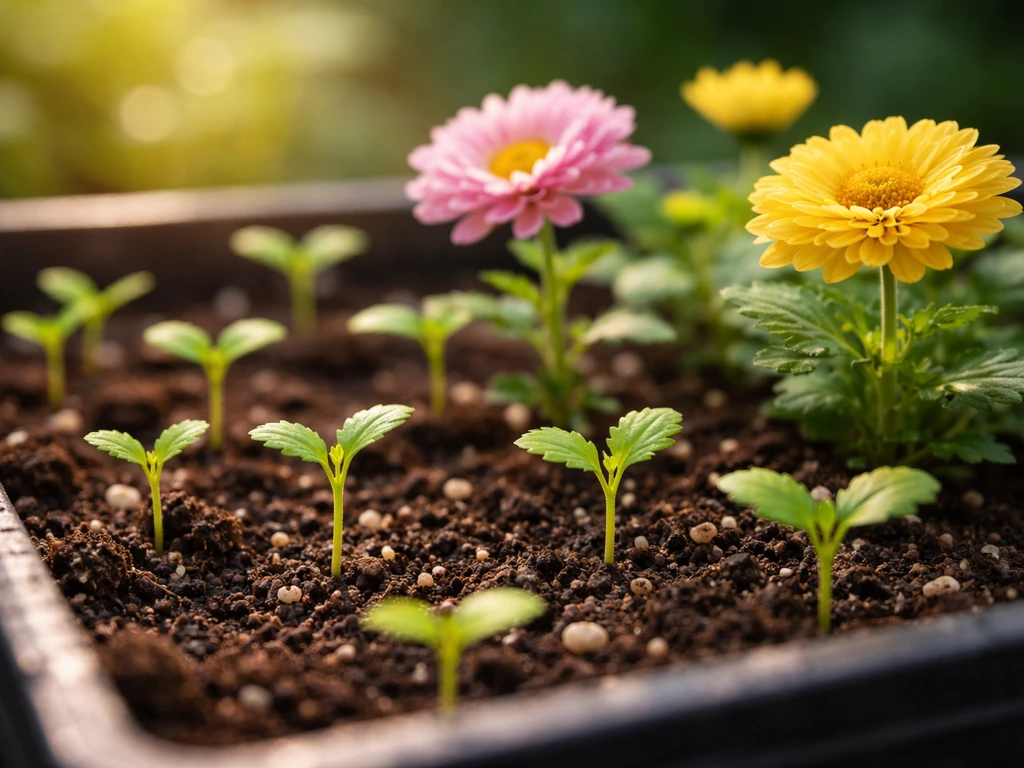
If you're starting papaya from seed, here's the direct answer: germination takes roughly 10 to 21 days under warm conditions, seedlings are ready to transplant around 2 months after sowing, and you can realistically expect your first papaya fruit somewhere between 9 and 14 months from the day you planted the seed.
How Long to Grow Papaya From Seed: Timeline to Fruit
Marcus Henley
20 Apr 2026
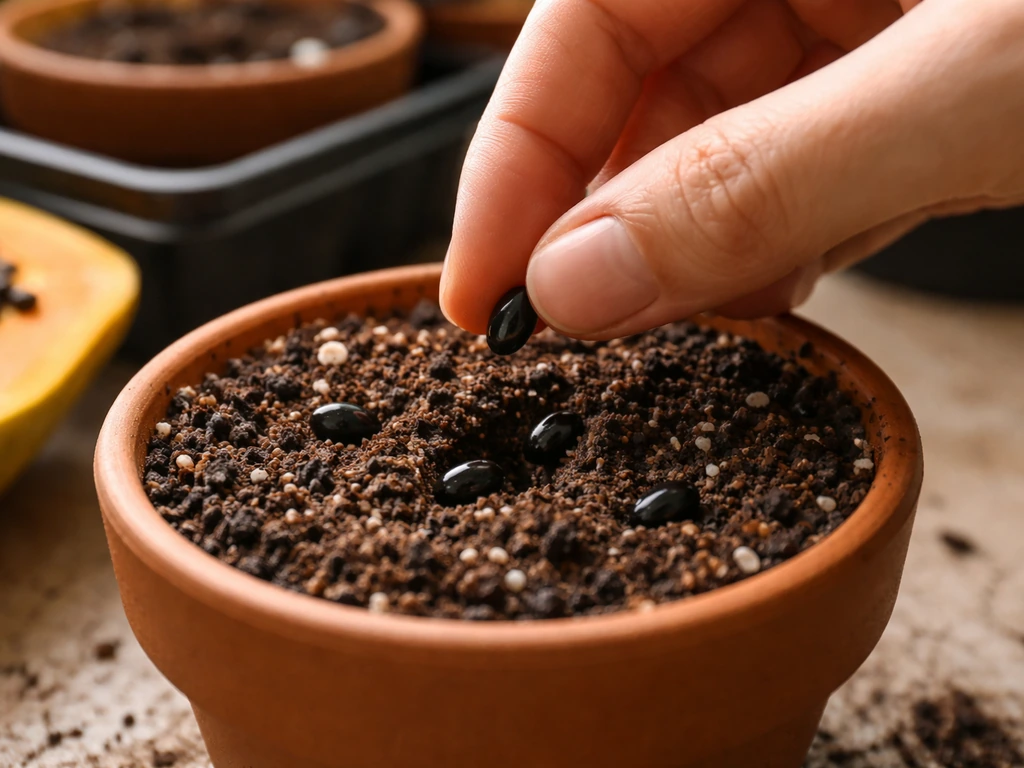
If you're comparing other seed-to-harvest timelines, you might also want to check how long to grow butternut squash from seed so you can plan around a different pace for a different crop. That's the honest range. Where you land within it depends almost entirely on temperature, seed freshness, and how consistently you can keep conditions warm. Let's walk through each stage so you know exactly what to expect.
Typical papaya seed germination timeline
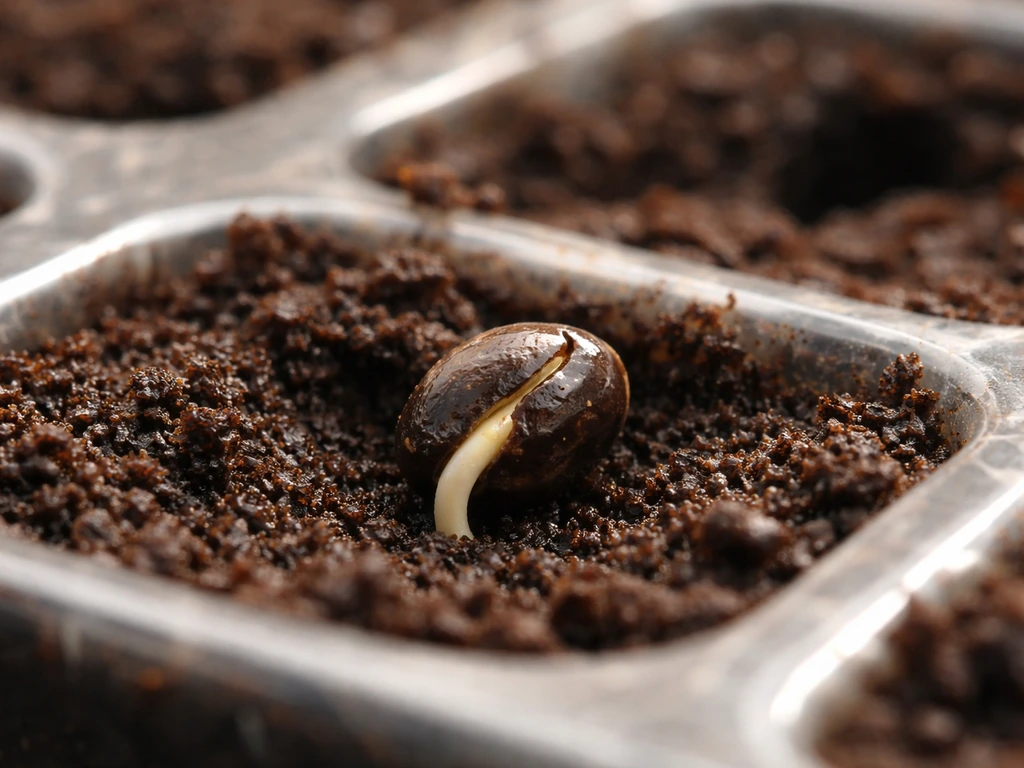
Most papaya seeds will begin showing radicle emergence (the first sign of life) around day 5 in ideal conditions. In practical home-growing situations with warm, moist soil, you'll usually see the first sprouts pushing through between days 10 and 15. If your conditions are slightly cooler or the seeds are a bit older, it can stretch to 21 days or even slightly beyond that. Germination is generally considered complete, meaning all viable seeds in a batch have either sprouted or won't, by about 2 to 3 weeks after sowing.
That 10-to-21-day window is what I'd call a normal range. Research from papaya propagation studies supports 10 to 15 days as the common expectation under nursery conditions, while controlled germination tests have recorded radicle emergence starting as early as day 5. If you hit day 25 and nothing has appeared, it's worth examining your conditions rather than just waiting longer.
| Stage | Timeline from Sowing | Notes |
|---|---|---|
| First radicle emergence | Day 5–10 | Best-case: warm temps, fresh seeds |
| Most seeds sprouted | Day 10–15 | Typical nursery/home-grow range |
| Germination complete | Day 14–21 | Allow up to 23 days before giving up |
| Full seedling emergence | 2–3 weeks | All viable seeds emerged by this point |
From sprout to seedling: what the first weeks actually look like
Once the seedling breaks the soil surface, growth moves quickly in warm conditions. Papaya is a fast-growing tropical plant, and even as a tiny seedling it puts on size at a noticeably quicker pace than something like a citrus or kiwi. Within the first few weeks after emergence, you'll see the first true leaves appear. The goal is to get to the 3-to-4 true-leaf stage, which is when the plant is strong enough to handle transplanting.
By around 2 months after sowing, a well-grown papaya seedling should be roughly 15 to 20 cm (about 6 to 8 inches) tall with at least 3 to 4 true leaves. That's your transplant window. Some growers wait until the plant hits about 4 inches with four solid true leaves as a minimum threshold. Don't rush this stage. A seedling that goes into the ground too early will sulk and slow down, which actually pushes your fruit date further out. The two-month mark in a nursery bag or starting pot is the sweet spot.
One thing to be aware of: papaya seeds are naturally covered in a gel-like coating called the sarcotesta. If you're extracting seeds directly from a ripe fruit, washing this coating off before sowing makes a real difference. It contains compounds that can suppress germination. I always rinse my seeds thoroughly and let them dry for a day before sowing. It's a simple step that noticeably improves sprout rates.
How long until you have an actual papaya tree
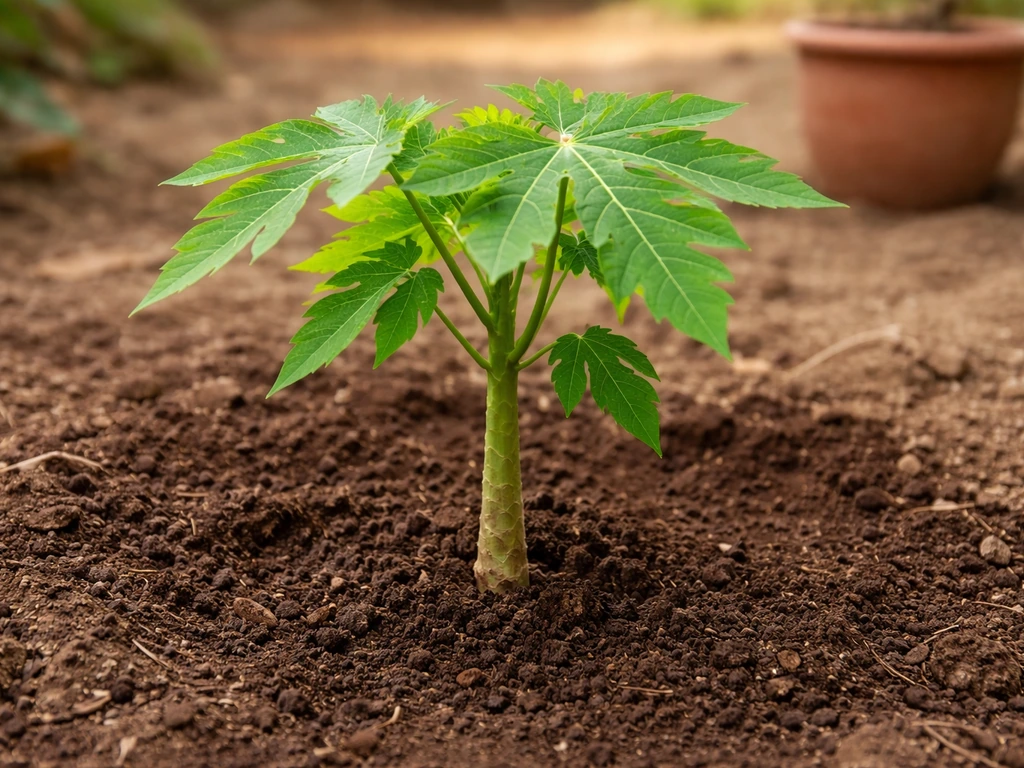
"Papaya tree" is a slightly misleading term since papaya is technically a large herbaceous plant, but in home-growing terms, you're thinking about the point when the plant is established, growing vigorously, and approaching flowering. That vegetative maturity phase runs from transplant to first flowers, and it typically takes 5 to 8 months after transplanting.
In a well-managed planting with consistently warm temperatures, some growers report flowers forming as early as 2 months after transplanting, though 5 to 7 months is the more common range. Indian extension guidelines put it at 6 to 7 months after transplanting to first flowering. Add the roughly 2 months from seed to transplant, and you're looking at about 7 to 9 months from seed to first flowers in good conditions.
Realistic seed-to-first-fruit timeline
This is what most people really want to know. Fruit harvest readiness comes about 5 to 6 months after flowering. So when you add that to the seed-to-flower timeline, the full journey from seed to first ripe papaya realistically lands between 9 and 14 months. Here's how that breaks down end to end:
- Seed germination: 10 to 21 days
- Seedling establishment (to transplant-ready): roughly 2 months from sowing
- Vegetative growth to first flowers: 5 to 8 months after transplanting
- Fruit development to harvest: 5 to 6 months after flowering
- Total from seed to first fruit: approximately 9 to 14 months
The 9-month end of that range is achievable in true tropical climates with warm nights, full sun, and consistent moisture. If you're growing in a subtropical or warm-temperate zone with seasonal variation, 12 to 14 months is a more realistic expectation. Compared to slower-maturing fruit plants like kiwi or jujube, papaya is genuinely fast, but it still requires patience and planning over nearly a full year.
If you are comparing species, jujube generally takes much longer than papaya to reach fruiting from seed Compared to slower-maturing fruit plants like kiwi or jujube. Kiwi from seed is much slower, so the timeline often extends well beyond a year compared with papaya Compared to slower-maturing fruit plants like kiwi or jujube.
What changes the timeline most
Temperature
Temperature is the single biggest factor controlling how fast papaya moves through every stage. Optimal germination happens at alternating temperatures around 25 to 35°C (77 to 95°F), and research shows germination rates of up to 89% are achievable in that sweet spot. Below that range, everything slows dramatically. Once soil temperatures drop below 60°F (about 15°C), root growth slows noticeably and can essentially stall. At temperatures approaching freezing, young papaya plants can be killed to the ground entirely. This isn't a plant that tolerates cold even briefly during its early stages.
Seed freshness and quality
Fresh seeds consistently outperform stored seeds by a significant margin. If papaya seed viability is being affected by storage conditions, the Cambridge Core paper on papaya seed germination reports that storage temperature and moisture strongly influence how well and how quickly seeds germinate, with faster losses under some cooler storage conditions.
Papaya seeds begin losing viability relatively quickly after harvest, a process driven by early seed degeneration in post-harvest conditions. Seeds stored in cloth bags at room temperature for about 29 months dropped to just 16% germination. Even seeds stored properly in plastic bags at cold temperatures (4 to 6°C) showed only 57% germination after the same period.
If you can get seeds from a fresh ripe fruit and sow them quickly, you'll have a much better experience than working with packaged seeds that have been sitting around.
Light
Papaya needs full sun to grow and fruit well, typically 6 or more hours of direct light per day. During the seedling stage indoors, inadequate light produces leggy, weak plants that struggle after transplanting and ultimately push the fruit timeline out. If you're starting seeds indoors in a non-tropical climate, a grow light positioned close to the seedlings will do more than almost anything else to keep growth on schedule.
Indoor vs. outdoor growing
In true tropical climates, outdoor growing year-round means the plant is never battling cold or shortened days, so timelines stay at the faster end. In temperate or subtropical zones, starting seeds indoors gives you control over the germination environment, but you're also managing the transition to outdoor conditions, which adds complexity. Plants grown in containers and kept indoors long-term will typically flower and fruit more slowly than in-ground plants in warm climates, partly due to root restriction and lower average light levels.
Sowing depth and sarcotesta removal
Sowing depth matters more than most growers expect. Seeds buried too deep have to expend more energy reaching the surface and often fail before emerging. The standard recommendation is about 1 cm depth. And as mentioned earlier, removing the sarcotesta gel coating before sowing removes a natural germination inhibitor and consistently improves both germination rate and speed.
Troubleshooting slow or failed germination
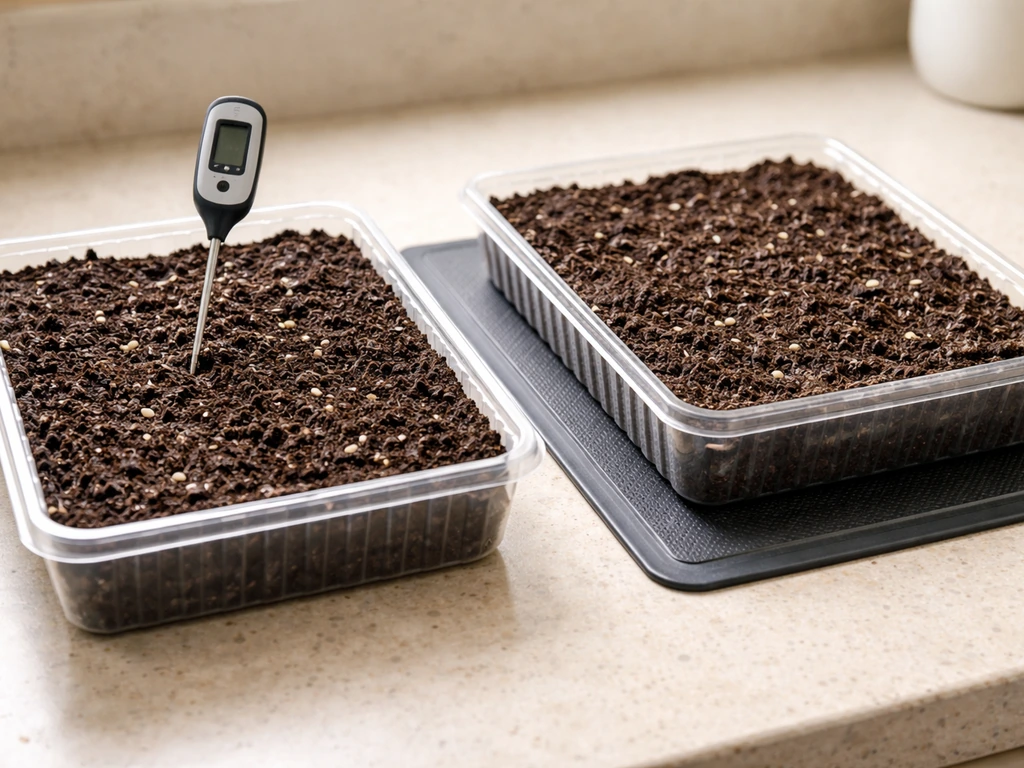
If you're past day 21 and haven't seen any sprouts, work through these common causes before writing off the batch:
- Soil too cold: check that your germination medium is staying consistently above 25°C (77°F). A heat mat under the tray makes a measurable difference in cooler environments.
- Old or poorly stored seeds: if the seeds came from a package with no purchase date or have been sitting in storage, low viability is the most likely culprit. Fresh seeds from a ripe fruit are almost always better.
- Sarcotesta not removed: seeds extracted directly from fruit without washing the gel coating off will germinate erratically or not at all.
- Sowing too deep: more than 1.5 cm of soil cover can prevent emergence. Try barely covering the seed if a second attempt is needed.
- Waterlogged medium: papaya seeds don't like sitting in saturated soil. The medium should be moist but well-draining. Consistently wet conditions encourage rot rather than germination.
- Seed priming: if germination rates are consistently disappointing, soaking seeds in warm water for 24 hours before sowing can help accelerate and even out germination timing.
If seedlings are emerging but growing very slowly after the first few weeks, the most likely issues are insufficient light, cool temperatures, or a growing medium that's too compacted or nutrient-poor. Papaya seedlings are surprisingly fast-growing when conditions are right, so sluggish growth is almost always a signal to check your environment rather than just wait it out.
Planning your sowing schedule by season
Because papaya is so temperature-sensitive at every stage, your sowing date needs to be planned backwards from your local climate. Here's the practical approach:
If you're in a tropical or frost-free subtropical climate, you can sow year-round, but the ideal timing is to sow seeds so that transplanting lands at the beginning of the rainy season. The combination of warm temperatures and consistent moisture after transplanting accelerates establishment significantly and keeps the fruit timeline on the faster end.
If you're in a temperate or warm-temperate zone with cold winters, start your seeds indoors at least 10 to 12 weeks before your last frost date. That gives you 2 months for the seedling to reach transplant size, plus a buffer. Don't transplant outdoors until nighttime temperatures are reliably above 15°C (60°F). A plant set out too early into cool soil will stall rather than grow, effectively wasting weeks of your season.
Keep in mind that even with a perfect sowing date, a plant in a temperate climate growing through a shortened warm season may not make it all the way to fruit in a single year. That's not a failure of your timing or technique. Papaya in containers can be overwintered indoors and may flower and fruit in their second season. Managing this expectation upfront will save a lot of frustration. If you've grown other long-season tropical fruits, you'll recognize this pattern immediately.
For home growers trying to nail down their sowing calendar: sow in late winter to early spring for a late spring transplant, aim for consistent indoor temperatures of 25 to 30°C during germination, and plan your fruit expectations around the 12-month mark from seed if you're outside the tropics. That's a realistic, achievable goal with the right setup. Kumquats grown from seed follow a different schedule, so it helps to know the specific seed-to-fruit timeline for kumquats how long does it take to grow kumquat from seed.
FAQ
My papaya seeds haven’t sprouted by day 21, what should I check first?
If you have no sprouts by day 21, don’t keep waiting with the same setup. First check soil temperature and warm consistency, then confirm seeds are fresh and not overly old. Also verify sowing depth is near 1 cm, and that the medium stays evenly moist but not waterlogged.
Is there a point where it’s likely the seeds are not going to sprout?
Papaya is typically counted as “complete” germination when viable seeds have sprouted or failed by about 2 to 3 weeks. Practically, if you see no emergence by day 25, it usually indicates a problem with temperature, seed viability, or sowing depth rather than a delay you can reliably wait out.
How can I keep the timeline on track if I’m growing indoors?
For indoor starts, keep temperatures in the germination range (around the high 20s C to mid 30s C) and use bottom-warming if your home is cool at night. For light, place a grow light close enough to prevent leggy growth, and keep seedlings under strong light after emergence, not just during the first week.
What’s the biggest mistake people make with transplant timing?
Starting too early in cool conditions is one of the fastest ways to lose weeks. Transplant only when nighttime temperatures are consistently above 15°C (60°F), and avoid leaving seedlings in cold drafts or chilly greenhouse corners, even for a few days.
Should I transplant at exactly 2 months or wait until they’re taller?
If you’re deciding between waiting longer in a pot versus transplanting at the 2-month mark, use the 3 to 4 true leaf stage as the minimum. Bigger is not always better, but a seedling transplanted too small or too weak often establishes slower and can push flowering back.
Will growing papaya in a pot change how long it takes to fruit?
Yes, container culture often extends the schedule compared with in-ground plants in warm climates. Root restriction and sometimes lower effective light intensity can delay flowering and fruiting, so expect the harvest window to drift toward the longer end of the normal range or beyond.
Does washing the gel coating help only for extracted seeds, or also for store-bought seeds?
For papaya started from extracted seeds, rinsing the sarcotesta gel off before sowing helps germination. If you bought packaged seeds, you can’t remove that coating, so seed age and storage conditions matter more, and the germination window may be less consistent.
What causes flowering to be early in some gardens but late in others?
Papaya can flower within about 2 months after transplanting in some warm, ideal setups, but that’s not the most common outcome. A more typical first-flower window is roughly 5 to 7 months post-transplant, with flowering delayed if light is weak or temperatures run cool.
What should I troubleshoot if my papaya flowers but won’t form fruit?
If you get flowers but no fruit, check for ongoing warmth and sufficient light, and confirm you have the right plant type since papaya can be male, female, or hermaphroditic depending on genetics. Insufficient pollination or temperature stress during flowering can also prevent fruit set.
If I can’t fruit in the first year, is overwintering indoors a normal strategy?
In temperate climates, your goal may not be one harvest in the same year. If winters are cold, plan to keep the plant alive indoors for overwintering, and expect flowering and fruiting to happen in the second season.
How much do short cold spells affect papaya growth and the fruiting timeline?
If soil temperature drops below about 15°C (60°F), root growth can slow significantly or stall. That stall can easily become a timeline delay, so add protection such as cloches, wind barriers, or timed transplanting to avoid early-season cold snaps.
Next Article
How Long Does It Take to Grow Chrysanthemums from Seeds
Timeline for growing mums from seeds: sowing to germination, transplant readiness, flowering and maturity, plus key vari