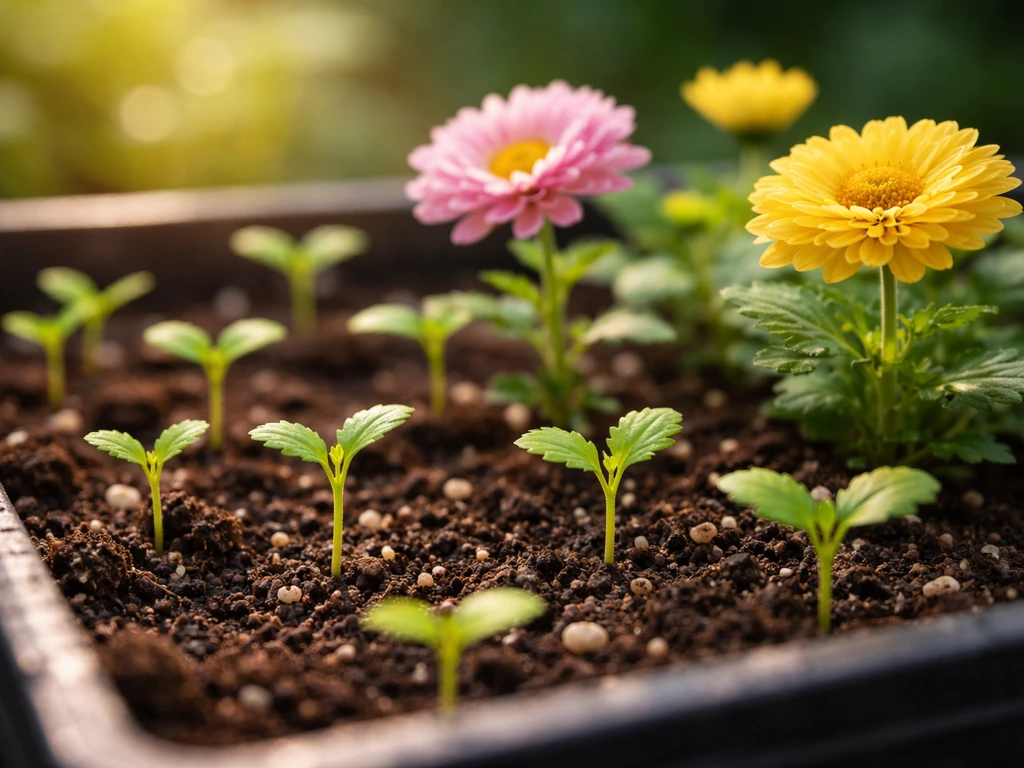
Cosmos take about 75 to 90 days from sowing to first bloom under average conditions, though you can expect to see flowers as early as 8 to 10 weeks (56 to 70 days) when temperatures are warm and the plants get plenty of light. Germination alone happens fast, usually 7 to 10 days. The rest of that timeline is seedling establishment, stem growth, and bud development. If your cosmos are taking closer to 90 to 120 days, that's still normal, especially in cooler climates or shadier spots. Here's exactly what to expect at each stage.
How Long Do Cosmos Take to Grow From Seed? Timeline
Marcus Henley
20 Apr 2026
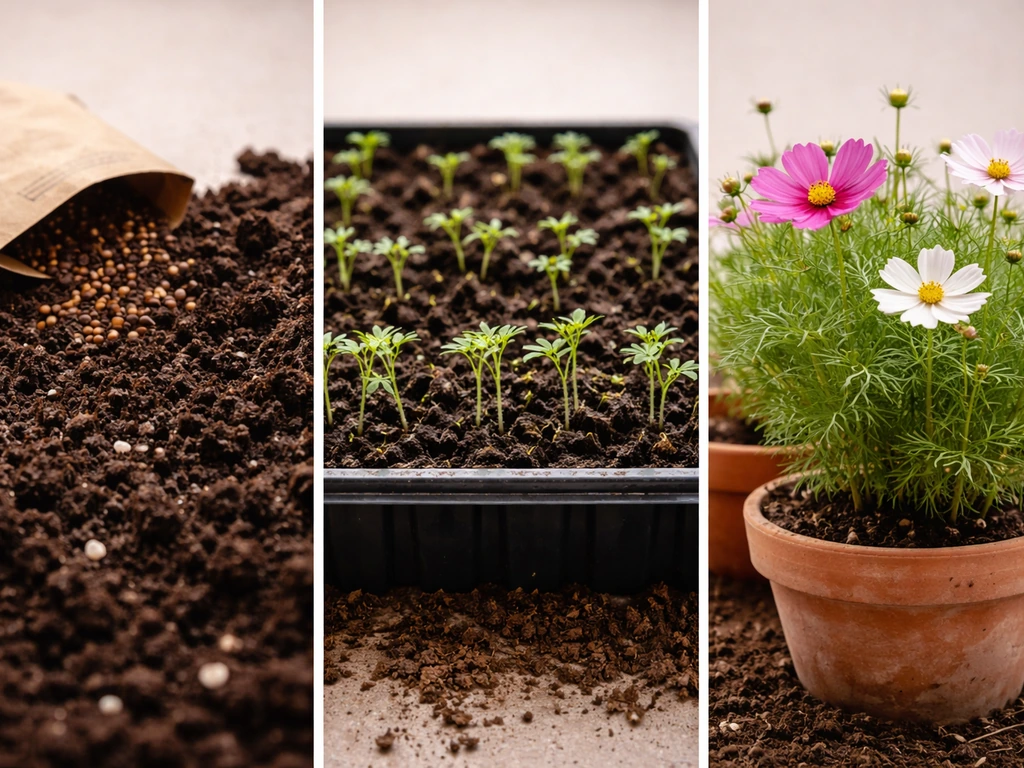
The full cosmos growth timeline, seed to bloom
This is the big picture timeline most gardeners are working with. Every stage can shift a little depending on your conditions, but these ranges hold up pretty consistently across cosmos varieties (Cosmos bipinnatus being the most common).
| Stage | Typical Timeframe | Notes |
|---|---|---|
| Germination | 7–10 days | Soil temp needs to be at or above 60–68°F (16–20°C) |
| Seedling establishment (first true leaves) | 2–3 weeks after germination | Cotyledons appear first; true leaves follow within 1–2 weeks |
| Active vegetative growth | Weeks 3–6 from sowing | Stems extend, branching begins; plant builds energy for flowering |
| First buds | Around weeks 6–8 | Buds form faster in warm weather and long daylight hours |
| First blooms | 8–10 weeks from sowing (56–70 days) | Can be 10–12 weeks in cooler or lower-light conditions |
| Full maturity / peak bloom | 75–90 days from sowing | Some sources extend this to 90–120 days in variable conditions |
One thing worth knowing: cosmos started indoors follow roughly the same biological timeline, but starting them 4 to 6 weeks before your last frost date means your transplants are already partway through that vegetative growth phase when they go in the ground. That's the real advantage of indoor starting. Your outdoor-sown seeds need to do all of that after hitting the soil.
Germination: what to expect in those first 7–10 days
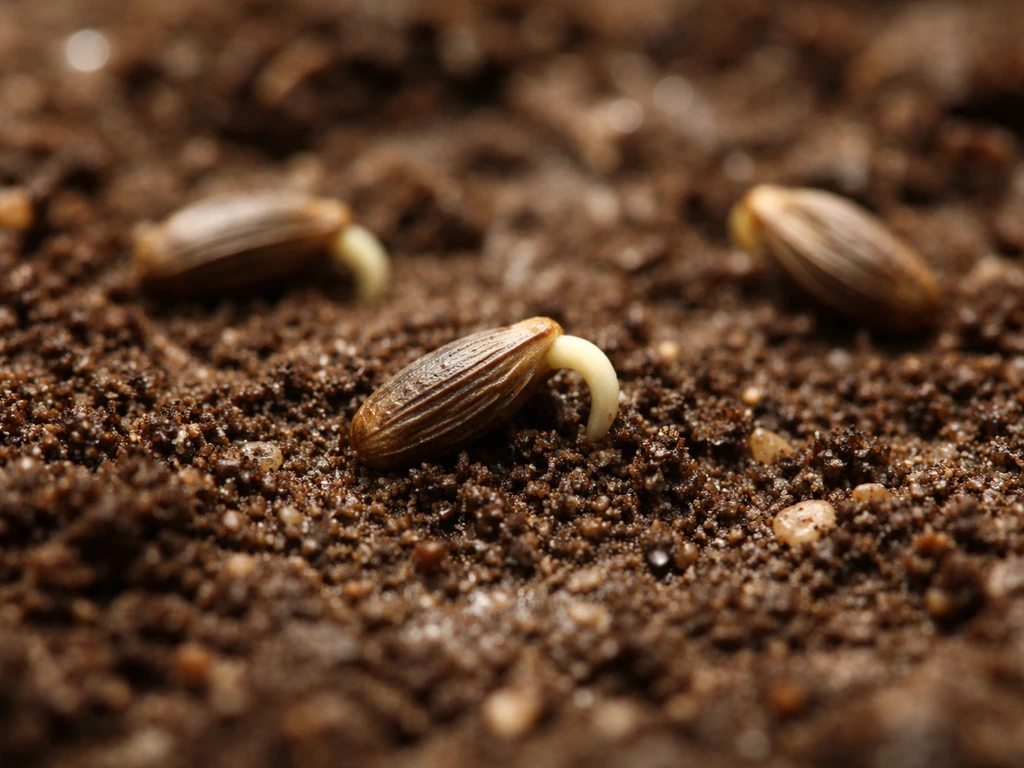
Cosmos germinate reliably and quickly when conditions are right. The sweet spot for germination temperature is 68 to 72°F (20 to 22°C), and you need soil temperature (not air temperature) to be at least 60°F (16°C) before direct sowing outdoors. Under those conditions, most seeds crack open and send up sprouts within a week. At cooler temperatures, say around 59 to 61°F, the RHS notes germination can stretch to up to 30 days. That's a huge difference, and it's probably the most common reason gardeners think their seeds have failed when they're actually just waiting for warmth.
Sowing depth matters too. Plant seeds no deeper than about 1/4 inch, or just barely cover them with soil. Cosmos seeds need light to germinate well, so burying them too deep is a surprisingly easy mistake. Keep the soil evenly moist for that first week but not waterlogged. Once you see sprouts, you can ease off a bit.
What affects germination speed most
- Soil temperature: This is the single biggest lever. Cooler than 60°F and germination slows dramatically or stalls entirely.
- Moisture: Consistent, even moisture (not wet, not dry) speeds germination. Letting the surface crust and dry out can kill seeds that have just cracked.
- Seed depth: Too deep and seeds struggle to push through. Lightly covered at 1/4 inch is ideal.
- Seed freshness: Fresh cosmos seed (from the current or previous season) germinates more reliably and faster than older stock.
- Light exposure: Cosmos seeds don't need light to germinate, but they need warmth. A heat mat set to 68–72°F indoors can cut germination time to the lower end of that 7–10 day window.
From seedling to first flowers: the waiting game
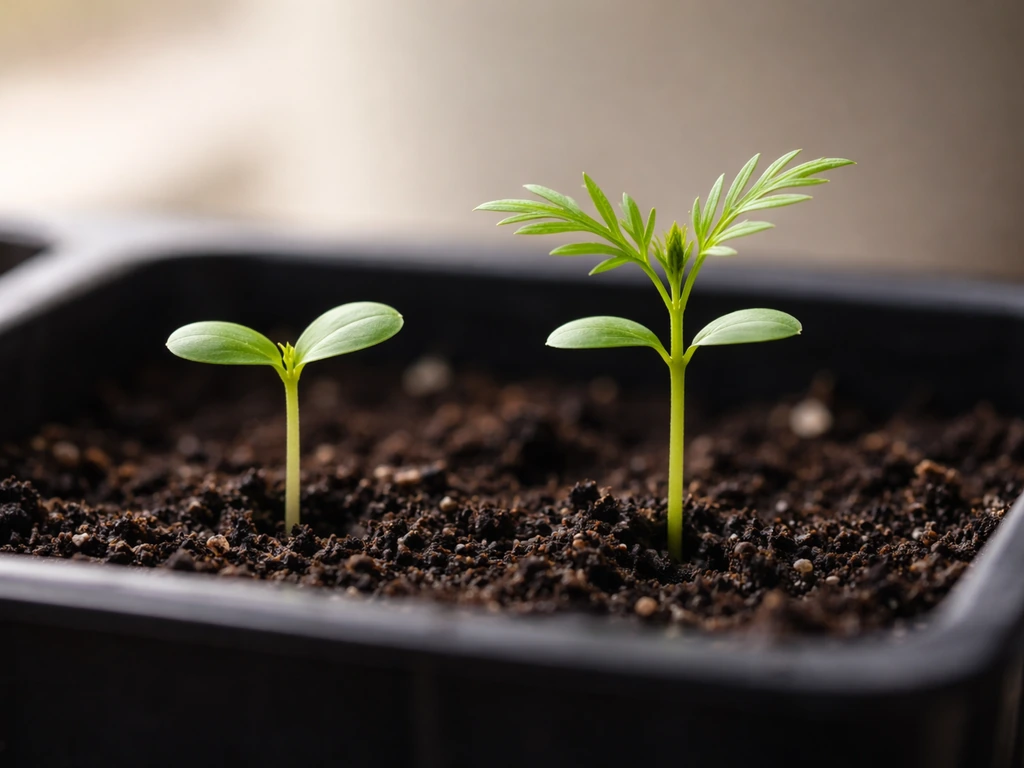
After germination, cosmos grow in a predictable pattern. The first thing you see are cotyledons, the initial seed leaves that look nothing like the feathery cosmos foliage you're expecting. True leaves follow within one to two weeks. If you started seeds indoors, this is the stage where you'd prick out seedlings into individual pots to give their roots more room, letting them develop further before transplanting outdoors.
From true leaves, the plant focuses on stem and branch development for the next few weeks. This is the part of the timeline that can feel slow because there's nothing dramatic happening above ground. Underground, though, the root system is building the foundation that will support all those flowers. By weeks 5 to 6 from sowing, you'll typically start to see the plant bulk up noticeably.
Buds begin forming somewhere around weeks 6 to 8, and with warm temperatures and long days, first blooms often appear right around the 8 to 10 week mark. Sedum seeds typically take a few weeks to germinate and then several more weeks to reach a plant that can grow steadily how long do sedum seeds take to grow.
Cycad seeds can take a long time to grow, so it helps to know what to expect before you plant how long do cycad seeds take to grow. Aloe vera has a different schedule, so check how long do aloe vera seeds take to grow for the best expectations.
If you’re wondering how long do summer seeds take to grow, the same seed-to-bloom window often applies, just with warmer temperatures and more consistent light helping them move faster 8 to 10 week mark. For summer seeds, the seed-to-bloom window and warm conditions are usually the biggest factors in how quickly you’ll see results.
One thing I've noticed in my own garden: cosmos planted outdoors from seed after the last frost in a warm, sunny spot often catch up surprisingly fast to indoor-started transplants, especially once summer heat arrives. The indoor head start matters most in short-season climates where every week counts.
Indoor start vs. direct sow: does it change the timeline?
Starting cosmos indoors 4 to 6 weeks (some growers stretch to 5 to 7 weeks) before your last frost date shifts when you get blooms, but it doesn't change the biological timeline much. You're essentially banking those weeks of growth so the plant is closer to flowering when it hits the garden. After transplanting, add a 7 to 10 day hardening-off period where you gradually expose seedlings to outdoor conditions before planting them out fully. Plants need that adjustment time, and skipping it can set them back and actually delay bloom.
Full maturity vs. flowering: they're not the same thing
This is a distinction worth making clearly. When cosmos 'flower,' that's the first bloom, and it can happen as early as 8 weeks from sowing. When cosmos reach 'full maturity,' that's when the plant is at peak size and producing blooms consistently and prolifically, and that typically happens closer to 75 to 90 days. Some sources list maturity out to 90 to 120 days, which covers slower-growing conditions or later-season plants.
The good news is that cosmos bloom continuously once they start, right through until frost. So 'full maturity' isn't a single moment, it's more like a window of peak performance that lasts for months. Deadheading spent flowers (removing them before they set seed) keeps the plant in flowering mode longer. If you let cosmos go to seed, the plant thinks its job is done and slows down flower production.
Also worth knowing: cosmos are not heavy feeders and actually perform better in lean soil. Rich, heavily fertilized soil pushes lush foliage at the expense of flowers. If your cosmos are big and green but light on blooms, soil fertility is often the culprit, not the timeline.
How to speed up cosmos from seed
If you want blooms sooner, here are the practical moves that actually make a difference. Most of them come down to optimizing temperature, light, and not overcomplicating things.
- Use a heat mat for indoor starts. Keeping soil temperature at a steady 68 to 72°F during germination gets seeds up in 7 days rather than 10. Once sprouts appear, the mat is less critical.
- Start indoors 5 to 6 weeks before your last frost. This is the most reliable way to get earlier blooms outdoors. You're transplanting a plant that's already several weeks into its growth cycle.
- Give seedlings maximum light indoors. A grow light set to 14 to 16 hours a day during the seedling stage keeps plants from getting leggy and encourages more compact, faster-developing stems. Cosmos can be sensitive to day length when it comes to flowering, and longer days support healthy plug development before transplant.
- Sow outdoors only once soil temperature is reliably above 60°F. Impatient early sowing into cold soil doesn't just slow germination, it can cause seeds to rot before they sprout. A soil thermometer is a cheap investment that saves a lot of frustration.
- Choose a sunny spot. Cosmos need full sun (at least 6 to 8 hours) to develop quickly and bloom on schedule. Shadier conditions push the timeline toward the longer end of those ranges.
- Don't overwater. Soggy soil slows root development and invites damping off. Consistent moisture is different from constant wetness.
- Skip the rich compost. Lean to average soil produces more flowers faster. Overly fertile beds push vegetative growth and delay blooming.
Why your cosmos might be slow or failing to grow
If your cosmos aren't on schedule, one of these is almost certainly the reason. The good news is that most of them are fixable.
Seeds haven't germinated after 10–14 days
First, check soil temperature. Cosmos seeds germinate best at soil temperatures between 70, 75°F and typically take about 7, 14 days to germinate soil temperatures between 70–75°F. If it's below 60°F, germination will be slow or won't happen at all. In cooler conditions, the RHS notes germination can take up to 30 days, so patience is warranted, but checking soil temp is step one. Also check whether seeds were buried too deep. More than 1/4 inch and cosmos struggle to push through. If the soil has been allowed to dry out completely, that can stall germination too.
Seedlings are leggy and weak
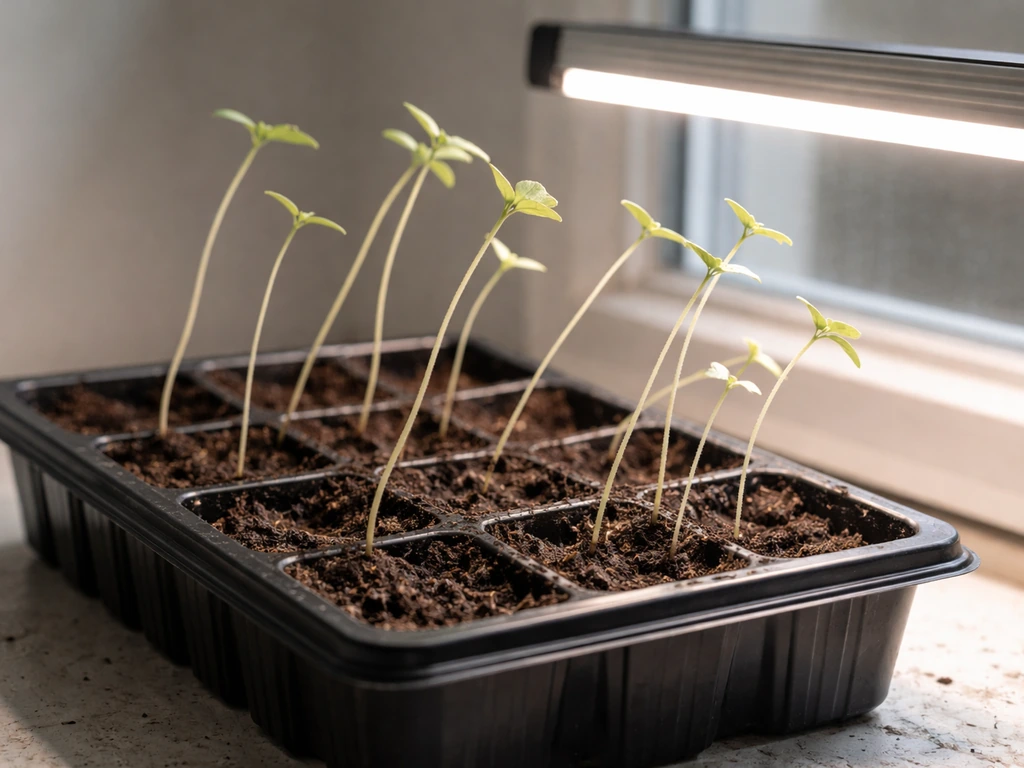
Leggy, floppy seedlings almost always mean insufficient light. Indoors, cosmos need a lot more light than a windowsill typically provides. A grow light positioned close to the seedlings (following manufacturer guidance on distance) makes a dramatic difference. Low light combined with overwatering is also a classic recipe for damping off, where seedlings collapse at the soil line due to fungal rot. If you're seeing that, improve drainage, increase air circulation, water from below rather than overhead, and back off on how often you water.
Transplants stalled after going outdoors
Transplant shock is real. Cosmos moved from a warm, sheltered indoor environment to full outdoor exposure without adequate hardening off will often stall for a week or two while they adjust. That's not failure, it's stress recovery. Make sure you've hardened plants off over 7 to 10 days before full outdoor planting. If a late cold snap hit after transplanting, plants may also be in recovery mode. Give them time and some warmth, and they'll usually come back.
Plants are growing but not blooming
If your cosmos are large and leafy but flowerless past the 10 to 12 week mark, revisit the soil situation first. Too much nitrogen (from rich compost, fertilizer, or heavy garden soil) pushes leaves over flowers. Also consider whether they're getting full sun. Illinois Extension notes that cosmos perform best in full sun, which supports faster flowering. Partial shade delays blooming noticeably. Finally, if you sowed seeds late in the season, shorter days as summer tips into fall can affect flowering timing, since cosmos are sensitive to day length.
Quick troubleshooting reference
| Problem | Likely Cause | Fix |
|---|---|---|
| No germination after 14+ days | Soil too cold (below 60°F) or seeds too deep | Check soil temp; resow at 1/4 inch depth with heat mat if indoors |
| Slow, uneven germination | Cool or inconsistent soil temperature | Use a heat mat; wait for consistent 68–72°F |
| Leggy, weak seedlings | Insufficient light indoors | Add grow light at 14–16 hours/day; move closer to light source |
| Seedlings collapsing at soil line | Damping off (overwatering + poor air circulation) | Reduce watering, improve drainage, add airflow |
| Transplants stalled outdoors | Transplant shock or inadequate hardening off | Give 7–10 day hardening-off period; wait for consistent warmth |
| Blooming late or not at all | Too much nitrogen, not enough sun, or late sowing | Reduce fertilizer, ensure full sun, check day length/season |
Where to go from here
The practical upshot: if you sow cosmos today (April 20), in a warm indoor setup you can expect germination within a week, established seedlings by mid-May, transplanting after your last frost, and first blooms somewhere in late June to early July under good conditions. . If you're comparing timelines for other seeds, you may also like this guide on how long do aloe vera seeds take to grow.
If you’re comparing to how long aquarium seeds take to grow, use the same idea: temperature, light, and setup conditions can shift germination and the overall seed-to-bloom timing how long do aquarium seeds take to grow. Autoflower seeds follow a related seed-to-bloom timeline, with strain, temperature, and light schedules affecting how long they take to reach harvest-ready size first blooms.
Autoflower seeds typically take about 8 to 10 weeks to reach first blooms, assuming temperatures and light are adequate 8 to 10 week window. That puts you squarely in that 8 to 10 week window. If you're direct sowing outdoors, wait until your soil hits 60°F, and count forward 75 to 90 days for peak bloom.
Cosmos are genuinely one of the easier flowers to grow from seed, and the timeline is forgiving compared to many ornamentals. The main traps are cold soil, too little light indoors, and overwatering at the seedling stage. Avoid those three things and you'll almost certainly end up with a thriving, blooming plant right on schedule. If you're also growing other flowers or ornamentals from seed this season, understanding how day length and indoor start timing work together (as covered in guides on starting seeds indoors and summer flowering seeds) can help you build a coordinated planting schedule that keeps blooms coming all season.
FAQ
How can I tell whether my cosmos are growing normally if they are past the 8 to 10 week first-bloom window?
First check whether the plants are already in full sun and whether you have excess nitrogen, then verify soil moisture. Cosmos often look fine but delay flowers when they are pushed by rich fertilizer, too much shade, or cooler spells after transplanting, especially if nights are staying cool.
Do cosmos need to be pinched or topped to bloom sooner?
Pinching is usually unnecessary for cosmos. Their flowering schedule is driven mostly by light, warmth, and day length, and heavy pruning can pause the growth cycle for a short period, making first blooms come later rather than sooner.
Why are my seedlings coming up but then collapsing or dying at the soil line?
That pattern typically points to damping off, most often from staying too wet, poor airflow, or overcrowded seedlings. Reduce watering, improve drainage, add spacing, and consider bottom-watering so the stem stays drier while roots hydrate.
If I direct sow, should I thin the seedlings and when?
Yes, thin once you can handle the seedlings (often when they have their first set of true leaves). Leave enough spacing for airflow and branching, which helps prevent fungal issues and can support more consistent flowering.
Can I speed up cosmos by using fertilizer, or will it make them bloom faster?
Cosmos are not heavy feeders, and higher nitrogen tends to produce more foliage with fewer blooms. If you want to “boost” flowering, use lean soil practices and only consider a light, balanced feed at most, after the plants are established and showing active growth.
Does soaking seeds before planting change how long cosmos take to grow?
Soaking can sometimes soften seed coats, but it does not reliably shorten the seed-to-bloom timeline because temperature and light still control germination speed and early establishment. If you soak, do it briefly and plant immediately to avoid rot from overly wet conditions.
What temperature swing will most likely delay cosmos flowering even if germination was fast?
Consistently cool nights after seedlings are planted outdoors can slow bud development. Even if you germinated quickly, a cold snap can set plants back one to two weeks, so track nighttime lows, not just daytime warmth.
How does letting cosmos go to seed change the remaining bloom time?
Once seed pods set, the plant usually shifts energy away from producing new flowers, so the bloom window narrows. Regular deadheading extends flowering because it prevents the “job done” response and keeps the plant cycling through bud production.
Are the timeline ranges the same for different cosmos varieties, or should I adjust for them?
The general seed-to-first-bloom window stays similar, but plant height and vigor can vary. Taller or more slowly maturing selections may behave closer to the upper end of the timeline, especially in cooler or shadier conditions.
Next Article
How Long Does It Take to Grow Chrysanthemums from Seeds
Timeline for growing mums from seeds: sowing to germination, transplant readiness, flowering and maturity, plus key vari