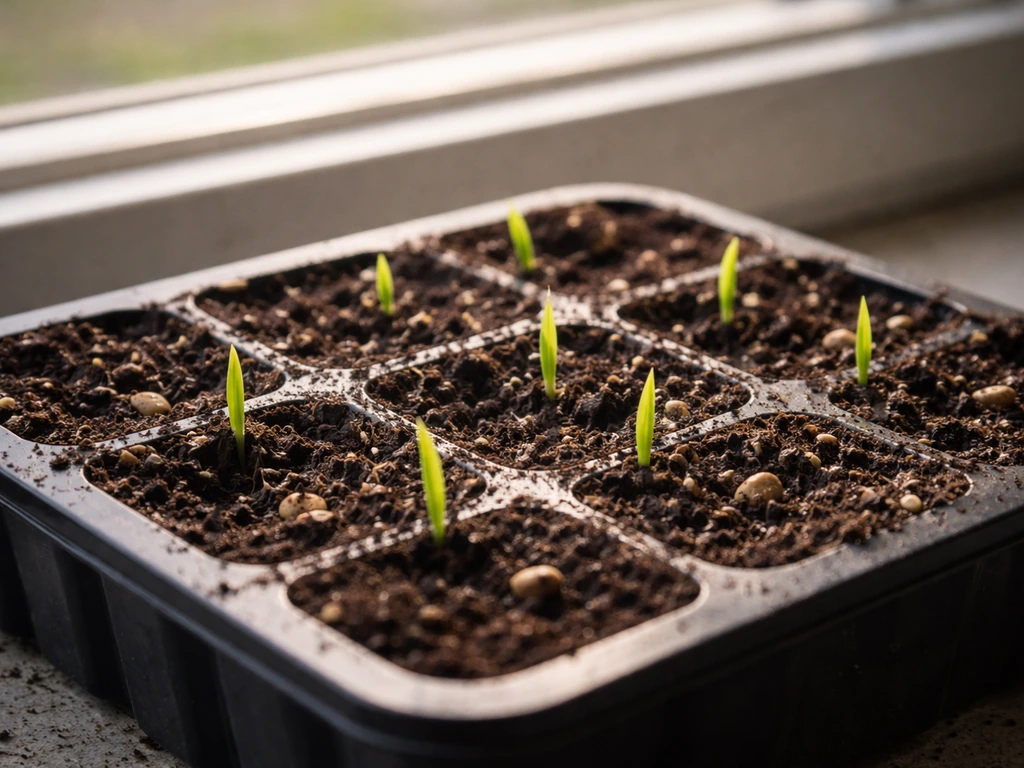
Here is the direct answer: growing a bonsai from seed takes anywhere from 3 to 5 years before you have something you can meaningfully train, and 5 to 10 years before it actually looks like a classic bonsai. Germination alone can take as little as 7 days (fast ficus varieties) or as long as two full winters (most junipers). Everything in between depends on your species, your seed prep, and how you define 'grown.' If you are planning a timeline right now, start with those numbers and then adjust based on the species you are working with.
How Long Does It Take to Grow Bonsai From Seed
Marcus Henley
9 Apr 2026
Baseline timeline: germination to your first trained bonsai
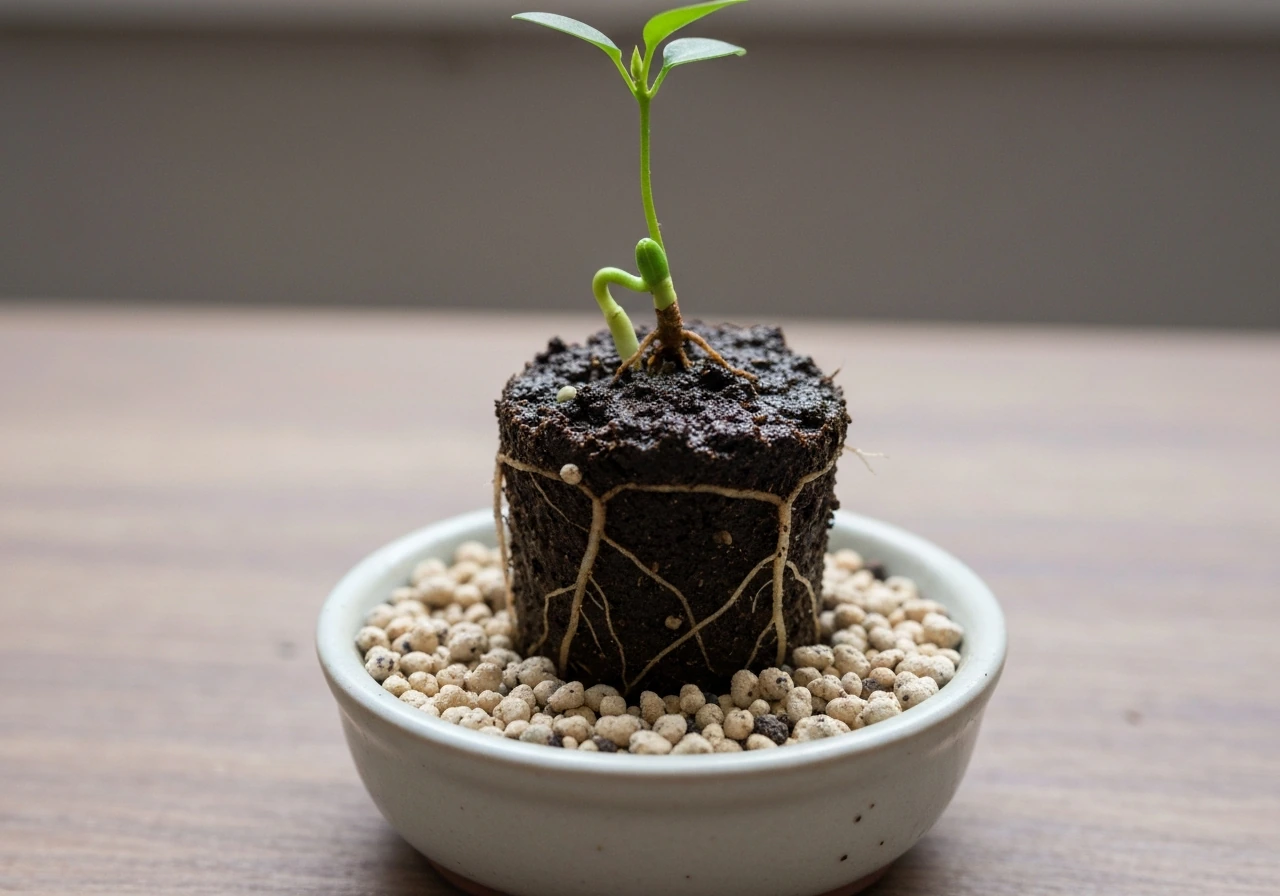
Think of growing bonsai from seed in three distinct phases, each with its own time cost. Phase one is germination, which ranges from about one week to two years depending entirely on species. Phase two is early seedling development, where you are building root mass and trunk girth before any real styling happens. This takes roughly one to three growing seasons. Phase three is the point where the tree starts to look like a bonsai after intentional training, wiring, and pruning. Most growers find that takes at least five years from sowing, and ten years is a more honest estimate for display-quality results.
| Phase | What happens | Typical timeframe |
|---|---|---|
| Germination | Seed sprouts and breaks soil | 7 days to 2 years (species-dependent) |
| Seedling establishment | Root system and first trunk growth develop | 1 to 3 growing seasons |
| Early training begins | First wiring, pruning, potting into bonsai container | Year 3 to 5 from sowing |
| Display-ready bonsai | Classic bonsai form recognizable | Year 5 to 10 from sowing |
Those ranges feel frustratingly wide, but they narrow a lot once you pick a species. A ficus started indoors in spring can have a trainable seedling in three years. A juniper started from untreated seed could still be waiting to germinate in year two. Picking the right species for your patience level is the single most important planning decision you will make.
Species differences and why your bonsai timeline varies
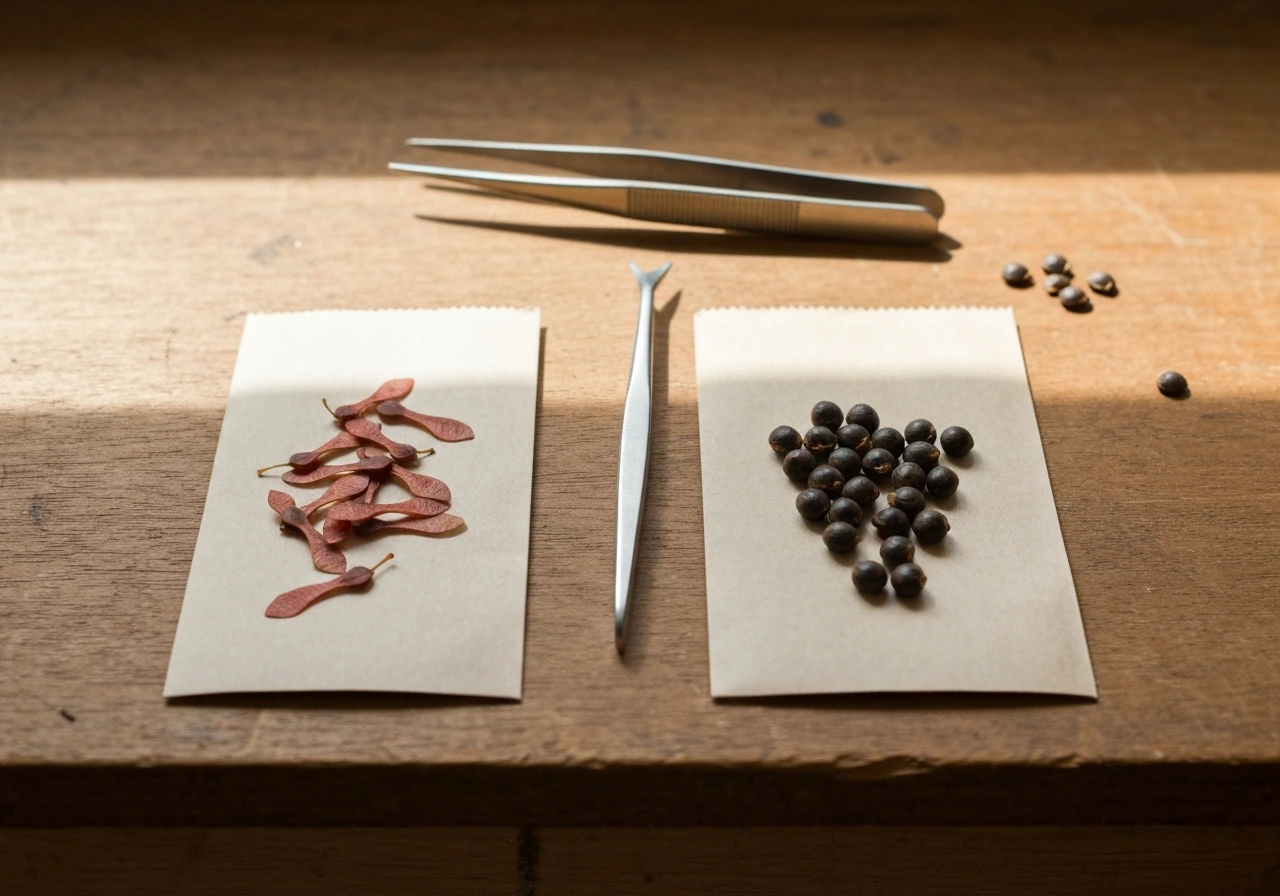
Different bonsai species have genuinely different biological clocks, and knowing your species lets you set accurate expectations from day one. Here is how the most common seed-grown bonsai compare:
| Species | Germination time | Stratification needed | Years to begin training |
|---|---|---|---|
| Ficus (Ficus microcarpa) | 7 to 90 days | None typically | 3 to 4 years |
| Chinese Elm (Ulmus parvifolia) | 2 to 3 weeks | Minimal to none | 3 to 5 years |
| Japanese Black Pine | 2 to 4 weeks (after prep) | Cold stratification 30 to 60 days | 4 to 5 years |
| Japanese Maple (Acer palmatum) | 2 to 4 weeks (after prep) | Cold stratification 60 to 120 days | 4 to 6 years |
| Juniper (Juniperus chinensis) | 3 to 6 weeks (after prep) | Cold stratification 2 to 3 months, sometimes two winters | 5 to 7 years |
| Eastern Juniper (Juniperus virginiana) | Variable | 3 months at 4°C (39°F) | 5 to 8 years |
Ficus is the fastest beginner option. Pure Bonsai lists Ficus microcarpa germination as fast as 7 to 15 days, though Weekand notes it can stretch to 90 days in less-than-ideal conditions. That spread tells you a lot: ficus is forgiving but not magical. Japanese maple is slower to germinate but visually rewarding early, making it popular despite the longer wait. Juniper is the real test of patience. Most juniper seeds take two winters before germination without very specific stratification protocols, which means if you plant untreated seed in spring, you might be waiting until the following spring, or the one after that, to see a sprout.
Long-lived trees that produce impressive bonsai often have long timelines in the wild too. If you want perspective on another slow-developing plant, think about how long it takes to grow a persimmon from seed, which follows a similarly multi-year path before the tree reaches a useful stage. Bonsai just adds the extra layer of intentional aesthetic shaping on top of that base growth.
Seed prep and sowing: dormancy, stratification, temperature, and depth
Most bonsai seed failures happen before the seed ever hits soil. Skipping dormancy-breaking steps is the number one reason seeds sit in trays for months and never sprout. Here is what to do for the main categories:
Cold stratification
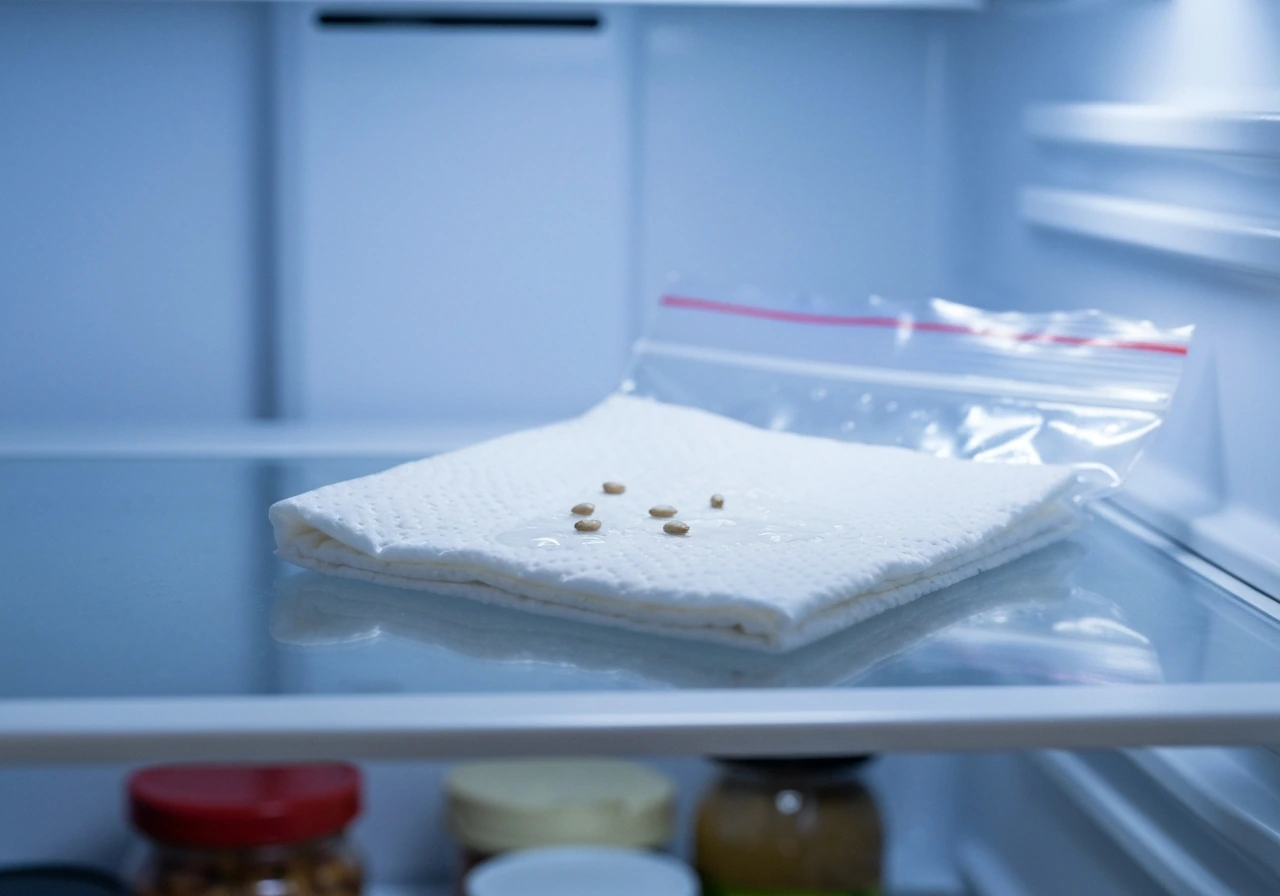
Cold stratification mimics winter. You wrap moist seeds in a damp paper towel inside a zip-lock bag, label it, and put it in the refrigerator at around 4°C (39°F). Japanese maple seeds need 90 to 120 days of this treatment for reliable germination. Japanese black pine needs 30 to 60 days. Chinese juniper needs roughly 2 to 3 months of refrigeration, and Eastern Juniper needs at least 3 months at 4°C. Do not rush these windows. Under-stratified seeds germinate sporadically if at all.
Scarification
Some species have hard seed coats that water cannot penetrate easily. Gentle scarification, either nicking the seed coat lightly with a nail file or soaking in warm water for 24 hours, helps. The USDA Forest Service notes that many juniper species show delayed germination specifically because of hard seed coats and dormant embryos, so scarification before stratification can meaningfully shorten your wait. For most junipers, a 24-hour soak before the cold treatment is recommended as a minimum.
Sowing temperature and depth
After stratification, most bonsai seeds want consistent warmth to germinate, roughly 18 to 24°C (65 to 75°F). Planting depth matters more than most beginners realize: sowing too deep stresses the emerging seedling and dramatically increases failure rates. A general rule is to plant at a depth equal to two to three times the seed's diameter, which for most small bonsai seeds means barely covering them with fine grit or soil. USU Extension's guidance on damping-off specifically warns against planting seed too deep, since the extra effort required by the emerging shoot weakens it and leaves it vulnerable to fungal attack.
From sprout to seedling: what the early maturity stages actually mean for bonsai
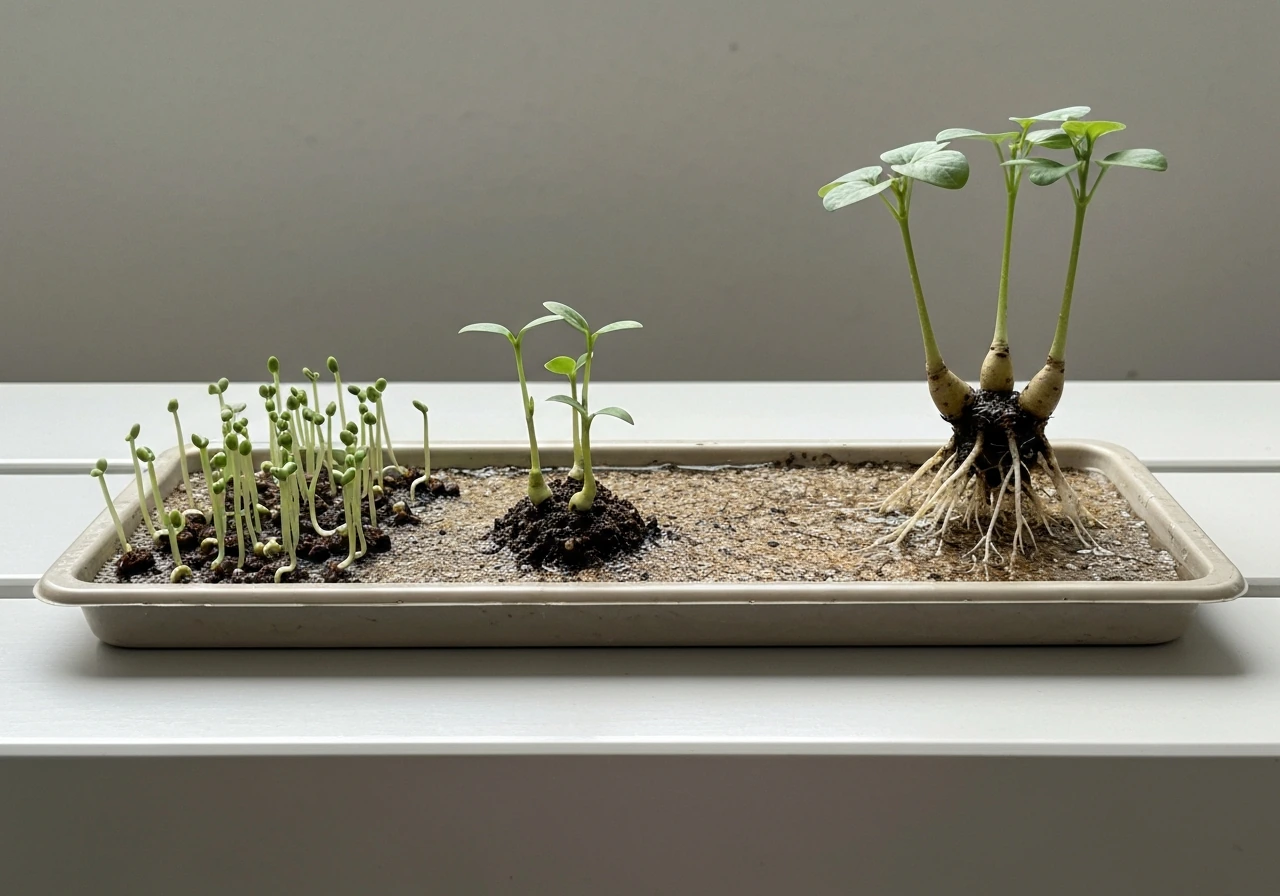
Once your seed germinates, the timeline shifts from days and weeks to seasons and years. The seedling's first job is not to look like a bonsai; it is to build a root system and fatten the trunk. This is where many beginners make their biggest mistake: they rush into a decorative pot too soon, starving the roots and stunting growth that cannot be recovered quickly.
Year one is about survival and establishment. You are growing the seedling in a training container or even in the ground, feeding it well, and letting it put on as much growth as possible. Training, meaning serious wiring and pruning to set the bonsai's future shape, can begin once seedlings are established after that first growing season. But 'beginning training' at year one means very light interventions, like choosing which leader to develop or making one small pruning cut. It does not mean the tree is a bonsai yet.
Years two through five are the trunk-building phase. You want the nebari (surface roots) spreading and the lower trunk thickening. Many serious growers plant seedlings into the ground during this phase to accelerate growth, then dig them up later for bonsai pot work. Back Garden Bonsai describes the first five years as primarily about establishing growth before more advanced shaping and wiring decisions, which is exactly the right way to think about it.
By year five to ten, you have a tree with character and enough trunk mass to start looking like a real bonsai when placed in a shallow pot. Bonsai Garden puts the display-ready window at 5 to 10 years from seed, and that matches what most experienced growers will tell you honestly.
How to speed growth and avoid slow or failed germination
You cannot cheat years off the timeline entirely, but you can avoid losing time to preventable failures. Here are the most effective moves:
- Complete stratification fully: do not pull seeds from the refrigerator early. Under-stratified Japanese maple seeds, for example, may germinate at 30% when the full 90 to 120 day treatment would give you 80%+.
- Use fresh seed: viability drops with storage time and poor storage conditions. Tetrazolium (TZ) staining is a quick biochemical test that assesses live seeds based on dehydrogenase activity in the tissue, and seed labs like Oregon State University's offer this as a standard viability screen if you want to check older stock before committing to a whole season.
- Match temperature to species: warm-climate species like ficus want bottom heat around 21 to 24°C. Cool-climate species like pine do not need bottom heat and can actually stall if kept too warm during germination.
- Keep moisture consistent but not waterlogged: wet, stagnant conditions invite damping-off fungi, which can kill seedlings before they even break the surface or shortly after. Use a well-draining seed mix and water from below when possible.
- Provide light immediately after germination: seedlings that do not get adequate light within days of sprouting become leggy and weak, which slows the whole timeline.
- Start in spring aligned with frost dates: count backward from your last frost date using 30, 60, 90, or 120-day increments depending on your species' stratification needs. This keeps the seedling's first growing season as long as possible.
One thing worth emphasizing: the growth speed difference between a well-fed, well-lit seedling in a training container versus a neglected one in a cramped pot is enormous. It is easy to get frustrated watching a bonsai seedling grow slowly when the real problem is a container that is too small or fertilizer that is too light. Treat your seedling like a normal potted plant in its first two years, and you will be surprised how much faster it gets to a trainable stage.
Troubleshooting delays: common reasons seeds stall or fail
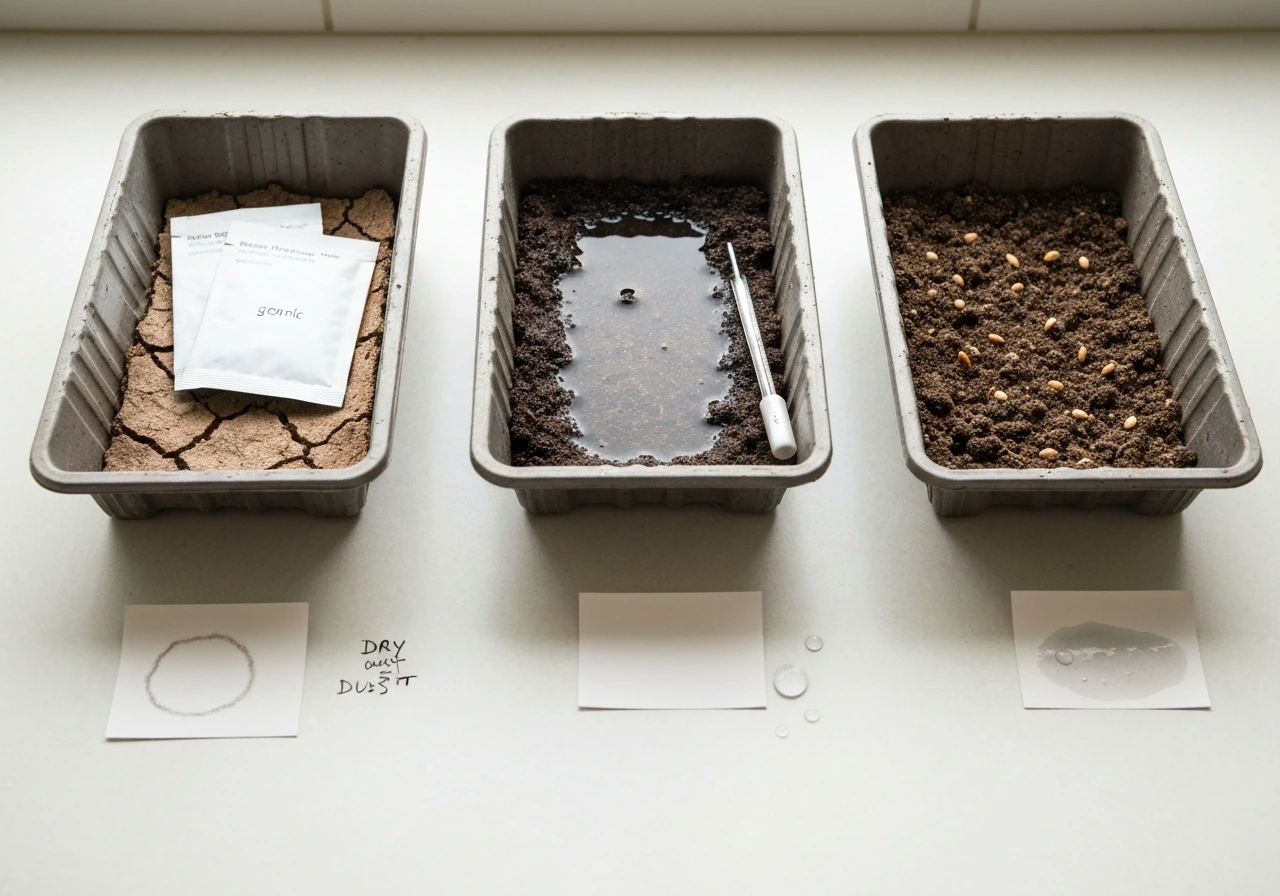
If your seeds have not sprouted and you are past the expected window, here is a systematic way to figure out what went wrong:
- Check whether stratification was complete. Junipers are the most common culprit. If you only gave them one month instead of two to three, put them back in the refrigerator and wait it out. Seeds still in dormancy are not dead.
- Check seed viability. Old seeds stored in warm, humid conditions lose viability fast. If you are unsure, a tetrazolium viability test will tell you within 24 hours whether your seeds are biologically capable of germinating at all, which saves months of pointless waiting.
- Check for damping-off. If seeds sprouted and then collapsed at the soil line, or disappeared entirely after emergence, damping-off fungi are almost certainly the cause. This happens when soil stays too wet, especially in poor-draining mixes. The fix is to start fresh with sterile seed-starting mix, reduce watering frequency, and improve airflow.
- Check your temperature. Seeds in conditions that are too cold (below 15°C for most species) will simply sit dormant rather than germinate. A basic seedling heat mat costs very little and solves this immediately.
- Check sowing depth. Seeds buried more than a centimeter deep often exhaust their energy reserves before breaking the surface. If you suspect this, carefully surface-sow a few replacement seeds in the same tray.
- Check for pests. Fungus gnats lay eggs in moist seed-starting mix, and their larvae eat germinating seeds and young roots. Yellow sticky traps confirm gnat presence quickly.
One reassurance worth offering: germination delay is not the same as germination failure, especially for dormant species. Juniper seeds that have been properly stratified and then placed in a warm spot outdoors can sit for weeks before the first sprout appears. The USDA Forest Service specifically notes that many juniper species show delayed germination due to dormant embryos, and outdoor stratification over winter in sand is one way experienced growers handle this. Do not give up at week three if your expected window extends to six weeks.
Estimating your timeline and planning your calendar
The most practical thing you can do today is count backward from your last frost date. If you are in a zone with a May 1 last frost date and you are growing Japanese maple, you need seeds in cold stratification by early January (120 days back) to sow them just after frost. If you are growing Chinese elm, which needs minimal stratification, you can start much closer to your sowing date. This count-back method works for any species once you know the stratification window.
For your full multi-year calendar, the simplest framework is: year zero is seed prep and germination, year one is establishment and first light training decisions, years two through four are growth and trunk development, and year five onward is where you start making real bonsai aesthetic choices. If you want to short-circuit years off this process, buying a pre-grown nursery stock or collected tree skips the seed phase entirely. But if you are committed to seed, that five-to-ten year window is honest and worth committing to.
Some growers get impatient with slow-growing bonsai subjects and find it useful to also tend faster-maturing plants alongside them to keep the gardening motivation high. If that sounds like you, learning how long it takes to grow zucchini from seed gives you something that goes from seed to harvest in under 60 days, a satisfying contrast to the bonsai waiting game.
Another thing worth planning: not every seed germinates, even with perfect technique. Sow more seeds than you need. For species with lower germination rates like juniper, sow two to three times as many as your target number of seedlings. For higher-germinating species like ficus or Chinese elm, one and a half times your target number is usually enough. Having extras at the seedling stage lets you select the healthiest specimens for training and gives you insurance against losses.
Finally, think about species selection in terms of your climate and space. If you are growing outdoors in a temperate climate, pines, maples, and junipers are natural fits. If you are growing indoors or in a tropical climate, ficus and Chinese elm handle warmth well. Matching the species to your environment removes one of the biggest variables from your timeline and sets you up for the best possible germination and growth rates.
Other long-term seed projects like learning how long it takes to grow grapes from seed or understanding how long it takes to grow dates from seed share this same principle: matching plant to place dramatically improves outcomes. With bonsai, getting that match right from day one is especially important because the investment of time is so long.
If you want a rough rule of thumb to walk away with: expect one to three months for germination (more for juniper), three to five years for a trainable seedling, and five to ten years for a bonsai that earns the name. Do the seed prep correctly, do not rush the early growth phase, and the timeline takes care of itself. The trees that make the most impressive bonsai are almost always the ones that were not hurried.
Some growers find it helpful to compare the patience required for bonsai against other long-timeline seed projects. Consider how long bamboo takes to grow from seed, which has its own notoriously slow establishment phase, or the multi-year commitment involved when you explore how long it takes to grow a bean seed all the way to a mature crop. Bonsai sits at the far end of the patience spectrum, but understanding that seed-to-maturity timelines vary enormously across all plants puts that commitment in better perspective.
FAQ
If I already have sprouted seeds, how long until my tree is actually “bonsai”?
Once you see true seedlings with healthy growth, you are usually in the early establishment window. In most cases, plan on about 3 to 5 more years before you can do meaningful training, and roughly 5 to 10 years total from sowing before it has the proportion and trunk mass people expect in a traditional bonsai.
Why does one seed packet give different germination timing than my neighbor’s experience?
Because germination timing is heavily affected by dormancy treatment quality, temperature stability, and seed age. A packet that was stored cool and dry, plus proper stratification, can germinate faster than seed that sat warm, dried out unevenly, or received too short a cold period.
What should I do if my seeds are sprouting but the seedlings look weak or leggy?
Leggy growth usually means light is too low, not that the tree is “failing.” Increase light gradually and keep seedlings in a container that allows robust root expansion, avoid early decorative potting, and use gentle, consistent watering to prevent drought stress.
Can I shorten the timeline by using a nursery starter instead of seed?
Yes, but only by skipping the germination and early root-building stages. Nursery stock still needs trunk thickening and nebari development for years, so it does not create a true instant bonsai, it mainly reduces the “waiting for sprouts” period.
Should I stratify indoors in a fridge, or can I stratify outdoors instead?
Either can work, but outdoor stratification depends on reliable winter conditions and protection from pests and extreme temperature swings. If your winters are mild, variable, or you cannot protect the seeds well, fridge stratification at controlled temperatures usually gives more consistent results.
How deep should I sow bonsai seeds to avoid the common planting mistake?
Most small bonsai seeds should be barely covered. A practical starting point is about 2 to 3 times the seed diameter, then keep the surface lightly covered with fine grit or soil, overly deep planting reduces emergence and increases damping-off risk.
My juniper seeds are not sprouting, is it too late to try again?
Often it is not. Juniper commonly takes multiple winters, especially if stratification was incomplete or seeds were not scarified. If you are within a reasonable extended window for your treatment, keep them in the right conditions and avoid repeatedly drying them out during the wait.
How many seeds should I sow if I do not know the germination rate?
Sow extra for insurance. For species with lower germination rates like many junipers, start with about 2 to 3 times the number of seedlings you want. For higher germinating species like ficus or Chinese elm, 1.5 times is usually enough.
When is the right time to start pruning and wiring on seed-grown bonsai?
Do not begin full styling immediately after sprouting. Light training can begin once seedlings are established after the first growing season, focus on selecting a leader and making minimal cuts, then increase intensity after you have enough trunk growth to tolerate the changes.
Will growing bonsai from seed work the same indoors versus outdoors?
Not exactly. Outdoors generally helps many temperate species with natural seasonal cues, stronger light, and year-round root growth. Indoors can work for heat-tolerant species like ficus, but you may need more controlled temperature, extra lighting, and careful protection from temperature swings.
Next Article
How Long Does It Take Bamboo to Grow From Seed?
Get real timelines for bamboo from seed: sprouting days, seedling weeks, and when it reaches plantable size.