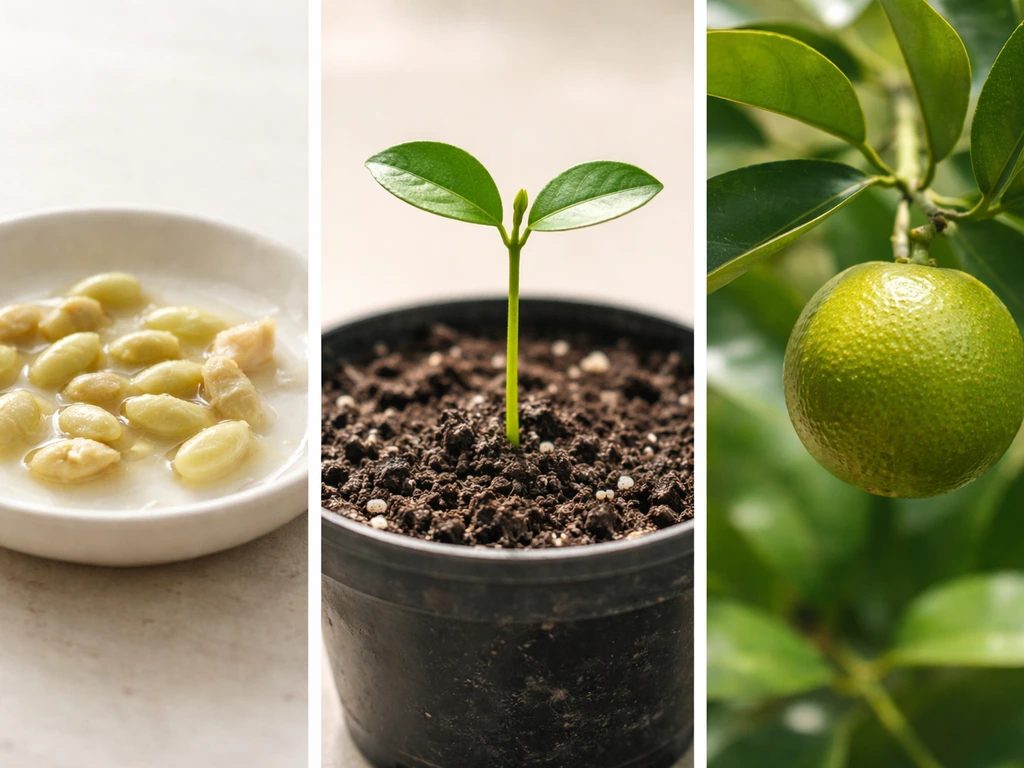
Most palm seeds germinate somewhere between 4 weeks and 6 months after sowing, depending heavily on species, seed freshness, and the temperature you keep them at. At a warm 85°F (29°C), a fast-germinating species like Washingtonia robusta can sprout in 4 to 8 weeks. Slower species, older seeds, or cooler conditions can push that to 3 to 6 months, and some palms are notoriously unpredictable even under ideal conditions. Once you have a sprout, expect another 6 to 12 months before the seedling looks like anything you'd recognize as a palm, and several years before it develops a proper trunk. Plan for a long game, but the good news is that getting seeds to actually germinate is very doable if you nail a few key conditions.
How Long to Grow a Palm Tree From Seed: Timeline and Tips
Marcus Henley
29 Apr 2026
What the timeline actually looks like, start to finish
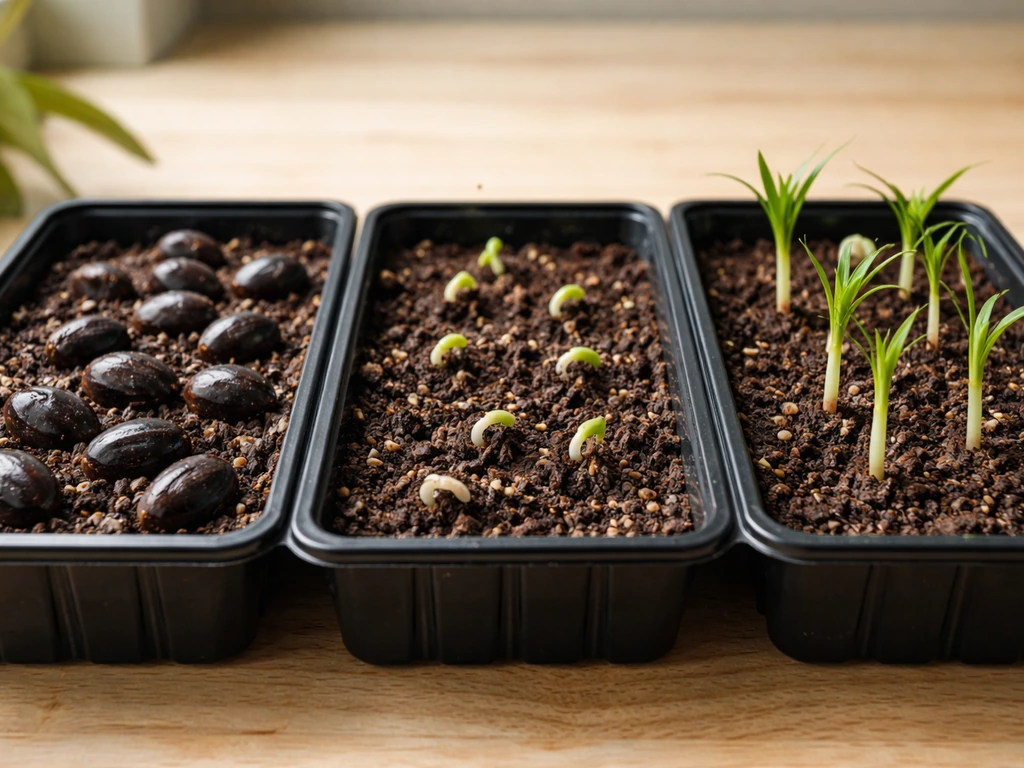
It helps to break the process into distinct phases so you know what to expect at each stage, rather than staring at a pot wondering if anything is happening.
| Stage | Typical Timeframe | What You'll See |
|---|---|---|
| Germination (sprout emerges) | 4–8 weeks (fast species, 85°F) / 3–6 months (slow species or cooler temps) | A small white or pale green sprout pushing up from the medium |
| First leaf emergence | 2–6 weeks after germination | A single strap-like or spear-shaped leaf (not yet a fan or feather shape) |
| Seedling looks like a palm | 6–18 months after germination | First pinnate or palmate leaves appear depending on species |
| Ready to pot outdoors or harden off | 1–2 years after germination | Multiple leaves, established root system |
| Recognizable young palm (small trunk or caudex) | 3–10+ years | Species-dependent; slow growers like Bismarck can take a decade |
Temperature is the single biggest lever you control. UF/IFAS research documents this clearly: one species took roughly blank" rel="noopener noreferrer">90 days to germinate at 77°F, 120 days at 59°F, and 150 days at 41°F. That's not a small difference. Keeping your germination setup warm is genuinely the most impactful thing you can do. For bottom-heat systems specifically, UF/IFAS notes that the effective temperature maintained is commonly in the 75 to 85°F (24 to 30°C) range blank" rel="noopener noreferrer">bottom-heat systems commonly keep an effective temperature of 75 to 85°F (24 to 30°C). If you're comparing this to growing something like a lime tree or olive tree from seed, which also require patience, palms are in a similar long-term category but front-load the challenge in the germination phase rather than the growing phase. If you're wondering how long to grow a lime tree from seed, the timing will be different from palms, but the early patience and careful germination conditions still matter growing something like a lime tree or olive tree from seed.
Why some palm seeds take forever (and others don't)
Palm seeds vary more than almost any other plant group. Species is the biggest factor: Washingtonia and Chamaedorea are relatively cooperative; Bismarck palms, double coconuts (Lodoicea), and many rare feather palms can take 6 to 18 months under the best conditions. Beyond species, here's what else drives the timeline.
- Seed freshness: This is huge. Palm seeds lose viability fast. Some species start losing viability within 3 to 6 weeks of harvest if they dry out. Chamaedorea seeds in particular can lose roughly 10% or more of their viability per month in storage. If you bought seeds from a mystery online listing with no harvest date, expect variable results.
- Hard or impermeable seed coats: Some palm seeds have coats that are physically impermeable to both water and air. Until that coat is breached, nothing is happening inside the seed. This is where pre-treatment earns its keep.
- Seed dormancy: Palm seeds can have true dormancy, meaning even a viable, fresh seed won't germinate until specific conditions trigger it. Some species need sustained warmth over weeks before the internal clock starts.
- Temperature: As covered above, cooler temps dramatically extend germination time. This isn't just about comfort for the seed; it's a near-linear relationship between warmth and germination speed.
- Moisture balance: Too wet causes rot before germination. Too dry halts the process entirely. The sweet spot is consistently moist but never waterlogged.
- Fungal inhibitors in the fruit wall: The fleshy fruit around many palm seeds contains germination inhibitors. If you sow the seed without removing and fermenting off that fruit flesh, it can actively suppress germination.
How to prep your seeds before sowing
Skipping this step is probably the most common reason people get poor germination rates. Palm seeds almost always need some form of pre-treatment. Here's what to do based on what you have.
Remove fruit flesh first
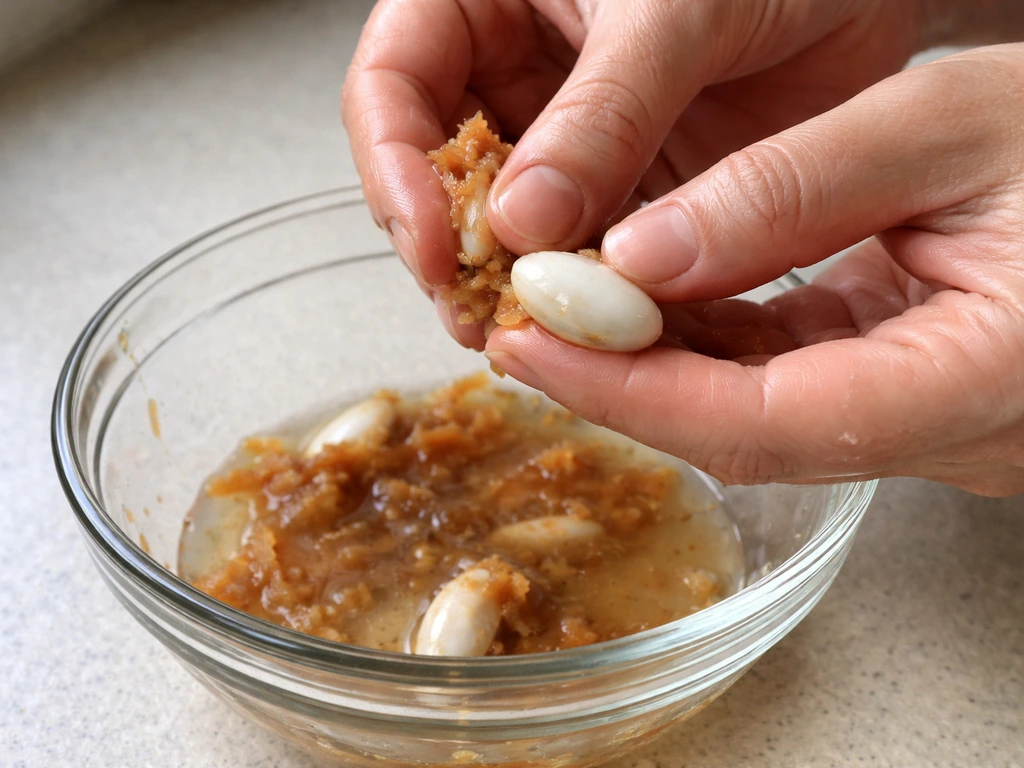
If your seeds still have fleshy fruit attached, soak them in water for several days to ferment and soften that outer layer, then scrub it off completely. This isn't optional: the fruit wall contains compounds that inhibit germination, and leaving it on is a reliable way to fail. Wear gloves if the pulp irritates your skin.
Soak cleaned seeds in warm water
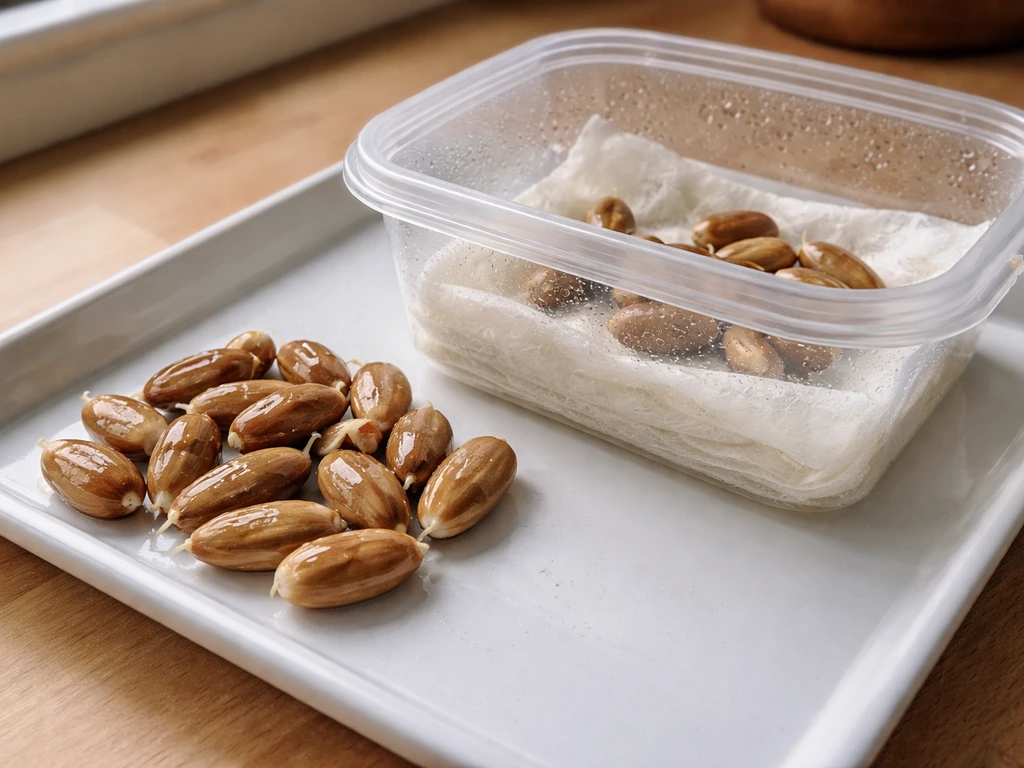
Once cleaned, soak seeds in room-temperature water for 24 to 48 hours before sowing. This softens the seed coat and begins the hydration process that triggers germination. Change the water once or twice during the soak. For hard-coated species, this soak also leaches out any remaining chemical inhibitors. For Washingtonia robusta specifically, a 24 to 48 hour soak in room-temperature water is standard practice before sowing.
Scarification for extra-hard coats
A few palm species have coats that are genuinely impermeable even after soaking. For these, light scarification helps: gently nick or sand the seed coat (away from the embryo end) before soaking. You're not trying to damage the seed, just create a pathway for water to enter. When in doubt, soak first and see if the seed swells noticeably after 48 hours. If it doesn't swell at all, light scarification before a second soak is worth trying.
Optional sanitation step
Some growers do a brief rinse with a very dilute bleach solution (1 part bleach to 10 parts water for a few minutes, then rinse thoroughly) before sowing to reduce surface mold and fungal issues. This is especially worth doing if you're working with seeds from an unknown source or in a humid environment. Don't overdo it; an overly aggressive bleach treatment can damage the seed.
Setting up your germination container, step by step
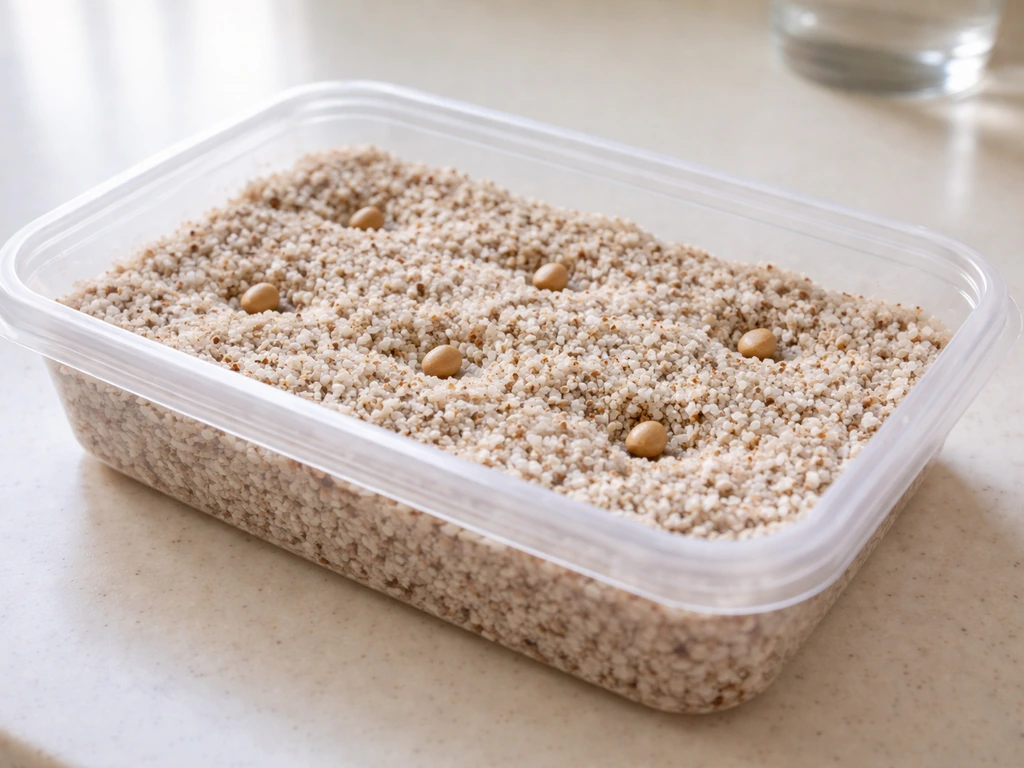
Getting the setup right matters more than any trick or shortcut. Here's how to do it properly.
- Choose your germination medium: Use a well-draining, well-aerated mix. A good option is coarse perlite mixed with a small amount of peat or coco coir. You want roughly 10 to 15% air space and 30 to 40% water-holding capacity by volume. Avoid heavy potting soil that holds too much water and starves roots of oxygen.
- Fill a container with drainage holes: A shallow tray or individual 4-inch pots work well. Make sure water can escape freely. Standing water is the enemy.
- Set sowing depth: Bury each seed to about half its diameter, not deeper. Cover with a thin layer of finely screened material (3 to 6 mm particle size), like fine perlite or sifted cinder. Sowing depth also interacts with light: seeds sown under brighter light conditions can handle slightly shallower placement.
- Water thoroughly but gently: After sowing, water until the medium is evenly moist throughout. Then don't water again until the surface starts to dry slightly. You want consistent moisture, not saturation.
- Set your temperature: This is critical. Aim for 85 to 90°F (29 to 32°C) in the germination medium itself, not just the ambient air. Use a seedling heat mat with a thermostat probe placed in the medium. At 90°F, some nurseries accelerate Chamaedorea germination significantly. Below 70°F, you're in trouble.
- Cover for humidity: Place a clear plastic dome or bag loosely over the container to maintain humidity. Check every few days and ventilate briefly to prevent mold buildup.
- Location and light: Bright indirect light is ideal. Direct sun can overheat the medium. Some growers germinate in complete darkness with good results since many palm seeds germinate underground naturally. Once the sprout emerges, move to bright indirect light immediately.
After the sprout appears: potting up and early care
Seeing that first sprout is genuinely exciting, but this is also a vulnerable stage. For calamansi, you can expect a similar pace where the real timing challenge is getting the seed to sprout, then waiting through the early seedling stage After the sprout appears. Here's how to handle the next phase without losing the seedling you just worked months to produce.
When to pot up
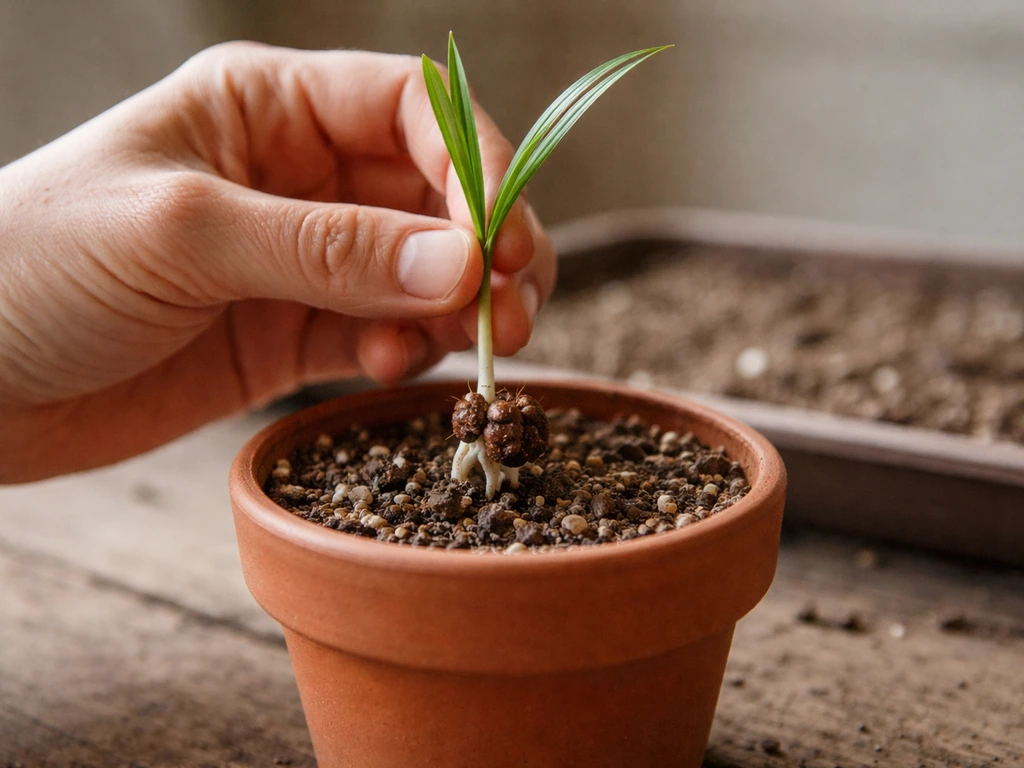
Wait until the seedling has produced at least one clearly developed leaf before moving it out of the germination setup. Palm seedlings often have a structure called a haustorium that stays inside the seed while the first root and leaf emerge, so the seed itself may look attached for weeks. That's normal. Don't try to separate the seedling from the seed prematurely.
Potting mix and container
Move seedlings into individual containers with the same type of well-draining mix you used for germination. After potting up, applying a broad-spectrum fungicide drench is a good precaution to prevent the root rot that commonly kills seedlings at this stage. Use a 4 to 6 inch pot to start; palms don't need a lot of root space early on.
Fertilizing
Hold off on fertilizer for the first 2 to 3 months after germination. The seed itself contains stored nutrients that feed the seedling during this window, and adding fertilizer early can actually stress the roots. After that window, switch to a slow-release palm fertilizer with micronutrients, applied at half the recommended rate to start.
Growth rate expectations once established
After the first leaf, growth is slow but steady. Most palm seedlings produce one new leaf every 4 to 8 weeks in their first year under good indoor conditions. Cantaloupe, by comparison, is much quicker, so if you're planning a garden, you'll want to know how long it takes cantaloupe to grow from seed once you sow. Don't panic if a seedling sits unchanged for weeks then suddenly pushes a new leaf. The palm is establishing its root system first, which doesn't show above the soil. By the end of year one, a healthy seedling might have 3 to 5 leaves and look like an interesting grass or small plant. It won't look like a palm yet. By year two or three, pinnate or palmate leaf forms start to emerge, and the plant starts to feel like what you imagined when you planted the seed.
When nothing is happening: troubleshooting stalled or failed germination
Palm seeds are notorious for testing your patience. Before you give up, work through these common failure modes.
| Problem | Likely Cause | What To Do |
|---|---|---|
| No germination after 8+ weeks | Temperature too low or seeds too old | Check medium temp with a probe thermometer; increase heat to 85–90°F; test seed viability by floating in water (sinkers are more likely viable) |
| Seeds rotting before sprouting | Overwatering or fungal contamination | Reduce watering frequency; improve drainage; consider a light fungicide application to the medium surface |
| White mold on medium surface | High humidity with poor airflow | Ventilate the dome daily; lightly scrape off mold; reduce moisture slightly |
| Seeds germinating but seedlings dying | Fungal damping-off | Drench with a broad-spectrum fungicide; ensure good airflow around seedlings |
| No germination from purchased seeds | Seeds were stored too long or dried out | Check harvest date if available; pre-soak for longer (72 hours); try scarification; accept that old seeds may not recover |
| Uneven germination (some sprout, some don't) | Normal species variability or mixed seed lot quality | Continue waiting; palm germination within a single pot can spread over weeks or months |
One important note on fungicides: research suggests that keeping seeds continuously coated in fungicide can actually reduce germination in some palm species. Use fungicides as targeted treatments for visible problems, not as a preventative coating applied at sowing.
Planning around the calendar: indoor vs outdoor growing
Seasonality matters a lot if you're in a temperate climate, and less so if you're in a warm zone or starting seeds entirely indoors with heat mats.
If you're in a warm climate (zones 9–11)
Sow during the warmer months, typically April through August in the Northern Hemisphere, when ambient temperatures support germination without supplemental heat. You can germinate outdoors in a shaded spot or in a greenhouse. Avoid sowing in late fall or winter when ground temperatures drop; you'll get dramatically slower germination or failure, as the temperature data makes clear.
If you're in a cooler climate or growing indoors
You can start palm seeds year-round indoors if you use a heat mat. This is the approach I'd recommend for anyone outside of warm coastal climates. A heat mat set to 85 to 90°F under a clear dome essentially eliminates the seasonal constraint. Germinate indoors, keep the seedling inside for at least the first full year, then harden it off gradually before any outdoor transition. Hardening off means progressively longer periods outside over 2 to 3 weeks, starting with shade and sheltered spots, before full outdoor placement.
The indoor vs outdoor long-term question
Many palm species are tropical or subtropical and won't survive frost. If your goal is an outdoor specimen, match the species to your climate before you invest months in germination. Cold-tolerant species like Trachycarpus fortunei (windmill palm) or Sabal minor can handle frost once established, but they still need indoor starts in cold climates. Tender species like Roystonea or Bismarckia need warm climates or large heated spaces long-term. Growing from seed is a years-long commitment, so choosing the right species for your conditions is the most important decision you make before touching a seed packet.
Your action checklist for starting today
If you have seeds in hand right now, here's exactly what to do in sequence. If you are working with citronella, the timeline is different from palms, so check how long to grow citronella from seed before you start.
- Check seed freshness: If you don't know the harvest date, try a float test and inspect for any softness or mold. Old or dried-out seeds have much lower viability.
- Remove any fruit flesh by soaking whole fruits in water for 3 to 5 days, then scrubbing clean.
- Soak cleaned seeds in room-temperature water for 24 to 48 hours, changing the water once.
- Optionally do a brief dilute bleach rinse (1: 10 bleach to water, 5 minutes, then rinse well) for sanitation.
- Prepare a germination container with a well-draining mix of coarse perlite and coco coir, with drainage holes.
- Sow seeds at half their diameter depth, cover with a thin fine-screened layer.
- Water evenly, cover with a clear dome, and place on a heat mat set to 85–90°F.
- Check every 3 to 4 days for moisture, mold, and emergence. Ventilate briefly each check.
- Wait: expect the first sprouts between 4 weeks and 6 months depending on species and seed quality.
- Once a leaf has developed, pot up into individual containers and apply a fungicide drench.
- Hold off on fertilizer for the first 2 to 3 months, then begin a dilute slow-release palm fertilizer.
FAQ
How long should I wait before I assume a palm seed will never germinate?
Use a two-step check. First, wait past the typical range for your species under your temperature (some can take 6 to 18 months). Second, inspect for swelling after soaking, and do not open the seed unless you see clear mold or damage. If the seed never swells after 48 hours of soaking (after any light scarification attempt), it is less likely to germinate, but you can still extend the timeline for slow species.
Do palm seeds need light or darkness to germinate?
Most palm germination is managed by temperature and moisture, not light. Keep them in a dim or indirect-light setup and focus on stable warmth, even moisture, and clean conditions. If you are using a dome, ventilate briefly so condensation does not drip onto the seeds.
What moisture level is best during germination, not too wet and not too dry?
Aim for a consistently damp medium or damp seed-on-medium setup, not standing water. Excess water reduces oxygen around the seed and can increase rot risk. If your dome is sealing, check daily and wipe away pooled condensation.
Should I let the seed stay in the germination container after the first sprout appears?
Yes. Wait until the seedling has at least one clearly developed leaf before potting up. The remaining seed (including the haustorium structure) often stays attached for weeks, and separating it early can stall growth or increase disease.
Can I use soil directly for germination, or is a different setup better?
A germination medium that drains well and stays evenly moist is usually safer than dense potting soil. Dense, slow-draining media can trap water around the seed. If you use potting mix, keep it light and avoid compressing the medium in the container.
Is it safe to speed up germination by increasing temperature above 90°F?
Higher warmth can speed some species, but pushing far beyond the warm target can also stress seeds or increase mold. If you use a heat mat, keep the setup in a controlled range (around 85 to 90°F for many setups) and monitor daily, especially with a clear dome that can overheat.
How do I prevent fungus or mold if my seeds are taking a long time to sprout?
Increase airflow and avoid waterlogged conditions first, because constant wetness is the main driver of mold. If you do use fungicide, keep it targeted to visible issues rather than coating seeds continuously, since preventative coating can reduce germination in some palms. Remove any seeds that show foul odor or heavy rot to protect the rest.
Should I remove the fruit pulp completely, or is partial removal okay?
Remove it fully if fleshy fruit is attached. Even small amounts of pulp and the fruit wall compounds can inhibit germination. If the pulp is stubborn, soaking and softening, then scrubbing with gloves, is more reliable than trying to scrape it dry.
When should I start feeding a palm seedling after it sprouts?
Hold off on fertilizer for the first 2 to 3 months after germination. The stored energy in the seed supports early growth, and early fertilizing can stress roots. After that, switch to slow-release fertilizer with micronutrients, start at half strength, then increase only if growth is steady.
If my palm hasn’t produced a new leaf in weeks, does that mean it failed?
Not necessarily. In many cases the seedling is building roots underground first. If the seedling looks firm, is not collapsing, and the medium remains healthy, you can wait longer before concluding failure. Sudden leaf emergence after a dormant stretch is common.
Can I germinate palm seeds outdoors instead of indoors?
Yes, but only if ambient temperatures stay warm enough and consistently. In temperate regions, late fall and winter sowings often fail or become extremely slow because ground temperatures drop. A shaded outdoor spot or greenhouse can work, but indoor heat mats are more dependable for year-round starting.
How do I transplant seedlings without damaging the roots at the haustorium stage?
Keep the seedling intact, pot it up with the same type of well-draining mix, and avoid separating the seed too early. Use a small starting pot (about 4 to 6 inches) and keep watering gentle during the first couple of weeks so the young root system can re-establish.
What potting mix drains well for palm seedlings, and what should I avoid?
Use a well-draining mix and avoid anything that stays soggy, like heavy garden soil or fine peat-based mixes without added drainage. Poor drainage increases root rot risk, especially in the early stage after potting up.
Next Article
How Long to Grow Calamansi From Seeds to Fruit
Seed-to-seedling and fruit timing for calamansi, with realistic ranges, what affects it, and how to speed growth