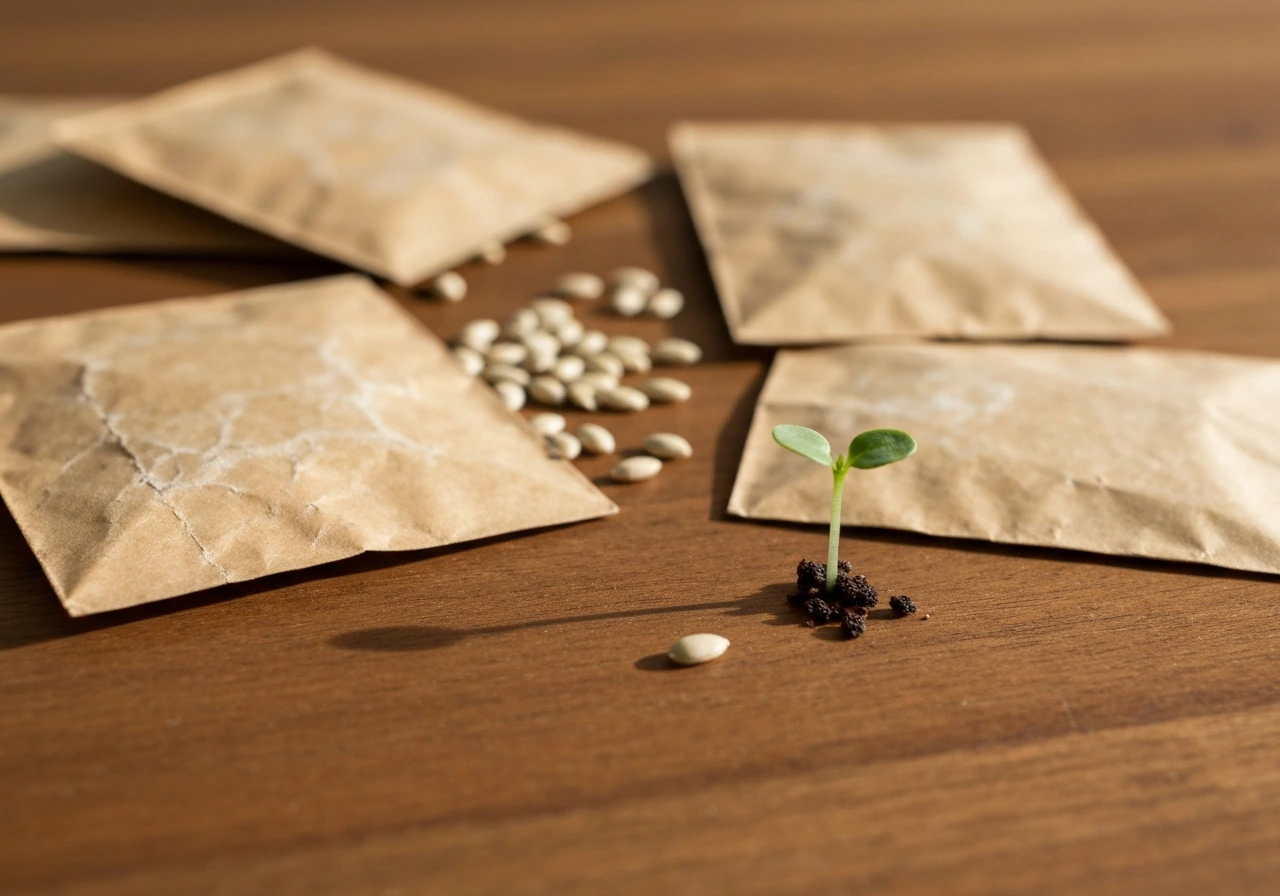
Winter seeds typically take anywhere from 7 to 90 days to germinate, depending on the plant type and whether they need cold stratification first. From there, add another 3 to 10 weeks to reach transplant size, and then weeks to months more before you're actually harvesting or seeing flowers. That range sounds frustratingly wide, but once you understand which category your seeds fall into, the timeline gets a lot more predictable. Here's how to think through it.
How Long Do Winter Seeds Take to Grow: Timelines & Tips
Marcus Henley
14 Apr 2026
Quick answer: what to expect from your winter seeds
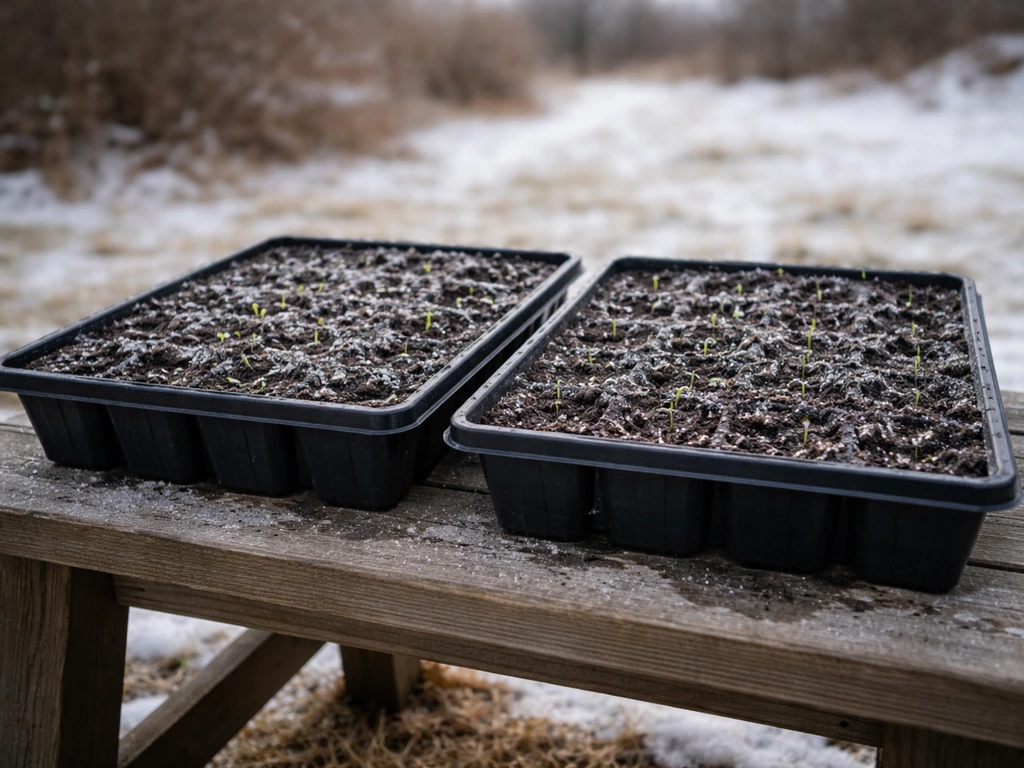
If you sowed seeds this past winter and are wondering when things should happen, here are the realistic ranges for the most common situations:
| Plant Type | Days to Germinate | Weeks to Transplant Size | Weeks/Months to Harvest or Flower |
|---|---|---|---|
| Lettuce | 2–8 days (optimum); up to 14+ days in cold soil | 3–5 weeks | 6–8 weeks from transplant |
| Spinach | 7–14 days | 4–6 weeks | 6–8 weeks from transplant |
| Kale | 4–7 days (optimum); slower in cold | 4–5 weeks | 7–9 weeks from transplant |
| Onion (dry seed) | 4–5 days (optimum); 10–14 days in cool soil | 10–12 weeks | 18–20 weeks from transplant |
| Peas | 7–14 days in cool soil | Direct sow (no transplant) | 10–12 weeks from sowing |
| Carrot | 6–10 days (optimum); may stall in cold | Direct sow (no transplant) | 10–14 weeks from sowing |
| Parsley | 14–28 days (slow even at optimum) | 5–6 weeks | 10–12 weeks from transplant |
| Hardy perennial flowers (e.g., coneflower, columbine) | 21–60+ days after cold period ends | 6–8 weeks | Flowers in first or second season |
| Native grasses (cold-stratified) | 30–90 days after stratification | 8–12 weeks | Full establishment in 1–2 seasons |
These are real-world ranges, not best-case-scenario numbers. In my experience, timing skews toward the longer end when soil is still cold, moisture is inconsistent, or seeds are older than two years.
What "winter seeds" actually means (and why it matters for timing)
The term "winter seeds" covers two pretty different situations, and mixing them up is one of the most common reasons growers are frustrated with slow results.
Hardy seeds sown in winter
These are seeds from cool-season crops like lettuce, kale, spinach, peas, and certain herbs. They can tolerate frost and will germinate once soil temperature rises above their minimum threshold. You're not trying to germinate them in frozen ground. You're sowing them in late fall or late winter, letting them sit dormant through the coldest stretch, and allowing them to sprout naturally as temperatures creep up.
Penn State Extension describes this approach as creating a "miniature outdoor greenhouse" effect, where the cold exposure happens naturally and the seeds germinate on their own schedule. University of Missouri Extension calls it starting seeds in late winter for spring transplanting, and they emphasize writing your sow date on every container so you can actually track how long things are taking.
Seeds that require cold stratification
These are a different beast entirely. Many perennial flowers, native grasses, shrubs, and tree seeds have a dormancy mechanism that prevents germination until they've experienced a sustained period of cold and moisture. This mimics winter in nature. Without that cold period, they simply won't sprout, no matter how good your conditions are. SDSU Extension points out that the need for cold stratification is often indicated on the seed packet via a germination code, so check your packet before assuming something has failed. If a seed packet says "needs pre-chilling," "requires stratification," or "seedlings can withstand frost," you're dealing with a cold-stratification crop. The germination clock doesn't even start until that cold requirement is satisfied.
Germination and seedling timelines by plant type
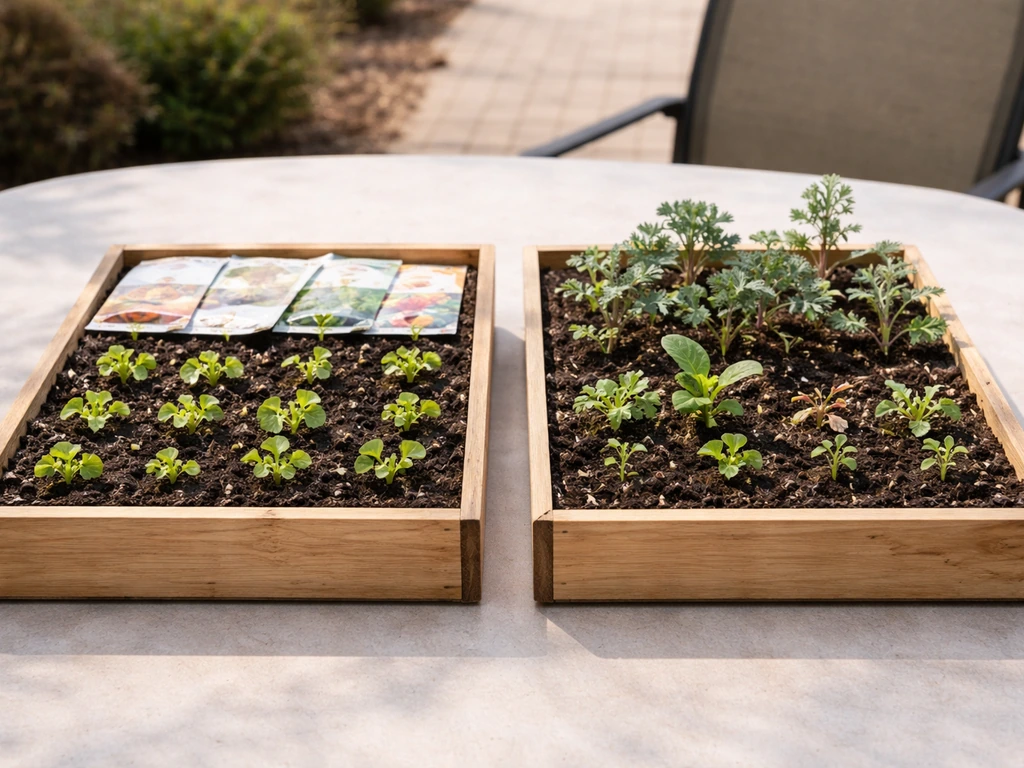
Extension services across the country organize timing into two distinct phases: time from seeding to germination (measured in days) and time from germination to transplanting (measured in weeks). That's the framework I use too because it makes scheduling much more concrete.
Cool-season vegetables
Lettuce is one of the fastest. Under optimum conditions (soil temps around 50 to 65°F), it germinates in 2 to 8 days and reaches transplant size in 3 to 5 weeks. Kale comes in at 4 days under optimum conditions. Onions are much slower, taking 4 to 5 days to germinate under ideal warmth, but requiring 10 to 12 weeks to reach transplant size, which is why experienced growers start onions indoors in late December or January for spring planting. Parsley is the laggard of the group, taking 14 to 28 days to germinate even at good temperatures, and it's infamous for sitting there doing nothing for three weeks before finally showing up.
Direct-sow crops (peas, carrots, spinach)
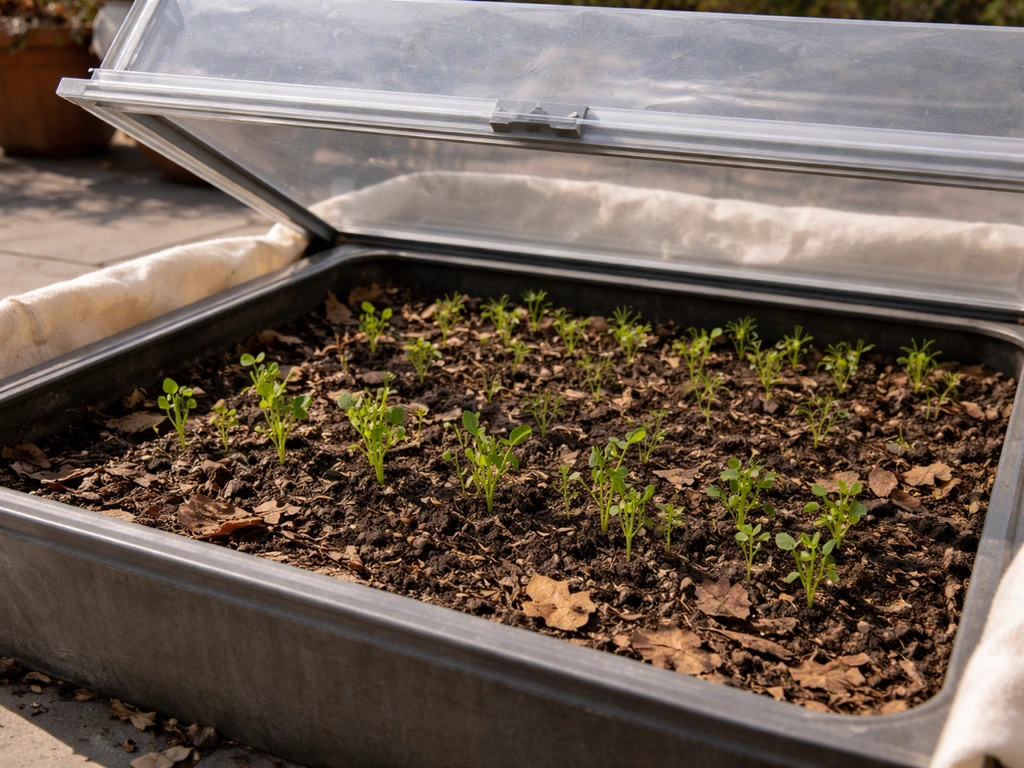
Peas and carrots don't transplant well, so you're looking at days to germination plus the full growing period all in one stretch. Peas will germinate in 7 to 14 days in cool soil and are typically ready to harvest 10 to 12 weeks from sowing. Carrots germinate in 6 to 10 days under good conditions but can stall badly in cold soil, with some extension charts showing little to no germination below certain soil temperature thresholds.
In the linked r/gardening thread, commenters note that cooler soil can greatly slow seed germination, and germination may stop entirely at extreme temperatures, citing an OSU Extension soil-temperature germination resource stall badly in cold soil. Oregon State Extension's soil-temperature germination data makes it clear that these cool-season crops have much more tolerance for cold than warm-season crops, but "tolerant" doesn't mean "fast.
" Cold still slows them down.
Hardy annual and perennial flowers
Hardy annuals like larkspur, bachelor's button, and sweet peas are typically sown in late fall or early winter. They'll sit dormant and then germinate in early spring, often in 10 to 21 days once soil temps come up. Perennials like coneflower (Echinacea), columbine, and black-eyed Susan require stratification, and after that cold period ends, expect 21 to 60 days before you see anything. First-year perennials may not flower at all, or they'll flower late in their first season. Patience is genuinely part of the deal.
Grasses and ornamentals
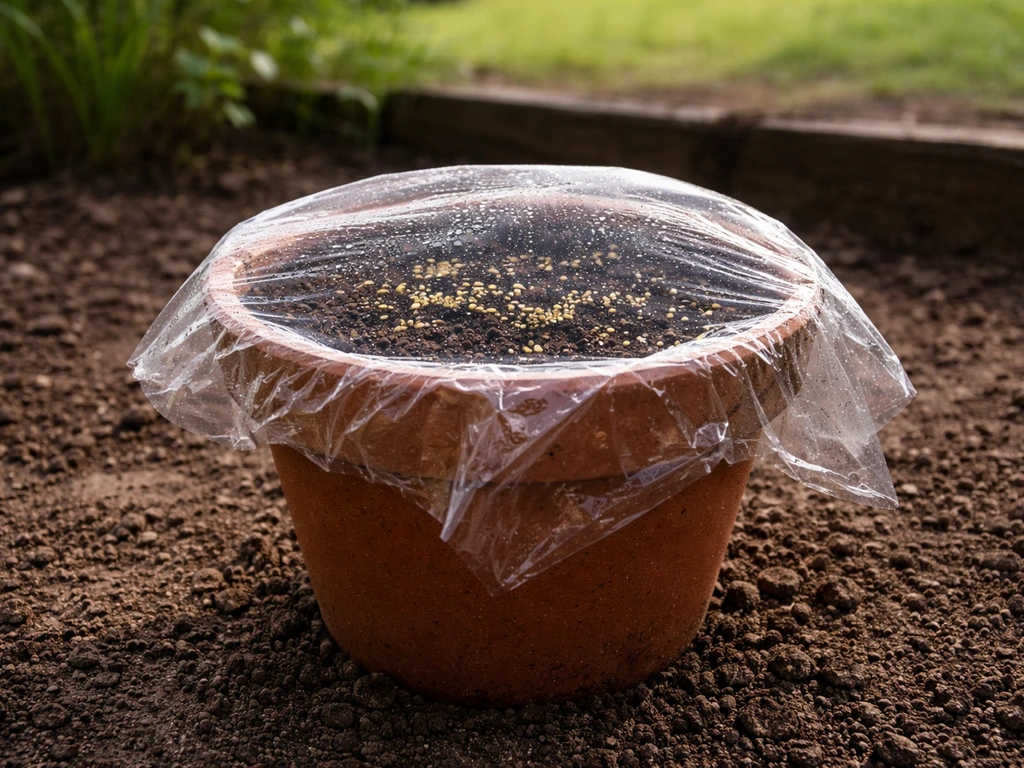
Native and ornamental grasses that need stratification are among the slowest germinators in this category. After their cold requirement is met, germination can take 30 to 90 days. Full establishment in the landscape usually takes one to two growing seasons. If you're thinking about how long ancient seeds take to grow, the same principle applies: some seed types have deep dormancy mechanisms that extend the timeline well beyond what most growers expect.
How to estimate total time from sow to usable plant
The formula extension services use (and the one I rely on) is simple: Days to Germinate + Weeks to Transplant Size + Weeks from Transplant to Harvest or Flower. Add a buffer of one to two weeks for weather delays, and you have a realistic estimate. For a crop like onions started from dry seed in late January: 10 to 14 days to germinate in cool indoor conditions, plus 10 to 12 weeks to transplant size, plus 18 to 20 weeks in the ground to full bulb development. That math puts harvest in late summer, which is exactly right for spring-transplanted onions.
For direct-sow crops like peas, you skip the transplant phase entirely. Sow in early spring as soon as soil reaches 40°F, expect germination in 7 to 14 days, and harvest in 10 to 12 weeks total. The simpler timeline is part of why peas are such a satisfying winter-to-spring crop.
It's also worth noting that the concept of winter sowing isn't totally unique to real-world gardening. If you've ever wondered about how long mixed seeds take to grow in Stardew Valley, the game actually parallels real seasonal seed logic more closely than you might expect, which speaks to how ingrained these seasonal planting patterns are.
The biggest factors that change your timeline
Germination timing in winter sowing is not just about the calendar date. These five factors matter far more than the date you dropped the seed in the ground.
Soil temperature
This is the single biggest variable. Penn State Extension puts it directly: seeds germinate when soil moisture and temperature conditions are correct. Oregon State Extension's soil temperature charts show that peas and lettuce will germinate at soil temperatures as low as 35 to 40°F, but they do it slowly. Carrot germination drops significantly below 50°F. Alabama Cooperative Extension's soil temperature germination data confirms that even cold-tolerant crops have a floor, and below that floor, you're basically waiting. A soil thermometer is one of the cheapest and most useful tools you can own.
Moisture consistency
Seeds need consistent moisture from the moment they start absorbing water. A dry spell mid-germination can kill the process. In outdoor winter sowing setups, precipitation usually handles this, but a dry late-winter stretch can stall things unexpectedly. For indoor winter starts, check moisture every day.
Planting depth
Mississippi State Extension warns specifically against planting seeds too deeply, noting that small seeds planted too shallow can actually speed germination while deep planting causes emergence failures. A general rule: plant seeds at a depth of about two to three times their diameter. For tiny seeds like lettuce or carrot, that means barely covering them at all. Planting a small seed half an inch deep in cold soil is a reliable way to see nothing for weeks.
Light and container placement
Seeds themselves don't need light to germinate (with a few exceptions), but seedlings need it immediately after emergence. For winter outdoor containers, placement in a south-facing spot maximizes solar gain. University of Minnesota Extension notes that reflective surfaces like white-painted cold frame interiors can meaningfully improve early-season light and warmth, which translates directly to faster seedling growth after germination.
Protection from temperature swings
Hard freezes after germination can damage or kill seedlings that aren't frost-tolerant. Even cold-tolerant seedlings can be set back by extreme temperature swings. Utah State University Extension describes cold frames, cloches, and plastic-jug covers as tools that create a more favorable microclimate, buffering against both hard freezes and desiccating wind.
How to speed things up or troubleshoot slow/no germination
If you've been waiting more than the expected number of days and see nothing, work through this checklist before giving up.
- Check soil temperature: Push a thermometer 2 inches into the soil. If it's below the minimum for your crop, germination is not going to happen yet, no matter how long you wait. Patience (or a heat mat for indoor starts) is the only fix.
- Check moisture: Dig carefully to where the seed is. Is the soil around it moist or bone dry? Dry soil at seed depth means the seed hasn't been able to absorb water and start the process.
- Check planting depth: If you buried small seeds (lettuce, carrot, herbs) more than 1/4 inch deep, they may struggle to push through. In cold soil, even marginally too-deep planting becomes a real barrier.
- Check seed viability with a paper towel test: Place 10 seeds between layers of damp paper towels, seal in a plastic bag, and keep at room temperature. Extension Dane County's damp paper towel method recommends checking after the crop's expected germination period. NCSU Extension advises starting to check after about 7 days. If fewer than 5 of 10 germinate, your seed lot may be too old or compromised to be worth sowing heavily.
- Consider pre-soaking: For peas, beans, and some larger seeds, an overnight soak in room-temperature water before planting can jumpstart moisture absorption and cut 1 to 3 days off germination time. Don't pre-soak small seeds or those with papery coats.
- Add row cover or a mini tunnel: If outdoor temperatures are still bouncing around, a layer of floating row cover directly over the soil (or a simple plastic-jug cloche) adds 2 to 5°F of soil warmth and buffers moisture loss. This alone can cut several days off germination in marginal conditions.
- Confirm cold-stratification was completed: If you're growing perennials, native grasses, or any seed with a stratification requirement, and you didn't give them the required cold-moist period, they won't germinate. Put moist seeds in a sealed bag in the refrigerator for the required period (typically 30 to 90 days for most species) and try again.
UMass Amherst's research on winter spinach found that priming seeds with an overnight pre-treatment improved germination and stand establishment, with assessments taken about one week after seeding. That's a practical reminder that small prep steps genuinely move the needle.
If you're also planning ahead for warmer weather, it's worth understanding how long spring seeds take to grow so you can sequence your plantings without a gap between your winter and spring harvests.
A practical planting schedule starting now (mid-April)
Since today is mid-April, winter sowing season is largely behind you, but you're right in the thick of the germination and early seedling window for anything you started in late winter. Here's how to read your current situation and what to do next.
If you sowed in January or February
You should be seeing germination now or very soon for most cool-season vegetables. Lettuce, kale, and spinach started in late January or February should have germinated and be in early seedling stage (true leaves forming). Onions started in January should be well into seedling development and approaching transplant size. If you haven't seen germination yet from those early sowings, do the paper towel viability test before re-sowing.
If you sowed in late February or March
Cool-season crops from late February should be in active germination or just emerging. Give them another week to two weeks before worrying. Peas sown directly in the ground in March should be showing green within the next week or two depending on your soil temperature. Parsley from March may still look like bare soil, and that's normal.
What to do right now in mid-April
- Transplant onion seedlings started in January into the garden if nighttime temps are above 28°F consistently.
- Start hardening off any indoor-grown cool-season seedlings (lettuce, kale, broccoli) by setting them outside for 1 to 2 hours daily, increasing exposure over 7 to 10 days.
- Direct sow carrots, radishes, and peas now if you haven't. Soil temps across most of the country are reaching the 40 to 50°F range, which is enough.
- Cover newly sown seeds with row cover if nighttime temperatures are still dropping below 35°F.
- Label every container with the sow date if you haven't already. Ohio State Extension's winter sowing guidance makes labeling a core step, and it's the only way to accurately track your timing against expected germination windows.
- Check stratified perennial seeds you refrigerator-stratified over winter. If they've had 60 to 90 days of cold treatment, move them to a warm, bright spot to trigger germination.
Looking ahead: transplant and harvest milestones
From mid-April, here's a rough forward timeline for crops either sown or germinating now:
| Crop | Current Status (mid-April) | Transplant Outdoors | Expected Harvest or Flower |
|---|---|---|---|
| Lettuce (winter-sown) | Germinating / early seedlings | Now to early May | Late May to mid-June |
| Kale (winter-sown) | Early seedlings | Early to mid-May | June to July |
| Onions (started January) | Seedlings 4–6 inches tall | Now to late April | August to September |
| Peas (direct sow March–April) | Germinating / just emerged | No transplant needed | Late June to July |
| Carrots (direct sow April) | Not yet emerged | No transplant needed | Late July to August |
| Hardy perennial flowers (stratified) | Post-cold, waiting for warmth | May to June | Late summer or following season |
| Parsley (winter-sown) | Possibly still dormant | Late May | Mid-summer for harvest |
One thing worth keeping in mind: the timing comparisons between seasons are genuinely useful for planning a continuous harvest cycle. Knowing how long spring seeds take to grow in Stardew is a fun seasonal reference, and in the real garden, the same logic applies: your spring crops pick up right where your winter crops leave off if you sequence them right.
The other thing I'd note for anyone planning future winter sowing seasons is understanding how certain specialty seeds work. For example, how long fluix seeds take to grow is a question that comes up in the context of modded growing systems, and understanding those mechanics alongside real-world timing can actually sharpen your intuition for how seed dormancy and environmental triggers work in general.
Variability is normal, not a sign something went wrong
The most important thing to internalize about winter seed timing is that variability is built into the system. Seeds don't read calendars. A week of unexpectedly cold temperatures can push germination back by two weeks. A warm spell in February can pull it forward by the same margin. Nebraska Extension's germination benchmarks show that even under optimum conditions, crops like carrot and parsley have wide germination windows, and "optimum conditions" in a controlled lab look nothing like a February cold frame in the Midwest.
What I've found most helpful is building buffer time into every estimate, checking soil temperature rather than air temperature when making decisions, and resisting the urge to re-sow too quickly after an apparent failure. Give seeds at least 150% of their expected germination window before calling it. Many a "failed" winter-sown container has surprised me in late April with a flush of seedlings I'd given up on.
FAQ
If winter seeds germinate in 7 to 90 days, when should I stop waiting and re-sow?
Use the germination window on the seed packet (or the crop-specific range) and add a buffer. A practical rule is to wait at least 150% of the expected days before re-sowing, then do a viability check first (paper towel or float test for some seed types). Re-sowing too early can mix fresh seedlings with older, uneven germinators and make spacing harder.
How can I tell whether I need cold stratification, especially if the packet is vague?
Look for explicit wording or germination codes like “pre-chilling,” “stratification,” “requires cold,” or “germination after exposure to cold.” If you see “frost tolerant” but no stratification note, it usually means the cold tolerance is for outdoor delay, not a dormancy requirement. When in doubt, test a small batch, and track temperatures for your container so you can distinguish dormancy from poor conditions.
Should I measure air temperature or soil temperature for “how long do winter seeds take to grow” decisions?
Soil temperature is the better metric because seeds respond to the temperature where they are planted. Air can swing quickly while soil changes more slowly. If you do not have a thermometer, use timing logic carefully and watch for consistent warming at planting depth, not just warmer afternoons.
What’s the most common reason winter-sown seeds fail to emerge, and how do I fix it?
The most frequent culprits are planting depth and inconsistent moisture during the start of water uptake. Seeds planted too deep often never emerge, especially in cold soil, and a dry spell after soaking can interrupt germination. Fix it next time by planting at roughly 2 to 3 times the seed diameter and checking moisture at least daily for indoor starts or covered containers.
Can I speed up winter seed germination by soaking or priming?
Sometimes. Priming, such as an overnight pre-treatment, can improve germination rate and stand uniformity for certain crops, but it can also make some seeds less tolerant of cold fluctuations if you then place them directly into severe conditions. If you try priming, start with a small test tray and keep the post-soak moisture steady until the seeds are planted.
Do seeds need light to germinate during winter sowing?
Most seeds do not require light to start germination, but the seedlings do need light immediately after they emerge. If you cover seeds too heavily, you can delay or prevent emergence for tiny-seeded crops. If you see seedlings but they look pale or stretched, increase light quickly using a brighter window, reflective surfaces, or a cold-frame approach that warms without overheating.
My seeds sprouted, but then everything stalled. What should I check next?
Check for hard freezes or rapid temperature swings after emergence, and make sure the seedlings are not drying out. Even frost-tolerant seedlings can be set back by extreme cold or desiccating wind. Also verify that the planting depth was not so shallow that roots are exposed, which can cause intermittent wilting that looks like “stalled growth.”
What should I do if I see uneven germination across a tray or container?
Expect a staggered flush, especially with wide germination ranges and temperature swings. Instead of pulling everything on the first sign of success or failure, thin only once seedlings have true leaves and you can judge spacing. Mark the soil line and keep watering consistently so later-germinating seeds are not penalized.
How does the timeline change if I direct-sow peas or carrots instead of starting indoors?
Direct-sowing can simplify the plan because you skip transplant size time, but you become more dependent on soil temperature and moisture. For crops like peas, you may still see a predictable harvest window once germination begins, but carrots can stall in colder ground. Plan on longer, variable days to emergence outdoors, especially below the crop’s soil-temperature “floor.”
If I’m planning a continuous harvest, how do I sequence winter and spring plantings?
Build your schedule around the crop’s total path (germination to harvest), then leave a small overlap rather than a gap. Because winter conditions can push germination back by one to two weeks, stagger sow dates (or use multiple small batches) so one delay does not end your harvest window. Track actual emergence dates, not just sow dates, then adjust future batches based on what your conditions did.
Next Article
How Long Do Ancient Seeds Take to Grow Timelines
Timelines for ancient seeds: germination, seedling stage, and harvest by plant type, plus troubleshooting and planning t