In vanilla Minecraft, most seed-based crops (wheat, carrots, potatoes, beetroot) take roughly 31 minutes of real time to reach full maturity under ideal conditions. That works out to about 1.5 in-game days. Melon and pumpkin stems take a bit longer to mature, anywhere from 10 to 30 minutes for the stem itself, and then additional time for the fruit to spawn adjacent to it. Those numbers assume good light, hydrated farmland, and a bit of luck with the random tick system, which I'll break down below.
How Long Does It Take Seeds to Grow in Minecraft?
Marcus Henley
14 May 2026
How crop growth actually works in Minecraft
Minecraft's engine runs on ticks. The game processes 20 ticks every real-world second (one tick every 0.05 seconds), and a full in-game day is 24,000 ticks, which equals 20 real minutes. Crop growth isn't tied to every tick, though. It runs off something called random block ticks, where the game randomly selects blocks in a loaded chunk and triggers an update on them. In Java Edition, any given crop block receives a random tick on average once every 68.27 seconds. In Bedrock Edition that average stretches to about 204.8 seconds per block, which is why crops feel noticeably slower on Bedrock.
Every time a crop receives a random tick and conditions are right (light, water, valid farmland), there's a chance it advances to the next growth stage. The key word is chance. Growth is probabilistic, not a fixed countdown. Two identical wheat farms can finish at meaningfully different times just because of random tick variance. This is also why it's completely normal for a crop to sit in the same stage for what feels like forever and then suddenly jump two stages in quick succession.
What a growth stage actually means
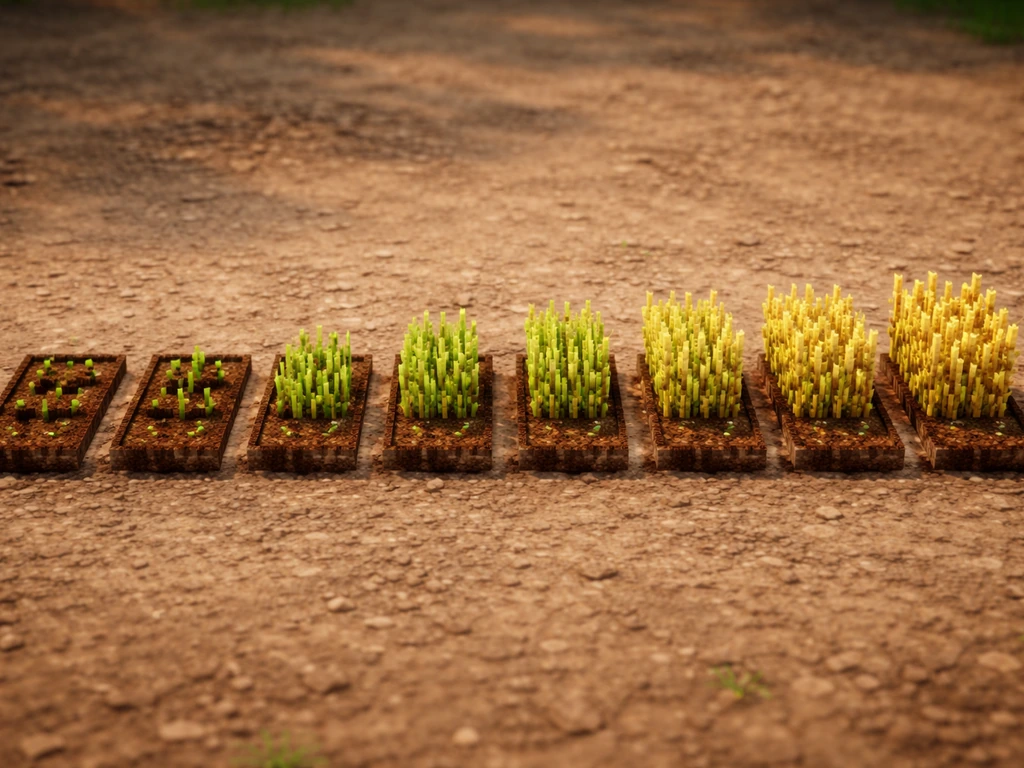
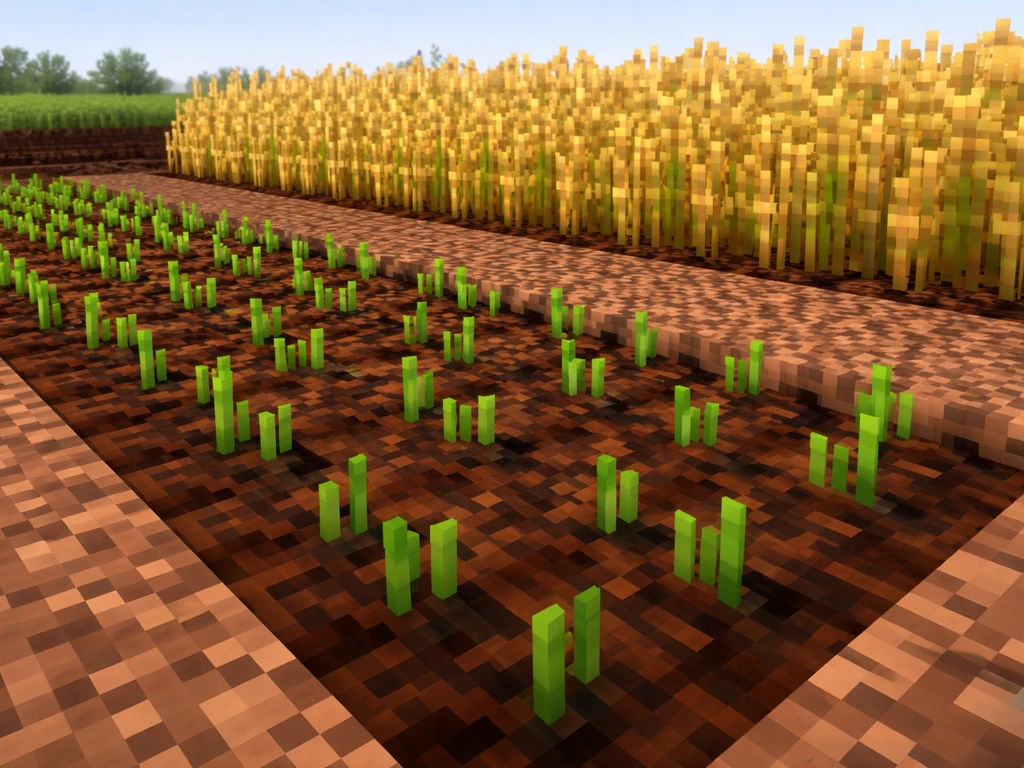
Each crop type has an internal age value tracked by the game. Wheat, carrots, and potatoes all have 8 stages (age 0 through 7), and stage 7 is the harvestable state. Beetroot is a bit simpler with only 4 stages (age 0 through 3), fully grown at stage 3. Visually, carrots and potatoes only show 4 distinct appearances even though they have 8 internal stages, so the plant can look the same for two consecutive stages. The safest approach is to wait until the crop is visually full and drooping (wheat goes golden, carrots and potatoes show their tops clearly above the soil) rather than guessing based on appearance alone.
What speeds up (or slows down) your crops
The 31-minute average assumes you've got the right conditions in place. When those conditions are off, growth can stall completely or drag on much longer than expected. Here's what actually moves the needle:
- Light level: Crops need a light level of at least 9 in the block directly above the plant to grow. This is a hard requirement. Underground farms need torch or lantern placement above every row, not just nearby. Natural sunlight through a glass ceiling works well too.
- Hydrated farmland: Farmland must be wet (darker brown color) for crops to grow. A single water source block hydrates all farmland within 4 blocks horizontally on the same level or one block above. One central water block in a 9x9 grid covers the whole field.
- Valid farmland block: Crops must be planted on farmland, not dirt, grass, or any other block. If farmland dries out completely it reverts to dirt and the crop pops off. Keep water nearby.
- Row layout and adjacency: Planting crops in alternating rows (wheat next to a different crop type, or wheat next to an empty row) gives a small growth-rate bonus compared to solid same-crop fields. This is a real mechanic, not just a farming tip.
- Random tick speed: The default random tick speed is 3 in both Java and Bedrock. You can change this with the /gamerule randomTickSpeed command. Raising it speeds up all tick-based growth; lowering it slows everything down. Mods like Farmer's Delight add their own growth rules entirely.
- Chunk loading: Crops only grow when their chunk is loaded. If you go far enough away that the chunk unloads, growth pauses. This is why auto-farms benefit from keeping you nearby or using chunk loaders in modded play.
Growth time reference for common crops
| Crop | Growth Stages | Harvestable At | Avg. Time to Maturity (Java) | Notes |
|---|---|---|---|---|
| Wheat | 8 (age 0–7) | Stage 7 | ~31 minutes | Golden color at maturity; drops 1 wheat + seeds |
| Carrots | 8 (age 0–7) | Stage 7 | ~31 minutes | Only 4 visible appearances; wait for full green tops with orange tips |
| Potatoes | 8 (age 0–7) | Stage 7 | ~31 minutes | Same visual stages as carrots; chance to drop poisonous potato |
| Beetroot | 4 (age 0–3) | Stage 3 | ~31 minutes | Fewer stages but same random tick mechanic; drops 1 beetroot + seeds |
| Melon stem | 8 internal stages | Stem mature; fruit spawns separately | 10–30 minutes for stem | Fruit needs air block adjacent to stem; can take additional time after stem matures |
| Pumpkin stem | 8 internal stages | Stem mature; fruit spawns separately | 10–30 minutes for stem | Same logic as melon; ensure adjacent air blocks on flat farmland |
| Sugar cane | Height increments | Harvest at 3 blocks tall | ~16 random ticks per block = variable | Not planted on farmland; grows on sand/dirt/grass next to water |
| Bamboo | Height increments | Harvest at desired height | ~204.8 sec per block (default) | Needs light level 9+ at top; faster with bone meal |
That 31-minute figure covers wheat, carrots, potatoes, and beetroot because they all run through the same random-tick growth system. The exact time will vary by a few minutes in either direction just due to randomness. Melon and pumpkin are different because their harvested product (the fruit block) spawns separately from the stem, so you're waiting for two events: the stem reaching maturity, then the game randomly placing a fruit in an adjacent space.
Setting up your farm for fastest reliable growth
If you want to minimize your wait time, set up your farm so that no condition is ever the limiting factor. Here's the layout I'd recommend for a beginner farm that actually grows at top speed:
- Start with a 9x9 plot of farmland. Till the soil with a hoe, then place one water source block in the very center. Every single farmland block in that 9x9 will be hydrated.
- Leave the water block open (you can cover it with a slab if you want to walk over it). Plant your seeds on all 80 surrounding farmland blocks.
- Light the entire plot to at least level 9 in the block above each crop. Four torches placed at the corners of the 9x9, or a ring of sea lanterns around the perimeter, usually covers it. If you're unsure, use F3 (Java) to check light levels directly.
- Plant in alternating rows of two different crops (wheat in rows 1, 3, 5 and carrots in rows 2, 4, 6, for example). This satisfies the adjacency bonus that boosts growth probability.
- For melons and pumpkins, leave one empty farmland or air block adjacent to each stem. A good layout is stem, air, stem, air in alternating rows so each stem has a guaranteed adjacent space for fruit to spawn.
- Stay in the area or build your base nearby. Chunks need to stay loaded. If you're playing survival and wandering far, your crops freeze until you return.
- Bone meal works as an instant growth booster for wheat, carrots, potatoes, and beetroot. It forces the crop to advance stages immediately. Keep a stack handy if you're in a hurry.
Why your crops aren't growing (troubleshooting checklist)
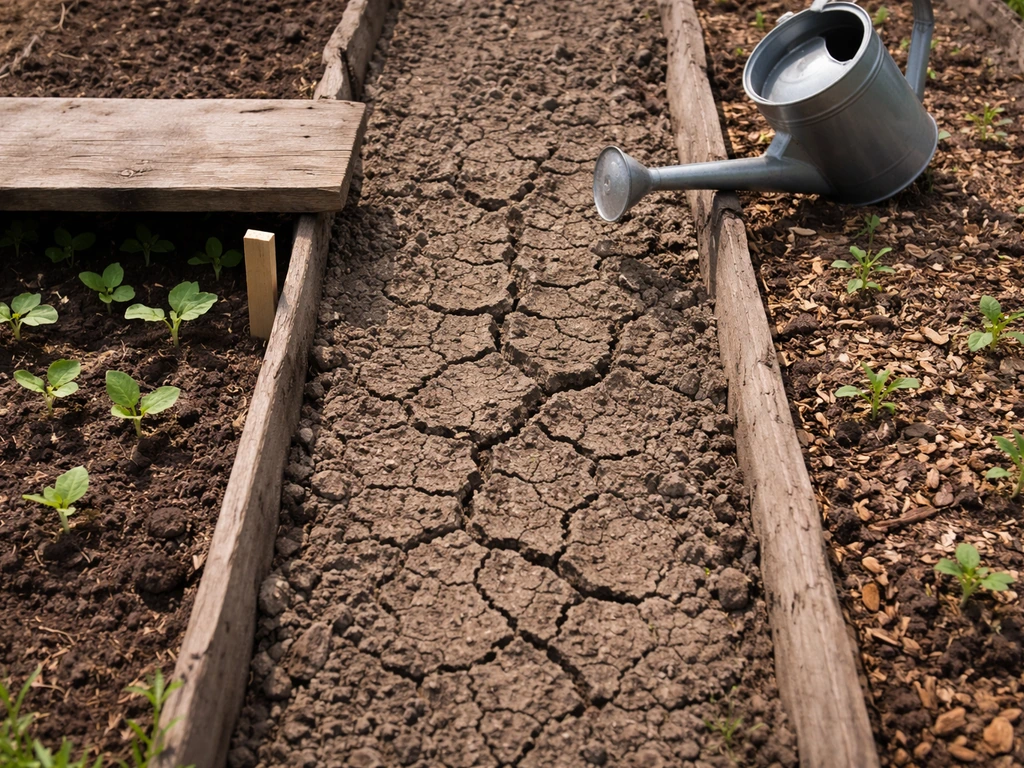
If your farm feels like it's frozen, run through this checklist before assuming something's broken. Most stalled-growth problems trace back to one of these causes:
- Light level is too low: Check the block directly above the crop, not just near the farm. You need level 9+ there. A single torch 5 blocks away might light the floor but not hit level 9 above every plant.
- Farmland is dry: Look at the soil color. Wet farmland is dark brown. If it's the same light tan as regular dirt, your water block is too far away or something is blocking hydration. Re-check that water is within 4 blocks horizontally.
- Farmland converted to dirt: If you (or a mob) walked on dry farmland repeatedly or your water source got removed, the farmland may have decayed back to dirt and dropped the crop. Re-till and replant.
- Crops planted on the wrong block: Seeds must be planted on farmland specifically. Dirt, coarse dirt, grass, or any other block won't work.
- Chunk isn't loaded: If you've been far from your farm, growth simply paused. Return to the area and wait.
- Not enough time has passed: Random ticks are random. Even under perfect conditions, some crops just take longer. If everything checks out but growth feels slow, give it a few more real-world minutes before assuming a problem.
- Using a mod that changes growth rules: Mods like Farmer's Delight, Pam's HarvestCraft, or Create Deco introduce their own crops and growth timers that don't follow vanilla behavior. Check mod documentation if you're on a modded instance.
- Wrong item type planted: Pumpkin seeds and melon seeds look similar. Planting the wrong one results in the wrong stem. Also, carrots and potatoes are their own seed items, not something you craft from separate seeds.
Planning your harvest around a target time
Because most farmland crops average around 31 minutes to full maturity, you can build a rough schedule around that. If you plant a field right before logging off for the night, it will almost certainly be ready when you return. If you plant and want to harvest before heading off on an in-game expedition, give it at least 35 to 40 real minutes to account for variance on the slower end of the random-tick distribution.
For melon and pumpkin farms, budget more time. The stem takes up to 30 minutes to fully mature, and then the fruit can take additional random ticks to spawn in the adjacent space. A safe planning window for a first melon or pumpkin harvest is 45 to 60 minutes from planting. After that first harvest, replanting is instant since the stem stays in place and just regrows fruit.
If you're using the randomTickSpeed gamerule to speed things up (which is totally reasonable in a single-player world where you just want to test a build), keep in mind that raising the value also speeds up things like leaf decay, fire spread, and grass spread, not just crop growth. A value of 10 to 20 gives noticeably faster crops without causing other problems. Setting it back to 3 afterward restores normal behavior.
One scheduling trick worth knowing: if you want an automated farm that harvests on a timer, the wiki's crop farming tutorial actually gives a precise target of 31 minutes and 3 seconds as the ideal auto-harvest interval for Java Edition. That lines up almost exactly with average maturity time, so pistons or other auto-harvest mechanisms set to that interval will catch most of your crops at full maturity without wasting too many partially grown ones.
Minecraft crop growth is one of those systems that feels mysterious until you understand random ticks, and then it clicks. Once you know that every crop is just waiting on a lucky coin flip that averages out to once per 68 seconds, and that all growth conditions must be met at the moment of that tick, everything else makes sense. Light it properly, keep the farmland wet, plant on valid soil, stay nearby, and your 31-minute harvest window will be reliable more often than not. In Stardew Valley, rare seeds grow on a different timer than Minecraft crops, so the time depends on the season and whether you use any growth modifiers. For mixed flower seeds in Stardew Valley, the time to grow depends on the specific season and whether you plant them from seed or from a crafted packet. In Super Mario Odyssey, seed growth timing depends on which plant you’re growing and how long you leave it in the planter, so check the in-game description for the exact window Super Mario Odyssey seed growth timing. Wildflower seeds mix usually take longer than Minecraft crops, so plan for several weeks to see real sprouts and additional time for full blooms wildflower seeds mix how long to grow.
FAQ
Does seed type matter, or do all “seeds” grow in the same time in Minecraft?
In vanilla Minecraft, wheat, carrots, potatoes, and beetroot use the same random-tick growth pipeline, so their average maturity times cluster around the same window. However, the specific crop block (wheat vs carrot vs beetroot) matters, and melon or pumpkin are separate because fruit must spawn after the stem matures.
If I speed up randomTickSpeed, will my crops always finish earlier by the same proportion?
Not exactly. Increasing randomTickSpeed makes crop growth checks happen more often, but it also changes other random-tick systems in the area (leaf decay, grass spread, fire behavior). That means you can see faster harvests, but world-side effects might increase lag or change what else is happening near your farm.
Why did my crop look fully grown but I could not harvest it yet?
For several crops, appearance changes are not a perfect 1-to-1 match with internal growth stages. For example, carrots and potatoes show fewer distinct visuals than their internal stage count, so a “looks ready” plant can still require another random tick to reach the harvestable state.
Can crops grow while I am far away from the farm?
They generally need the crop chunks to be loaded. If you leave the area so the chunk unloads, growth stops because the game no longer processes those blocks for random ticks. Practical tip, keep the farm within your active rendering/loading radius while you wait for maturation.
What happens if the light or water conditions are only sometimes met?
Growth only has a chance to advance when conditions are correct at the moment of a random tick. If you have partial lighting (like shaded rows) or inconsistent hydration (like farmland that dries between water updates), the crop may stay stuck in a stage longer even if it averages out close to 31 minutes under perfect conditions.
Do crops still grow if they are fully grown but you never harvest them?
Yes, once a crop reaches the harvestable stage it stays there until harvested or until something disrupts it (for example, farmland becomes invalid due to water/layer changes, or the crop is destroyed). If you rely on an auto-harvest timer, keep it frequent enough so crops do not sit harvested-ready for too long while the next cycle waits.
Why does my farm take longer on Bedrock than Java?
Bedrock has a much longer average interval between random tick updates for a given crop block, so growth feels slower and more variable. If you are comparing timings between editions, use the Bedrock average tick interval mentioned in the article to adjust your expectations.
Is “31 minutes” enough time for a first harvest if I’m planting right before I sleep/log off?
For wheat, carrots, potatoes, and beetroot, 31 minutes is a good average, but variance can push harvest-ready closer to 35 to 40 minutes. If you cannot stay nearby or you must harvest at a specific time window, plan the longer end to avoid missing the harvestable state.
How should I plan time for melon and pumpkin the first time I plant them?
For melon and pumpkin, account for two steps: the stem reaching maturity, then a fruit spawning event adjacent to the stem. A safe planning window for the first fruit harvest is usually 45 to 60 minutes from planting, longer if your farm’s light, hydration, or spacing is not consistent.
What spacing or placement mistakes commonly cause “stalled” crop growth?
Common issues include using non-valid blocks under the crop, leaving farmland dry (water not reaching all farmland blocks), or placing crops where lighting is too low. Also, melon and pumpkin rely on the fruit spawning adjacent to the stem, so incorrect spacing or boundary blocks can reduce or delay fruit placement.
Will replanting immediately after harvesting affect regrowth timing?
Yes. For melon and pumpkin, the stem remains and just needs to regrow fruit, so subsequent harvests are typically much faster than the first planting. In contrast, crops planted from scratch must go through the full seed-to-mature cycle again.
Next Article
Mixed Flower Seeds Stardew How Long to Grow Timeline
Stardew mixed flower seeds timeline: days to sprout and bloom plus real-world germination and troubleshooting tips.