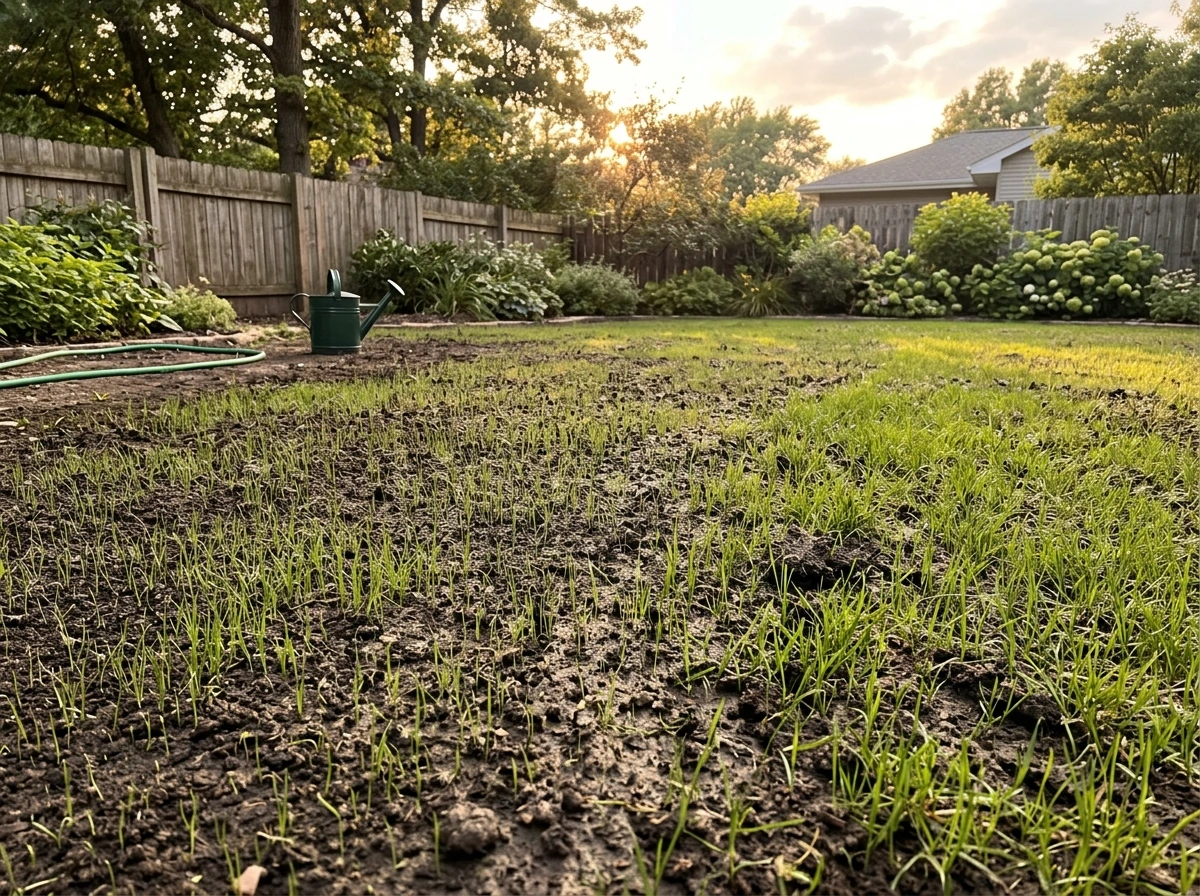
Zoysia grass seed typically takes 14 to 21 days to germinate, and then another 6 to 8 weeks before you have anything resembling a real lawn, so if you’re wondering how long does it take to grow sod from seed, plan on a longer timeline than most people expect.
How Long Does Zoysia Grass Seed Take to Grow?
Marcus Henley
24 Mar 2026
how long does couch grass seed take to grow From the day you sow seed to the day you have a thick, fully established turf, you're realistically looking at 3 to 6 months, depending on your climate, soil conditions, and how well you nail the watering routine. That's the honest answer.
If you want a quick comparison, zoysia usually needs the same kind of time frame from sowing to a thick, established lawn, often measured in weeks to months depending on conditions how long does lawn seed take to grow. If you were expecting to see a lush lawn in a few weeks, zoysia is going to test your patience. But if you go in with the right expectations and follow a few key steps, it absolutely gets there.
The full zoysia seed timeline, start to finish
Here's how the growth stages break down in practice. Each stage has its own care requirements, so knowing where you are in the process helps you make the right call at the right time.
| Stage | Typical Timeframe | What You'll See |
|---|---|---|
| Sowing to first sprouts | 14–21 days | Tiny green shoots emerging from soil |
| Seedling establishment | 6–8 weeks after germination | Thickening coverage, roots anchoring in |
| Visible lawn coverage | 2–3 months after sowing | Patchy but spreading turf |
| Full lawn maturity | 3–6 months (sometimes into second season) | Dense, uniform, mowable lawn |
Zoysia japonica, the species most commonly sold as seed, falls right in that 1 to 3 week germination window under good conditions. The 14–21 day range is reliable when soil temperatures are warm and moisture is consistent. The establishment phase that follows is where most people underestimate the timeline. Six to eight additional weeks of careful watering and hands-off management is the norm, not the exception. Full lawn maturity can sometimes push into a second growing season if you plant late or conditions are marginal.
One thing worth knowing: zoysia is a warm-season grass that spreads by stolons and rhizomes once established, so the lawn gradually fills in over time rather than all at once. Early on it can look thin and patchy, and that's completely normal. It's not failing, it's just slow.
What changes the timeline: temperature, sunlight, and soil moisture
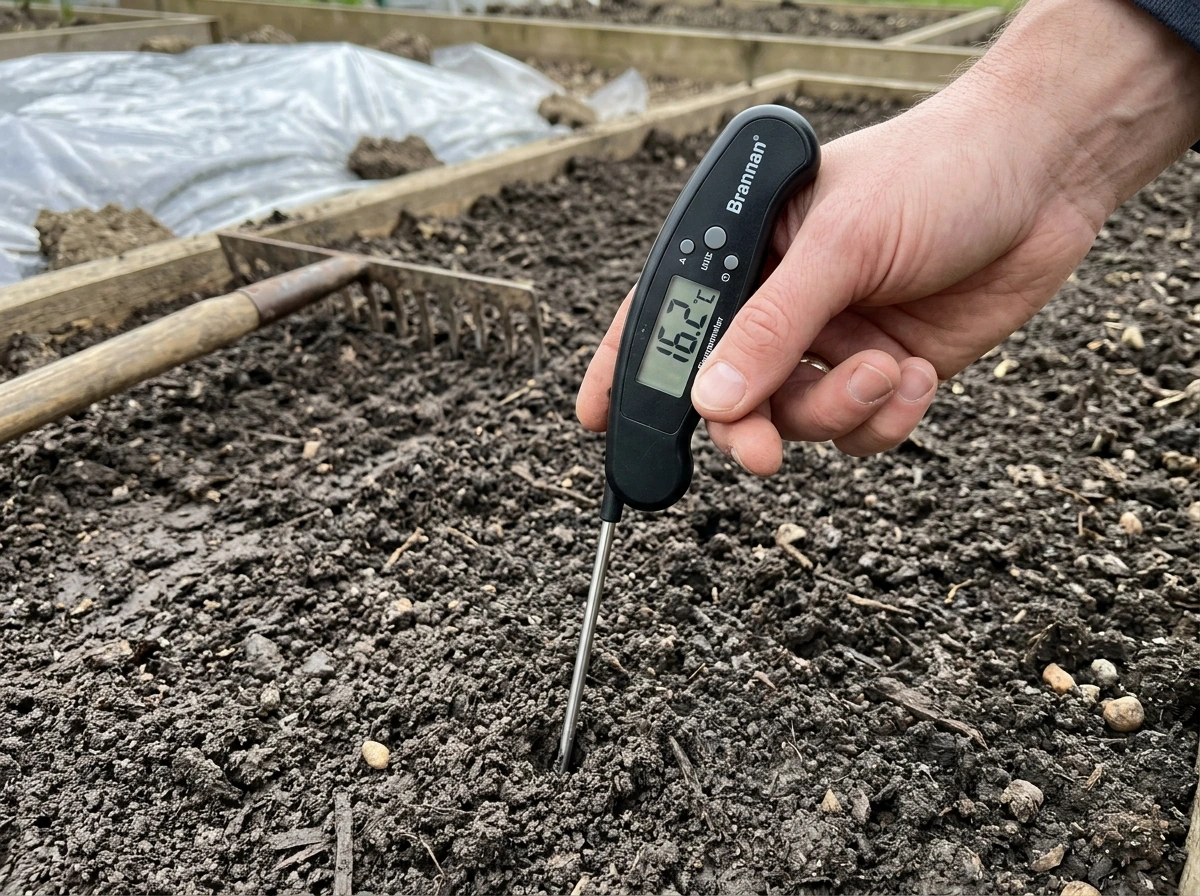
Timing your planting correctly is probably the single biggest factor in how fast zoysia seed grows. University of Maryland Extension recommends planting from blank" rel="noopener noreferrer">mid-May into June, when soil temperatures are reliably warm. Zoysia seed needs warm soil to germinate, and if you sow too early in spring, you'll be waiting a long time for those first sprouts as the seed just sits in cool ground. Plant too late in summer and your seedlings may not have enough time to establish before cooler weather hits and growth shuts down.
Soil temperature is the most direct driver of germination speed. Zoysia seed germinates best when soil temps are consistently between 65 and 70°F or warmer. Below that range, germination slows dramatically or stalls entirely. You can't speed this up by watering more. If your soil is cool, germination will be slow no matter what else you do right.
Sunlight matters too. Zoysia seed is light-dependent for germination, meaning it needs to be near the surface where light can reach it. This is why planting depth is so critical (more on that shortly). Full sun also drives faster seedling growth once the seeds have sprouted, while shaded areas tend to lag behind.
Soil moisture is the third key variable. Inconsistent watering during germination is the most common reason zoysia seed fails or takes far longer than expected. The seedbed needs to stay consistently moist throughout the germination window. Even one dry period of a few hours in hot weather can kill newly germinated seeds or halt the process entirely.
How to plant zoysia seed for fastest, most reliable germination
Getting the planting steps right from the start saves you weeks of frustration. Zoysia seed is very small and has specific needs around depth and seed-to-soil contact that most general lawn seeding advice doesn't fully address.
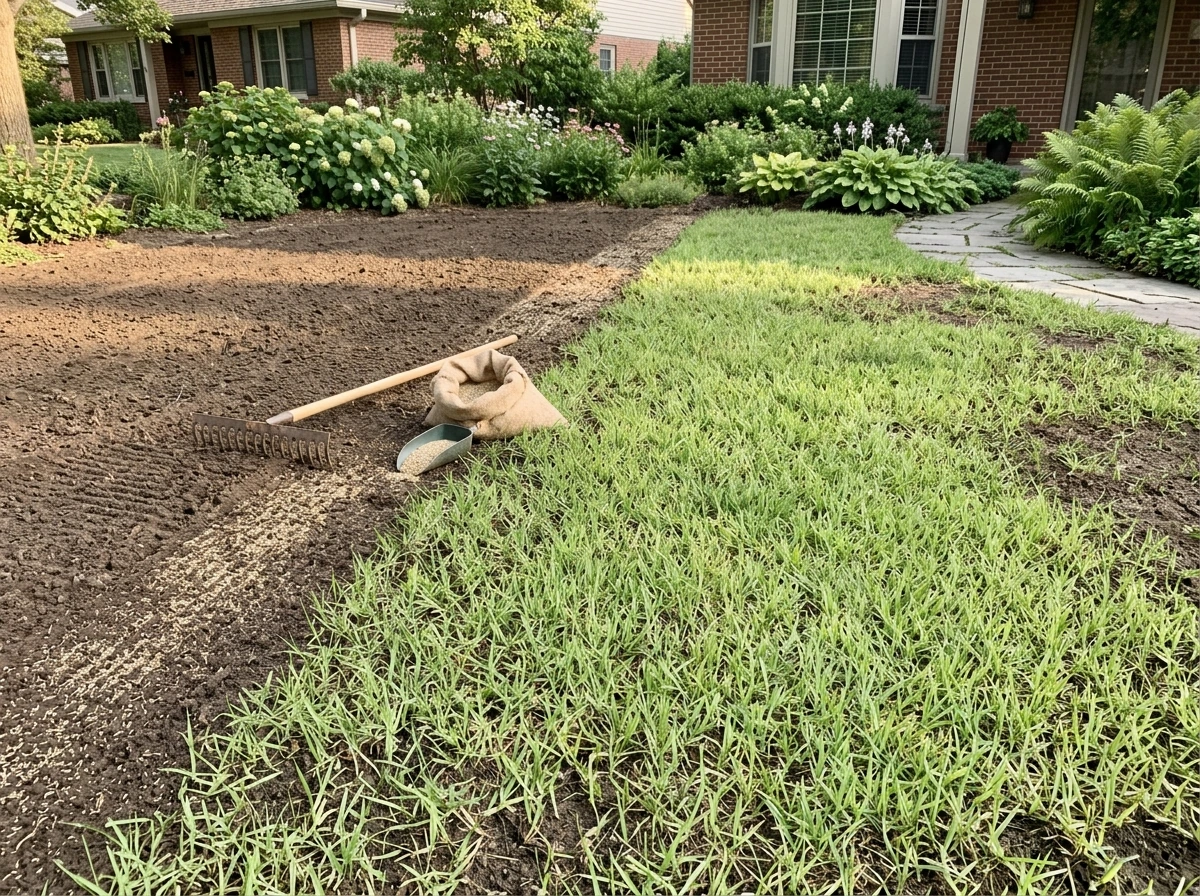
- Loosen the top 1 to 2 inches of soil before seeding. You don't need to till deep, but the surface needs to be crumbly and receptive, not compacted.
- Sow seed at a rate of 2 to 3 pounds per 1,000 square feet. Spread it evenly, using a broadcast spreader if you have one.
- Rake lightly after sowing to press seed into the soil. Zoysia seed should sit no deeper than 1/4 inch, ideally between 1/4 and 1/2 inch from the surface. Any deeper and germination suffers because the seed needs light.
- Apply a very light topdressing, less than 1/4 inch of fine compost or soil, to help hold moisture and maintain seed-to-soil contact without burying the seed too deep.
- Water gently and thoroughly right after seeding. From here, your job is keeping that seedbed moist consistently until germination.
The depth and contact points above aren't suggestions, they're the make-or-break details. Poor seed-to-soil contact is a leading cause of uneven or failed zoysia germination. The seeds need to be touching moist soil, not sitting on top of loose dry material or buried under too much cover.
Signs of progress vs signs something's wrong
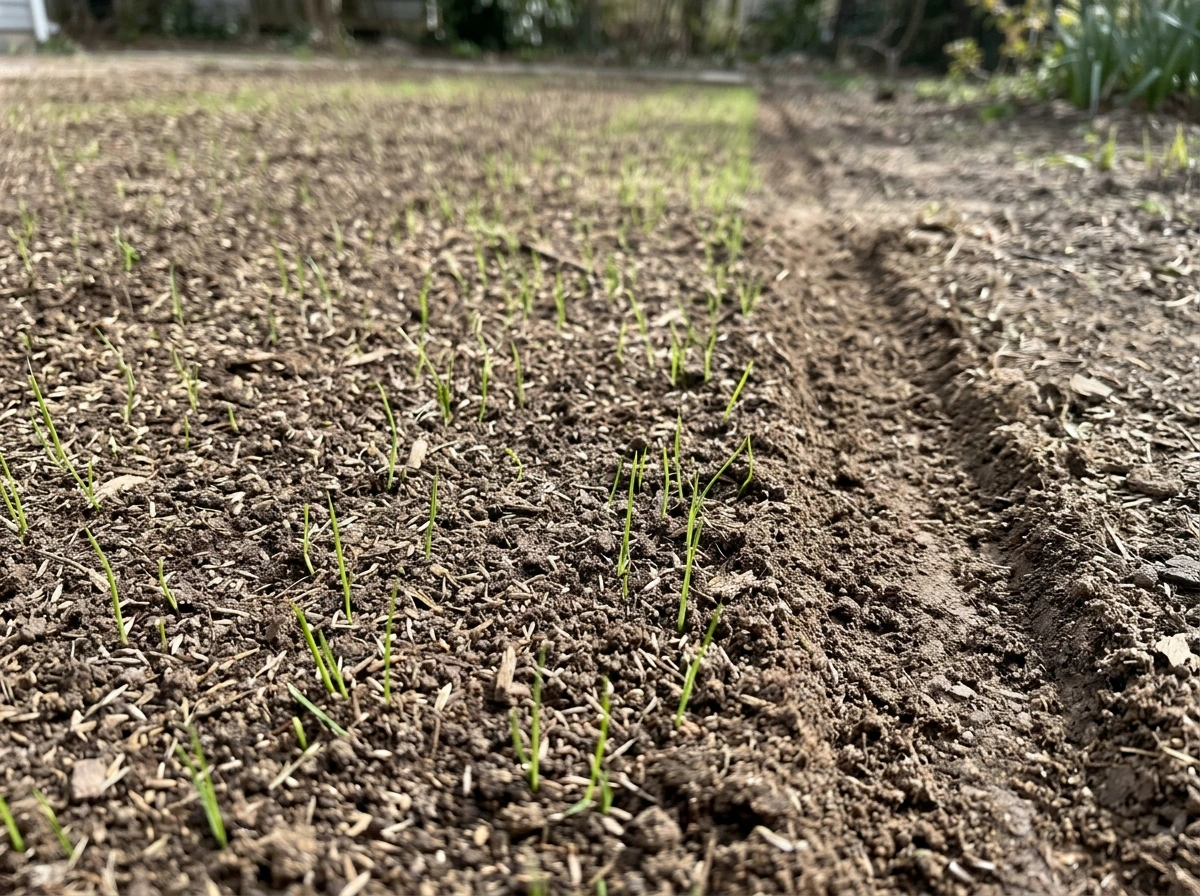
Knowing what normal looks like at each stage keeps you from panicking unnecessarily or, just as importantly, from missing a real problem until it's too late to fix.
Signs things are going well
- Thin, bright green shoots appearing in scattered patches 14–21 days after sowing
- Gradual spread of coverage over the following weeks, not uniform all at once
- Soil surface looks consistently damp but not soggy or puddled
- Seedlings are upright and green, even if sparse
- By week 8 to 10 after sowing, most of the seeded area has visible growth
Signs something needs attention
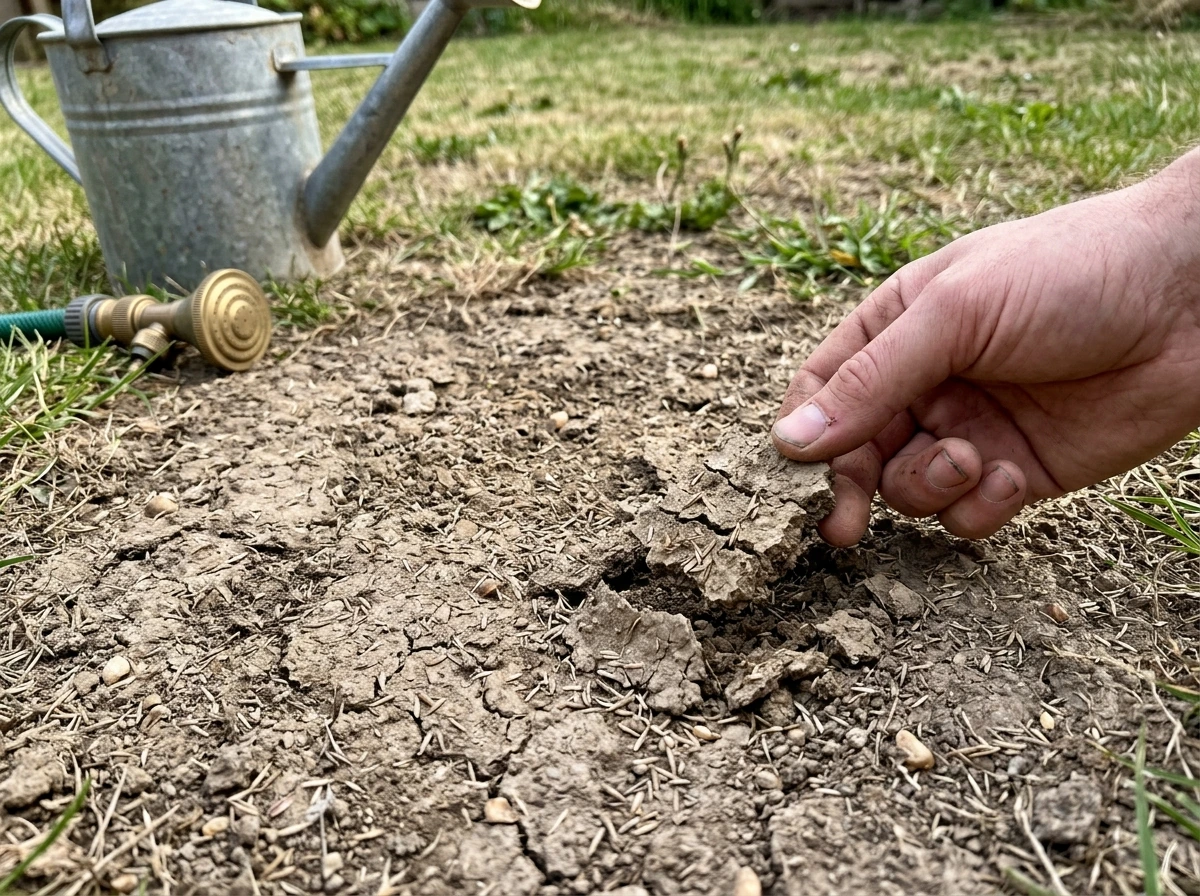
- No visible growth after 3 full weeks, especially in warm weather
- Dry, crusty soil surface between waterings
- Large bare patches with no germination while nearby areas sprouted
- Yellowing or wilting of young seedlings shortly after sprouting
- Weeds are outcompeting seedlings and shading them out
Uneven germination across a seeded area is common and doesn't necessarily mean failure. Micro-variations in soil moisture, depth, and sunlight across even a small lawn cause some spots to germinate faster than others. Give slower areas another week or two before deciding they've failed.
Troubleshooting slow germination
If you're past the 21-day mark and still seeing little to nothing, work through these common causes before giving up on the planting.
| Problem | Likely Cause | Fix |
|---|---|---|
| No germination after 3+ weeks | Soil temperature too low | Check soil temp with a thermometer; wait for consistent warmth above 65°F or consider reseeding later in the season |
| Patchy, uneven germination | Poor seed-to-soil contact | Lightly press or roll bare spots; reseed thin areas and rake in gently |
| Seedlings appear then die | Drying out between waterings | Increase watering frequency; small seedlings have almost no drought tolerance |
| Seed buried too deep | Over-raking or too thick a topdressing | Seed at or above 1/4 inch depth next time; can't fix existing seed but can reseed bare spots |
| Weeds taking over | Weed pressure during slow establishment | Hand-pull weeds carefully; avoid pre-emergent herbicides during active seedling establishment |
| Germination stalled after good start | Inconsistent moisture or heat stress | Return to frequent light irrigation; avoid letting the surface dry out |
One mistake I see fairly often is overwatering to the point of puddling. Missouri IPM specifically flags this as something to avoid: you want the soil to look moist, not waterlogged. Standing water can rot seeds before they germinate and compact the surface, reducing contact with remaining seed. The goal is consistently damp, not wet.
Also hold off on any pre-emergent herbicides during the establishment phase. Pre-emergence herbicides work by forming a barrier that prevents weed seedlings from establishing, so timing around seeding is critical pre-emergence herbicides form a barrier that prevents weed seedling establishment. They don't distinguish between weed seeds and your grass seeds, and applying them too early will kill your germinating zoysia right along with the weeds you're trying to stop.
If you've genuinely exhausted your troubleshooting options and your planting window has passed, don't force it. Late-season reseeding that pushes seedlings into cooler weather can result in weak, patchy turf that struggles through winter. In that case, it's often better to wait and reseed the following late spring when conditions are favorable again. Some growers also switch to plugs or sod if seeding repeatedly fails, and that's a completely legitimate choice since zoysia establishes faster from vegetative material than from seed.
What to do after germination: watering, mowing, and getting to a full lawn
Germination is the milestone that gets all the attention, but what happens in the 6 to 8 weeks after it is just as important. Young zoysia seedlings are fragile and need consistent support to transition into a real lawn.
Watering after germination
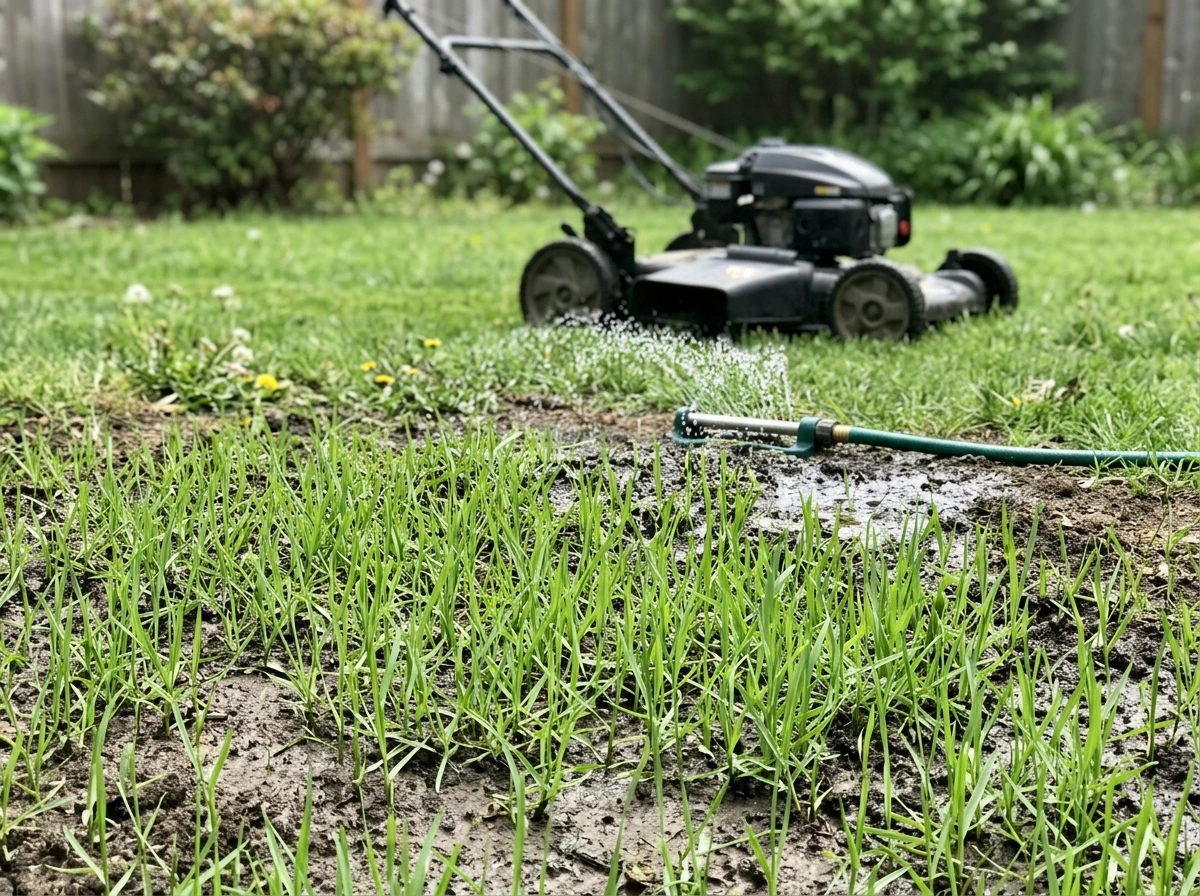
During active establishment, keep watering frequently, up to 3 or 4 short sessions per day if weather is hot and dry. The goal is to never let the surface dry out completely while roots are still shallow. After 2 to 3 weeks of visible seedling growth and spreading, you can begin to taper off frequency and shift toward deeper, less frequent watering to encourage the roots to go deeper. Once the lawn is genuinely established, water as needed based on rainfall and soil conditions.
When and how to mow
Don't mow until the grass has reached a height where you can cut it without scalping the seedlings, generally when it hits around 2 to 3 inches tall. For the first mow, set your blade higher, around 1.5 inches, to remove the top third without stressing young plants. Once the lawn is fully established, zoysia can be maintained at 3/4 inch to 1.5 inches depending on cultivar and your preference. Clemson Extension recommends 1.5 inches as a good general target for most zoysia cultivars, while some finer-textured varieties thrive at lower heights.
Fertilizing and longer-term care
Hold off on fertilizing until the lawn is clearly established with good coverage, typically 8 to 10 weeks after germination. Applying nitrogen too early can push top growth at the expense of root development and can also encourage weed competition. University of Maryland Extension recommends following an established fertilization schedule once the lawn is past the seedling stage, which generally means a light feeding in summer and following label rates closely.
If you're curious how zoysia's timeline compares to other grass types, it's on the slower end. If you're curious how zoysia's timeline compares to other grass types, it's on the slower end. Fescue grass seed for instance, germinates faster and establishes more quickly in cooler conditions. Zoysia trades that speed for exceptional heat and drought tolerance once it's mature. The patience you invest in the establishment phase pays off in a lawn that handles summer stress far better than most alternatives. Zoysia trades that speed for exceptional heat and drought tolerance once it's mature. The patience you invest in the establishment phase pays off in a lawn that handles summer stress far better than most alternatives.
The bottom line: plant in late spring when soil is warm, keep the seedbed consistently moist, don't bury the seed, and give it the full 2 to 3 months before judging the results. Slow and patchy early on is normal. A thin lawn at week four is not a failed lawn, it's a lawn in progress.
FAQ
Can I speed up how long zoysia grass seed takes to grow?
Yes, but only if the soil is warm and stays moist during germination. If you try in cool spring soil, zoysia seed can sit without sprouting for weeks, so you may still land in the same overall 3 to 6 month window even with earlier planting.
What should I expect at 2, 4, and 8 weeks after sowing zoysia seed?
If you see slight green sprouts but the area still looks thin at around 4 weeks, that is often normal. Uneven seedling speed usually comes from small differences in depth, moisture, or sun, so give slower patches another 1 to 2 weeks before concluding failure.
How deep should zoysia grass seed be planted?
No. You want the seed in contact with moist soil, which usually means covering it very lightly. Deep burial reduces light exposure needed for germination and weakens sprouts, leading to spotty or stalled germination.
How often should I water while waiting for zoysia to germinate and establish?
It can. Newly germinated seeds are vulnerable to dry spells, so letting the surface dry out for even short periods during germination can delay or kill sprouts. After seedlings appear, you can transition from very frequent watering to deeper, less frequent watering once the plants start spreading.
Is it better to water more often or run longer cycles for zoysia seed?
You should use a practical rule, not a calendar date. If you overwater enough to create puddles or a muddy, waterlogged surface, you risk seed rot and reduced seed-to-soil contact. Aim for consistently damp, not saturated.
When can I fertilize zoysia after seeding?
Usually, yes. Waiting 8 to 10 weeks after germination is safest because early nitrogen can favor weeds and encourages top growth over root establishment. If your seedlings are struggling, adjust watering and sunlight first before adding fertilizer.
When is the earliest I can mow zoysia seed?
Mowing too early is a common reason progress stalls. Once mowing begins, use a higher first cut (around 1.5 inches) and avoid scalping until the lawn can handle normal mowing, typically when it reaches about 2 to 3 inches tall.
Will zoysia seed be fully established the same year it germinates?
That depends on timing and coverage. In late spring, you might get noticeable fill in before fall, but full maturity can extend into a second growing season if you seed late or conditions are marginal, so expecting a thick lawn immediately after germination is unrealistic.
Can I use pre-emergent weed control after I sow zoysia seed?
Avoid pre-emergent herbicides during establishment. Many products will suppress weed germination but they also can interfere with your zoysia seedlings, especially while the grass is still shallow-rooted.
When should I consider plugs or sod instead of reseeding with seed?
Switching to plugs or sod can make sense if you are missing your planting window or repeatedly struggle with germination due to inconsistent conditions. Vegetative material typically establishes faster because it bypasses the vulnerable seedling stage.
Next Article
How Long Does Lawn Seed Take to Grow Full Timeline
Real lawn seed timeline from germination to mow-ready, factors that change it, and tips to fix slow or patchy growth.