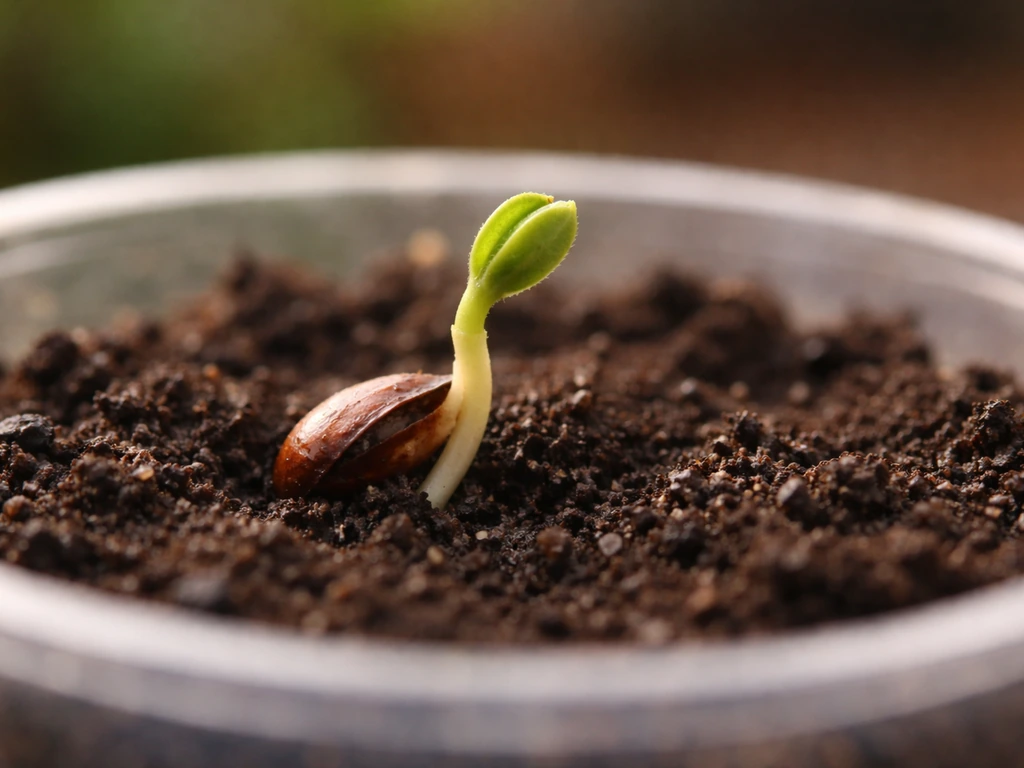
The seeds that take the longest to grow from planting to full maturity are typically woody perennials, ornamental trees, and certain herbs like lavender and rosemary, which can take anywhere from 3 months to several years before they're truly established. Among common garden plants, artichokes, celery, and slow-growing ornamental grasses can stretch past 120 to 180 days just to reach harvest or full size. If you're planning a garden this season, the short version is: if a seed requires cold stratification, hard-coat scarification, or belongs to a woody perennial family, budget far more time than you would for a tomato or a bean.
What Seed Takes the Longest to Grow and Why
Marcus Henley
29 Apr 2026
What 'longest to grow' actually means
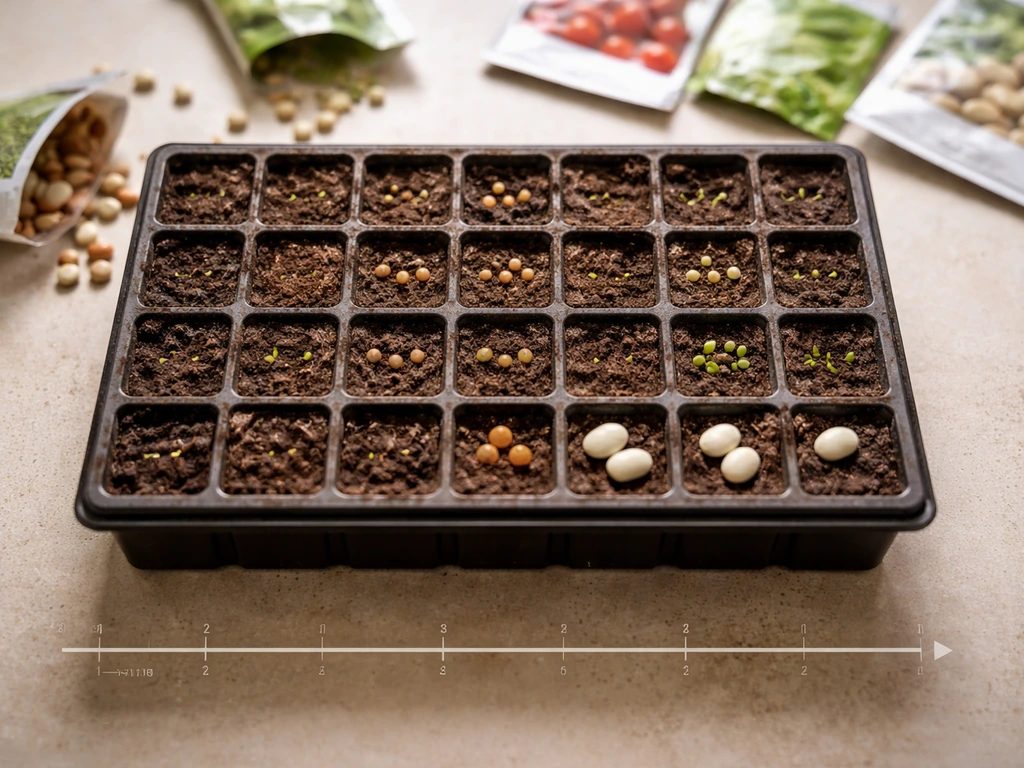
Before comparing slow seeds, it helps to pin down which milestone you're measuring. There are three stages most growers care about, and they can be very far apart depending on the plant.
- Germination: The seed cracks open and a sprout appears above the soil. This is what 'days to germination' on a seed packet refers to, and it tells you whether your season is long enough to even start the plant outdoors.
- Seedling establishment: The plant grows its first set of true leaves and is strong enough to handle transplanting or outdoor conditions. This can be weeks or months after germination.
- Full maturity or harvest: The plant reaches the size, flowering, or fruiting stage you actually want. For vegetables, Burpee defines this as 'days to maturity,' counted from when seedlings develop first true leaves (for direct-sown crops) or from the day of transplanting for long-season crops like tomatoes and peppers.
A seed like lavender might germinate in 14 to 21 days, but reach a flowering, full-size plant only after 90 to 200 days from transplant, and it won't hit peak garden presence until its second season. That gap between 'it sprouted' and 'it's actually doing what I want' is where most growers get caught off guard. When you read a seed packet's 'days to maturity,' keep in mind that number often starts the clock after the seedling stage, not from the day you drop the seed in soil.
The slowest seed types, broken down by category
Slow growth isn't random. It clusters by plant type and family. Here's where to expect the longest waits across the main categories.
Vegetables
Celery and celeriac are the slowest common vegetables most home gardeners will ever try. Celery takes 10 to 21 days just to germinate (and that's with consistent warmth), then needs 80 to 120 days to reach harvest from transplant. Artichokes grown from seed can take 85 to 100 days from transplant, but because they need to be started indoors 8 to 10 weeks early, the total seed-to-harvest timeline easily exceeds 6 months. Leeks are another slow one, clocking 100 to 120 days from transplant. Peppers deserve a mention too: while not extreme, they need 8 to 10 weeks of indoor growth before transplanting, plus 60 to 90 days to first harvest outdoors.
Herbs
Lavender is the most notorious slow-growing herb from seed. Germination alone takes 14 to 28 days and requires very specific conditions (more on that below). From seed start to a plant large enough to transplant outdoors is typically 10 to 12 weeks, and a fully established flowering plant in the garden won't arrive until the plant's second year in most climates. Rosemary is almost as slow, with germination taking 15 to 25 days and full establishment stretching past 6 months from seed. Oregano, thyme, and sage are in the moderate-to-slow range at 7 to 14 days to germinate but needing the full season to bulk up.
Flowers
Perennial flowers grown from seed are almost always slower than annuals. Delphiniums can take 14 to 21 days to germinate and need cold stratification to even wake up reliably. Echinacea (coneflower) can take 10 to 30 days to germinate, and the plant often doesn't flower until its second season. Lupins are similar: germination takes 14 to 21 days (after scarification), and first full flowering is often a year or more away. On the annual side, snapdragons are surprisingly slow, needing 10 to 14 days to germinate and 80 to 100 days total to flower. Carnations can take 10 to 14 days to germinate and 90 to 120 days from seed to bloom.
Grasses
Ornamental grasses grown from seed are among the slowest plants in any garden. Prairie-style grasses like little bluestem and switchgrass (Panicum virgatum) can take 21 to 30 days just to germinate, and they won't form an impressive clump until their second or third year. Lawn grasses vary a lot: bermudagrass germinates in 7 to 28 days depending on soil temperature, but zoysia grass can take 14 to 21 days to germinate and up to two full growing seasons to form a dense, established lawn from seed.
Ornamentals and trees from seed
Trees and woody shrubs grown from seed sit in a category of their own for patience. Oak trees grown from acorn can take 1 to 2 months just to germinate if conditions are right, and the seedling won't look like a meaningful tree for years. Japanese maples grown from seed require cold stratification, can take 60 to 90 days to sprout, and won't hit recognizable landscape size for 5 to 10 years. Wisteria from seed can take 30 to 60 days to germinate and may not flower until 10 to 15 years old if left to grow on its own timeline (grafted plants flower far sooner, which is why most serious gardeners skip seed-grown wisteria entirely).
Typical timeline ranges, with milestones to watch for
| Plant / Seed Type | Days to Germinate | Seedling Ready to Transplant | Full Maturity / First Harvest or Bloom |
|---|---|---|---|
| Celery | 10–21 days | 10–12 weeks from seed | 80–120 days from transplant |
| Artichoke | 7–14 days | 8–10 weeks from seed | 85–100 days from transplant |
| Leek | 7–14 days | 10–12 weeks from seed | 100–120 days from transplant |
| Lavender | 14–28 days | 10–12 weeks from seed | Year 2 for full flowering |
| Rosemary | 15–25 days | 12–16 weeks from seed | 6+ months; best in year 2 |
| Echinacea (coneflower) | 10–30 days | 8–10 weeks from seed | Flowers in year 2 typically |
| Delphinium | 14–21 days | 8–12 weeks from seed | 90–120 days from transplant |
| Lupin | 14–21 days | 8–10 weeks from seed | First full bloom year 2 |
| Switchgrass (ornamental) | 21–30 days | Slow; 10–14 weeks | Full clump in year 2–3 |
| Zoysia grass (lawn) | 14–21 days | N/A (direct sown) | Dense lawn in 1–2 seasons |
| Japanese maple (tree) | 60–90 days | 12+ months as seedling | Landscape size: 5–10 years |
| Oak (from acorn) | 30–60 days | 6–12 months as seedling | Tree-sized: 10+ years |
These are real-world ranges, not laboratory ideals. Your climate, soil temperature, and how carefully you manage moisture will shift every one of these numbers. Treat them as planning tools, not guarantees.
Why these seeds take so long
Slow germination and long maturity timelines aren't a flaw in the seed. They're built-in survival mechanisms. Understanding why helps you either work with them or speed them up deliberately.
Dormancy
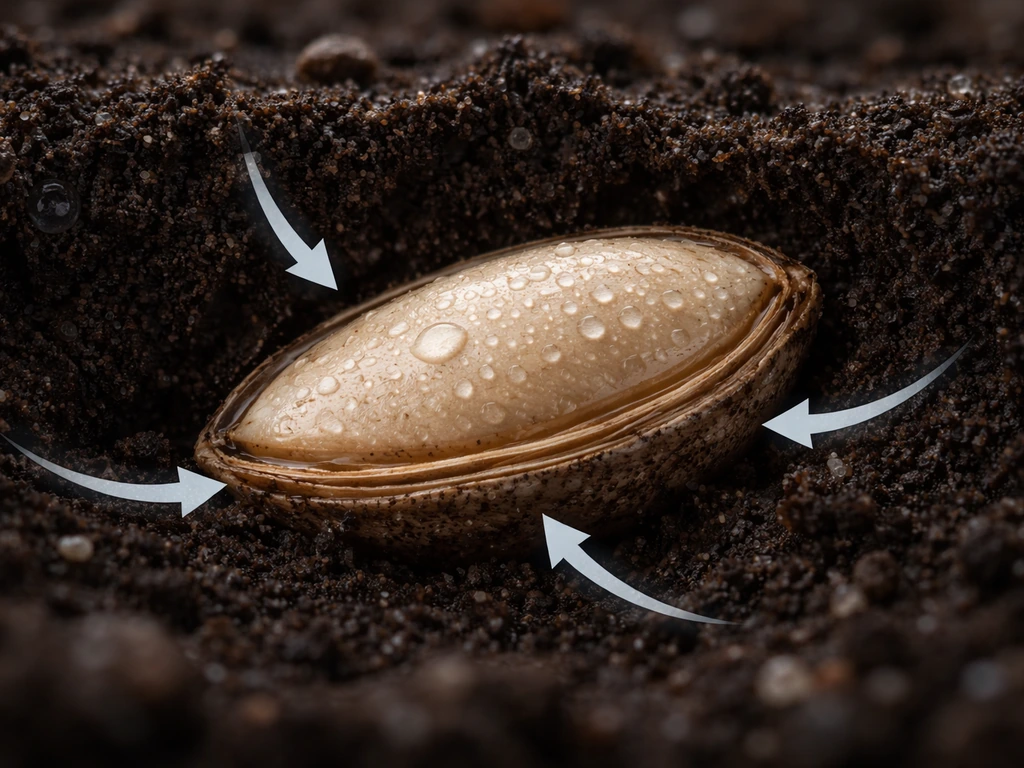
Many perennial and tree seeds have built-in dormancy that prevents them from sprouting until conditions signal it's safe to grow. Oak acorns, for example, won't germinate until they've experienced a cold, moist period that mimics winter. This prevents germination in fall when a seedling couldn't survive the coming frost. If you plant these seeds in warm spring soil without replicating winter first, they'll sit there doing nothing, sometimes for over a year.
Cold stratification
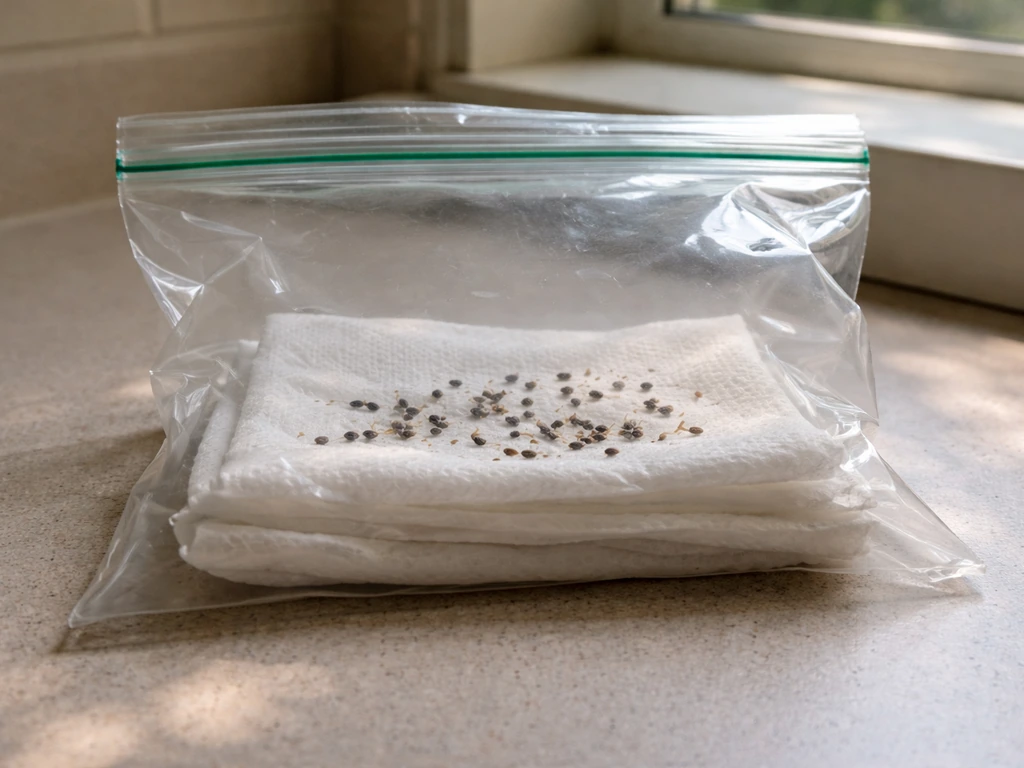
Stratification is the process of exposing seeds to cold, moist conditions for a set period before planting, usually by wrapping them in damp paper towels inside a sealed bag in the refrigerator. Delphiniums, echinacea, blank" rel="noopener noreferrer">lavender (cold stratification helps significantly), Japanese maple, and many native wildflowers all benefit from or require this treatment. The typical cold stratification period runs 30 to 90 days at 33 to 40 degrees Fahrenheit. Skip this step and you're likely looking at very erratic, delayed germination or none at all.
Scarification
Scarification means physically or chemically breaking down a seed's hard outer coat so moisture can get in. Lupins have notoriously hard seed coats. Without nicking the seed with sandpaper or soaking it in warm water for 24 hours, germination can take weeks longer than it needs to, or fail entirely. Morning glory, sweet peas, and passionflower seeds all benefit from the same treatment. This isn't a slow-down built into the growth stage itself, it's a barrier before germination even starts.
Temperature and light requirements
Celery is a prime example of a seed that simply refuses to perform outside a narrow temperature window. It needs [soil temperatures between 60 and 70 degrees Fahrenheit to germinate reliably. ](https://extension. umaine.
edu/publications/2410e/) University of Wisconsin, Madison Horticulture Extension notes that celery has a minimum soil temperature of 65°F, an optimum of 70°F, and it can still germinate in a viable range from 40°F to 85°F between 60 and 70 degrees Fahrenheit.
Too cold and it stalls; too warm and germination rate drops sharply. Lavender needs light to germinate and should only be surface-sown or barely covered. Planting it too deep is one of the most common reasons growers wait a month and see nothing. Light requirements like this are usually listed on the seed packet under the germination section alongside planting depth.
Plant biology for biennials and perennials
Biennials (plants that complete their life cycle over two years) and perennials genetically invest their first season in root and leaf development, saving flowering or fruiting for later. Echinacea, lupins, and many ornamental grasses follow this pattern. No matter how perfect your growing conditions, you can't rush the calendar on a plant that's biologically programmed to flower in its second year. Knowing this before you plant saves a lot of frustration.
How to find the exact timeline on your seed packet
Seed packets carry most of the information you need to plan realistically. The two numbers to look for are 'days to germination' and 'days to maturity. If you are wondering how long it takes for apple seed to grow, the timeline depends heavily on cold stratification and your local winter conditions how long does it take for apple seed to grow.
' Days to germination tells you how long it should take the seed to sprout under proper conditions, and it's a signal whether your remaining season is long enough to even start. blank" rel="noopener noreferrer">Days to maturity tells you how long until harvest or full flowering, though as noted earlier, this number is often counted from the transplant date rather than from sowing, especially for long-season crops.
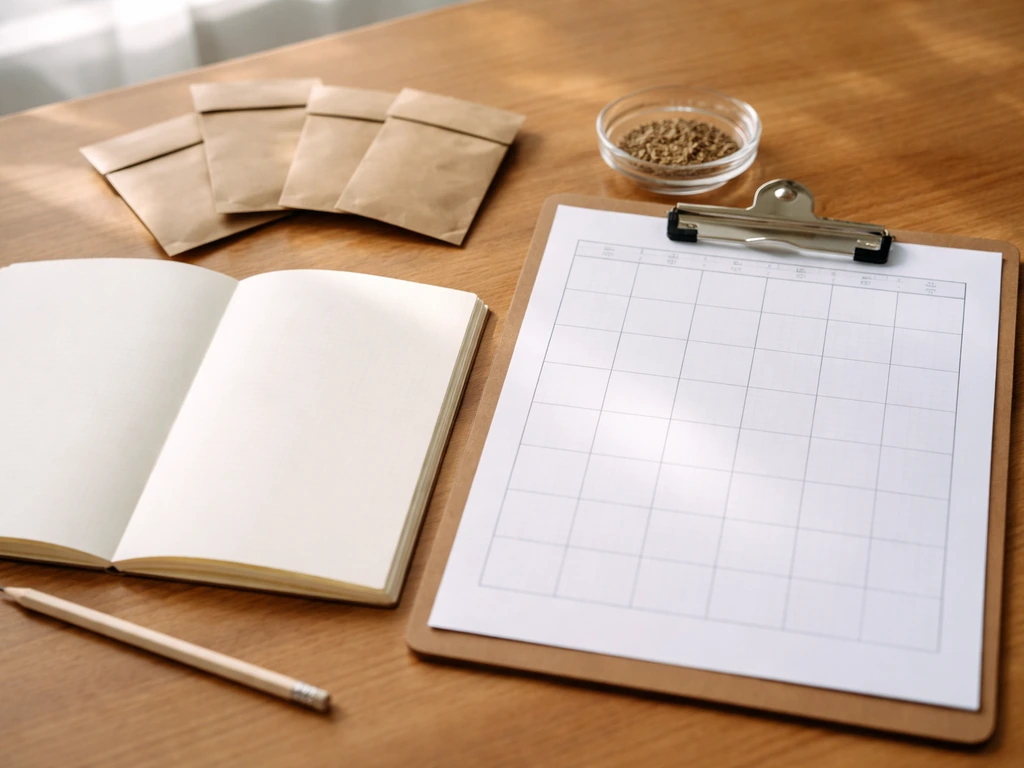
When you're calculating your actual total time commitment, add these up: weeks of indoor growing before transplant, plus days to maturity from transplant. For a crop like celery started indoors 10 weeks before your last frost and needing 100 days from transplant, your total seed-to-table time is roughly 170 days. Check that against your frost dates to make sure you have enough season left.
Also look for notes about light requirements (surface sow vs. deep sow), soil temperature ranges, and any pre-treatment instructions like soaking or refrigerating. These aren't bonus tips, they're often the difference between germination happening in 2 weeks versus 2 months.
How to speed things up (and troubleshoot when nothing is happening)
There's a real difference between seeds that are slow by nature and seeds that are slow because of fixable conditions. Here's how to tell them apart and what to do.
Pre-treatments that actually cut germination time
- Scarify hard-coated seeds (lupins, morning glory, sweet peas) by rubbing lightly with sandpaper or soaking in warm water for 12 to 24 hours before sowing.
- Cold-stratify seeds that need a winter cue (delphiniums, echinacea, Japanese maple) by refrigerating them in moist paper towels in a sealed bag for 30 to 90 days before planting.
- Use a heat mat set to 70 to 75 degrees Fahrenheit for cold-sensitive germinators like celery, peppers, and basil. Bottom heat alone can cut germination time by 30 to 50 percent compared to room temperature.
- Surface-sow light-dependent seeds (lavender, snapdragon, lettuce) and press them gently into moist soil without covering them.
- Pre-soak large seeds like artichoke, squash, or bean in warm water for 4 to 8 hours to soften the coat and speed moisture uptake.
Troubleshooting checklist for slow or failed germination
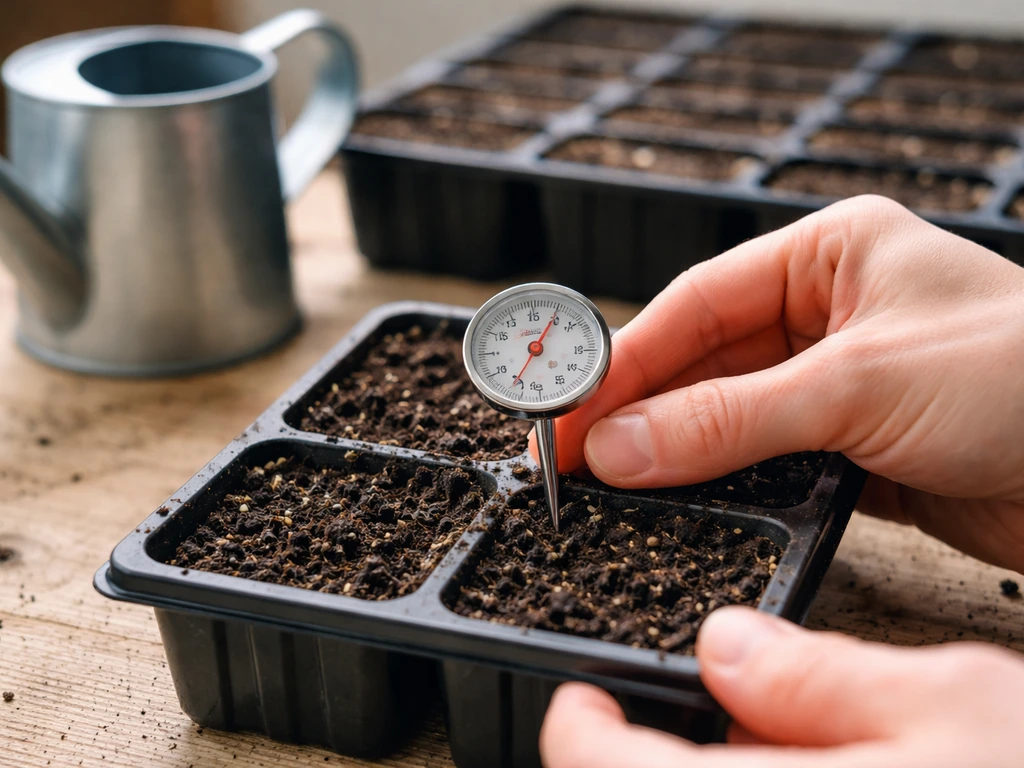
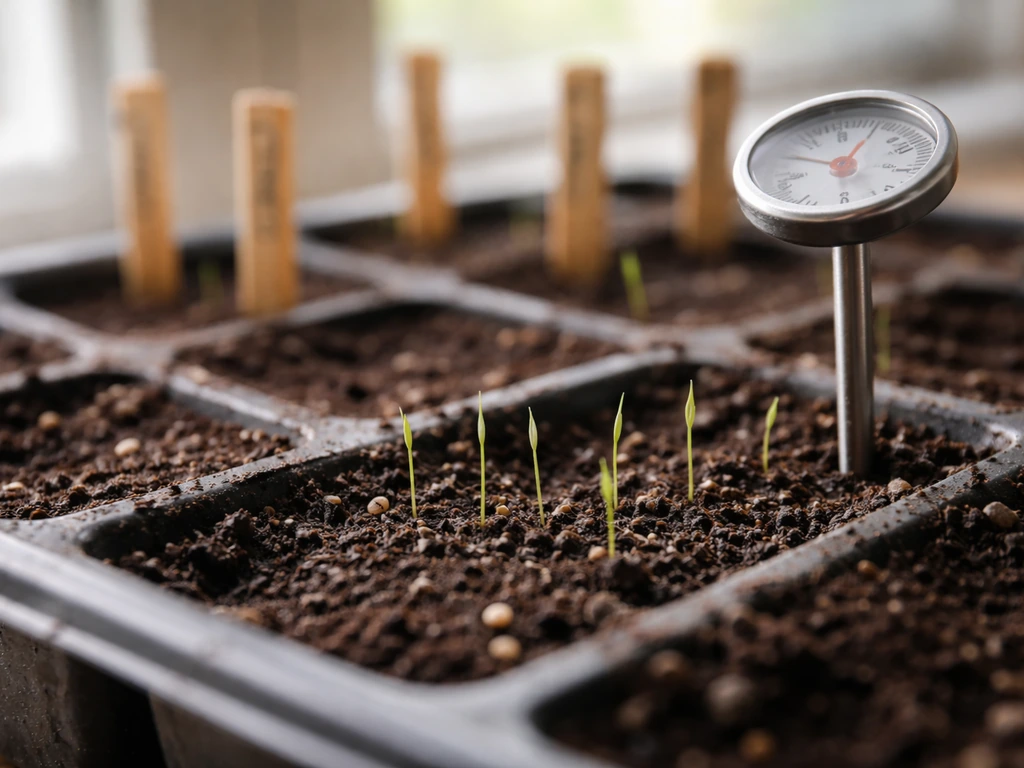
- Check soil temperature, not air temperature. Most seeds need soil between 65 and 75 degrees Fahrenheit. Use a cheap soil thermometer. Cold soil is the number one reason seeds stall.
- Check moisture. Seeds need consistent, even moisture, not wet or dry cycles. If the top layer dries out between waterings, germination rate drops sharply. Use a humidity dome or plastic wrap over the tray until sprouts appear.
- Check planting depth. Most small seeds should be sown at a depth of no more than twice their diameter. Lavender, snapdragon, and celery should barely be covered at all.
- Check seed viability. Old seed loses germination rate fast. A simple test: place 10 seeds on a damp paper towel, seal in a bag, and leave at room temperature for the expected germination window. If fewer than 5 sprout, the seed lot is poor.
- Check for pre-treatment requirements. If you skipped stratification or scarification for a seed that needs it, replant with the pre-treatment done properly. Waiting longer won't help.
- Check for pests or rot. Fungus gnats, damping off fungus, and waterlogged soil can kill germinating seeds before you see a sprout. Ensure drainage is adequate and use a sterile seed-starting mix.
If a seed hasn't sprouted by double its listed germination window under correct conditions, it's unlikely to. Replant rather than waiting indefinitely. This is especially true for lavender, rosemary, and celery, where patience past the window is usually wasted time.
Planning your planting schedule so you don't lose a season
The biggest mistake slow-seed growers make is starting too late. Working backward from your goal date is the only reliable method. If your goal is to find what seed will grow in a week, this backward planning will quickly show why most options take far longer Working backward from your goal date.
- Start with your last frost date in spring (or first frost date in fall). Find this for your zip code through your local extension service or a frost date calculator.
- Add up total time needed: weeks indoors before transplant, plus days to maturity from transplant. Write this out as a calendar date, not just a number of days.
- For slow-growing perennials and biennials (lavender, echinacea, lupin), accept that a seed started this spring likely won't give you a mature flowering plant until spring or summer of next year. Start them anyway, but set expectations correctly.
- For trees and woody ornamentals from seed, decide honestly whether seed-growing fits your timeline. A Japanese maple or wisteria from seed is a multi-year project. If you want results within a season or two, buy established plants instead.
- Build in a buffer of 10 to 14 extra days beyond the seed packet estimate. Real conditions are rarely as perfect as packet conditions, and having a buffer prevents you from running out of season.
If you're the type who wants fast results to stay motivated, it's worth knowing the contrast: the fastest-germinating seeds (radishes, cress, beans) can sprout in 3 to 5 days and reach harvest in 25 to 30 days. Growing a few quick-turnaround crops alongside your slow ones gives you wins while you wait, and is a strategy a lot of experienced gardeners use deliberately.
The bottom line is that slow seeds aren't difficult seeds, they just require a plan. If you're using Speedy Seed, you can still estimate timing by checking the germination and maturity windows and matching them to your local conditions how long does speedy seed take to grow. Know your milestones, do the pre-treatments, give them the right temperature and moisture, and count backward from your harvest or bloom date before you ever open the packet. That single habit prevents more wasted seasons than any other tip I can give you.
FAQ
What seed takes the longest to grow before I see flowers?
Wisteria is one of the most extreme examples, because seed-grown plants may take roughly 10 to 15 years to flower. If you want comparable longevity but faster results, choose grafted wisteria instead, since grafted plants typically reach bloom much sooner.
Should I measure “longest to grow” from planting, germination, or harvest?
For “longest,” most people should focus on full maturity in your garden, not first sprout. Many slow plants germinate within a few weeks but still won’t reach the useful stage until after transplant and, for perennials and trees, often after a second season.
What’s the fastest way to tell if I’ll run out of growing season with a slow seed?
For long-season plants, you can run out of time even if germination is successful. Use frost dates, then calculate indoor weeks plus days to maturity from transplant, and confirm the total timeline fits between sowing and your first fall frost.
Why do some seeds sit for months even though the packet shows a germination window?
Yes, warm conditions can “reset the clock” for dormant seeds. If a seed requires cold stratification, planting in warm soil may lead to delayed or failed germination, sometimes for over a year, because the dormancy signal was never satisfied.
When should I replant if a slow seed still hasn’t sprouted?
If you are past the germination window and conditions were correct, waiting longer is usually a low-return strategy. A practical rule is to re-check depth and temperature first, then if there is still no sprout after double the listed germination time, plan to sow again.
What is the biggest mistake that makes lavender take even longer?
The most common reason lavender seems “extra slow” is planting too deep. Surface sow or barely cover, and keep it under the germination light conditions stated on the packet, because depth can delay germination by weeks or prevent it entirely.
Why is celery often slower in home gardens than the seed packet suggests?
For celery, unreliable outcomes are often temperature related. If your soil stays below the preferred range, germination stalls and establishment slows, so consider starting indoors with more consistent warmth and transplant when conditions are right.
How can I tell if my slow seed issue is scarification versus stratification?
Hard-coated seeds can appear slow because moisture cannot enter, not because growth is inherently slow. Scarify by nicking (carefully) or using an appropriate warm-soak method before sowing to avoid weeks of delay.
What happens if I partially complete cold stratification but not the full time?
Cold stratification needs to happen before sowing, not after. If you forget to refrigerate or the cold period was too short, germination becomes erratic, so treat the duration and timing as part of the planting plan, not a one-time step.
Do woody seeds take longer because of dormancy, or because of early growth priorities?
Yes, seed-grown trees and some shrubs can take several years to become visually “meaningful” even after germination. Expect a long stretch where growth is mostly root and leaf structure first, then canopy size, and flowering can be delayed far beyond the early years.
How do I keep motivation up when I’m growing very slow seeds?
If your goal is a garden payoff quickly, pair one or two slow crops with fast “confidence builders.” For example, you can sow quick-turnaround staples alongside slow seeds so you still get harvests while the slow ones complete their longer stages.
How should I interpret seed packet “days to maturity” for slow plants?
You should rely on “days to germination” and “days to maturity,” but interpret maturity carefully for long-season crops. In many cases, maturity is counted from transplant, so your real seed-to-harvest timeline should add indoor time plus the transplant-based maturity period.
Next Article
How Long Does It Take for Apple Seed to Grow?
Timeline from apple seed to tree: germination, seedling setup, maturity, and steps like cold stratification to fix slow