Most wildflower seed mixes germinate in 7 to 30 days under good conditions, and annuals in the mix will typically produce their first blooms within 60 to 90 days of germination. Perennials are a different story: they spend their first year just building roots, and most won't flower until year two or even year three. So when you're looking at a packet of wildflower mix, you're really looking at two timelines layered on top of each other, and understanding which is which makes the whole experience a lot less frustrating.
Wildflower Seeds Mix: How Long to Grow by Stage
Marcus Henley
20 May 2026
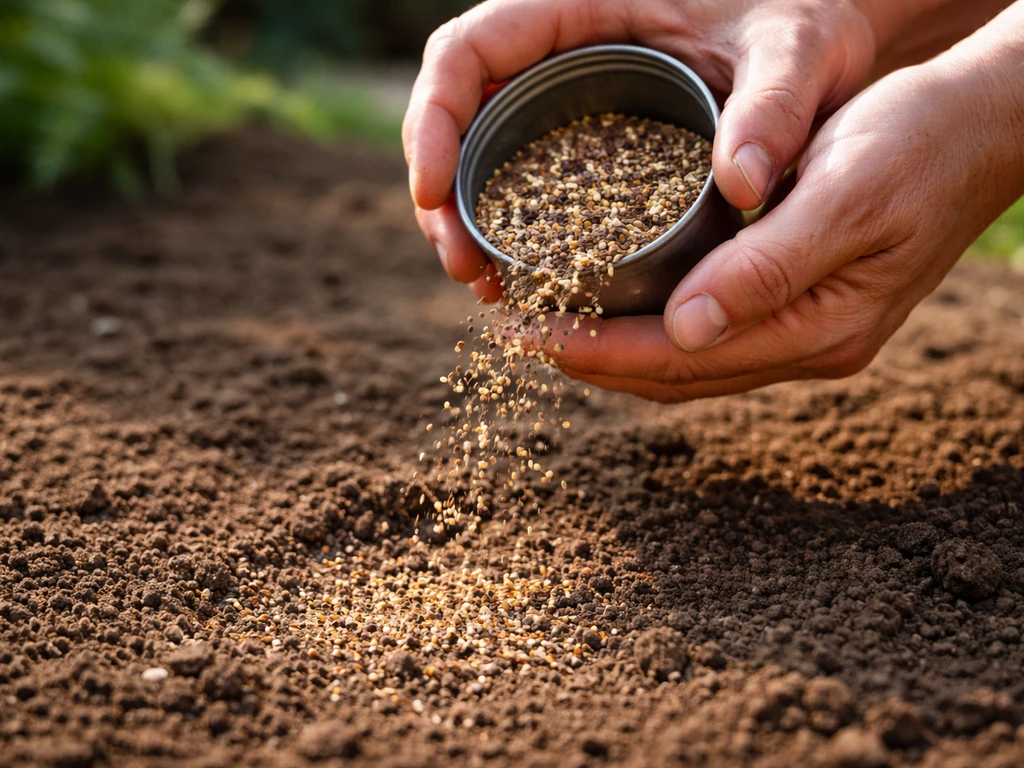
The typical wildflower mix timeline from seed to first bloom
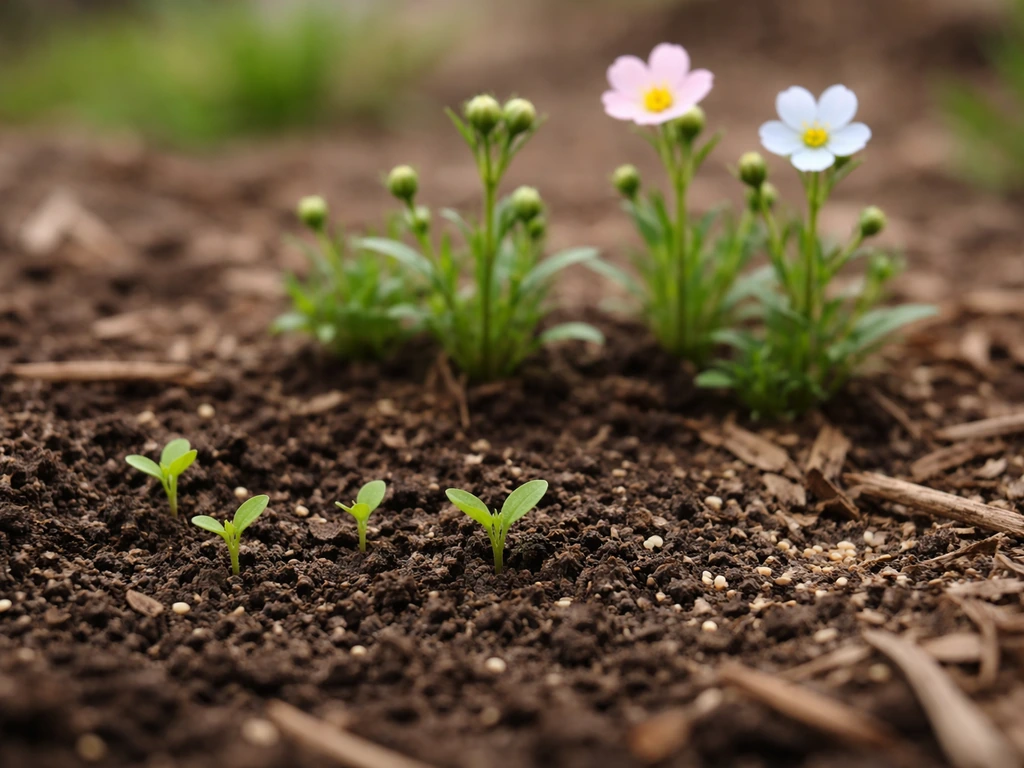
Here's how a standard wildflower mix unfolds from the day you sow to the day you're actually looking at flowers. These ranges come from real product data and extension research, not best-case marketing claims.
| Growth Stage | Typical Timeframe | Notes |
|---|---|---|
| Germination (first sprouts visible) | 7–30 days | Annuals tend toward the faster end; perennials and natives can take longer |
| Seedling establishment | 2–6 weeks after germination | Plants stay small and low; focus is on root growth |
| First blooms (annuals) | 60–90 days from seeding | Cornflower, California poppy, cosmos, and similar annuals bloom first |
| First blooms (biennials) | Second season | Plants grow vegetatively in year one, flower in year two |
| First blooms (perennials) | Year 2 or year 3 | Some native perennials take 2–5+ years to reach full flowering |
| Full meadow maturity | 3 years from seeding | Year three is typically when a perennial meadow really fills in |
The 7 to 21 day germination window cited on most commercial mixes (including Ferry-Morse and similar products) applies when soil temperature and moisture are both in the right range. If either is off, you can push toward that 30-day outer edge without anything being wrong. I've had patches of native perennials sit dormant for six weeks before suddenly popping up all at once once the soil warmed properly.
The big thing most first-time meadow growers miss: perennials will not flower the first year. Not because something went wrong, but because that's just how they work. They're building a root system that will sustain them for decades. If your mix is heavily perennial, expect mostly vegetative growth in year one, limited flowering in year two, and real payoff in year three. UNH Extension describes year three as the year a wildflower meadow really comes alive, and that matches what I've seen.
What changes how long your wildflower seeds take to grow
Germination timing is not fixed. The same seed packet can behave very differently depending on a handful of conditions, and knowing which ones matter most helps you diagnose delays instead of assuming failure.
Soil temperature
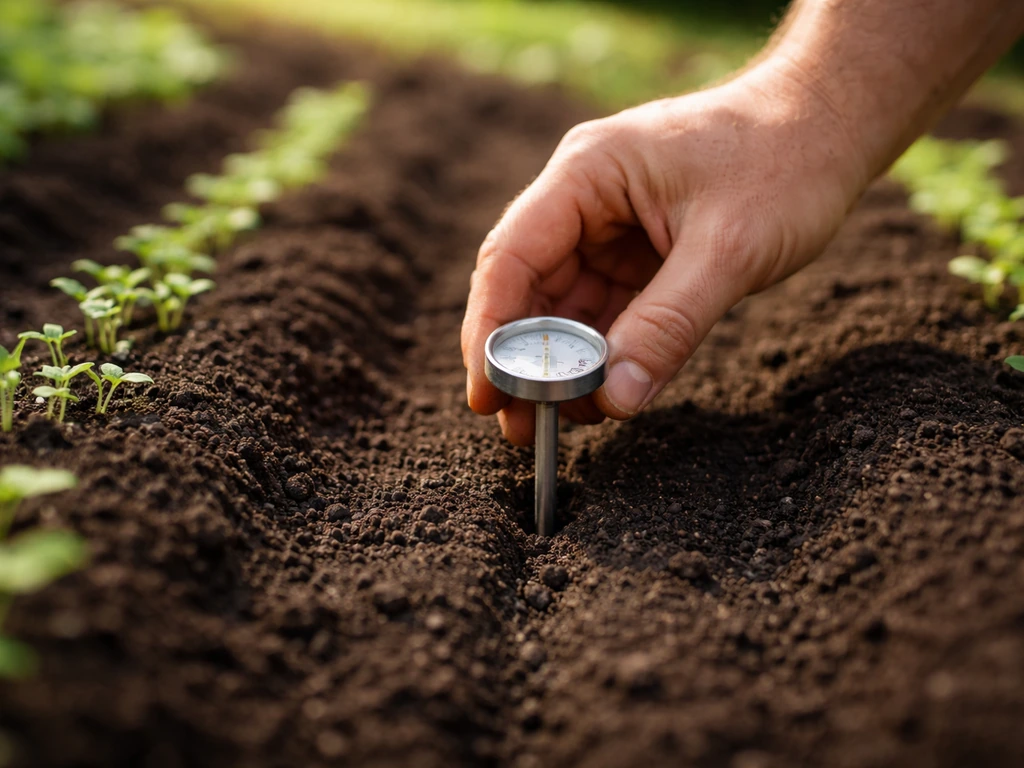
This is the single biggest driver of germination speed. Most wildflower seeds need soil temperatures between roughly 55°F and 70°F to germinate reliably. Below that range, germination slows dramatically or stalls entirely. Sow too early in spring when soil is still cold (below 50°F) and you may wait six weeks for something that would otherwise sprout in ten days. A cheap soil thermometer is genuinely one of the most useful tools you can own if you're doing serious wildflower seeding.
Moisture
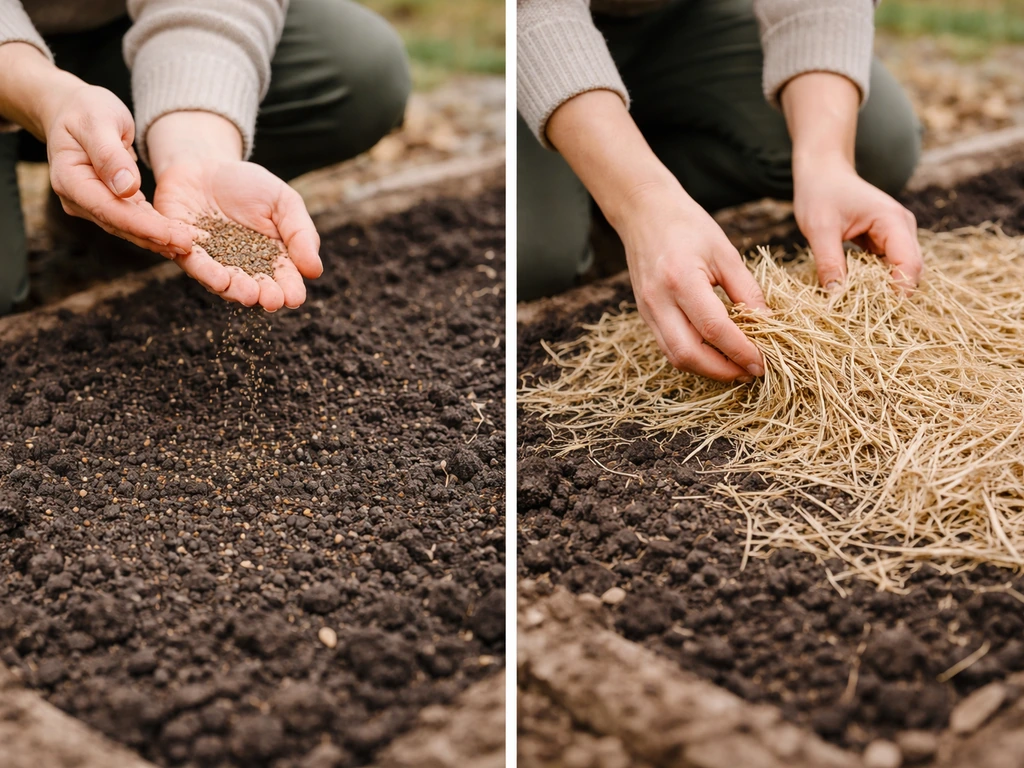
Seeds need consistent moisture to germinate but will rot or fail to make good contact with wet, compacted soil. The seedbed should feel like a wrung-out sponge: evenly moist but not saturated. In dry conditions, the surface can crust over and block emergence entirely. In overly wet conditions, especially in heavy clay, seeds may sit and rot before they sprout. Covering fresh-sown areas with a thin layer of clean, weed-free straw helps hold moisture and prevents crusting, which is a common fix for patchy emergence.
Seeding depth
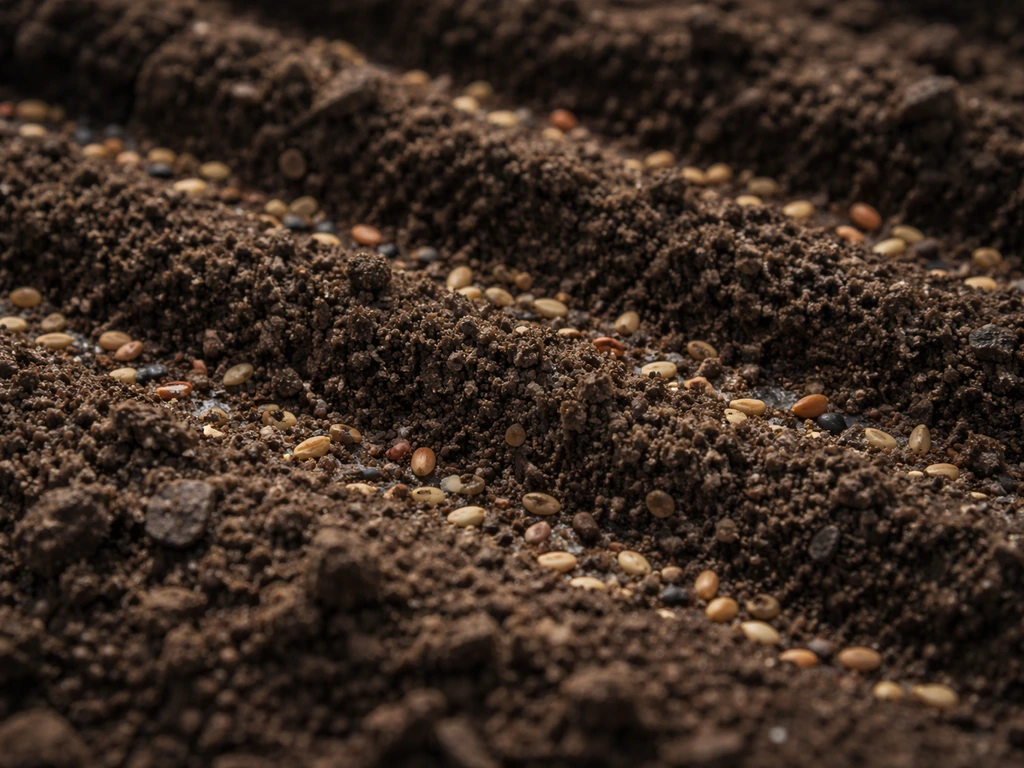
Most wildflower seeds are tiny and need light to germinate. The RHS is clear on this: press seeds lightly into the soil surface but don't bury them. If you rake them in too deep, many will simply never emerge. The correct method is to broadcast the seeds, then tamp or roll them so they make firm contact with the soil without being covered. Firm contact is essential; floating seeds that never touch moist soil won't germinate at all.
Cold stratification requirements
Many native wildflowers, especially perennials, have evolved to require a cold, moist period before they'll germinate. This is called cold stratification, and it mimics what happens naturally when seeds overwinter in the ground. Common stratification periods are 30 to 90 days at around 35 to 40°F. If you're sowing a native mix in late spring and germination is patchy or absent, this could be the issue: some of those seeds simply aren't ready to sprout without their cold treatment. Seed packets will often list the required stratification duration. Fall sowing lets nature handle this automatically.
Sunlight and site
Wildflowers generally want full sun (6+ hours daily). Shadier spots slow growth significantly and can lead to leggy, weak seedlings that never establish properly. If your planting area gets less than four hours of direct sun, check whether the specific species in your mix are shade-tolerant before assuming a timing problem.
Estimating your timeline by region and planting season
When you sow matters almost as much as what you sow. There are two main planting windows for wildflowers, and each produces a different type of result.
Spring sowing (February to June)
Spring sowing is the more intuitive approach and works well for annual-heavy mixes. In warmer climates (USDA zones 7 and above), you can sow as early as February or March once nighttime temperatures are reliably above freezing and soil temperatures climb above 50°F. In colder zones (4 through 6), late April through mid-June is more realistic. Spring-sown annual wildflowers typically bloom by midsummer. Perennials in a spring-sown mix won't bloom until the following year at the earliest.
Fall sowing (August to October)
Fall sowing is actually preferred for most native perennial mixes because seeds get their natural cold stratification over winter and germinate more reliably the following spring. blank" rel="noopener noreferrer">American Meadows recommends sowing at least 8 weeks before your first expected frost date so seeds have time to settle in before the ground freezes. In the UK and in mild US climates, autumn sowing (August through October) is standard practice for establishing a wildflower meadow. Watson Seeds (UK) recommends sowing in spring from March to mid-June, or in autumn from August to late-September, for establishing a wildflower meadow blank" rel="noopener noreferrer">autumn sowing (August through October). The payoff is earlier, more reliable spring germination compared to spring-sown seeds that lack stratification.
| Region / Zone | Best Spring Sow Window | Best Fall Sow Window | Expected First Annual Blooms |
|---|---|---|---|
| USDA Zones 3–4 (cold) | Mid-May to mid-June | Late August to September | Late July to September |
| USDA Zones 5–6 (moderate) | April to mid-May | September to early October | July to August |
| USDA Zones 7–8 (warm) | February to April | October to November | May to July |
| USDA Zones 9–10 (mild winter) | September to February | September to November | March to May |
| UK / Western Europe | February to May | August to October | June to August |
These windows assume you're targeting annuals for first-year color. If your mix is native perennial-focused, add one to two years to any flowering expectation regardless of when you sow.
What 'mature' actually means for wildflowers
Maturity for a wildflower mix isn't a single moment; it's a progression with three meaningful milestones you'll want to track.
Seedling stage
In the first few weeks after germination, wildflower seedlings look small, unremarkable, and sometimes identical to weeds. They're staying low to the ground on purpose, channeling energy into root development rather than upward growth. Don't panic if your patch looks like a flat, green mat at six weeks. This is completely normal, and it's a stage where weed competition is the biggest threat since young wildflower seedlings can't yet hold their own against more vigorous grasses and broad-leaf weeds.
Flowering stage
For annuals, flowering kicks in roughly 60 to 90 days after germination, assuming good conditions. For perennials, the first real flowering typically happens in year two, with full, robust flowering in year three. Some native species, especially long-lived prairie perennials, can take two to five or more years from germination to first bloom. That's not failure; that's the plant investing in longevity.
Reseeding stage
A well-managed wildflower patch becomes self-sustaining through reseeding. Annuals need to set seed every year to reappear the following season. Perennials naturalize from their root systems but also benefit from reseeding for genetic diversity. Once your patch reaches this stage, usually by the end of year two for annuals and year three or later for perennials, the meadow starts to manage much of its own continuity. This is why leaving seed heads standing after bloom is valuable, especially through autumn and winter.
Why germination might be slow or patchy (and how to fix it)
Patchy germination is one of the most common frustrations with wildflower mixes, and it almost always comes down to one of a handful of fixable causes. Here's how to diagnose and respond.
- Poor seed-to-soil contact: If seeds were broadcast but not pressed in, they may be sitting on the surface without contact with moist soil. Fix: Tamp the area firmly with a board or roller, or re-sow and press seeds in by walking over the area.
- Surface crusting: A hard crust can form on bare soil after rain or watering, especially in clay-heavy soils, physically blocking emergence. Fix: Gently break the crust with a light rake or hand fork, then mulch lightly with straw to prevent recurrence.
- Seeds buried too deeply: Wildflower seeds need to be near the surface. Raking them in aggressively can push them too deep where they don't get enough light to trigger germination. Fix: Accept the lost seeds and re-sow at the surface next season.
- Soil too cold: Germination stalls below 50°F. Fix: Wait for soil to warm naturally rather than adding heat. Check with a soil thermometer before expecting emergence.
- Unmet cold stratification: Native perennial seeds that haven't received their required cold period simply won't sprout. Fix: Fall-sow to let nature handle it, or pre-stratify seeds in moist sand in the refrigerator for 30 to 90 days before spring sowing.
- Overwatering or waterlogged soil: Seeds sitting in saturated soil will rot. Fix: Improve drainage before re-sowing, and adjust watering to keep soil moist but never soggy.
- Weed competition smothering seedlings: Sometimes germination is fine but seedlings get choked out before you notice them. Fix: Mow weeds to 4 to 6 inches during the first season to give wildflower seedlings a chance to keep pace.
If you're past the 30-day mark with little to no germination, resist the urge to immediately re-sow on top of what's already there. Some species, particularly native perennials, can take 6 to 8 weeks in the right conditions, and dormant seeds may still be viable. Give it another two weeks, keep soil moist, and check whether your soil temperature is actually in range before deciding to re-sow.
What to do after germination (watering, thinning, and mowing)
Getting seeds to germinate is only half the job. How you manage the patch in those first few months directly affects how quickly (and fully) your wildflowers bloom.
Watering in the establishment phase
For the first four to six weeks after germination, keep the soil consistently moist. This doesn't mean daily flooding; it means checking the top inch of soil and watering whenever it dries out. Once seedlings are 3 to 4 inches tall with established roots, you can back off to watering during dry spells only. Most wildflower mixes are bred for some drought tolerance, but they need that consistent moisture during the seedling stage to develop the root systems that later allow them to fend for themselves.
Thinning
If seedlings emerge in dense clumps, light thinning helps. Crowded plants compete for resources and often produce fewer blooms. Thin annual wildflowers to about 6 inches apart; give larger perennials 12 inches or more. Thinning feels counterintuitive but genuinely speeds up time to flowering because each plant has more access to water, nutrients, and light.
First-year mowing for weed control
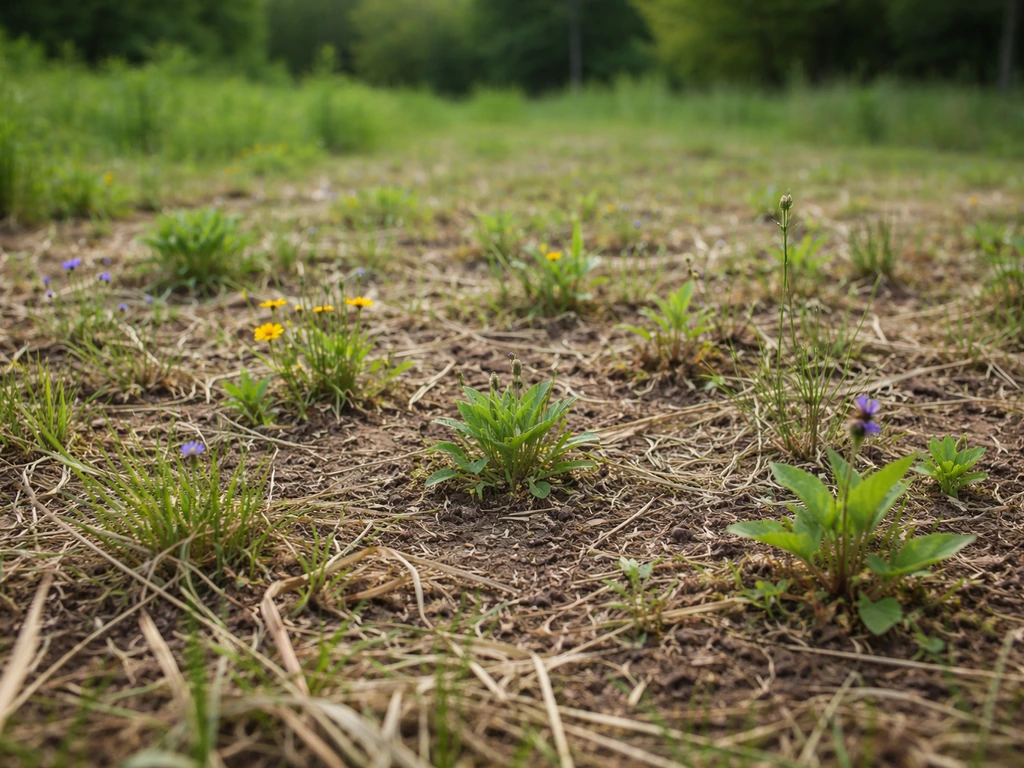
This is the most underrated tool in wildflower establishment. During the first growing season, mow the entire patch to 4 to 6 inches whenever weeds start to overtop your seedlings. The University of Minnesota recommends mowing regularly to this height throughout the first year. The University of Delaware suggests mowing to 6 to 12 inches as a weed control strategy, adjusting based on how tall your wildflower seedlings are. The logic: most weeds grow taller faster than wildflower seedlings, so mowing removes weed competition without harming the lower-growing wildflowers. It looks drastic but works.
Deadheading and end-of-season management
For annual wildflowers, deadheading (removing spent blooms) extends the flowering period because it prevents the plant from going to seed prematurely. If you want the annuals to self-sow and return next year, stop deadheading in late summer and let them set seed. For the end of the season, you can leave seed heads standing through winter for wildlife and then mow or cut back in late November or early spring. After the first year, once your meadow is established, limit mowing to once a year, ideally after seeds have dropped in autumn or in very early spring before new growth starts.
Picking the right mix for your time horizon
The most common mismatch I see is someone buying a perennial-heavy native wildflower mix expecting a colorful summer display in a few months. It doesn't work that way, and then they assume the seeds failed. Matching your mix to your actual timeline expectation makes the whole experience much more satisfying.
| Goal | Best Mix Type | Expected First Blooms | Long-Term Behavior |
|---|---|---|---|
| Quick color this season | Annual wildflower mix | 60–90 days from sowing | Must re-sow each year unless self-seeding |
| Color this year plus longer-term fill | Annual/perennial blend | Annuals in year 1; perennials year 2–3 | Becomes more perennial-dominated over time |
| Long-term low-maintenance meadow | Native perennial mix | Year 2 or 3 | Self-sustaining with minimal input after year 3 |
| UK/European cottage meadow | Traditional meadow mix (annuals + grasses) | First season for annuals | Grasses dominate long-term; needs annual management |
American Meadows' approach of mixing four annual species into perennial mixes is a smart strategy: the annuals provide first-season color and fill while the perennials establish. This is a great model to look for when shopping for a mix. The label should tell you what percentage of the mix is annual, biennial, or perennial, and if it doesn't, that's a red flag.
If you're in a hurry for results, an annual-only mix like California poppy, bachelor's button, and cosmos will give you blooms faster than almost anything else in the garden, sometimes within eight weeks of sowing. If you're building something permanent, commit to the three-year timeline and start that clock as soon as your seeds are in the ground. If you’re asking how long it takes seeds to grow in Minecraft, the timing depends on the specific crop and growth conditions in your game world.
One last thing worth noting: questions about seed-to-bloom timelines come up across all kinds of growing contexts. Whether you're planning a real-world wildflower patch or tracking growth cycles in a game environment, the underlying curiosity is the same: how long until something beautiful shows up? In Stardew Valley, rare seeds follow their own distinct growth timeline, so it's worth checking how long they take before planting wildflower patch or tracking growth cycles in a game environment.
In Stardew Valley, mixed flower seeds follow similar patience rules, and the exact grow time depends on your season how long until something beautiful shows up. In Minecraft, the timing works the same way: factors like crop type, growth conditions, and updates can affect how long seeds take before you see harvests seed-to-bloom timelines in Minecraft.
If you're working out mario odyssey how long for seeds to grow in a game setting, the same idea applies: growth depends on what you're planting and the conditions behind the scenes game environment. For real wildflowers, the honest answer is anywhere from eight weeks to three years depending on what's in your mix and how you manage it. But with the right expectations and a bit of patience, the payoff is genuinely worth the wait.
FAQ
If my wildflower seeds haven’t sprouted by day 30, should I re-sow right away?
Not usually. Some native perennial seeds can take 6 to 8 weeks when conditions finally line up. Instead, verify soil temperature and moisture, keep the seedbed evenly moist (not saturated), and wait about two more weeks before adding more seed on top of the existing layer.
Why did my mix germinate, but the seedlings look like weeds and then disappeared?
Early seedlings are easy to miss, and many losses happen from weed competition or drying. During the first 4 to 6 weeks after emergence, keep the top inch moist and control taller weeds by mowing to about 4 to 6 inches when weeds start overtopping seedlings.
Do I need to water every day to get wildflower seeds to grow faster?
No. The goal is consistent moisture at the seed depth. Check the top inch of soil, water when it dries out, and avoid flooding or letting waterlogged soil sit, especially in heavy clay where seeds can rot before germinating.
Should I bury wildflower seeds or cover them with compost after sowing?
Most tiny wildflower seeds need light at the soil surface to germinate, so they should not be buried. Press them lightly or roll/tamp for firm contact, then use a very thin layer of clean, weed-free straw if you need help preventing crusting or moisture loss.
My packet lists cold stratification. What should I do if I’m sowing in spring anyway?
If the mix needs a cold, moist period, spring sowing can stay patchy unless you mimic that treatment. Check the label for the required weeks and, if you cannot fall-sow, consider stratifying the seed before sowing (moist, cool conditions for the specified duration) rather than relying on weather alone.
How can I tell whether the delay is cold soil, moisture problems, or seed depth?
Cold soil usually shows slow or absent germination even though moisture is correct. Wet, compacted soil often leads to little-to-no emergence followed by seedbed “crust” or rot smells, and too-deep sowing often results in very low emergence despite otherwise good conditions. Use a soil thermometer and follow the press-in, not-bury approach to eliminate the most common causes.
Can I speed up bloom time by fertilizing early?
Typically, no. Over-fertilizing can favor fast-growing weeds and grasses and can shift seedling growth away from establishing roots. Stick to good seedbed prep and proper mowing, and avoid heavy feeding in the first season unless your soil is clearly deficient.
What spacing or thinning should I do if my seedlings come up in thick clumps?
Thin only if overcrowding is obvious. A practical approach is about 6 inches apart for many annuals, and roughly 12 inches or more for larger perennials, so each plant has access to water and light. Thinning can make the plants mature sooner and bloom more reliably.
How long will it take for a perennial-heavy native mix to bloom in my yard?
Expect mostly vegetative growth in year one, limited flowering in year two, and robust flowering by year three. Some long-lived prairie perennials may take 2 to 5 years or more from germination to first bloom, so patience is part of the timeline, not a sign of failure.
What if my mix includes both annuals and perennials, and the flowering timing seems inconsistent?
That’s normal. Annuals usually bloom roughly 60 to 90 days after germination, while perennials often wait until year two or later. Look for the staggered pattern: first-season blooms from annuals, then gradually increasing perennial color over subsequent years.
Does mowing or cutting the patch harm wildflowers?
It can help if you mow at the right height and timing. For the first year, mow when weeds start overtopping seedlings to around 4 to 6 inches (adjust upward if your seedlings are taller). The aim is to reduce weed competition while keeping lower-growing wildflowers intact.
Should I leave seed heads standing if I want the meadow to come back next year?
Yes, if you want self-seeding and stronger continuity. For annuals, let late-season blooms go to seed by stopping deadheading in late summer. For the overall patch, leaving seed heads through autumn and winter supports wildlife, then do a cut-back in late fall or very early spring before new growth starts.
Next Article
How Long Does Rare Seed Take to Grow in Stardew
Rare Seed grows in 24 days in Stardew Valley. Get the full planting to harvest timeline plus fixes for delays.