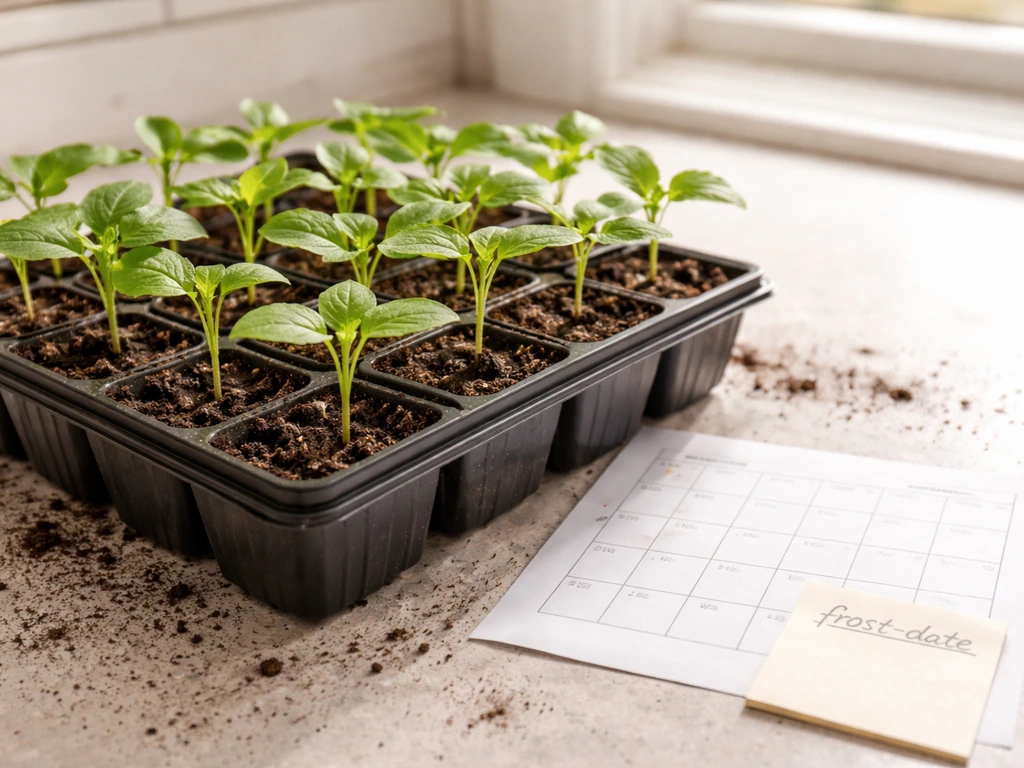
Most seedlings that seem stuck are dealing with one of three problems: temperature that's too cold at the root zone, inconsistent moisture, or not enough light after emergence. The fix depends on where you are in the process, so the first step is matching what you're seeing against what's actually normal for the plant you're growing. A pepper sitting in the tray for two weeks without any sign of life might be completely fine, while a bean that hasn't emerged after three weeks almost certainly needs attention. Once you know your baseline, diagnosing the real cause and deciding whether to wait, adjust, or restart gets a lot more straightforward.
Why Are My Seedlings Taking So Long to Grow? Fix It Fast
Marcus Henley
28 Apr 2026
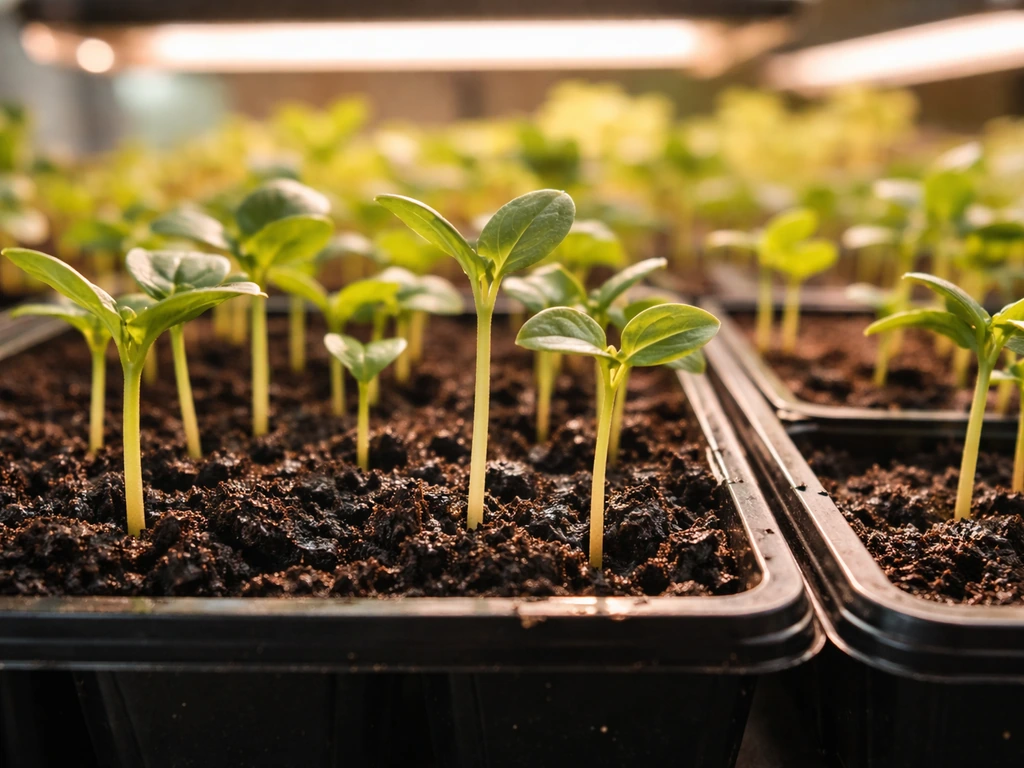
Typical seedling timelines by plant type
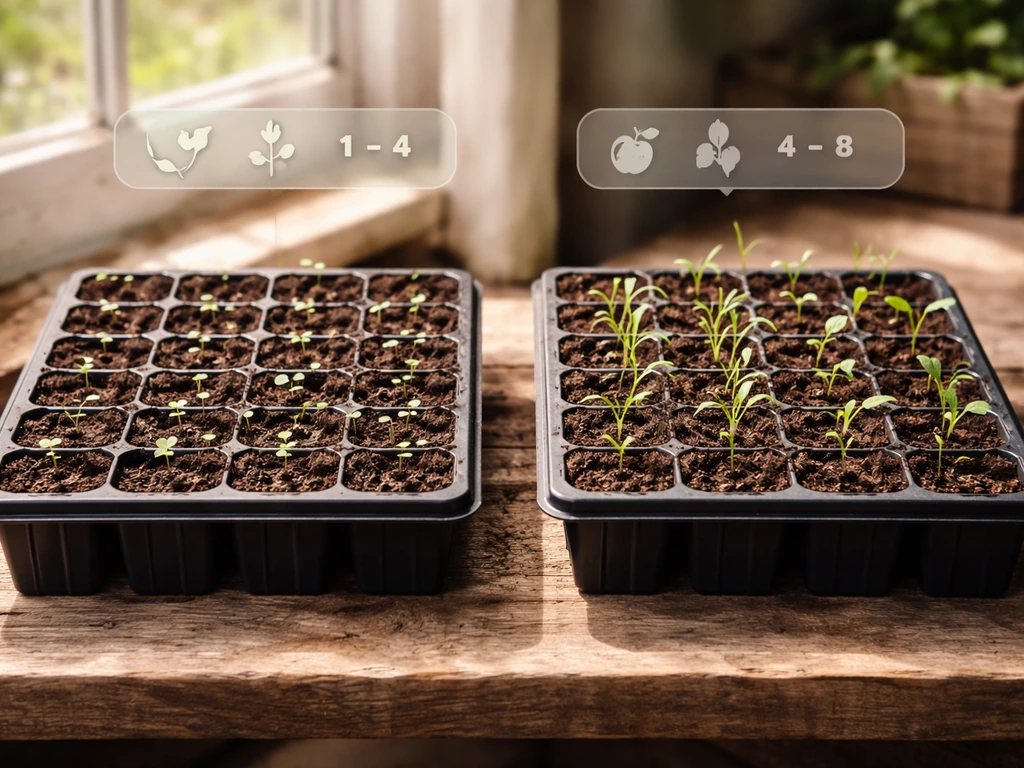
Before you troubleshoot, you need a realistic window to measure against. Germination timelines below assume optimal temperature and consistent moisture. In real-world conditions, especially early in the season when grow rooms and windowsills run cool, you should add a few days to a week onto most of these ranges.
| Plant | Days to Germination (Optimal) | Optimal Soil Temp (°F) |
|---|---|---|
| Broccoli | 4–7 days | 65–75°F |
| Beans | 8–10 days | 70–85°F |
| Cucumber | 3–10 days | 70–85°F |
| Tomato | 6–12 days | 70–80°F |
| Pepper | 7–10 days | 80–85°F |
| Peas | 7–14 days | 55–65°F |
| Lettuce | 7–14 days | 60–70°F |
| Basil | 10–14 days | 70–75°F |
| Carrot | 10–17 days | 60–70°F |
Peppers and basil are on the slower end even under ideal conditions, while fast germinators like broccoli and cucumber can surprise you with how quickly they push up. Carrots are notoriously slow and sensitive, and the window between 'germinating normally' and 'something went wrong' can be hard to read. If you're growing flowers, ornamentals, or grasses, variability is even wider.
Some perennial flower seeds take 21 to 30 days or longer to break dormancy, and many ornamental grasses need stratification before they'll move at all. How fast seedlings grow after that first emergence is a related but separate question, and the growth rate from sprout to true leaves depends heavily on the same environmental factors covered below.
From sprout to true leaves, the same temperature, light, and moisture factors can also explain why growth feels faster or slower than you expected how fast do seedlings grow.
Seed and timing issues that slow things down
Sometimes the problem starts before anything hits the soil. Old seed is one of the most common culprits. Seed viability drops every year in storage, and seeds stored in warm or humid conditions degrade faster. If you're using seed packets from two or three seasons ago, especially for plants like onions, parsnips, or leeks (which have naturally short viability), low germination rates or very slow emergence are predictable outcomes.
Sowing depth matters more than most people expect. The general rule is to plant seed at a depth of about three times the seed's maximum width. Tiny seeds like lettuce and basil barely need covering. When you go too deep, the seedling uses up its stored energy reserves trying to push through soil before it even reaches light, and it arrives at the surface already stressed or not at all. On the flip side, seeds that sit too close to the surface can dry out fast between waterings, stalling germination right after the radicle starts to emerge.
Wrong sowing season catches a lot of first-time growers off guard. Starting warm-season crops like peppers and tomatoes too early in a cold house means the seeds sit in borderline conditions for weeks. Conversely, sowing cool-season crops like peas in a warm room slows them down because peas actually prefer soil temperatures in the 55 to 65°F range, and warmer conditions suppress germination. Some seeds, particularly larger-seeded legumes and hard-coated seeds like morning glory or parsley, benefit significantly from pre-soaking for 8 to 24 hours before sowing. Skipping that step doesn't always cause failure, but it regularly adds days to germination time.
Environmental causes: light, temperature, moisture, and airflow
Light
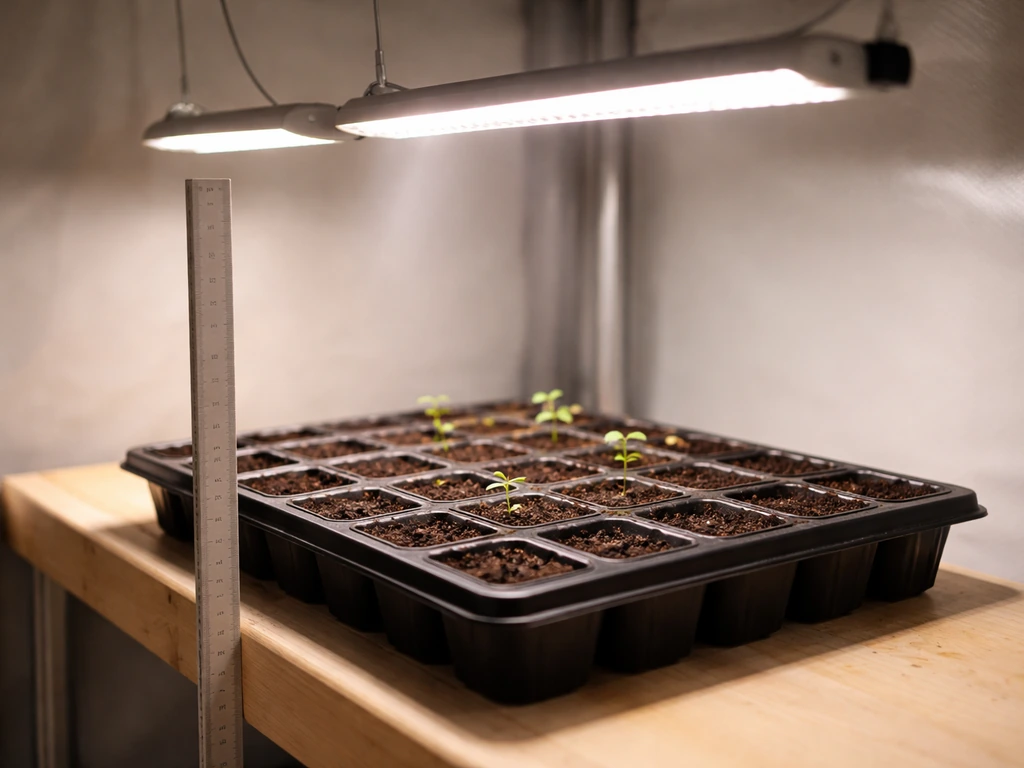
After emergence, light is the single biggest driver of healthy seedling development. In low light, seedlings don't stop growing, they actually grow faster in one dimension: upward. This is legginess, and it's the plant desperately reaching toward a light source it can't quite find. Leggy seedlings have long, thin, weak stems and pale leaves.
They look tall but they're not healthy, and they'll struggle at transplant. Most vegetable seedlings need 12 to 16 hours of light per day. As a general guide, many common vegetable seedlings take about a week or two after sprouting to reach true leaves when light and temperature are right how long for seedlings to grow true leaves.
A south-facing window in April might deliver 4 to 6 hours of usable intensity on a cloudy day, which is rarely enough. If you're using grow lights, distance matters as much as duration: an LED panel too far from the tray delivers a fraction of the light intensity it would at the recommended height. Bringing lights closer or extending the photoperiod to 14 to 16 hours fixes legginess faster than almost any other adjustment.
Temperature
Soil temperature at seed depth, not air temperature, is what controls germination speed. A room that feels warm at 68°F can have seed trays sitting at 58°F if they're on a tile floor or near a drafty window. Most warm-season crops stall badly below 65°F and germinate very slowly below 70°F. Peppers are the most temperature-sensitive common vegetable, really preferring 80 to 85°F soil to germinate reliably within their expected window. Cool-season crops like peas and lettuce can actually be slowed by heat, so if your setup runs warm you may be seeing the inverse problem. A cheap soil thermometer or infrared thermometer tells you in 30 seconds what's actually happening at root level.
Moisture
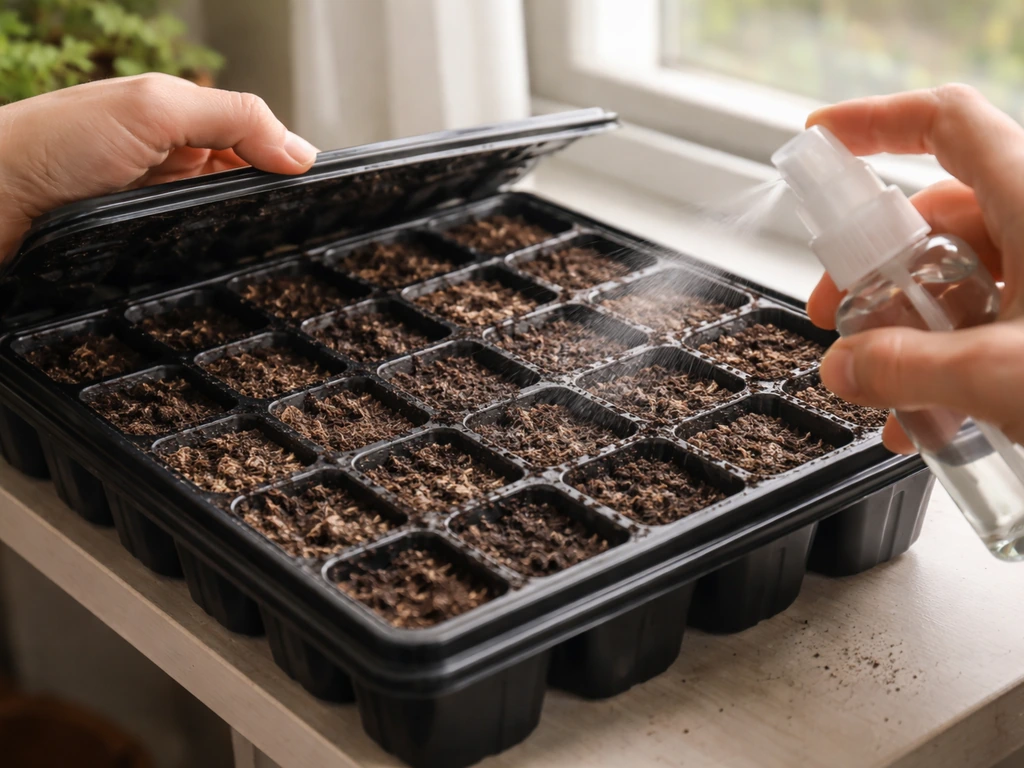
Inconsistent moisture is probably the most common reason home-grown seedlings stall. Seeds need consistent humidity to trigger and sustain germination. Let the surface crust dry out and germinating seeds die before they reach the surface. Keep it soaking wet and you invite damping-off, a fungal condition where seedling stems go tan and mushy at the base and seedlings collapse.
The target is an evenly moist medium that never fully dries out and never sits waterlogged. Bottom watering, where you set the tray in water and let the medium wick it up, is one of the most reliable ways to maintain this balance. For carrots specifically, surface crust is a major cause of poor emergence because carrot seedlings lack the strength to push through compacted or crusted topsoil.
Airflow
Stagnant, humid air is where damping-off thrives. A small fan on low, running a few hours a day across your seedling trays, reduces surface humidity, helps stems strengthen through light resistance, and dramatically lowers damping-off risk. Overcrowded trays with seedlings packed close together create the warm, wet, still microclimate that fungal pathogens love. If you've seen any seedlings collapse with brown, pinched-looking bases in an otherwise healthy tray, damping-off has entered and you need to remove affected seedlings immediately because it spreads.
Soil and container problems
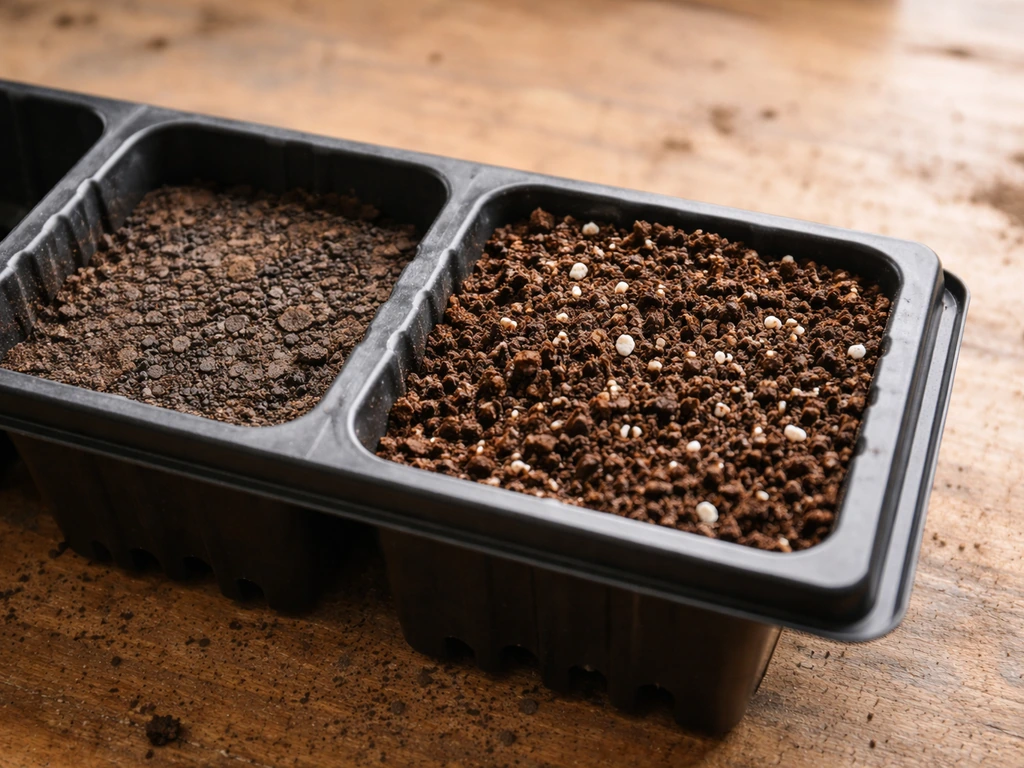
Using garden soil in seed-starting trays is one of the more reliable ways to end up with slow, sick seedlings. Garden soil compacts in small containers, drains poorly, and often carries fungal pathogens that thrive in the warm, wet conditions of a seed tray. A proper seed-starting mix is light, porous, and drains freely while still holding enough moisture. The target pH for seedling media is roughly 6.0 to 6.5. Straight peat moss has a pH around 3.8 to 4.5, which is too acidic for most vegetables and can significantly slow nutrient uptake even when all other conditions look right.
Container depth and drainage holes matter too. Cells that are too shallow limit root development and dry out too fast. Cells with no drainage or a blocked drainage hole stay waterlogged at the bottom even when the surface looks dry. That wet, anaerobic zone at the root base slows growth and invites rot. If you're using reused containers, check that drainage holes are clear and that the container hasn't cracked in a way that traps water.
Overcrowding is another silent growth-killer. Multiple seedlings competing in a single small cell stunt each other. Thinning down to one seedling per cell as soon as the strongest plant is clear, typically right after the first true leaves appear, makes a visible difference in growth rate within a week.
How to troubleshoot fast: what to check today
Run through this diagnostic list in order. Most of the time, one check reveals the problem within minutes.
- Check soil temperature at seed depth. Use a thermometer to measure directly in the tray. If it's more than 5°F below the optimal range for your crop, that alone explains slow or stalled germination. Move trays to a warmer location or use a heat mat.
- Verify sowing depth. Gently probe with a toothpick near an unsprouted seed. Tomatoes and peppers should be about 1/4 inch deep. Beans and peas around 1 inch. Tiny seeds like lettuce or basil should be barely covered or pressed onto the surface.
- Assess moisture. Squeeze a small amount of medium in your hand. It should hold together lightly but not drip. A bone-dry tray or a soaking-wet one both cause problems. Check whether the surface has crusted, especially for carrots and other fine-seeded crops.
- Look for damping-off symptoms. Examine the base of any emerged seedlings. Brown, water-soaked, or pinched stems at soil level mean damping-off is present. Remove affected seedlings and improve airflow immediately.
- Evaluate cotyledon and true leaf development. Seedlings with their seed leaves (cotyledons) open and upright are growing. Pale, yellow, or cupped cotyledons suggest light deficiency or overwatering. True leaves appearing above the cotyledons means the plant is past the critical early stage and growing on its own energy.
- Check for legginess vs. stunting. Leggy (tall and thin) means not enough light. Stunted (short, dark, barely moving) usually means cold temperatures or waterlogged roots. These two problems look opposite and have opposite fixes.
- Do a germination rate check. Plant 10 seeds of the same type in a damp paper towel, fold it, and place it in a plastic bag at room temperature. Check after the expected germination window for your crop. If fewer than 5 out of 10 germinate, seed viability is low and you should start fresh.
When to wait vs. when to restart
The decision to restart is easier once you know exactly how far outside the expected window you are. If your tomatoes have been in the tray for 8 days and haven't emerged yet, that's well within normal range. If they're at 21 days and nothing has come up, and your soil temperature is confirmed to be in the right range, then germination has almost certainly failed. At that point, restarting with fresh seed is the right call, and the sooner the better if you're working within a planting season.
Pre-emergence damping-off, where seeds rot before they ever push up, is more common than most people realize. Penn State Extension describes it as distinct from post-emergence collapse: you never see a seedling at all, and it can look identical to a simple germination failure. Damping-off is favored by conditions including excessive soil moisture, dense seeding, and cool soil temperatures before germination and warm soil temperatures after seedling emergence pre-emergence damping-off. If you notice a faint sour or musty smell from your tray and seeds that simply haven't appeared, that's often what happened. The fix for the next round is fresh sterile seed-starting mix, clean containers, proper moisture management, and slightly better airflow.
Some plants are genuinely slow and that's just their nature. Many perennial flowers, ornamental grasses, and herbs like parsley or rosemary can take three to five weeks before you see any movement. If you're growing something in that category for the first time, check the seed packet or a reliable germination reference for that specific variety before deciding you have a problem. Comparing how fast do seedlings grow across different plant families can save you a lot of unnecessary restarts.
| What You're Seeing | Most Likely Cause | Action |
|---|---|---|
| No emergence after 2x the expected window | Failed germination: cold temps, old seed, or pre-emergence damping-off | Check soil temp, do paper towel viability test, restart if needed |
| Emerged but not growing taller | Too cold or waterlogged roots | Warm the tray, reduce watering, check drainage |
| Tall, thin, pale seedlings | Insufficient light | Move closer to light source or extend photoperiod to 14–16 hours |
| Seedlings collapsing at base | Damping-off from overwatering or poor airflow | Remove affected plants, improve airflow, reduce watering |
| Uneven germination across a tray | Temperature variation or inconsistent seed depth | Verify tray is level, check depth consistency, add heat mat |
| Yellow cotyledons on recently emerged seedlings | Overwatering or low light | Reduce watering, increase light intensity |
How to speed up growth safely
Once you've identified the bottleneck, most growth-rate improvements happen within days of correcting it. Here are the adjustments that make the most difference, in roughly the order you should prioritize them.
- Fix the light first. Move grow lights to within the manufacturer's recommended distance, typically 2 to 4 inches for most seedling-stage LED panels, and run them for 14 to 16 hours per day with 8 to 10 hours of darkness. Seedlings still need a dark period to develop properly.
- Add bottom heat for warm-season crops. A seedling heat mat under your trays can raise soil temperature by 10 to 20°F above room temperature, which is often the single change that gets stalled peppers and tomatoes moving.
- Switch to bottom watering. Set trays in a shallow pan of water for 20 to 30 minutes, then drain. This keeps moisture even and prevents the boom-bust surface drying that stresses germinating seeds.
- Thin aggressively. One seedling per cell, once the first true leaves are clear. It feels wasteful but the remaining plant will visibly accelerate within a week without competition.
- Hold off on fertilizer until the second set of true leaves is established. Seed-starting mix contains little to no fertilizer by design, and seedlings live off cotyledon energy at first. Feeding too early doesn't help and can burn fine roots. Once you have a clear second set of true leaves, a diluted liquid fertilizer at half the recommended rate is appropriate.
- Harden off before transplanting. Moving seedlings directly from a warm, calm indoor environment to outdoor wind and temperature swings causes transplant shock that can stall growth by one to two weeks. A 7 to 10 day hardening process, starting with an hour of outdoor exposure and increasing gradually, makes the transition nearly seamless.
Knowing when to transplant is part of the speed equation too. Seedlings kept too long in small cells become root-bound and their growth slows dramatically, even with good light and care. Understanding how long to grow seedlings before transplanting for your specific crop prevents the plateau that comes from a plant that's outgrown its container but hasn't made it to the garden yet.
If everything looks right but growth still seems slower than expected, revisit the timeline table at the top of this article and compare where you are against what's actually normal. Some slowness is just the plant being a plant. Peppers, celery, and most herbs operate on their own schedule, and pushing them with extra fertilizer or heat usually causes more problems than it solves. Make the environmental corrections, give it another week relative to the expected window, and you'll almost always see the tray start moving.
FAQ
How can I tell if my problem is air temperature or soil temperature?
Yes. If your seed trays feel warm in the room but germination is slow, the root-zone temperature is often the culprit. Measure soil temperature directly at seeding depth (not air temperature), and insulate the tray from cold floors or drafts. A small heat mat can make a faster, more even change than simply turning up the thermostat.
What’s the right moisture level if my seedlings keep stalling?
Overwatering can stall seeds by depriving them of oxygen and increasing rot and damping-off risk. Aim for an evenly moist surface that never dries into a hard crust, but also never stays soggy. A practical check is to squeeze a handful of the seed-starting mix lightly, it should feel like a damp sponge, not drip.
Can I save seedlings once they start collapsing (damping-off)?
Usually not. Once a seedling is actively collapsing from damping-off, removing affected seedlings and improving airflow and surface dryness is the priority, but “rescuing” a collapsed plant rarely works because the stem base is already compromised. Focus on saving the remaining seedlings and starting a safer next round if many seeds never emerged.
If my seedlings are growing tall and pale, is that always a light issue, and what should I change first?
Light problems often look like legginess, but you can also see slow progress if seedlings get only brief light or very weak intensity. Use both timing (14 to 16 hours under lights is often needed) and distance (move lights closer if intensity is low) as separate fixes. If using a window, rotate trays daily to keep growth even.
Should I always soak seeds before planting to speed up germination?
Pre-soaking is most helpful when seeds have hard coats or are naturally slow, and it should be treated as a process step, not a requirement. For seeds that benefit, soak in cool water for the recommended window, then sow promptly. If you soak longer than intended, you can reduce germination by damaging or overly softening seed coats.
What should I do if I think I planted seeds too deep?
Check sowing depth with the seed’s maximum width, and treat pellets or very large seeds as exceptions where depth can be too much if you follow a generic rule. If you suspect you planted too deep, it’s usually better to restart with fresh seed because the seed energy reserve may already be exhausted, especially for fast-germinating crops.
How can I tell if my seed is old versus my conditions being the problem?
Old seed is a common cause of slow or uneven emergence, and it tends to worsen when storage was warm or humid. If you are seeing no sprouts beyond the upper end of the expected germination window, confirm viability next time by doing a simple germination test on a small batch before committing to a full sowing.
My trays look wet but not soggy, how do I know if drainage is the issue?
Blocked or missing drainage is easy to miss because the surface can look fine while the bottom stays waterlogged. Inspect drainage holes, ensure cells are not sitting in pooled water, and avoid trays without a way to let excess water escape. If you must reuse containers, flush and replace cracked ones.
Could overcrowding make seedlings grow slower even if I’m giving enough light and water?
Yes, overcrowding can stunt growth even if everything else is correct. Seeds compete for light, moisture, and space, and the microclimate between seedlings stays warmer and more humid. Thin to one seedling per cell as soon as thinning is feasible, typically right after true leaves appear.
Will using garden soil or straight peat moss slow down my seedlings?
Soil mix choice affects speed, and pH can be a hidden factor. If you used garden soil or plain peat moss, you can end up with compaction, poor drainage, or overly acidic media that slows nutrient uptake. For most vegetables, a seed-starting mix tuned for seedlings (around pH 6.0 to 6.5) helps prevent slow, weak growth.
Should I add more fertilizer to speed up seedlings that are slow?
No. Extra fertilizer before seedlings are established is rarely the fix, and it can increase salt stress or encourage damping-off through overly wet conditions. If you want to correct slow growth after true leaves appear, start with a gentle approach (like diluted seedling fertilizer) only after you confirm temperature, light, and moisture are on target.
When is it worth waiting longer versus restarting with fresh seeds?
If growth is delayed but within the crop’s normal window, wait and adjust the single biggest limiting factor you can identify (often soil temperature, light intensity, or moisture consistency). Recheck after about a week relative to the expected range, and only restart when you are clearly past the upper end, with root-zone temperature confirmed.
How can I tell if my seedlings are getting root-bound and slowing down?
Root-bound timing is specific to crop and container size, but the rule of thumb is to transplant before roots circle tightly and before growth enters a plateau. If you see roots wrapping the cell walls and the top growth stalls despite good light, it’s often time to move up to larger pots or into the garden.
Next Article
How Long to Grow Seedlings Before Transplanting
Days from sowing to transplant-ready seedlings, plus readiness checklist and how to time sowing by frost and conditions