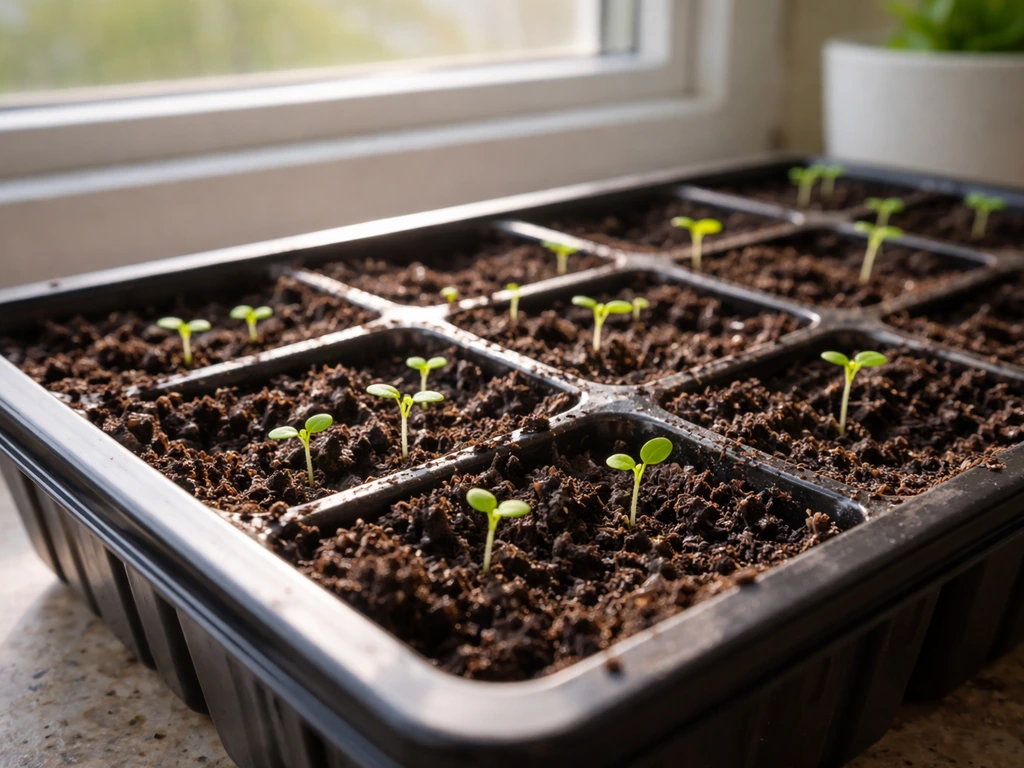
Most vegetables take anywhere from 3 to 14 days to germinate from seed, then another 4 to 8 weeks to reach transplant size, and finally 45 to 90 days (or more) from transplanting to actual harvest. If you want a simple way to estimate your specific timeline from sowing to harvest, use this guide on how long does it take to grow plants from seeds. That's a wide range, and the exact number depends on which vegetable you're growing, your soil temperature, and how consistent your watering and light are. The good news: once you know the numbers for your specific crop, you can plan your whole season around them with real confidence.
How Long Does It Take to Grow Vegetables From Seeds?
Marcus Henley
22 Apr 2026
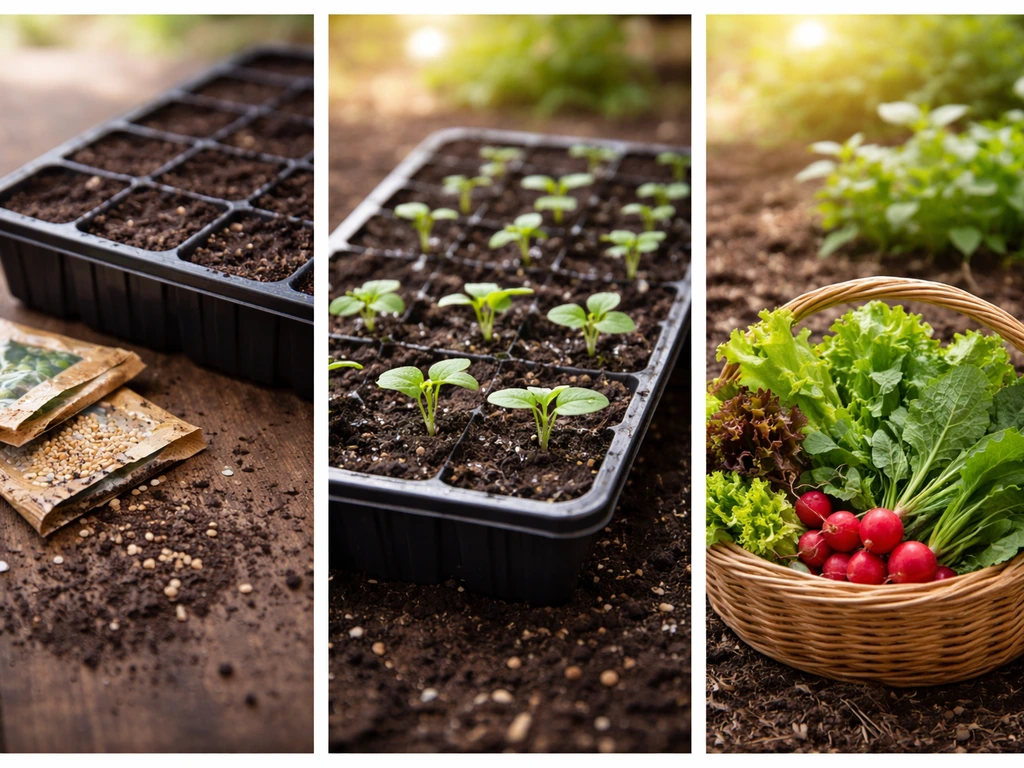
The full timeline: seed to germination to seedling to harvest
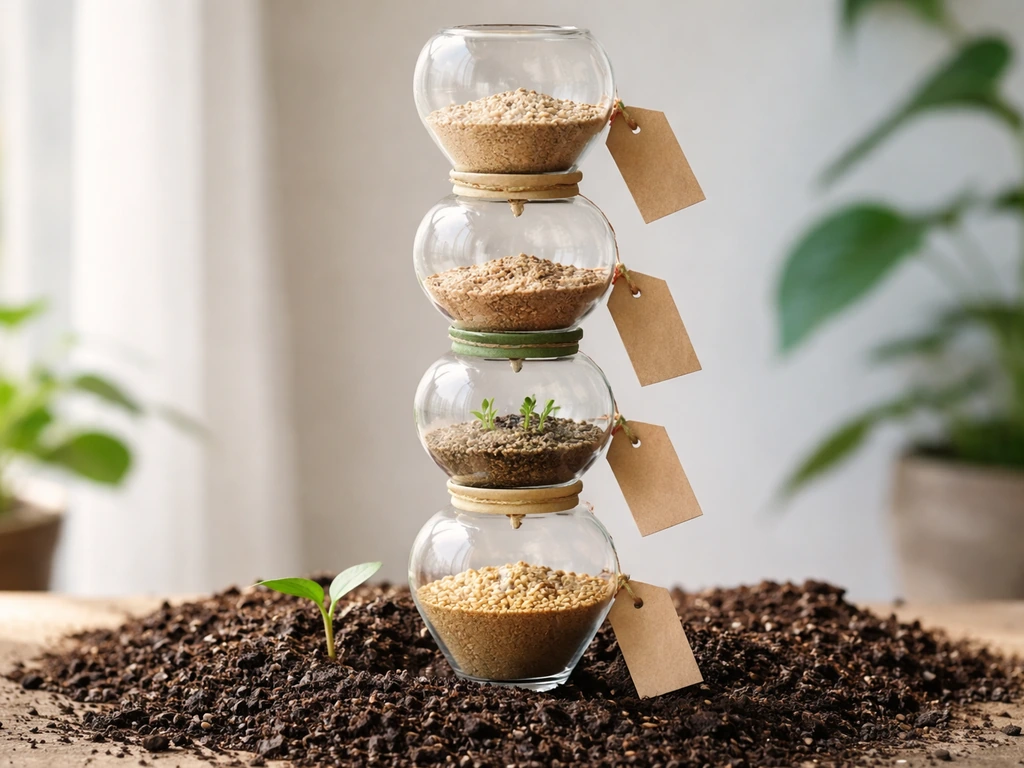
There are essentially four stages to track when you're growing vegetables from seed. Each one has a different clock running, and they stack on top of each other to give you your total time from sowing to eating.
- Germination (days 1 through roughly 3–14): The seed absorbs moisture, cracks open, and sends up its first sprout. This phase is entirely driven by soil temperature, moisture, and oxygen.
- Seedling establishment (weeks 1–8 after germination): The seedling grows true leaves and builds a root system big enough to survive transplanting. Timing depends heavily on light and temperature.
- Hardening off (1–2 weeks before transplanting outdoors): You gradually expose seedlings to outdoor conditions so they don't go into shock. This is not optional for most crops.
- Outdoor growth to harvest (45–90+ days from transplanting): Once in the ground, days-to-maturity (DTM) counts down from transplant date, not from the day you first sowed the seed.
That last point trips up a lot of people. The DTM number printed on your seed packet almost always starts from transplant date outdoors, not from the day you started seeds indoors. So if your tomato packet says '75 days,' that means 75 days after you set the transplant in the garden, not 75 days after you dropped the seed in a tray. Factor in 6–8 weeks of indoor growing plus a week or two of hardening off, and your real total time from seed to first tomato is closer to 100–115 days.
How the vegetable type and variety shift the whole schedule
Cool-season crops and warm-season crops operate on completely different timelines, and choosing an early-maturing variety versus a late-season one can swing your harvest date by two to four weeks or more.
Cool-season crops like broccoli, cabbage, spinach, and lettuce are built to germinate quickly in cooler soil (around 50–60°F) and tend to have shorter days-to-maturity. Leaf lettuce, for example, can be ready to harvest in as little as 45 days from transplanting. Broccoli typically runs 50–65 days. These are your earliest crops, which is why experienced gardeners start them indoors 6–8 weeks before the last frost and get them in the ground before tomatoes are even close to going out.
Warm-season crops, including tomatoes, peppers, cucumbers, and squash, need warmer soil to germinate well (65–85°F) and take much longer from seed to table. Tomatoes and peppers are the classic example: peppers take 9–14 days just to germinate under ideal conditions and then need 6–8 weeks of seedling time before they're transplant-ready, followed by 70–90 days to harvest. That's why you start peppers 10–12 weeks before your last frost date. Tomatoes are similar, with 6–12 days to germination and 5–7 weeks to transplant size. You can use these tomato-specific germination and transplant timelines to estimate how long it takes tomatoes to grow from seed in your own conditions how long does it take tomatoes to grow from seed.
Within each category, variety choice matters a lot. An 'early' tomato variety might mature in 55–60 days, while a big beefsteak can take 85 or even 95 days. If you're in a short-season climate, choosing early-maturing varieties isn't just a preference, it's often the difference between a successful harvest and a frost-killed plant that never delivered.
What actually controls how fast seeds grow
Four environmental factors drive germination speed and seedling growth more than anything else. Get these right and your seeds will perform close to the numbers on the packet. Get them wrong and you'll be waiting much longer, or not see anything at all.
Soil temperature (not air temperature)
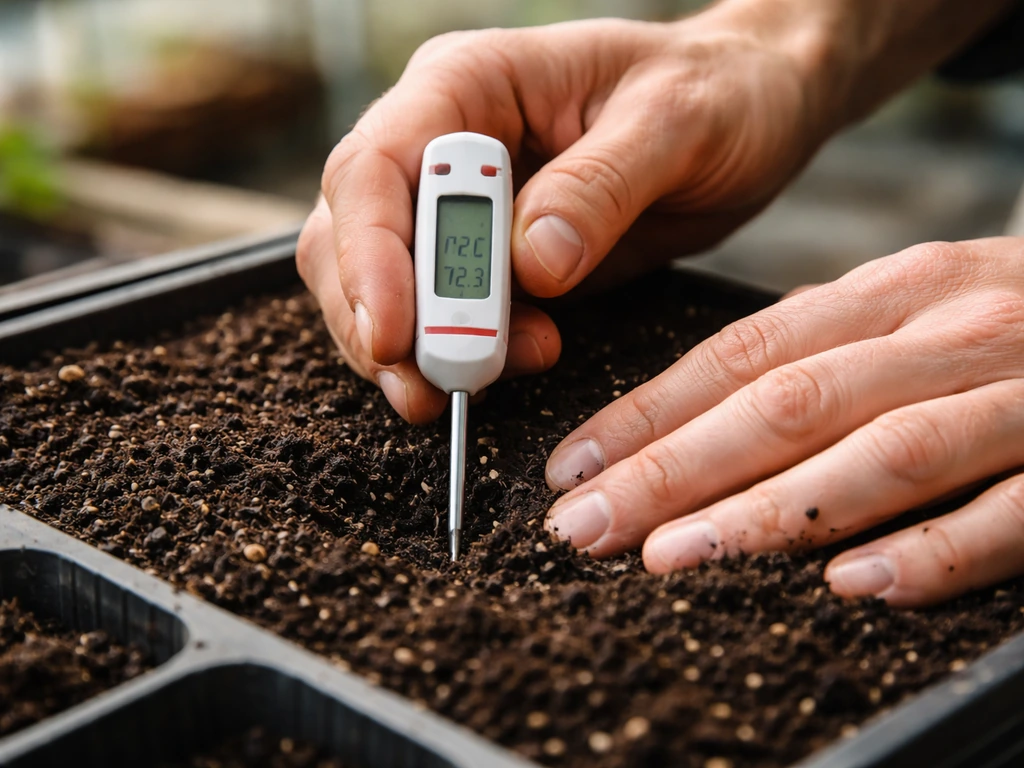
This is the one most beginners overlook. Germination is triggered by soil temperature, not the air temperature in your room or greenhouse. You can have a warm house and still have cold, slow-to-sprout trays sitting on a concrete floor. A cheap probe thermometer is worth every penny here. For warm-season crops like tomatoes and peppers, you want soil at 65–85°F. For cool-season crops like broccoli and cabbage, 50–60°F works fine. Temperatures that are too high also cause problems: CSU Extension notes that maximum temperature limits exist for most vegetable seeds, and pushing past them actually inhibits germination, so hotter is not always faster.
Moisture
Seeds need consistent moisture to germinate, but 'moist' does not mean 'soaking wet.' Covering trays with a plastic dome or plastic wrap traps humidity and keeps the medium from drying out before seeds sprout. Once seedlings emerge, the dome comes off. Overwatering after germination is one of the fastest ways to kill young seedlings, especially if they sit in standing water at the tray bottom.
Oxygen
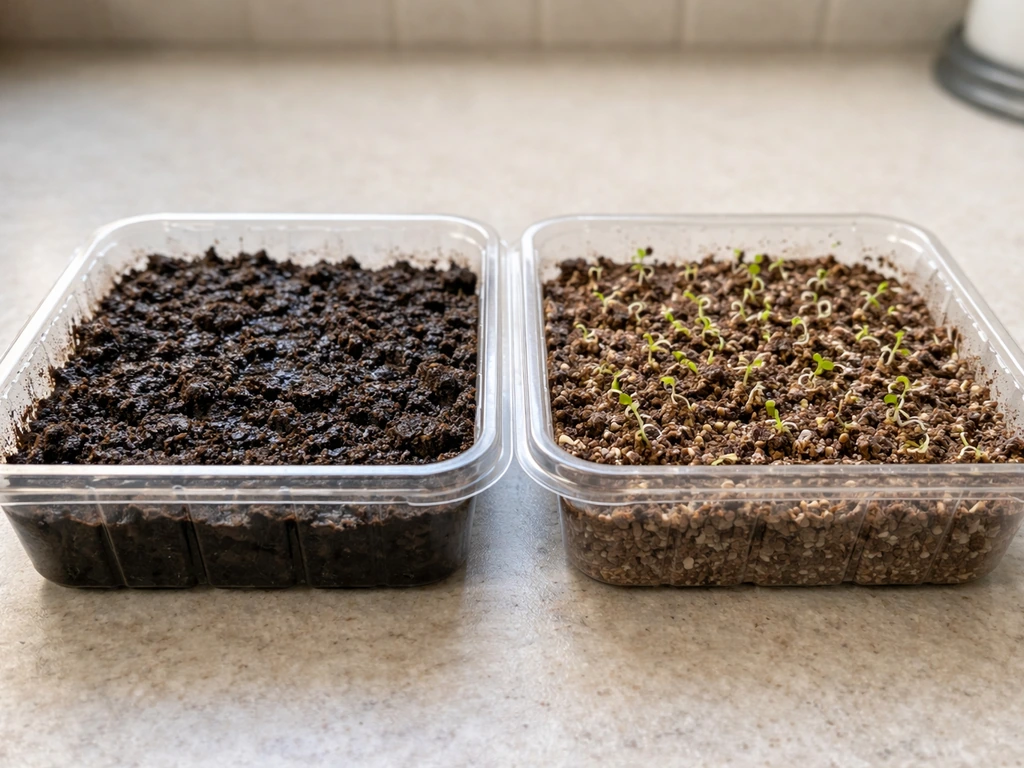
Seeds actively consume oxygen as they germinate. A waterlogged or compacted growing medium cuts off that oxygen supply and slows or stops germination entirely. Use a light, well-draining seed-starting mix, not dense garden soil, and water gently rather than drenching.
Light
Most vegetable seeds don't need light to germinate, but once seedlings emerge, adequate light immediately becomes critical. Weak or insufficient light is the main reason for leggy, floppy seedlings that fall over or never develop strong stems. A south-facing window can work, but a grow light positioned 2–4 inches above the seedlings for 14–16 hours a day produces much more consistent results. After germination, Oregon State Extension identifies light as one of the primary environmental limits on how fast a plant actually grows.
How to calculate your own sowing and harvest dates
The formula is straightforward once you have a few numbers. Here's how to build your schedule from scratch.
- Find your last frost date. This is your anchor point for the whole season.
- Look up the recommended 'transplant age in weeks' for your specific crop (seed packets, extension planting guides, or CSU's vegetable planting chart all include this). For tomatoes it's typically 6–8 weeks; for peppers 8–10 weeks; for cucumbers 4–5 weeks.
- Add the days-to-germination for that crop onto your transplant age. For example, tomatoes need about 6–12 days to germinate and then 5–7 weeks to reach transplant size. So you're looking at roughly 7–8 weeks total from sowing to transplant-ready.
- Count backward from your last frost date by that total time to get your indoor sowing date.
- Add 1–2 weeks for hardening off before you actually set transplants out.
- After transplanting, add the days-to-maturity (DTM) from the seed packet to project your harvest window.
Here's a worked example: Last frost date is May 10. You want to grow tomatoes (germination 6–12 days, transplant age 6–7 weeks, DTM 75 days). Count back 7 weeks from May 10 and you get around March 22 as your indoor sowing date. Transplant goes out around May 10, and first harvest would be around July 24. That total window from seed sowing to harvest is about 125 days, even though the packet says '75 days.'
For direct-sown crops like lettuce, spinach, carrots, and beans, the math is simpler because you skip the indoor seedling phase. The DTM for direct-sown crops typically counts from the day you sow outdoors, so those numbers are closer to what you'll actually experience.
Fast growers vs. slow growers: sample ranges and how to plan around them
Here's a practical look at common vegetables grouped by how quickly they go from seed to harvest. These ranges reflect typical conditions and include both germination and maturity timelines.
| Vegetable | Germination (days) | Transplant age (weeks) | Days to maturity (from transplant or direct sow) | Total seed-to-harvest estimate |
|---|---|---|---|---|
| Lettuce (leaf) | 7–14 | 3–4 (or direct sow) | 45–60 | 55–75 days |
| Spinach | 7–14 | Direct sow | 45–60 | 52–74 days |
| Radish | 3–7 | Direct sow | 25–35 | 28–42 days |
| Broccoli | 4–7 | 5–7 weeks | 50–65 | 85–105 days from seed |
| Cabbage | 4–7 | 5–7 weeks | 60–80 | 95–115 days from seed |
| Cucumber (pickling) | 3–10 | 3–4 weeks | 55–65 | 75–95 days from seed |
| Squash/Pumpkin | 5–10 | 2–3 weeks | 50–70 | 65–90 days from seed |
| Tomato | 6–12 | 6–8 weeks | 70–90 | 100–125 days from seed |
| Pepper (sweet) | 9–14 | 8–10 weeks | 70–90 | 115–135 days from seed |
Radishes are the classic fast crop, ready in under six weeks from direct sowing. Leaf lettuce and spinach are the next tier, great for filling gaps and getting early-season harvests. If you want something in the ground in early spring and eating fast, those are your go-to options. On the opposite end, peppers are the slowest common vegetable in most home gardens, which is why experienced growers start them first, often as early as January or February in cold climates. Tomatoes are a close second.
Planning tip: stagger your sowing. Instead of seeding all your lettuce at once, sow a small batch every two to three weeks through spring. You'll have continuous harvests instead of a glut followed by a gap. The same logic applies to beans and cucumbers once the season is warm enough.
If you're growing tomatoes or peppers specifically, those crops have enough complexity in their timelines that they're worth examining in more detail on their own. The timing differences between varieties, and the way soil temperature and light affect early seedling development, make a big difference in real-world results.
When seeds are slow or don't come up at all
Slow germination is frustrating, but it's almost always traceable to one of a few fixable causes. Before you assume bad seeds, work through this list.
The soil is too cold
This is the number one culprit. If you're starting warm-season crops on a cool windowsill or in a basement where the floor temperature is in the 50s, germination will be very slow or stalled. Use a seedling heat mat until sprouts emerge, then remove it. Use a seedling heat mat until sprouts emerge, since University of Maine Cooperative Extension notes that bottom-heat mats only need to be used until germination begins. The University of Maine Extension is clear that bottom-heat mats primarily help during the germination phase, not necessarily after.
Inconsistent moisture
Seeds that dry out partway through germination often don't recover. Conversely, constantly soaked medium leads to rot. A humidity dome over the tray until sprouts emerge solves most moisture consistency problems. Check daily and mist if the surface looks dry.
Damping off
Damping off is a fungal problem that either rots seeds before they sprout (so you see nothing) or collapses seedlings right at the soil line after they've emerged. It thrives in wet, poorly ventilated conditions and is heavily associated with unclean trays and containers. Penn State Extension explains that you can have an entire tray fail to germinate simply because damping-off fungi consumed the seeds underground. Prevention means starting with clean trays (a 10% bleach soak works well), using fresh sterile seed-starting mix, and not overcrowding seedlings. Good air circulation after germination is also key.
Sown too deep or too shallow
Each vegetable seed has an ideal sowing depth. A general rule is to plant seeds at a depth of two to three times their diameter. Very small seeds like lettuce and celery need only surface contact or very light covering. Bury them too deep and they exhaust their energy before they can reach light.
Old or low-viability seed
Seed viability declines over time. If you're using packets that are several years old, do a quick germination test: fold 10 seeds in a damp paper towel, keep it warm for the expected germination window, and count how many sprout. Less than 5 out of 10 germinating means you should sow more heavily or get fresh seed.
Soil temperature is too high
This one surprises people. CSU Extension explicitly lists maximum soil temperature thresholds for germination. Lettuce, for example, famously struggles to germinate when soil temperatures exceed about 75–80°F. If you're in a hot climate starting seeds in midsummer, the issue isn't that conditions are too cold, it's that they're too warm.
Knowing when you're actually 'done': transplanting, hardening off, and harvesting
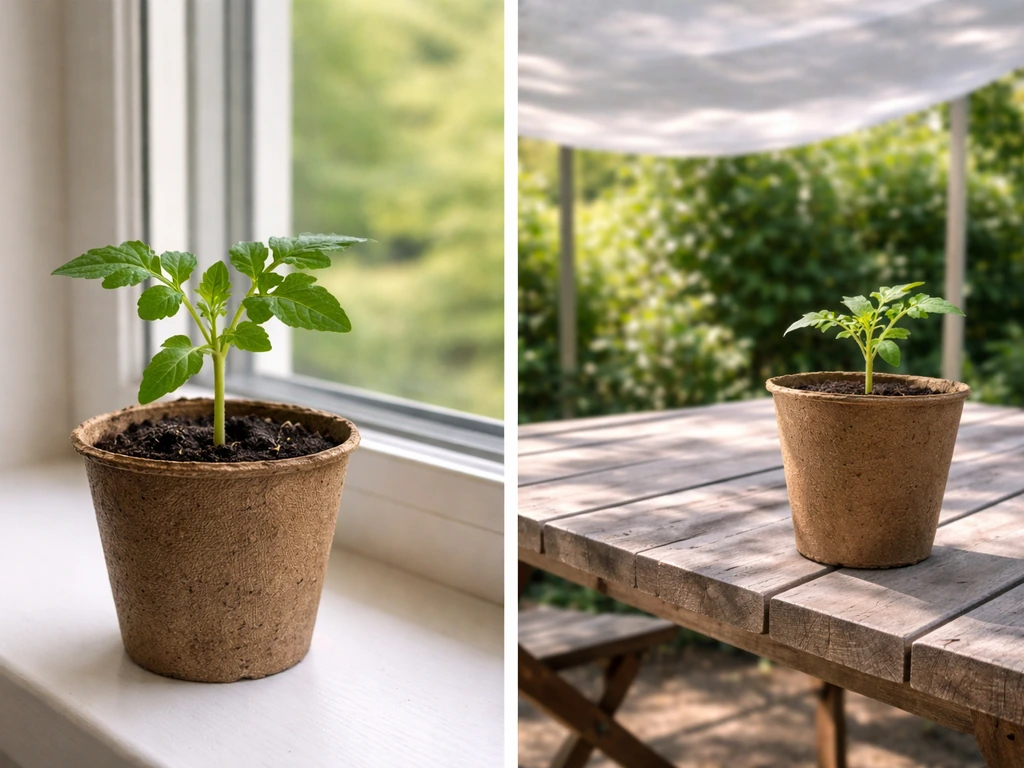
One of the most common mistakes is treating 'germinated' as 'done' or 'big enough to go outside' as 'ready to plant.' Each stage has its own readiness signal.
When a seedling is ready to transplant
Most vegetable seedlings are ready to transplant when they have two to four true leaves (not the first seed leaves, which look different) and a well-developed root ball that holds the plug together. For tomatoes and peppers, that's typically 6–10 weeks after sowing. For cucumbers and squash, it's faster, around 3–4 weeks. Don't rush this. A seedling set out before it has a solid root system will stall badly and often never catches up to one transplanted at the right stage.
Hardening off: the step most people skip
Hardening off means gradually exposing indoor-grown seedlings to outdoor conditions over 7–14 days before transplanting them permanently. SDSU Extension, University of Maryland Extension, and MSU Extension all agree on the 1–2 week window. You start with short periods (1–2 hours) of sheltered outdoor exposure, working up to full days and then full sun. Skipping this step or rushing it leads to sunscald, windburn, and transplant shock that can set a plant back by weeks. Maryland Extension also notes to avoid putting tender seedlings out when temperatures are below 45°F, even during hardening off.
Knowing when to harvest
Days-to-maturity is a guideline, not a guarantee. Visual and tactile cues are more reliable than calendar counting alone. Broccoli should be harvested while the head is still tightly compact and dark green, before any yellow flower buds open. Cucumbers are best picked when firm and at typical size for the variety; oversized cucumbers turn seedy and bitter quickly. Peppers can be harvested green (at full size) or left on the plant to ripen to red, orange, or yellow, but the color change adds several more weeks to your timeline. Spinach should be harvested before bolting begins. Tomatoes are ready when they give slightly to gentle pressure and have reached full color for their variety.
The practical takeaway: use your DTM to know when to start watching closely, but let the plant tell you when it's actually ready. Some seasons run fast; some run slow. A late cold snap, an unusually hot stretch, or inconsistent watering can all shift your harvest window by one to two weeks in either direction, and that's completely normal.
Putting it all together for your garden
If you take nothing else from this guide, take the formula: last frost date, minus transplant age in weeks, minus days-to-germination, equals your indoor sowing date. Then add DTM after transplanting to project harvest. Write those dates on a calendar or in a notebook, and revisit them as the season progresses. Conditions vary, and your dates will shift a bit, but having the framework means you're always oriented rather than guessing.
The crops with the most complex timelines, especially tomatoes and peppers, reward extra attention to detail in the seed-starting phase. Herbs like basil, dill, and cilantro follow their own germination and maturity patterns and are worth planning separately if they're part of your garden. Tulsi (holy basil) is an herb too, so its seed-starting timeline is usually estimated the same way: germination depends on warmth and moisture, then you plan for seedling and harvest time based on your local growing conditions Tulsi from seeds. The core principle is the same across all of them: know your numbers, control your conditions, and don't skip hardening off.
FAQ
How can I tell the right seed-starting date if my last frost date is an estimate and weather changes?
Use the framework from your seed packet (germination plus transplant age plus DTM) but build a buffer. Plan your first sowing or transplant for your target date, then schedule a second batch 7 to 10 days later as insurance, especially for warm-season crops that cannot tolerate cold soils.
Do I need to add days-to-maturity if I direct sow, or is that already included?
For most direct-sown vegetables, the DTM typically assumes you start counting from the outdoor sow date, so you usually do not add a separate germination or indoor seedling phase. The common mistake is double-counting germination when you also count the “days to maturity” from the transplanting side of the label.
What soil temperature should I aim for if my seedlings are on a heat mat but the room is cold?
Prioritize soil or growing-medium temperature, not air temperature. Place a probe in the tray or use a mat designed for seed-starting, and expect slower germination if the tray sits on a cold surface like wood or concrete that cools the medium faster than the mat can warm it.
Why do my seeds sprout but then growth stalls for days or weeks?
Often this is a light or oxygen issue after germination. Once you see sprouts, remove domes, increase light immediately, and avoid letting the mix stay soggy. If seedlings become pale and slow, they are usually not getting enough light to produce sturdy stems and roots.
How long should I expect seeds to take before I assume they failed?
Do not judge germination by the first day you expect sprouts. Wait until the upper end of the germination window under your conditions. If nothing appears near the high end, do a germination test with fresh seeds from the same packet if you have them, or sow a replacement batch to avoid losing the season.
Should I thin seedlings, and does thinning change how long until harvest?
Thinning affects speed and final size, but it is usually necessary. Crowded seedlings compete for light and nutrients, causing slower, weaker growth and delayed harvest. Thin to the spacing recommended for your variety soon after true leaves appear, then your plants typically resume the expected timeline.
Can I harvest earlier than the “days to maturity” number?
Yes for many crops, but the quality tradeoff matters. Leafy greens and herbs are often best harvested young. For crops like broccoli heads or carrots, harvesting before maturity can mean smaller or less flavorful produce, so use visual cues (head tightness, firmness, color) rather than the calendar alone.
Does hardening off change the total “seed to harvest” time?
It can, but usually by a small margin if done correctly. If you skip it or rush it, transplant shock can set plants back by one to two weeks, effectively extending the seed-to-harvest timeline. Proper hardening off reduces stalling so your schedule stays closer to your estimates.
What’s the quickest way to speed up harvest if I’m behind schedule?
First, confirm what’s actually limiting you: temperature, light, or transplant readiness. The fastest “fix” is often moving to more consistent light (grow lights positioned correctly) and ensuring warm-season seedlings have adequate bottom heat until sprouting. Over-fertilizing late in seedling stage can also backfire, so focus on conditions that directly drive germination and sturdy growth.
How should I handle germination if my seeds are older than the packet date?
Older seed often germinates more slowly and less uniformly. Run a germination test with a damp towel, and if germination is low, sow heavier or replace the seed. This prevents partial stands that later take longer to fill space and delay harvest.
Do herbs follow the same timing as vegetables when planning from seeds?
They often follow different patterns, especially for slow-germinating herbs. Plan herbs separately because germination and maturity can be longer than typical leafy greens, and some herbs (like cilantro) may bolt quickly depending on temperature, changing the effective harvest window.
Next Article
How Long Does It Take to Grow Herbs From Seeds?
Timelines to grow herb seeds from germination to first harvest, with ranges, checkpoints, and fixes for slow sprouting.