From seed to your first ripe tomato, you're looking at roughly 95 to 136 days total, depending on the variety you're growing and the conditions you're working with. That breaks down into two main phases: about 5 to 8 weeks to get a seedling ready to go in the ground, then another 60 to 80 days (sometimes more) from transplant to harvest. If you're just wondering whether your seeds are going to sprout this week, germination alone typically takes 5 to 10 days when soil temperatures are warm. Keep reading and I'll walk you through each stage so you can build a real schedule around these numbers.
How Long Does It Take Tomatoes to Grow From Seed?
Marcus Henley
2 Apr 2026
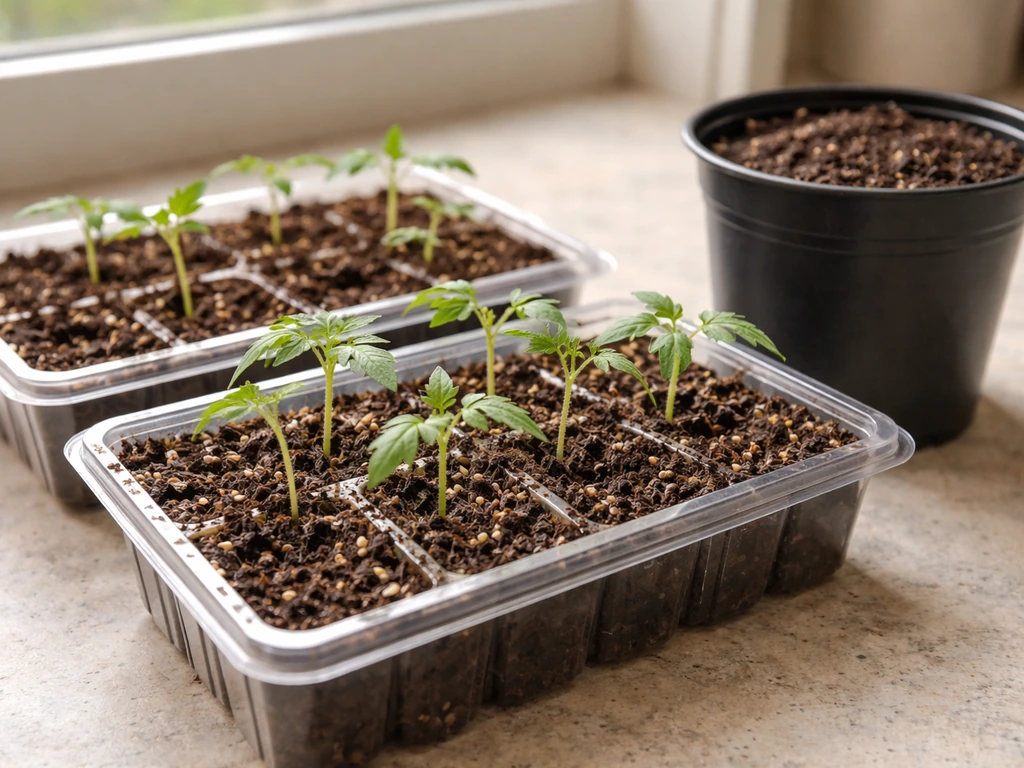
Typical tomato seed germination timeline
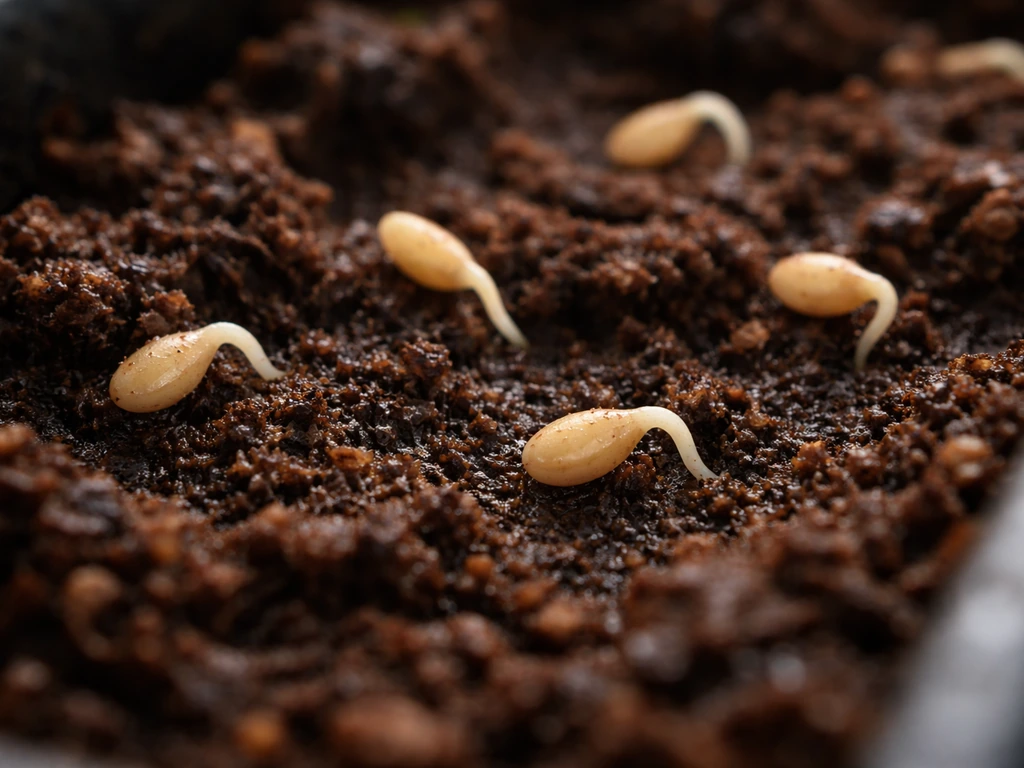
Under good conditions, tomato seeds germinate in about 5 to 10 days. The key phrase there is "good conditions," and temperature is almost the entire story. Tomato seeds germinate best when soil temperature is between 70 and 95°F, with the sweet spot right around 85°F. At that temperature, you'll often see sprouts pushing up in as few as 5 days.
Cool soil is where timelines go sideways. At 50°F, tomato seeds can take over 40 days to germinate, and some won't germinate at all. On the other end, soil temperatures above about 104°F will likely kill germination entirely. This is why starting seeds indoors on a heat mat makes such a difference. A windowsill in an unheated room in early spring can easily sit in the 55 to 65°F range, which stretches your germination window from a week to three or four weeks. That's not a failed batch of seeds; that's just cold soil doing what cold soil does.
Beyond temperature, good seed-to-soil contact matters more than most people realize. A fine, even seedbed or a quality, fine-textured seed-starting mix presses the seed against moisture consistently, which speeds up imbibition (the water absorption that triggers germination). If you're sowing into chunky, lumpy mix, the seed may be sitting in an air pocket, which delays the whole process.
One more thing worth checking before you panic about slow germination: seed age. Tomato seeds are actually pretty long-lived, with viability typically holding for 6 to 10 years under good storage conditions. But "good storage" means cool, dry, and dark, not the garden shed. Seeds stored in a humid garage for a few summers will lose viability faster. If you're using old seeds, expect uneven germination and lower germination rates even if you have perfect temperatures.
Seedling emergence and growing to transplant size
Once seeds germinate, you're in the seedling phase, and this stage takes about 5 to 8 weeks from the day you sowed to the day you have a plant ready to go outside. That's a wide range, and it's mostly driven by light and temperature.
Tomato seedlings grow best with daytime air temperatures around 70 to 80°F and nighttime temperatures around 60 to 65°F. Drop below 50°F at night and growth slows significantly. If you're growing indoors under grow lights, you have a lot of control here. If you're relying on a south-facing window in early spring, cool nights in the house can quietly add 1 to 2 weeks to your seedling timeline.
The standard target for a transplant-ready tomato seedling is 4 to 5 true leaves and a height of about 5 to 6 inches (12 to 15 cm). Some guides push this a little further, targeting a dark green plant that's 6 to 8 inches tall with a thick, sturdy stem. The stem thickness matters almost as much as height. A tall, spindly seedling with a thin stem is a sign of insufficient light, and that plant will struggle after transplanting. If your seedlings are stretching toward the window, move them closer to a light source or add supplemental lighting.
This is also the stage where growing vegetables from seeds in general requires the most hands-on attention. Consistent watering, adequate light, and temperature management during those 5 to 8 weeks set the foundation for everything that comes after. Shortcut this phase and the transplant struggles. Do it right and you'll put a genuinely strong plant in the ground.
From transplant to your first tomatoes
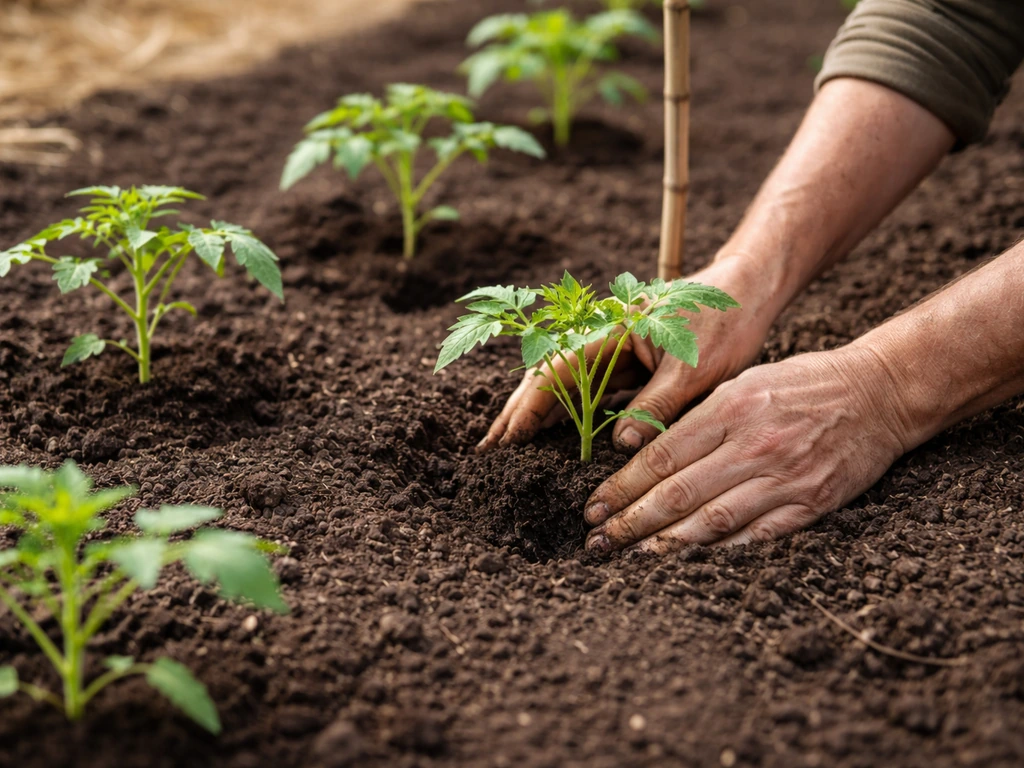
This is the phase most people underestimate when they're planning a garden. After transplanting, tomatoes need another 60 to 80 days on average before you're harvesting fruit. For some varieties, particularly indeterminate heirlooms, you're looking at 80 to 105 days from transplant. Early-season varieties bred for short growing windows can come in closer to 50 to 65 days.
The variety you choose makes a real scheduling difference. Early maturing types like Celebrity ripen in roughly 50 to 65 days after transplanting. Standard mid-season varieties land in the 70 to 80 day range. Slow-maturing indeterminate types (think Brandywine or large beefsteak varieties) can push 90 to 105 days. Check the "days to maturity" number on the seed packet or label. That number is always counting from transplant, not from seed.
Temperature also affects this phase more than gardeners expect. A tomato variety rated at 65 days can easily take 75 to 80 days or longer if your nights are cool during the growing season. That's not a bad plant; it's just a plant responding to its environment. If you're in a short-season climate and your nights drop into the 50s regularly in late summer, build in some extra time and choose faster-maturing varieties whenever possible.
Determinate tomatoes (the kind that set fruit all at once and stop growing) tend to mature faster and more predictably. Indeterminate types keep growing and producing all season but take longer to hit that first harvest. For scheduling purposes, determinates are easier to plan around.
Seed to harvest: the full timeline at a glance
Here's how all three phases stack up when you put them together. These ranges cover most home garden situations from early-maturing varieties under good conditions to slower varieties in cooler climates.
| Phase | Typical Duration | Notes |
|---|---|---|
| Germination (seed sprouts) | 5 to 10 days | Soil temp 70–85°F ideal; can take 40+ days at 50°F |
| Seedling to transplant size | 5 to 8 weeks (35–56 days) | Target 4–5 true leaves, 5–8 inches tall |
| Transplant to first harvest | 60 to 105 days | 50–65 days for early types; 80–105 for slow/indeterminate |
| Total: seed to harvest | Roughly 95 to 136 days | About 14 to 20 weeks under typical conditions |
If you're doing the math for a planting schedule: work backward from your average last frost date, add 2 weeks for hardening off, and then count back 5 to 8 weeks to find your indoor sowing date. That gives you a transplant-ready plant right when conditions outside are warm enough to support it.
What actually changes the timeline
Temperature (soil and air)
This is the biggest lever you have. Soil temperature affects germination speed directly, and air temperature affects seedling growth and time to fruit. Keeping soil at 85°F during germination and air temperatures at 70 to 80°F during the day can shave weeks off your timeline compared to cool conditions. A seedling heat mat under your trays during germination is probably the single most effective investment a home gardener can make for starting tomatoes.
Light
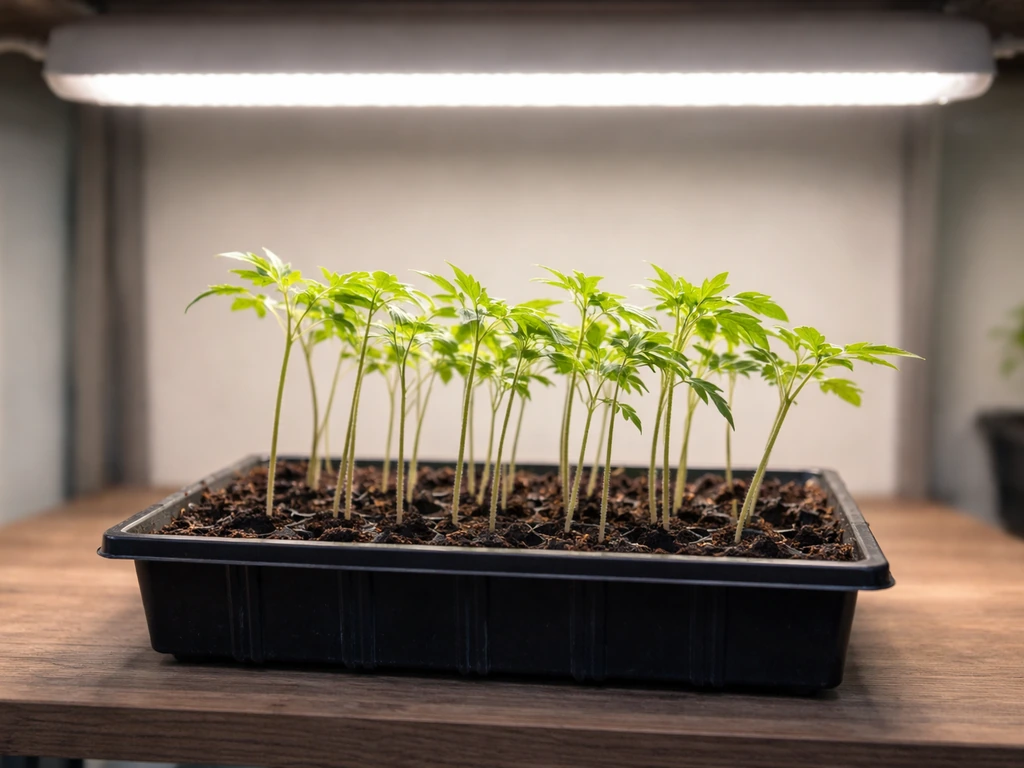
Low light doesn't stop germination, but it absolutely slows seedling development and causes the leggy, weak growth that makes transplanting harder. Once seedlings emerge, they need strong, consistent light for 14 to 16 hours a day if you're growing under artificial lights, or the brightest window you have if you're not. Weak seedlings take longer to reach transplant size and establish more slowly after going into the ground.
Moisture
The soil needs to stay consistently moist during germination, but "moist" is not "wet." Overly wet conditions invite damping-off (more on that below) and can slow or prevent emergence. After seedlings are up, letting the surface dry slightly between waterings encourages stronger root development and reduces disease pressure.
Seed age and storage
Fresh seed from this season or last season will germinate faster and more uniformly than older seed. Tomato seeds stored properly can stay viable for 6 to 10 years, but germination rates drop over time. If you're using seeds that have been sitting in a warm, humid spot, do a quick germination test before committing them to your whole garden plan: wrap 10 seeds in a moist paper towel, keep them warm, and check after 7 to 10 days to see what percentage sprouts.
Variety and plant type
Early, mid, and late-season varieties exist for a reason. If you're planning a summer garden and want to compare how tomatoes fit into a broader timeline, it helps to look at how long it takes to grow plants from seeds across different crop types, since crops like peppers and eggplant have similarly long lead times and benefit from the same early indoor start strategy.
Troubleshooting slow or failed germination
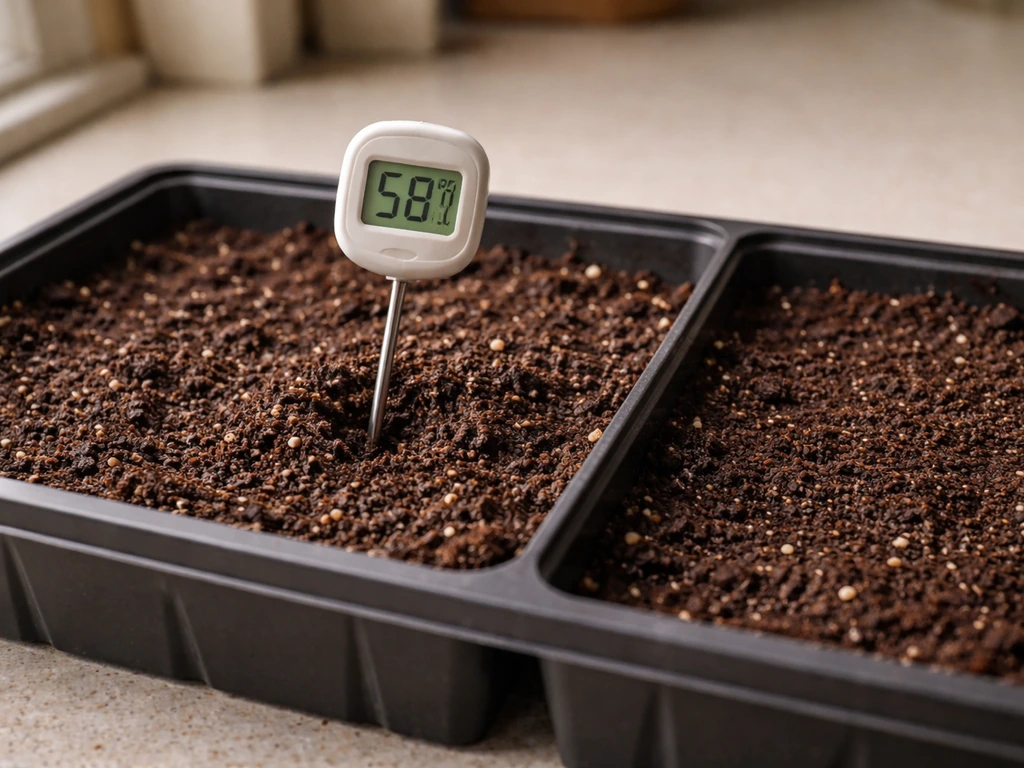
If it's been more than 14 days and you're still not seeing sprouts, something in the environment is likely off. Here's how to work through it.
- Check soil temperature first. Use an inexpensive soil thermometer. If your germination mix is below 65°F, seeds are simply waiting for warmth. Move the trays to a warmer spot or use a heat mat.
- Check moisture levels. The growing medium should feel like a wrung-out sponge, damp but not dripping. Dry out completely and germination stalls; stay waterlogged and seeds rot.
- Check sowing depth. Tomato seeds should be planted about 1/4 inch deep. Too deep means the seedling exhausts its energy before breaking the surface. This is also a risk factor for damping-off because the emerging seedling spends more time in contact with potentially pathogen-rich wet soil.
- Consider damping-off. If seeds germinated but seedlings collapsed at the soil line shortly after emergence, damping-off is the likely cause. It's promoted by wet, poorly drained conditions and low light. Prevention is easier than treatment: use a sterile seed-starting mix, water from below, and make sure air circulation is good around seedlings.
- Evaluate seed viability. If temperatures were right and moisture was correct but almost nothing sprouted, old or improperly stored seed is likely the issue. Run a germination test on the remaining seeds before sowing more.
- Give it a few more days before giving up. Uneven germination is normal, especially with older seeds or borderline temperatures. Sometimes the last stragglers show up 5 to 7 days after the first ones.
One thing worth knowing about damping-off specifically: once seedlings reach the 2- to 3-leaf stage, they become significantly more resistant to the most common damping-off pathogens like Pythium and Rhizoctonia. If you can get past that early vulnerable window with good airflow and controlled watering, the risk drops considerably. Overwatering and high soil salts from overfertilizing early are two of the most common ways gardeners accidentally slow down or kill otherwise healthy seedlings during this phase.
How tomatoes compare to similar crops
Tomatoes are on the longer end of the vegetable seed-to-harvest spectrum because of that long indoor seedling phase and extended time to fruit. If you're also growing peppers, the timeline is similar but often even longer. Growing peppers from seed can take 8 to 10 weeks just to reach transplant size, compared to tomatoes' 5 to 8 weeks, so peppers typically need an even earlier indoor start date.
Herbs are much faster by comparison. If you're also growing basil or other herbs from seed this season, looking at how long herbs take to grow from seeds will show you timelines in the 2 to 4 week germination-to-usable-plant range for many common varieties, which is a useful contrast when you're juggling starting dates for multiple crops.
Within herbs specifically, plants like tulsi (holy basil) have their own timing quirks. Growing tulsi from seeds follows a similarly warm-temperature requirement to tomatoes for good germination, which makes sense since they're both heat-loving plants that do best when the soil is genuinely warm rather than just room temperature.
Putting it all together for your planting schedule
The practical takeaway is this: tomatoes need a long runway. If your last frost date is May 15, you should be sowing seeds indoors around late February to early March. That gives you 7 to 8 weeks of indoor growing time, a hardening-off period in late April, and a transplant date right around your frost-free window. From there, count on 60 to 80 days (or more for slower varieties) before you're picking fruit. Start on time, keep things warm, give seedlings strong light, and the timeline almost takes care of itself.
FAQ
Does the “days to maturity” on the seed packet start counting from seed or transplant?
Yes. If your goal is ripe fruit on a specific date, count “days to maturity” from transplant (not from seed), then add the seedling runway you need (usually 5 to 8 weeks after sowing). For example, if a packet says 75 days to maturity, that is about 75 days from transplant plus your indoor growth time, not just 75 days from when you planted the seeds.
What happens if I transplant tomatoes when nights are still cool?
If you transplant before outdoor night temperatures are consistently warm (often 50s°F), tomatoes can stall, effectively adding 1 to 2 weeks or more before they resume steady growth and flower. Use a simple check: wait until nights are reliably above about 60°F if you can, or plan extra time and expect slower ripening.
Which tomato types usually give the earliest first ripe fruit, determinate or indeterminate?
Indeterminate types typically won’t give you a first harvest as early as determinate types because they keep growing and producing over a longer season. For planning, determinate tomatoes are usually faster and more predictable for first ripening, while indeterminate heirlooms can take roughly 90 to 105 days from transplant.
My seedlings are slow, could my watering be the problem even if the soil stays damp?
Overwatering can slow everything down because soggy mix reduces oxygen around the roots and can increase damping-off risk early on. During germination, keep the mix consistently moist but not waterlogged, and after emergence let the top layer dry slightly between waterings to encourage sturdier root growth.
Will a heat mat always speed up tomato germination, and are there risks?
Yes, warm, stable conditions matter most. A heat mat can help, but you still need to prevent overheating and dehydration. If you use a heat mat, monitor soil temperature and avoid letting it exceed the high end (above about 104°F), since that can stop germination entirely.
What should I troubleshoot if tomatoes have not sprouted after 14 days?
Often, slow germination is not a seed failure. If seeds have not sprouted by around 14 days, first re-check soil temperature (especially at seed depth), then check seed-to-mix contact (lumps or air pockets), and finally confirm seed age by doing a small paper-towel germination test.
Can grow lights reduce the total time from seed to transplant readiness?
Grow lights can shorten the seedling timeline mainly by reducing stretching and speeding development, but they won’t replace temperature as the main driver of germination speed. For the biggest impact after sprouts, aim for strong, consistent light (about 14 to 16 hours per day under lights) so seedlings reach transplant size without becoming leggy.
My seedlings are tall and spindly. Will fertilizing fix it or should I change something else?
If plants are leggy, the immediate fix is more light and, if needed, a position adjustment, not extra fertilizer. Weak, stretched growth takes longer to establish after transplant, so it is better to correct lighting early than to “push” the plant with early feeding.
How can I tell if my tomato seed batch is too old to rely on?
Older seeds are more likely to sprout unevenly and can take longer to emerge, even if conditions are right. Use a germination test (such as checking a small batch after 7 to 10 days) to estimate what percentage will sprout and whether you need to sow thicker or replace the seed lot.
Can early fertilizer use delay germination or damage young tomato seedlings?
Salt buildup from early overfertilizing can slow growth or worsen damping-off risk when seedlings are still vulnerable. If you suspect you fertilized too soon, pause feeding, flush with clean water if the mix is heavily crusted, and resume only when seedlings are established.
Why do my tomatoes look healthy but still not ripen on time?
In many climates, the real bottleneck after transplant is not “growing” but ripening, which depends on temperature during the late-season period. Cooler nights late in the season can extend the total days to first harvest, so plan extra time or choose faster-maturing varieties for short-season areas.
Next Article
How Long Does It Take to Grow Chrysanthemums from Seeds
Timeline for growing mums from seeds: sowing to germination, transplant readiness, flowering and maturity, plus key vari