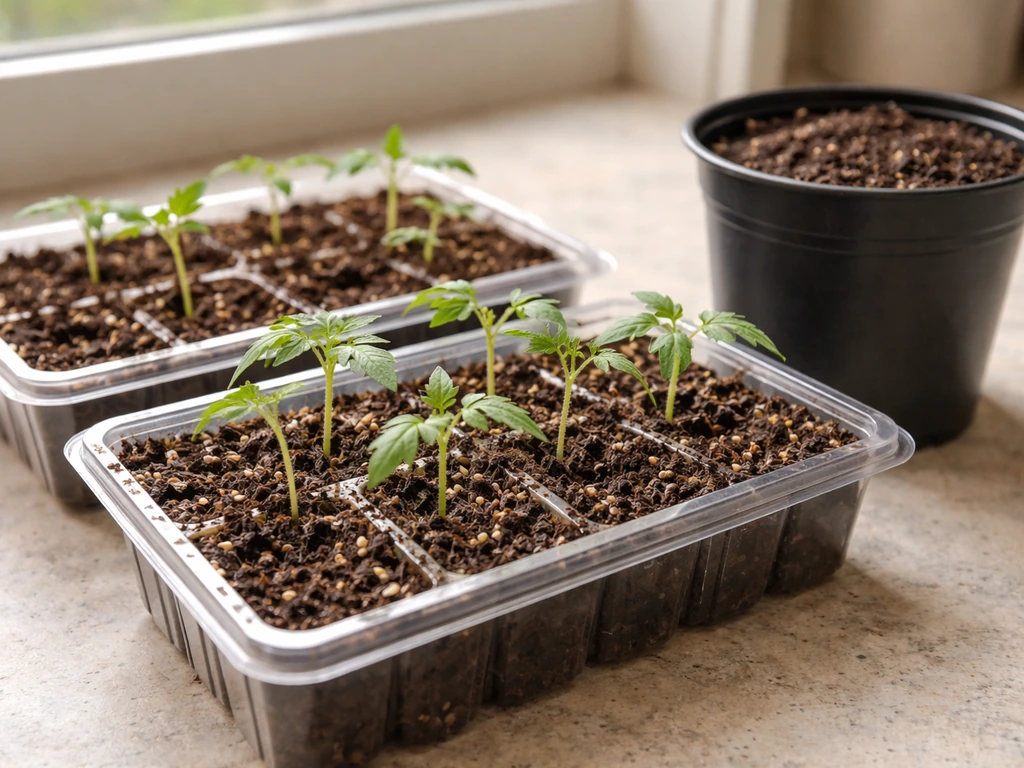
Growing peppers from seed takes roughly 100 to 150 days from the day you sow the seed to the day you pick a ripe pepper. That's the honest, wide-angle answer. Within that window, germination alone can take anywhere from 7 to 28 days depending on soil temperature, seed freshness, and variety. Once seedlings are up, you're looking at 6 to 10 more weeks before they're ready to transplant outdoors, and then another 60 to 90 days in the ground before fruit ripens. Growing transplants from seed takes about 10 to 12 weeks, according to Mississippi State University Extension Service about 6 to 10 more weeks before they're ready to transplant outdoors. If you're planning a season, that full arc is what you need to build your calendar around.
How Long Does It Take to Grow Peppers From Seed
Marcus Henley
2 Apr 2026
Typical seed-to-harvest timeline for peppers
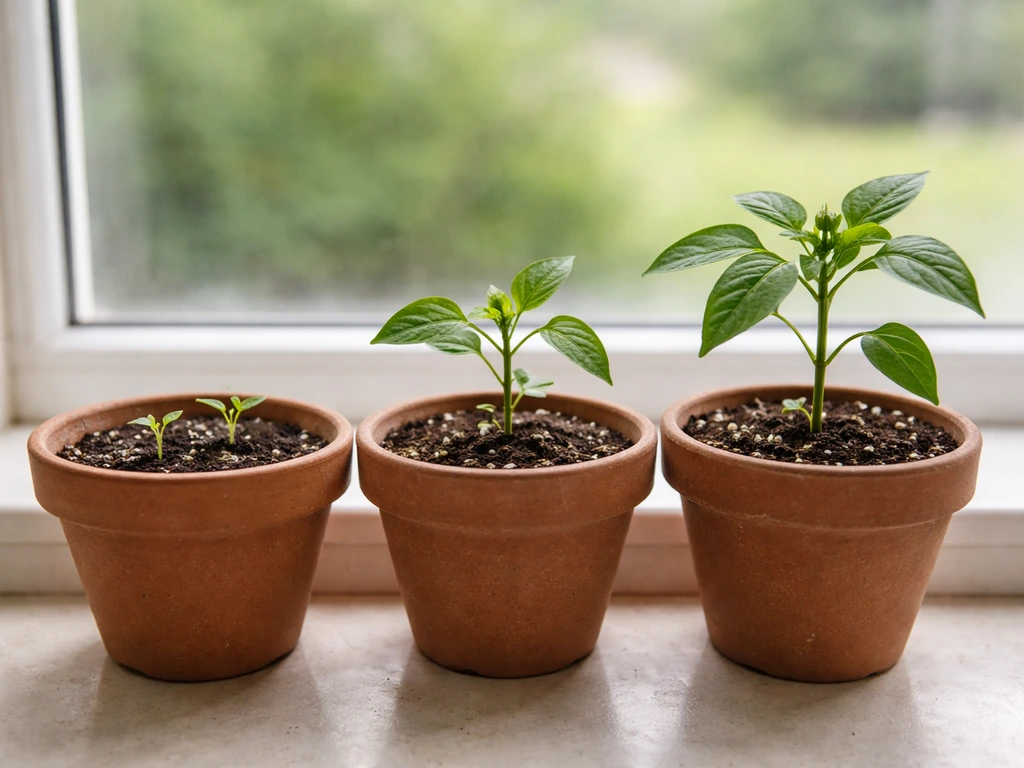
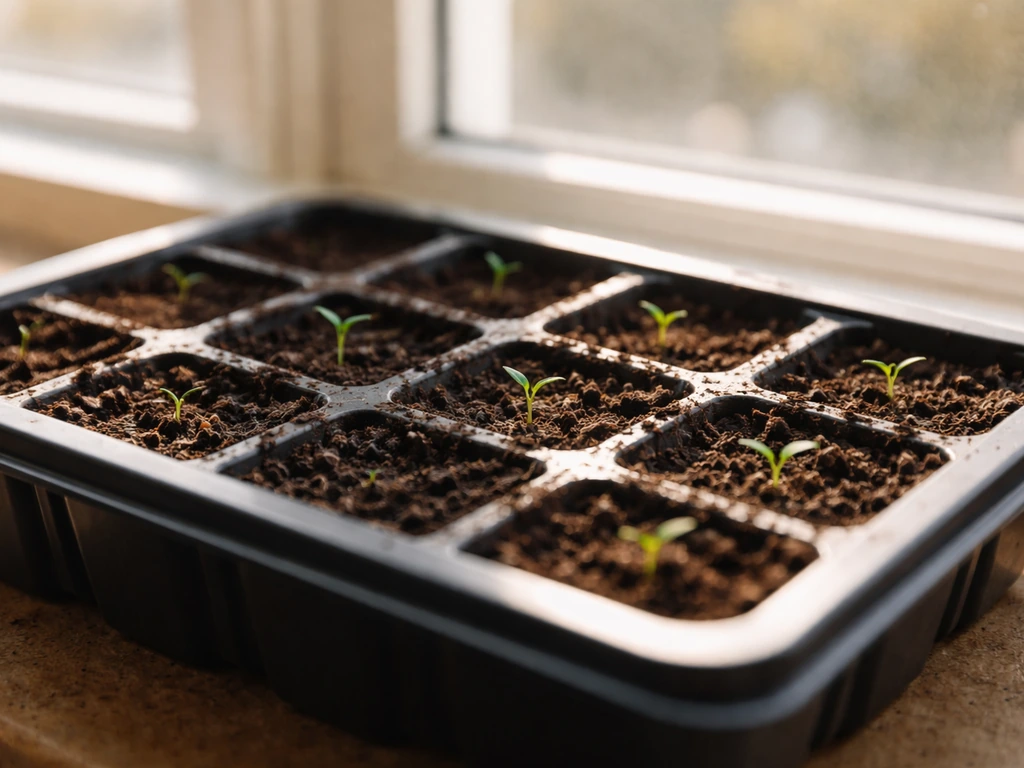
Most pepper varieties follow a predictable sequence, even if the exact numbers shift based on conditions. Here's the broad timeline you can expect from a single pepper seed to a harvest-ready plant:
| Stage | Time from sowing | Notes |
|---|---|---|
| Germination | 7 to 28 days | Faster above 80°F soil temp; slower or stalled below 60°F |
| Seedling establishment | 2 to 4 weeks after sprout | First true leaves appear; plant gains strength |
| Transplant-ready seedling | 6 to 10 weeks from sowing | 4 to 6 true leaves, 4 to 6 inches tall |
| First flowers outdoors | 8 to 12 weeks after transplant | Depends on variety and weather |
| Ripe fruit harvest | 60 to 90 days after transplant | Green peppers come earlier; fully ripe takes longer |
The takeaway is that peppers are not a quick crop. They're one of the slowest vegetables to go from seed to harvest, which is exactly why most gardeners start them indoors 8 to 10 weeks before their last frost date. If you're comparing this to something faster and wondering whether you should even bother starting from seed, keep in mind that growing vegetables from seeds in general rewards patience, and peppers are no exception.
Bell pepper timeline: seed germination to harvest
Bell peppers are the most commonly grown variety and the one most people are picturing when they search this question. From seed to harvest, expect about 100 to 130 days total. Bell peppers specifically tend to be mid-range in terms of heat tolerance, which means their germination is very sensitive to temperature drops. At 70 to 75°F soil temperature, Iowa State University Extension research puts germination at about 7 to 10 days. Drop to 65°F and you're looking at closer to 9 to 14 days per University of Maine data. Drop below 60°F and germination slows dramatically or doesn't happen at all.
After bell pepper seeds germinate, the seedling phase runs about 6 to 8 weeks before the plant is large enough to transplant safely. You want to see at least 4 true leaves and a sturdy main stem before moving it outdoors. Once transplanted into warm soil (ideally 65°F or above), bell peppers typically begin flowering in 8 to 10 weeks. If you want green bell peppers, you can harvest once the fruit reaches full size, usually around 65 to 70 days after transplant. For red, yellow, or orange bell peppers, add another 2 to 3 weeks on top of that for the fruit to fully ripen and change color.
For a concrete example: if you sow bell pepper seeds indoors on March 1, you can expect sprouts around March 8 to 15 (at good temperatures). Your seedlings are transplant-ready by mid-to-late April. After transplanting, you're harvesting green bell peppers in late June or early July, and fully ripe colored peppers by mid-July to early August. That's a March-to-July journey, which is totally normal and worth planning for.
Long pepper timeline from seed
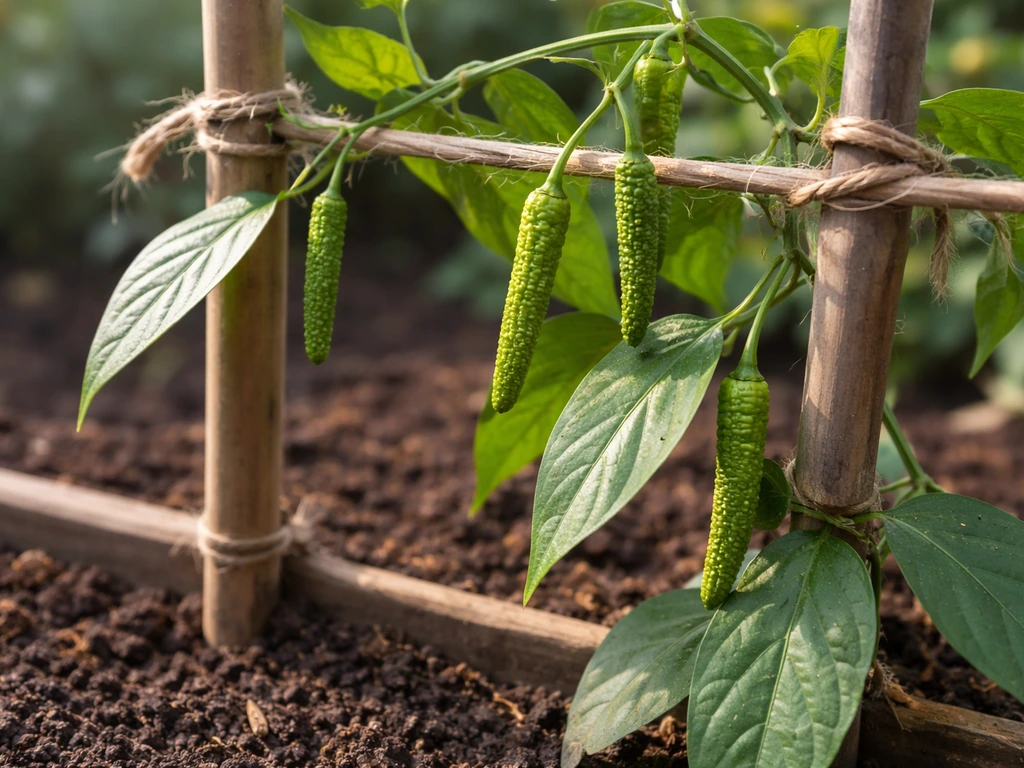
Long peppers (Piper longum, the spice-producing climbing vine, or elongated chili types like the Italian long pepper or Jimmy Nardello) follow a slightly different timeline. Wikipedia describes long pepper (Piper longum) as a flowering vine cultivated for its fruit, which is used as a spice after drying blank" rel="noopener noreferrer">Long peppers (Piper longum, the spice-producing climbing vine, or elongated chili types like the Italian long pepper or Jimmy Nardello). For Piper longum specifically, germination is notoriously slow and unpredictable, often taking 20 to 40 days even under ideal conditions. The seeds need consistently warm, humid conditions to break dormancy and do best with a soil temperature between 75°F and 85°F.
Elongated chili-type long peppers (like sweet Italian frying peppers or long cayenne types) behave much more like standard chili peppers. Expect germination in 10 to 21 days, seedling stage of 6 to 8 weeks, and a days-to-harvest rating of around 70 to 90 days after transplant. Total seed-to-harvest timeline lands at roughly 110 to 140 days. The longer timeline compared to bell peppers is partly due to fruit size and the added ripening time for thin-walled fruits to fully develop heat and flavor.
One thing that helps with Piper longum specifically: soak seeds in warm water for 24 hours before planting and keep the growing medium consistently moist (not wet) throughout germination. I've had seeds take 35 days to show any sign of life, and then suddenly pop up strong. Don't give up too early with this one.
What changes the timeline: temperature, light, watering, and soil
Temperature is the single biggest lever. MSU Extension is clear on this: pepper seeds germinate best above 80°F. At 60°F, germination is sluggish at best. At 85 to 90°F, it can happen in as few as 5 to 7 days. Once seedlings are established, the ideal growing temperatures shift: day temperatures of 70 to 75°F and night temperatures of 60 to 65°F promote healthy, compact growth. Temperatures above 90°F during flowering can cause blossoms to drop, which delays your harvest significantly.
Light matters just as much after germination as temperature does before it. Pepper seedlings need 14 to 16 hours of light per day indoors to grow compact and strong. Under a grow light set 2 to 4 inches above the seedlings, this is easy to achieve. In a south-facing window in early spring, you're unlikely to get enough, and seedlings will stretch and weaken. Leggy seedlings take longer to establish after transplanting, which pushes your harvest date back by weeks.
Watering consistency plays a surprising role in timing. Pepper seeds need even moisture during germination but rot quickly if the growing mix stays waterlogged. A domed seed tray helps hold humidity without drowning seeds. Once seedlings emerge, letting the top half-inch of soil dry out between waterings encourages stronger root development and actually moves plants toward maturity faster than constant wet soil.
Soil quality and container size both affect how fast seedlings size up. Peppers started in nutrient-poor seed mix will stall after their first true leaves unless you start light fertilizing (half-strength liquid fertilizer works well) around week 3. Moving seedlings from a small cell tray into a 3 to 4 inch pot when they hit 2 inches tall removes another common growth bottleneck. Tight roots slow everything down.
How to grow peppers from seed to harvest: a step-by-step schedule
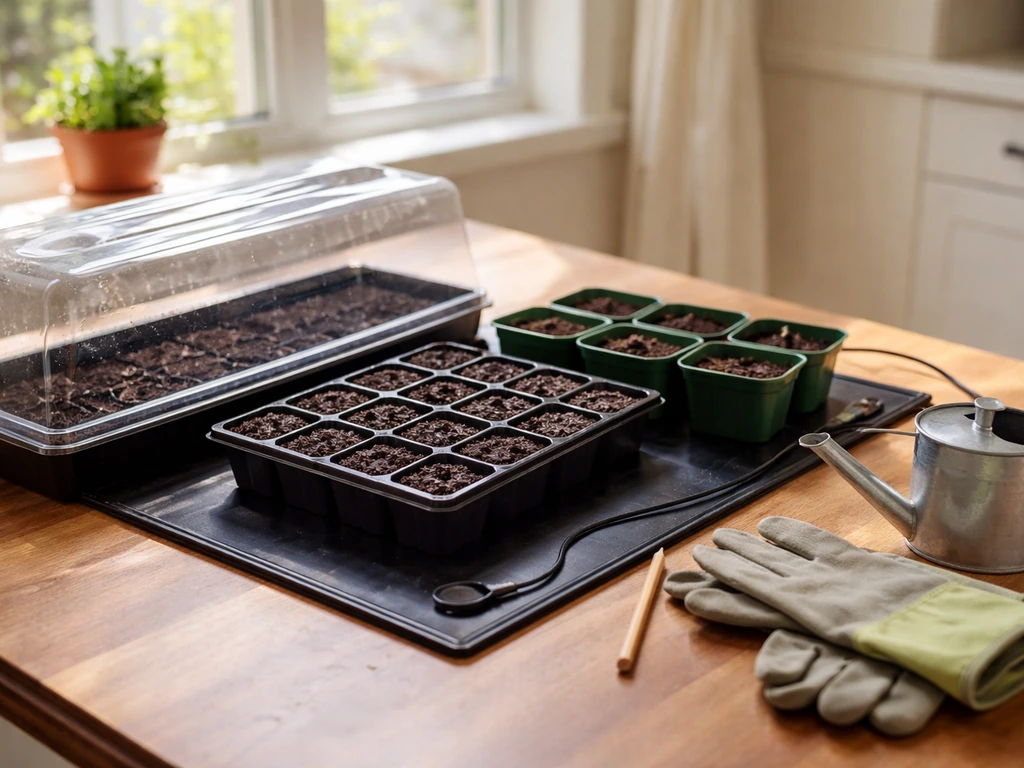
This is the full playbook. Use your last expected frost date as the anchor point and count backward from there. For most of the continental US, that means starting seeds indoors in late February to mid-March.
- Week 1 (sowing day): Fill a cell tray or small pots with a moist, sterile seed-starting mix. Sow seeds 1/4 inch deep, two seeds per cell. Cover with plastic dome or wrap to hold humidity. Place on a heat mat set to 80 to 85°F. No light needed yet.
- Weeks 1 to 3 (germination phase): Check daily for moisture. Keep the medium consistently damp but not saturated. Do not move to light until seeds sprout. At 80°F+, expect sprouts in 7 to 14 days. At 70°F, expect 10 to 21 days.
- Weeks 2 to 4 (post-germination): As soon as sprouts appear, move immediately under grow lights or into the brightest window you have. Set lights 2 to 3 inches above the seedlings for 14 to 16 hours per day. Remove the dome once you see green above the soil. Thin to one seedling per cell.
- Weeks 4 to 6 (first true leaves): Once the first set of true leaves is fully open, begin very light fertilizing (diluted to half-strength). If seedlings are in small cells, pot up into 3 to 4 inch containers with a richer potting mix.
- Weeks 6 to 8 (transplant preparation): Begin hardening off seedlings 1 to 2 weeks before your planned transplant date. Move them outside for 1 to 2 hours on the first day, gradually increasing to full days over 7 to 10 days. Avoid cold wind and temperatures below 55°F.
- Weeks 8 to 10 (transplanting outdoors): Transplant into the garden when nighttime temperatures stay reliably above 55°F and soil temperature is at least 65°F. Space plants 18 to 24 inches apart. Water in with a diluted fertilizer solution.
- Weeks 10 to 18 (outdoor growth and flowering): Plants establish, begin flowering, and set fruit. Maintain consistent watering. Mulch around plants to hold soil moisture and moderate temperature swings.
- Weeks 18 to 22+ (harvest): Pick green bell peppers at full size (roughly 65 to 70 days after transplant). Wait 2 to 3 more weeks for colored varieties. For hot peppers and long peppers, harvest at full color and firm texture for peak flavor.
This timeline assumes you're comparing peppers to other vegetable crops you might be scheduling. If you're curious how this stacks up against, say, how long tomatoes take to grow from seed, tomatoes follow a very similar indoor start schedule but often reach harvest slightly faster outdoors. Peppers need more patience, especially in the first weeks.
Troubleshooting: slow germination, weak seedlings, and failed growth
Seeds haven't sprouted after 2 to 3 weeks
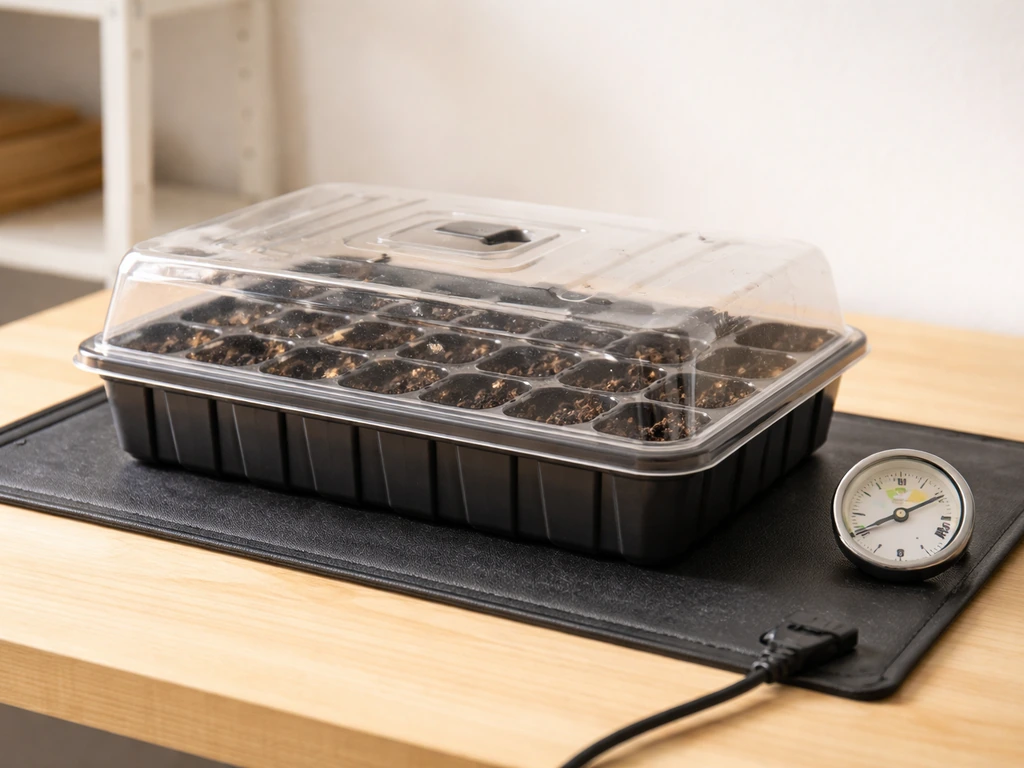
This is the most common worry, and more often than not it's a temperature issue. If your seeds are sitting at 65°F or below, they may just be stalled rather than dead. Before re-sowing, check actual soil temperature with a thermometer (not just room temperature), bump up the heat mat, and give it another 7 to 10 days. Old seeds (more than 2 to 3 years old) or improperly stored seeds can also have poor germination rates. If you get to day 28 with nothing, re-sow with fresh seeds.
Seedlings are tall, thin, and falling over
This is classic etiolation, or light starvation. Leggy seedlings stretched toward whatever light they could find. The fix is immediate: move them under a grow light set very close to the tops (2 inches is fine for most setups), increase photoperiod to 16 hours, and bury the stem slightly deeper when you pot up. This is a case where understanding how plants grow from seeds in terms of light requirements really pays off early in the process.
Seedlings stopped growing after their first leaves
If you see the seed leaves (cotyledons) open but no new growth happening for 2 or more weeks, the plant is probably root-bound, nutrient-starved, or both. Pot up into a slightly larger container with fresh potting mix and begin light feeding. Check that the soil isn't staying soaking wet, which can cause root rot and mimic the same stalled appearance.
Flowers dropping before fruit sets
Blossom drop in peppers is usually caused by temperature extremes. Nights below 55°F or days above 90°F both trigger it. If you're growing in a region with hot summers, the solution is to time transplanting so plants are setting fruit before peak heat arrives. Mulching heavily and providing afternoon shade during heat waves can also help preserve flowers. This is a scheduling problem more than a sowing problem, but it's worth knowing because it can add 2 to 4 weeks to your actual harvest date.
When to give up and re-sow
The honest rule: if seeds haven't germinated by day 28 under good conditions (80°F+ soil temp, consistent moisture), re-sow. If seedlings become so leggy and weak they can't support themselves, start over. The window for outdoor planting is forgiving enough in most climates to allow one do-over. If you're getting deep into May and feeling like you're behind, it's worth knowing how much flexibility you have. Growing herbs from seeds, by contrast, is usually faster and more forgiving, so if you're looking for a confidence-building parallel project while your pepper seedlings develop, that's a solid choice.
A note on unusual varieties and what to expect
If you're growing something outside the bell-pepper mainstream, like a superhot variety (Carolina Reaper, Trinidad Moruga Scorpion), expect germination to run toward the longer end of the range, 21 to 28 days even with ideal temperatures. These varieties are also slower to produce fruit outdoors, often 90 to 120 days from transplant. Some gardeners start superhots in January to give them enough season. On the milder end, small-fruited varieties like shishito or padron can reach harvest in as few as 60 days from transplant, which is quick for a pepper.
Growing something more tropical and aromatic alongside your pepper tray? If you're also starting tulsi (holy basil), which is another heat-loving plant that pairs beautifully in garden beds with peppers, you can check out how long tulsi takes to grow from seed to coordinate your indoor start schedule. Both plants appreciate the same warm starting conditions, so they're easy to run together on the same heat mat.
The short version for schedule planning
If you need to condense everything into a planning rule of thumb: start pepper seeds indoors 8 to 10 weeks before your last frost date. Expect germination in 1 to 2 weeks at 80°F. Plan for 100 to 150 total days from seed to ripe fruit. Bell peppers land closer to 100 to 130 days. Long peppers and superhots run closer to 130 to 150 days. Give your seeds warmth early, your seedlings light and space in the middle, and your transplants consistent moisture and temperatures above 55°F at night, and the timeline largely takes care of itself.
FAQ
Does the seed-to-harvest timeline change if I transplant later than planned?
If you start indoors before your last frost date, count “days to harvest” from sowing, but remember the biggest shift happens after transplant. A late transplant by 2 weeks can easily move your first ripe peppers by 2 to 4 weeks because peppers keep waiting for warm nights and stable growth conditions.
What happens to timing if my pepper seeds are old or were stored poorly?
Yes. Older seeds and seeds that dried out in storage often still sprout, but they do it slower and more unevenly. If germination is stretched toward the upper end (for example, 20 to 28 days for varieties that normally finish earlier), use a longer germination window in your schedule rather than assuming the plants will “catch up” quickly after they sprout.
My peppers are flowering, but I’m not getting peppers yet. How long should I wait?
Peppers can flower and still not produce ripe fruit for a while, especially after stress. If you see blossoms drop or fruit set fail, focus on stabilizing temperature (avoid nights under about 55°F and days over about 90°F). That’s often the difference between “flowers now” and “harvest soon.”
Is the timeline shorter if I only grow for green peppers?
Not exactly, and it can create confusion. “Green” peppers are usually harvested when the fruit reaches full size, even if color stays green. If you’re comparing timelines to red, yellow, or orange, add about 2 to 3 more weeks for color change after they’re full-sized.
How much does container size affect how long it takes to harvest?
It can. Very small containers can slow growth because root volume limits water and nutrients. As a practical rule, when seedlings are potting-up from cells, move to containers around 3 to 4 inches if they are staying indoors for more than a short time, and avoid leaving them crowded too long.
Why did my pepper seedlings look fine indoors, but harvest is late after I moved them outside?
If daytime and night temperatures fluctuate a lot, peppers behave like they are on “pause.” Consistent warmth after transplant matters more than a few warm days. Aim to keep nights above roughly 55°F once outdoors, because cold nights can delay fruit set even when the plant looks healthy.
Does using a heat mat guarantee faster germination?
For most pepper varieties, using a heat mat only helps if the soil, not just the air, is warm and stable. Check actual growing-medium temperature with a thermometer. If the mix is cool (for example, mid-60s or below), germination can stall even when the room feels warm.
How does insufficient light affect my pepper harvest date?
More light usually helps timing indirectly by preventing slow, weak establishment. If seedlings become leggy, they often need extra time after transplant to recover enough strength to push toward flowering. Preventing stretching by providing long light periods reduces the chance your harvest slips by weeks.
My seedlings stopped after sprouting. How can I tell if it’s nutrients, roots, or watering?
It depends on what “not growing” means. If cotyledons open but there is no new growth for a couple of weeks, the cause is often root-bound, nutrient-poor mix, or waterlogged conditions. The fix is targeted, pot up with fresh mix and adjust watering toward evenly moist but not wet.
Can overwatering really delay pepper harvest, even if the plants look green?
If you’re using a potting mix that is too heavy or staying waterlogged, root issues can stall the plant and extend the timeline. A simple check is whether the top layer dries slightly between waterings, plus whether the growing medium drains freely. Constant wetness can delay growth by damaging roots early.
How do heat waves or cool snaps affect the time to ripe peppers?
Yes, and it’s a scheduling gotcha. Temperature extremes during flowering can cause blossoms to drop, so you may get flowers that look promising but no fruit ripens on time. If your region has hot spells, plan to transplant so flowering happens before the hottest stretch, or protect plants from peak afternoon heat.
When should I re-sow pepper seeds instead of waiting longer?
The most common “start over” moment is when seeds fail to germinate by about day 28 under genuinely warm, consistent soil conditions. If you miss that window and keep waiting, you can lose more time than re-sowing with better conditions and fresh seed.
Next Article
How Long Does It Take Tomatoes to Grow From Seed?
Timeline for tomatoes from seed to harvest, including germination, seedling transplant size, and expected picking days.