From sowing a tobacco seed to having a harvest-ready plant in the ground, you're looking at roughly 110 to 160 days total, depending on your climate and how well the early stages go. That breaks down into about 7 to 14 days for germination, another 50 to 60 days growing seedlings indoors before transplanting, and then 100 to 130 frost-free days in the field before your plants reach meaningful maturity. Plan for the long game here, tobacco is one of the slower crops to go from seed to harvest, and getting the indoor seedling stage right is the most critical thing you can control.
How Long to Grow Tobacco from Seed Full Timeline
Marcus Henley
30 Apr 2026
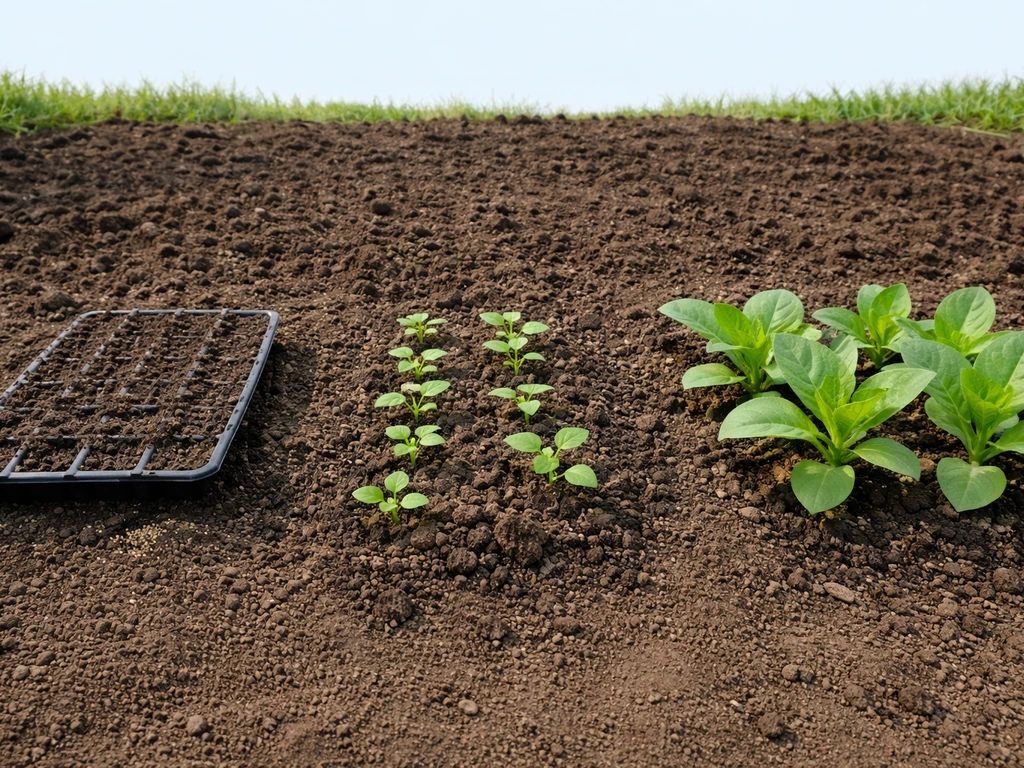
The Full Tobacco Seed-to-Plant Timeline at a Glance
Tobacco has three distinct phases before you're anywhere near curing leaves, and each one has its own pace. Rushing any of them tends to produce weak plants that underperform in the field. Here's how the stages typically stack up for Nicotiana tabacum, the cultivated tobacco most home growers are working with.
| Stage | Typical Duration | Key Conditions |
|---|---|---|
| Germination (seed to sprout) | 7 to 14 days | Light, warmth (75-85°F), consistent moisture |
| Seedling growth (indoors) | 50 to 60 days | Controlled temps, clipping for uniformity, hardening off |
| Field growth (transplant to maturity) | 100 to 130 days | Frost-free period, full sun, well-drained soil |
| Curing (post-harvest, flue-cured) | 4 to 8 days | Heat and airflow management |
| Total seed to usable leaf | ~160 to 200+ days | Dependent on variety and climate |
Flowering tobacco varieties like ornamental Nicotiana are faster and easier to manage, they're typically started 5 to 6 weeks before transplanting out, compared to the 8 to 9 weeks that serious tobacco growers allow for Nicotiana tabacum. If you're growing tobacco for its leaves rather than its flowers, budget more time and more attention in the seedling phase.
What to Expect from Germination
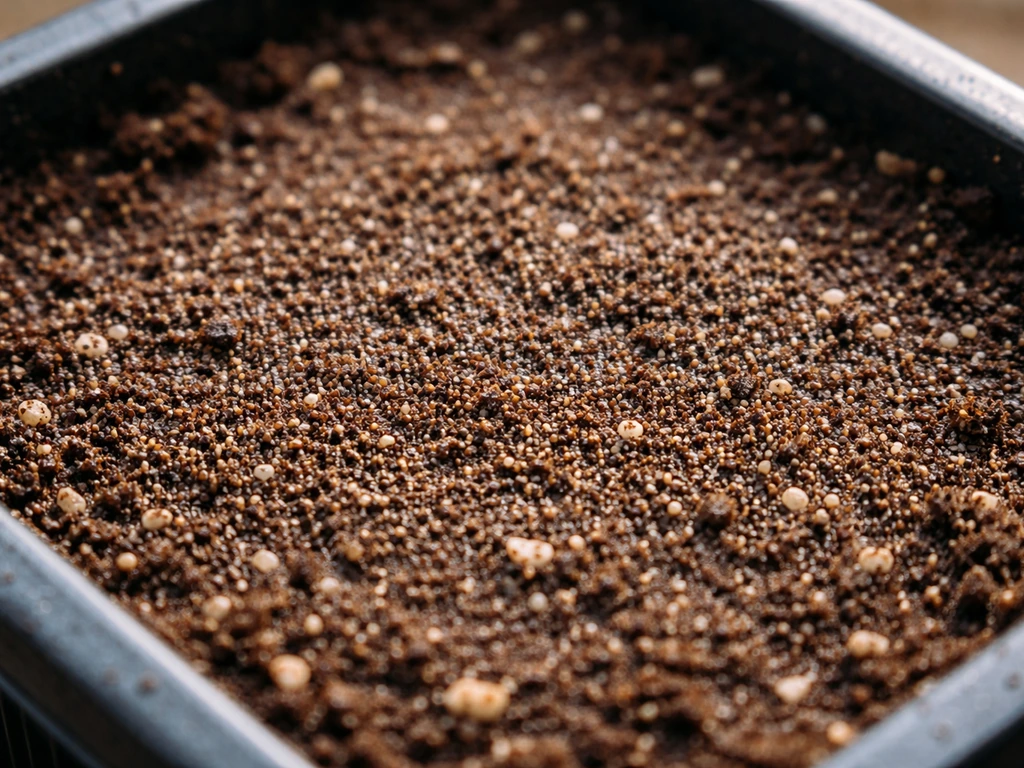
Tobacco seeds are tiny, almost dust-like, and they behave differently from most vegetable seeds you've started before. The biggest thing to know upfront: tobacco seeds need light to germinate. Peer-reviewed research on tobacco seed germination explains that light can act as either an initiator of germination or a suppressor (photoblastic behavior), which helps distinguish fresh versus aged seed responses tobacco seeds need light to germinate. Do not cover them with soil or growing medium. You sprinkle them on the surface, press them gently into contact with the mix, and then mist rather than water. Covering them is one of the most common reasons home growers see nothing happen for weeks.
Under good conditions (surface-sown, consistently moist, 75 to 85°F, bright indirect light), expect germination in 7 to 14 days. Temperature matters a lot here. NC State Extension and others note that fluctuating day and night temperatures can actually help break dormancy, so a warm day temp around 80 to 85°F dropping to around 65 to 70°F at night is closer to ideal than a flat, constant temperature. Once seedlings are visibly established (roughly 14 to 20 days after seeding), you can drop that nighttime temperature a few degrees to encourage hardier growth.
The three non-negotiables for tobacco germination
- Light: seeds sown on the surface, not buried — even a thin layer of medium can block germination
- Moisture: keep the surface consistently damp with a mister or fine-spray bottle, not a heavy pour that displaces seeds
- Temperature: aim for 75 to 85°F during the day with a moderate drop at night to mimic natural conditions
Research from the Journal of Applied Genetics confirms that germination timing varies significantly across different tobacco accessions and seed lots, so if one batch germinates in 8 days and another in 13, that's normal, not a sign something went wrong. Variety differences are real, and even within a single variety, individual seeds can be variable.
Growing Seedlings Indoors and Knowing When to Transplant
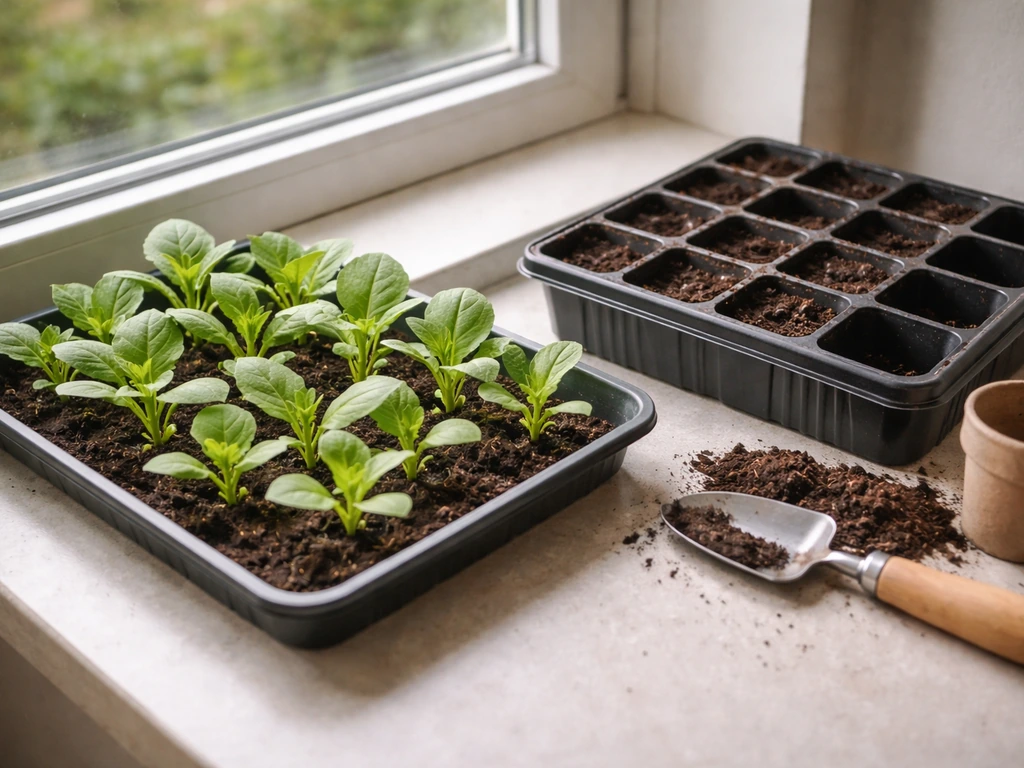
This is the phase that catches most first-timers off guard. Tobacco seedlings grow slowly. NC State Extension recommends starting seeds about 50 to 55 days before you plan to transplant them outdoors, and that number is there for a reason. You need those weeks to let the plants develop enough root mass and leaf area to survive transplant shock and establish quickly in the field.
One practice worth knowing about is clipping. Commercial growers clip seedlings (cutting the tops) to promote uniform, bushy growth and to encourage hardiness before transplanting. Home growers don't always do this, but it's worth considering if your seedlings are getting leggy or uneven. Clipping sets the plants back a few days but usually results in tougher transplants.
When are seedlings actually ready to go outside? Look for plants that are 4 to 6 inches tall with at least 4 to 6 true leaves. At that point, harden them off over 7 to 10 days before transplanting, set them outside in a sheltered, partly shaded spot for a few hours a day and gradually increase exposure to direct sun and outdoor conditions. Skipping hardening off often results in transplant shock that can set your field timeline back by weeks.
Time to Maturity in the Field (and Why It Varies So Much)
Once transplanted into the ground after your last frost, tobacco needs a frost-free growing period of 100 to 130 days before plants reach meaningful maturity. That's a long window, and where you land in it depends on your variety, your soil, your irrigation, and your local climate.
Burley and flue-cured tobacco types (the most common Nicotiana tabacum varieties for home leaf production) tend toward the longer end of that range. Certain air-cured and cigar varieties can be earlier. Ornamental Nicotiana species grown for flowering are faster still, they'll bloom in the first season without needing the same long frost-free window as leaf tobacco.
Climate plays a major role. Tobacco was developed as a warm-season crop in humid, temperate conditions, think the Carolinas, Virginia, Kentucky. If you're growing in a cooler or shorter-season climate, your plants will be slower to mature, and you may not reach full leaf development before the first fall frost ends your season. That's worth factoring in before you commit to a large planting.
After harvest, if you're curing flue-cured tobacco, budget another 4 to 8 days for the curing process itself. That's not growing time, but it's part of the full timeline from seed to usable leaf and worth including in your planning.
How to Build Your Planting Schedule from Your Frost Date
The easiest way to plan a tobacco grow is to work backward from your last spring frost date. That date determines when you can safely transplant outdoors, and everything before it is indoor seedling time. Here's how to map it out.
- Find your average last frost date for your location (your local extension office or a quick online lookup will give you this).
- Count back 50 to 60 days from that date — that's your indoor sowing date for Nicotiana tabacum grown for leaves.
- For ornamental Nicotiana (flowering tobacco), count back 5 to 6 weeks instead.
- Add 7 to 14 days for germination before true seedling growth begins — this is already baked into the 50 to 60 day window, but it's worth knowing so you aren't alarmed when nothing is visible in the first week.
- Plan to transplant outdoors on or just after your last frost date, after a 7 to 10 day hardening-off period.
- From transplant date, add 100 to 130 days to estimate your harvest window and confirm that falls before your first fall frost.
As a practical example: if your last spring frost is May 10, you'd sow seeds around March 10 to March 20 (50 to 60 days prior). You'd harden off starting early May and transplant after May 10. With 100 to 130 field days, you'd be looking at a harvest window of roughly mid-August to mid-September, well before typical fall frosts in most growing regions.
If you're in a northern state with a short growing season, this math will reveal quickly whether tobacco is viable for you without a greenhouse extension. Some northern growers start seeds 6 to 8 weeks before last frost and select earlier-maturing varieties to squeeze into a short window.
Troubleshooting Slow or Failed Tobacco Germination
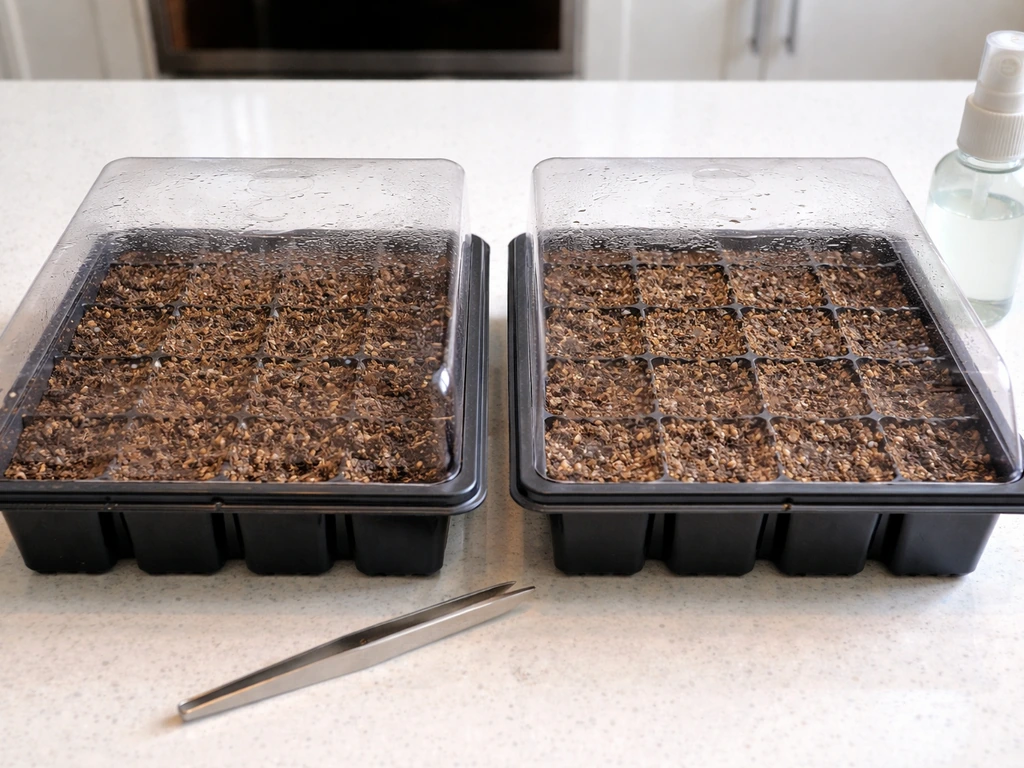
If two weeks have passed and you're still not seeing anything, don't write off the seeds yet. Tobacco germination can be stubborn, and most failures trace back to a handful of fixable issues.
| Problem | Likely Cause | What to Do |
|---|---|---|
| No germination after 14+ days | Seeds were covered with growing mix | Re-sow on the surface without any covering, just press into contact |
| Germination is sparse or patchy | Uneven moisture or temperature fluctuations | Mist more consistently; use a humidity dome to stabilize conditions |
| Seeds germinated but seedlings died quickly | Damping off (fungal) | Improve air circulation, reduce surface moisture, use a sterile seed-starting mix |
| Very slow germination (3+ weeks) | Temperature too low or too consistent | Add bottom heat (seedling heat mat) and try fluctuating day/night temps |
| Seeds seem dormant across multiple lots | Old or improperly stored seeds | Pre-chill seeds for 24-48 hours in a moist paper towel in the fridge before sowing |
Pre-chilling is worth calling out specifically. Research published through CORESTA found that pre-chilling Nicotiana tabacum seeds before sowing improved germination rates under marginal temperature and light conditions. If you're working with seeds you're not confident about, a 24 to 48 hour cold treatment in a damp paper towel in the refrigerator before surface-sowing can meaningfully improve your results.
Also remember that tobacco seed germination is genuinely variable. Studies measuring time to 50% germination in tobacco accessions show wide variation even under controlled conditions. Some batches are simply slower than others. If you see some seedlings emerging by day 10 to 12, that's a good sign even if the tray isn't fully populated yet, keep the conditions stable and give it a full 18 to 21 days before deciding something has truly failed.
Quick-Growing Checklist to Keep Your Tobacco on Track
Use this as a running reference from sow date through harvest. Each checkpoint tells you what to look for and what to act on.
- Sowing day: Surface-sow seeds, no covering, mist gently, place in warm spot (75 to 85°F) with bright light or under grow lights
- Days 1 to 7: Maintain consistent surface moisture by misting once or twice daily; do not let surface dry out or flood it
- Days 7 to 14: Watch for first sprouts; if using a humidity dome, begin venting slightly to reduce damping off risk
- Days 14 to 20: Seedlings establishing — begin reducing nighttime temperature slightly to encourage hardier growth
- Weeks 3 to 6: Thin or prick out seedlings into individual cells if crowded; begin very light fertilizing once first true leaves appear
- Weeks 6 to 8: Seedlings should reach 4 to 6 inches with 4 to 6 leaves — consider clipping if plants are leggy
- 1 to 2 weeks before transplant: Begin hardening off outdoors, starting with 2 to 3 hours of shelter and building to full outdoor exposure
- Transplant day (after last frost): Plant out at appropriate spacing, water in well, protect from late cold snaps if needed
- Days 1 to 30 in field: Watch for establishment — wilting is normal the first few days, recovery indicates successful transplant
- Days 100 to 130 in field: Begin monitoring for leaf maturity indicators (yellowing lower leaves, slowed growth) as harvest signals
- Post-harvest (flue-cured): Allow 4 to 8 days for curing before evaluating your leaf quality
Growing tobacco from seed is genuinely rewarding but demands patience at every stage. The payoff is that you have far more control over your crop than with almost any other starting method, and the indoor seedling phase gives you a real head start.
If you've grown other slow, light-sensitive seeds before, certain cannabis varieties, for instance, which also require careful attention to germination conditions and indoor starts, tobacco will feel familiar in its demands, just with an even longer runway before harvest. Feminized cannabis seeds still tend to be slow-starting, so the total timeline depends heavily on germination conditions and how long the plants stay in the indoor seedling phase before transplanting or moving outdoors.
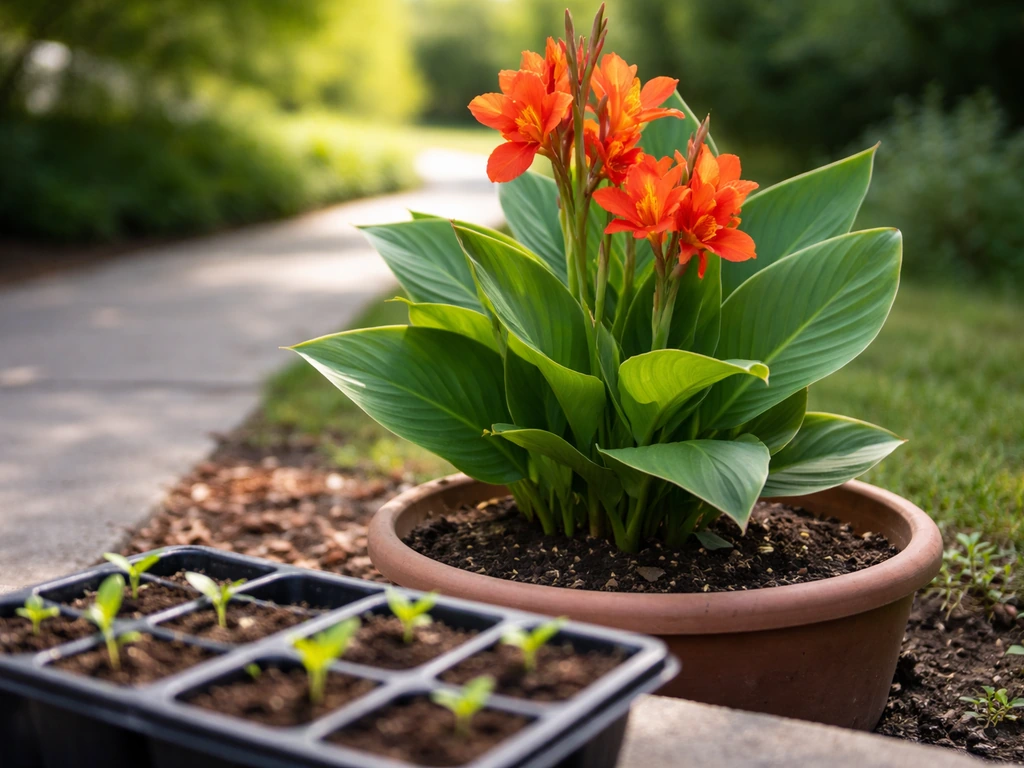
Canna seeds often take a similar starting approach, but the total timeline is typically shorter than tobacco, so plan accordingly cannas from seed. Cannabis, like tobacco, is also sensitive during germination and early indoor growth, which is one reason seed-to-harvest timing can vary careful attention to germination conditions. If you’re specifically wondering about cannabis, the same patience and careful early germination conditions apply, and you’ll also want to plan around the seed-to-harvest timeline cannabis varieties.
FAQ
How long to grow tobacco from seed if my night temperatures stay cooler than expected?
Cool nights can slow early growth and extend the seedling phase, but germination is the main risk. Aim for a warm day and a cooler night drop (about 80 to 85°F down to 65 to 70°F), then keep the tray stable once seedlings appear. If nights stay consistently much colder, expect slower establishment after transplant, which can push your field maturity later by a couple of weeks.
When should I start counting “time to harvest” if I want the most accurate timeline?
Count from your transplant date to estimate field time, because germination and indoor growth can vary by seed lot and conditions. Your article’s indoor schedule is a guideline, but the 100 to 130 frost-free window is what ultimately determines whether you hit meaningful maturity before fall frost.
What is the practical difference between starting 5 to 6 weeks early versus 8 to 9 weeks early?
The longer start gives Nicotiana tabacum more time to build root mass and leaf area before transplant shock. If you start closer to 5 to 6 weeks for leaf tobacco, plants are more likely to be under-sized at transplant, leading to slower early field growth and a higher chance of missing the end of season leaf development.
Can I speed up tobacco growth by fertilizing right after germination?
Not in the way most people expect. After germination, focus on stable moisture and light first, because seedlings are delicate and can stall if you overdo salts. When feeding, use low strength and only after true leaves are established, otherwise you can slow growth or cause uneven development across the tray.
If tobacco seeds are light-sensitive, how do I keep them from drying out on the surface?
Surface-sown seeds need consistent moisture without being submerged. Use misting, maintain high humidity under a cover or dome until you see germination, then ventilate gradually to prevent damping-off. If the top dries between misting cycles, germination can be delayed even if temperature is in range.
What should I do if some tobacco seeds germinate by day 10 but others lag behind?
Treat uneven emergence as normal variability, especially across accessions and seed lots. Keep conditions steady and wait longer before concluding failure. A good decision aid is to give the tray a full 18 to 21 days before re-sowing, because early-emerged seedlings are a sign the conditions can work even if the tray never becomes perfectly uniform.
At what point do I re-sow tobacco seeds instead of waiting?
If you see absolutely no emergence after the upper end of the germination window you’re following (for many cases, around 14 to 21 days), re-sowing can be justified. If you have even a few sprouts, you can usually correct husbandry issues first (light coverage, moisture consistency, temperature swing) and allow the rest of the batch to catch up.
Do I have to harden off tobacco seedlings, and what happens if I skip it?
Harden off is strongly recommended because seedlings grown indoors handle outdoor sun, wind, and temperature swings poorly. Skipping it commonly causes transplant shock that slows early field growth, sometimes setting the schedule back by weeks and reducing how much maturity you reach within the frost-free window.
Can clipping tobacco seedlings change the timeline to harvest?
Clipping can set plants back by a few days, but it may improve uniformity and resilience. In a long-season crop, that small delay is usually manageable, but if you are in a short-season climate, clipping could matter. If you are near the limit of your frost-free period, prioritize avoiding additional stress rather than maximizing bushiness.
How do I adjust the total “how long to grow tobacco from seed” plan for a short season with early fall frost?
Work backward from your first expected fall frost, not just last spring frost. If the frost-free period becomes too short for 100 to 130 field days, choose earlier-maturing types and consider reducing the seedling start window only if your plants still meet the 4 to 6 inch height and 4 to 6 true leaves target at transplant.
Does variety change the timeline enough to matter for backyard planning?
Yes. Ornamental Nicotiana for flowering tends to finish earlier than Nicotiana tabacum grown for leaf, and leaf-focused types often need the longer end of the frost-free window. If you want leaf production, stick to the tabacum timing assumptions and treat any earlier variety as a possible bonus, not a guarantee.
Do I need to include curing time in the “from seed to harvest” estimate?
If you mean usable leaf, yes. For flue-cured tobacco, add roughly 4 to 8 days for curing after field harvest. For timeline planning, separate “in-ground maturity” from “finished, cured product” so you can judge whether fall conditions will still allow curing to complete.
Next Article
How Long Does It Take to Grow Cannas From Seed
Timeline for growing cannas from seed, from sprouting to first blooms, plus steps, conditions, and troubleshooting.