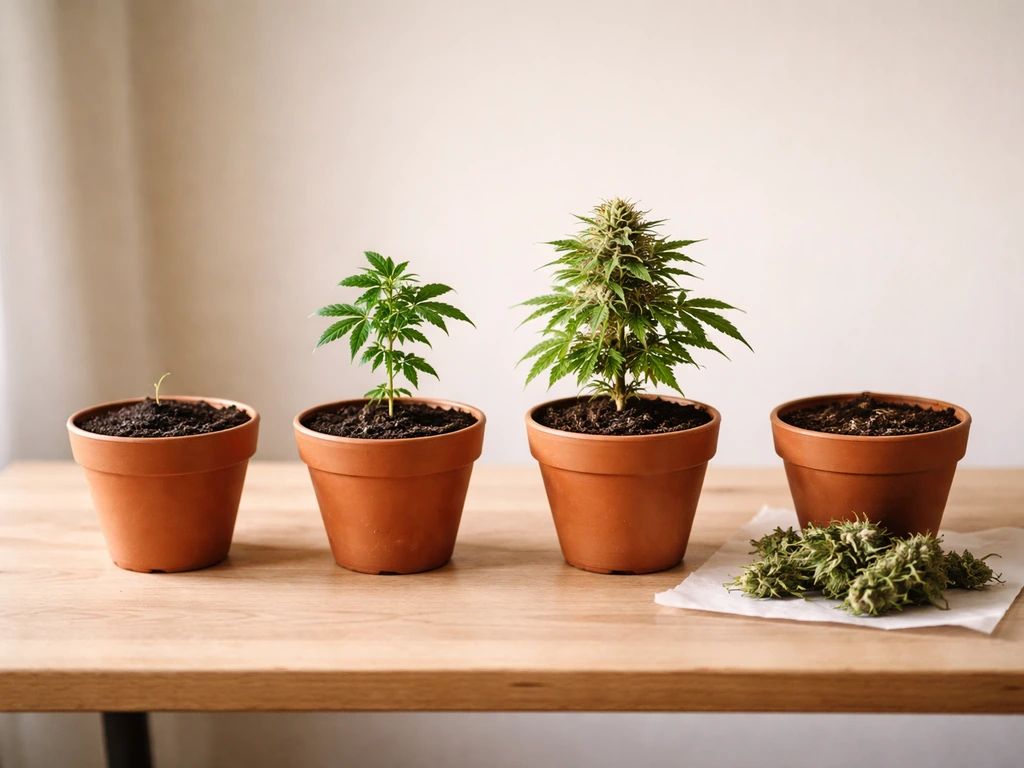
Cannabis takes anywhere from 8 weeks to 7+ months to grow from seed to harvest, depending on whether you're growing autoflowers or photoperiod plants, and whether you're growing indoors or out. That's a wide range, so let me break it down into real numbers you can actually use to plan your grow.
How Long Does Cannabis Take to Grow From Seed
Marcus Henley
13 Apr 2026
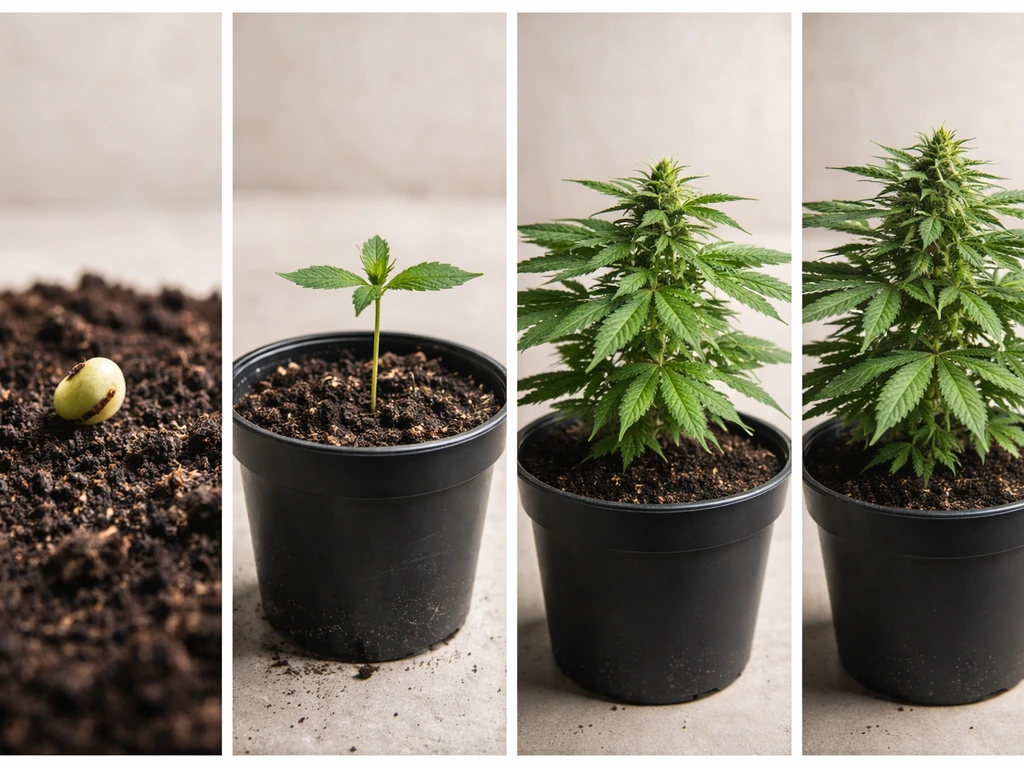
The full cannabis growth timeline, seed to harvest
Every cannabis grow moves through the same four stages: germination, seedling, vegetative, and flowering. The time spent in each stage depends heavily on your seed type and how you choose to grow. Here's how those stages stack up in a typical grow:
| Stage | Autoflower Duration | Photoperiod Duration |
|---|---|---|
| Germination | 1–7 days | 1–7 days |
| Seedling | 10–15 days | 10–15 days |
| Vegetative | 2–4 weeks (fixed) | 2–8 weeks (grower-controlled) |
| Flowering | 4–5 weeks | 7–14 weeks (strain-dependent) |
| Total (seed to harvest) | 8–10 weeks | 3–7+ months |
Those totals aren't a typo. Autoflowers are genuinely fast, and photoperiod plants are genuinely flexible, sometimes excessively so if you're not paying attention to your light schedule. Both have their place depending on what you're trying to accomplish.
Germination: getting that first root out of the shell
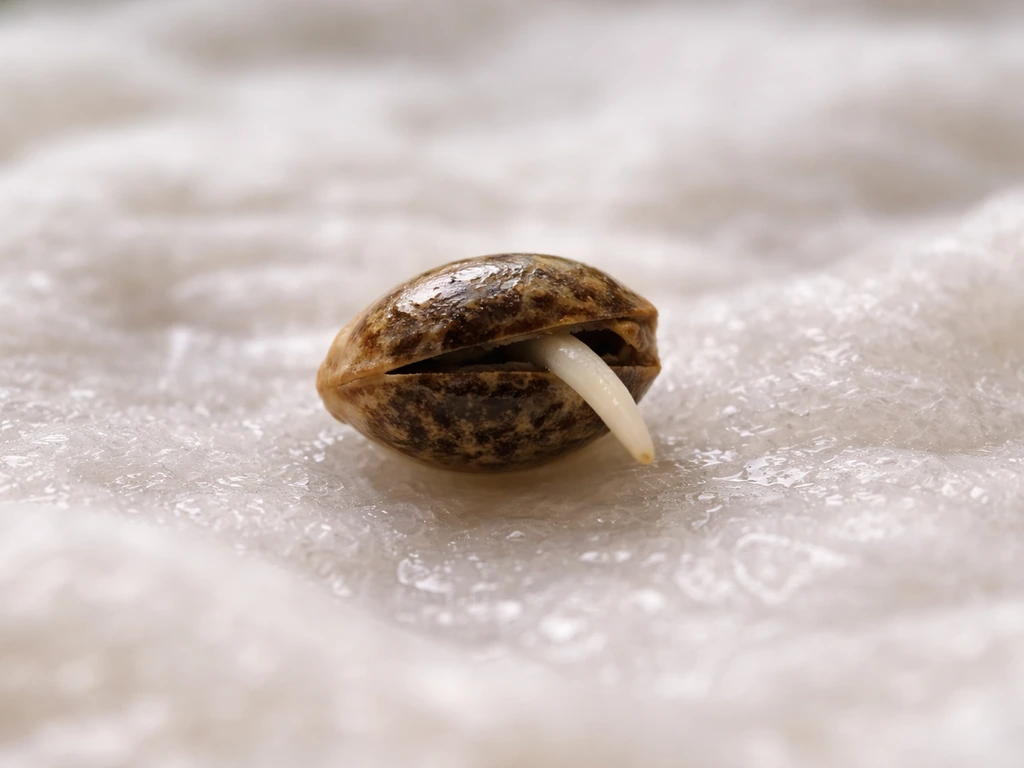
Germination itself takes 1–7 days from the moment you introduce moisture to your seed. The first sign of life is a tiny white taproot cracking out of the shell, and then you're off to the races. Most healthy seeds pop within 2–4 days when conditions are right.
The paper towel method is one of the most popular approaches: place seeds between two damp paper towels, keep them in a warm dark spot, and check daily. The ideal germination temperature is around 77°F (25°C), with an acceptable range of 70–85°F (20–30°C). One thing to watch closely: the paper towels need to stay moist but not soaking wet. A dried-out paper towel stops germination cold, and seeds sitting in standing water risk rotting before they sprout. Check them every 12–24 hours and re-dampen if needed.
Once the taproot is visible at about 2–3mm long, it's time to transfer the seed into your growing medium, taproot pointing downward. From there, the seedling stage begins, typically lasting 10–15 days until the plant has developed 3–4 leaf nodes and is ready to transition into vegetative growth. If you haven't seen any sign of life after 7 days, that seed is likely a dud and you should move on to a replacement.
Vegetative stage: short sprint or long training session?
This is where autoflowers and photoperiod plants diverge dramatically, and understanding the difference will change how you plan your entire grow.
Autoflower veg: short and mostly out of your hands
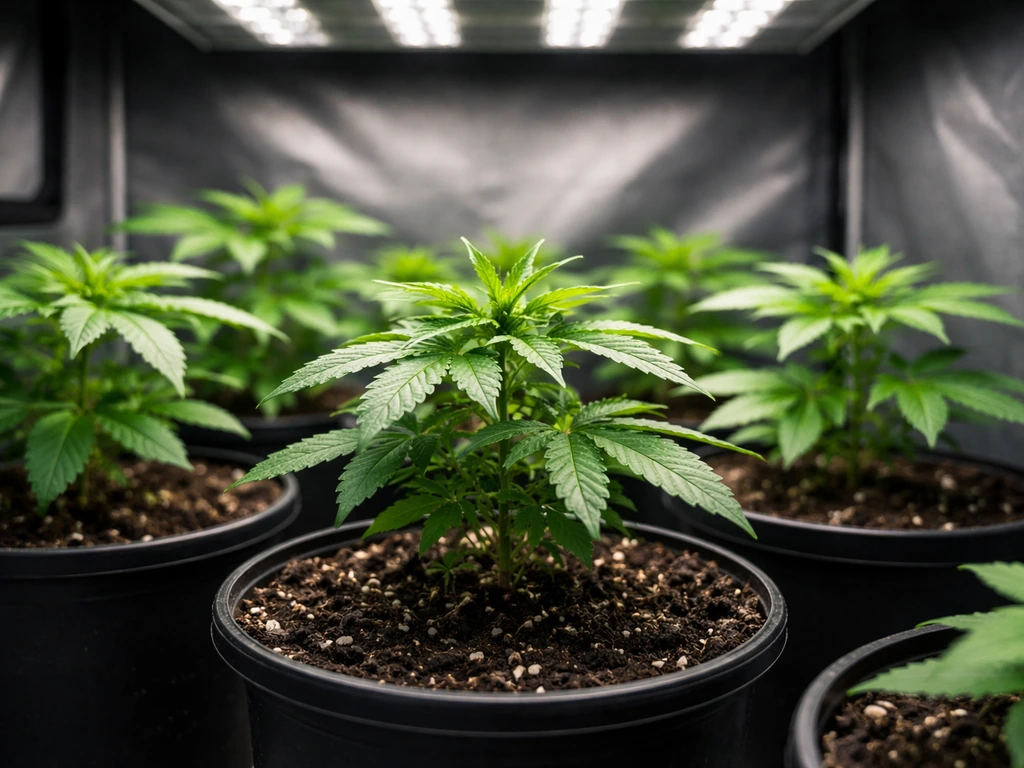
Autoflowers spend roughly 2–4 weeks in the vegetative stage before they flip to flowering on their own internal clock, no light schedule change required. That means you have a limited window to do any training. Low-stress techniques like LST (bending and tying) work well in this window. High-stress methods like topping are trickier because recovery time eats into the small veg window you have. If you're growing autos in a SCROG setup, expect to add about a week of extra veg time compared to a no-training grow, just to get enough canopy to fill the mesh.
Photoperiod veg: you're in control
Photoperiod plants stay in veg as long as you keep the lights on for 18+ hours per day (indoors) or as long as summer day length supports it (outdoors). The vegetative period for photoperiod plants typically runs 2–8 weeks, but experienced growers sometimes push it longer intentionally to build a large plant structure before flipping to flower. If you top your plants, add at least a week to your veg timeline for recovery. SCROG setups often run a 4–8 week veg phase to allow enough canopy to weave through the mesh before the flip. The longer you veg a photoperiod plant, the larger the eventual harvest potential, but you're adding weeks to your total timeline.
Flowering stage: photoperiod vs autoflower side by side
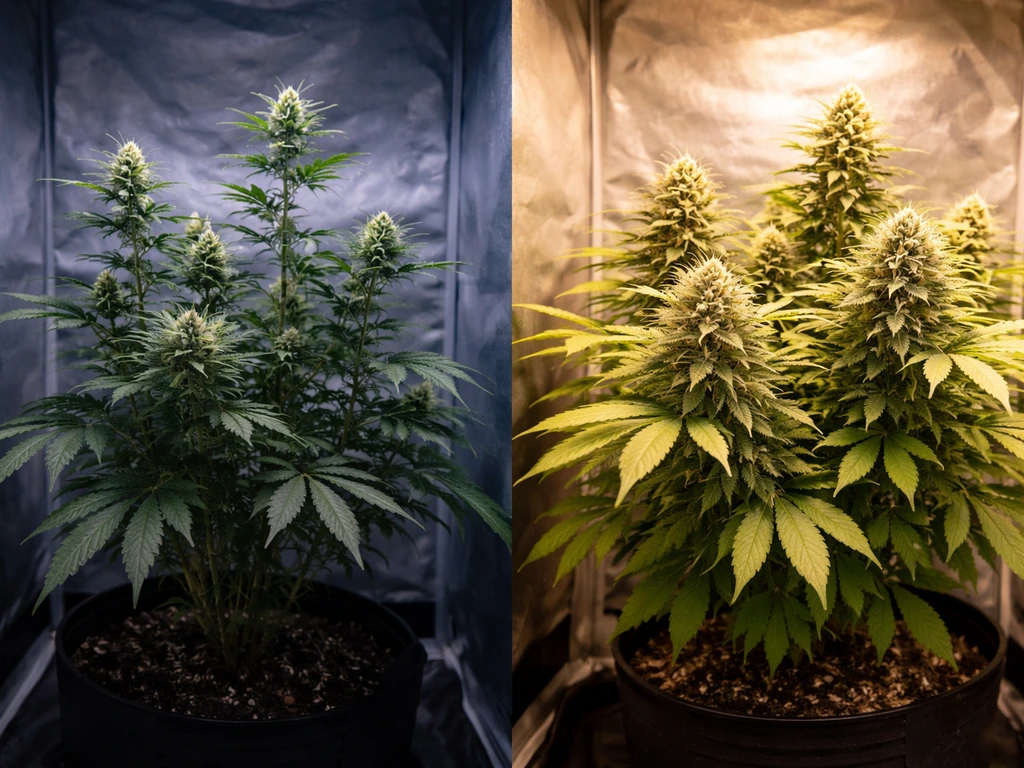
Flowering is where the clock really matters, and where the two seed types behave very differently. If you want a detailed look at how long it takes feminized weed seeds to flower, that's worth reading alongside this guide.
Autoflower flowering
Autoflowers begin flowering around 3–4 weeks after germination and spend approximately 4–5 weeks in bloom, bringing the total life cycle to about 8–10 weeks from seed to harvest. Many autoflowering cannabis varieties are ready to harvest in less than 10 weeks from seed blank" rel="noopener noreferrer">8–10 weeks total. The flowering phase is mostly fixed by genetics, so there's limited room to stretch or shorten it. Plan your harvest date by counting forward 8–10 weeks from the day you germinated your seeds.
Photoperiod flowering
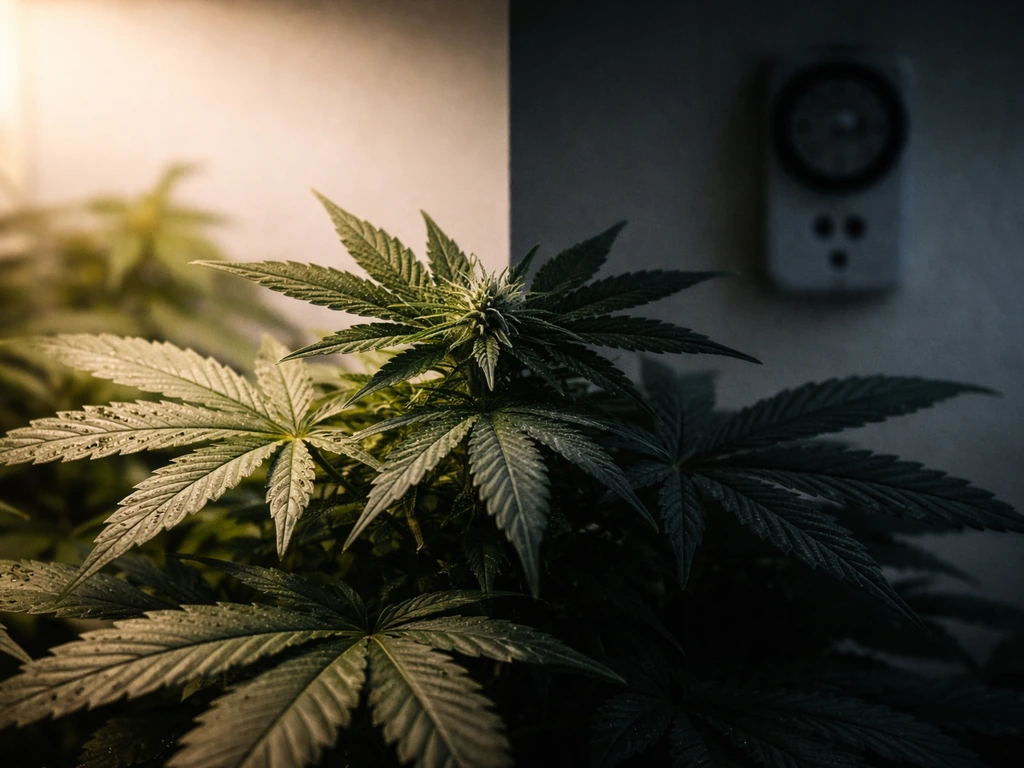
Photoperiod plants begin flowering when day length drops below roughly 14 hours of light, either naturally in late summer outdoors or artificially when you switch your indoor lights to a 12/12 schedule. Once flowering begins, most indica and hybrid strains finish in 7–10 weeks. Sativa-dominant strains are slower, often running 10–14 weeks of flowering before they're actually ripe. Plan your nutrient schedule carefully during this phase: nutrient demand peaks in the first half of flowering and then tapers off. In the final 1.5–2 weeks before harvest, most growers flush with pH-balanced water and stop feeding nutrients entirely to clean up the final product.
Total grow time by setup: indoor, outdoor, and climate
Your setup has a massive impact on total grow time. Here are realistic ranges for each scenario:
| Setup | Seed Type | Estimated Total Time |
|---|---|---|
| Indoor, controlled environment | Autoflower | 8–10 weeks from seed |
| Indoor, controlled environment | Photoperiod (indica/hybrid) | 3–5 months from seed |
| Indoor, controlled environment | Photoperiod (sativa-dominant) | 5–7+ months from seed |
| Outdoor, temperate climate | Autoflower | 8–10 weeks (plant anytime) |
| Outdoor, temperate climate | Photoperiod | Harvest Oct–Nov; total ~5–7 months from spring start |
| Outdoor, warm/long-season climate | Photoperiod | Can stretch to 7+ months with long veg |
For outdoor photoperiod grows, the calendar does the heavy lifting. Plants go into veg when you put them out in spring, stay there all summer, and automatically flip to flower as daylight shortens in late summer. Harvest typically happens 10–12 weeks after the flowering stage begins, which in most temperate climates lands somewhere in October or November. If you're curious how other slow-maturing crops handle similar seasonal timing outdoors, the guide on how long it takes to grow tobacco from seed covers a surprisingly similar multi-month outdoor timeline.
Indoor grows give you complete control but require active management of your light schedule. The advantage is that you can flip photoperiod plants to flower whenever you're satisfied with plant size, making your harvest date predictable to within a week or two.
Back-calculating your harvest date
Once you know your seed type and setup, you can work backward from a target harvest date or forward from your germination date. Here's how:
- Start with your germination date (day 1).
- Add 10–15 days for the seedling stage.
- Add your planned veg time: 2–4 weeks for autos, or 2–8+ weeks for photoperiod depending on training goals.
- Add your strain's flowering time: 4–5 weeks for autos, 7–14 weeks for photoperiod depending on genetics.
- Subtract 1.5–2 weeks from the end of flowering as your flush window (stop feeding, switch to water only).
- That final date is your estimated harvest window.
Example: you germinate an autoflower on April 13. Add 14 days for seedling (April 27), then 3 weeks of veg (May 18), then 5 weeks of flowering (June 22). Your estimated harvest is around late June, roughly 10 weeks from seed. For a photoperiod indica grown indoors, germinate April 13, allow 14 days seedling (April 27), 5 weeks veg (June 1), flip to 12/12, then 8 weeks of flowering puts harvest around late July. About 15 weeks total.
What makes cannabis grow faster or slower
Genetics set the floor and ceiling, but your environment determines where in that range you actually land. These are the factors that move the needle most:
Temperature
Cannabis grows fastest when temperatures stay between 70–85°F (20–30°C) during lights-on periods. Go too cold and metabolic processes slow down, stretching every stage. Go too hot (above 90°F/32°C consistently) and you stress the plant, also slowing growth and potentially causing foxtailing during flower.
Light intensity and schedule
Light drives photosynthesis, which drives growth rate. During veg, target a PPFD of roughly 300–600 µmol/m²/s. During flowering, bump that up to 600–900 µmol/m²/s without supplemental CO2. Running lights too dim keeps plants in a sort of slow motion, extending veg time noticeably. Outdoors, the natural photoperiod is what triggers flowering in photoperiod plants once days shorten below about 14 hours of light.
Genetics and strain
This one is non-negotiable. A sativa-dominant strain is going to take 10–14 weeks to flower no matter how perfect your environment is. Autoflowers are genetically wired to finish in 8–10 weeks total. Know your strain's published flowering time before you start and build your schedule around it, not around wishful thinking.
Nutrients
Underfeeding slows growth, but overfeeding causes nutrient burn which also slows growth (and looks awful). Plants in veg want more nitrogen; plants in flower want more phosphorus and potassium. Stick to a stage-appropriate feeding schedule and you'll stay on pace. Overfeeding in late flower can actually delay harvest because the plant needs time to process the excess before it's ready.
Pot size
A plant that gets root-bound will stall. If your plant's growth suddenly slows and you've ruled out watering and nutrient issues, check the roots. If they're circling the bottom or poking out of drainage holes, it's time to transplant up. Note that transplanting causes 3–7 days of mild stress during which growth slows, so factor that into your timeline if you're doing multiple pot upgrades.
Training methods
Low-stress training (LST) adds minimal time. Topping and other high-stress methods add at least a week to your veg phase for recovery. SCROG setups typically add 1–4 extra weeks of veg to let the canopy fill the net. None of these are bad choices, they just need to be accounted for in your back-calculation. For a broader picture of how growing weed from seed indoors compares across different setups, that article walks through the full range of training and environment combinations.
Troubleshooting slow or stalled growth
If your plant isn't moving at the pace you expected, here's a practical checklist of what to investigate first:
- Seeds not germinating after 7 days: discard and replace; seeds may be old, damaged, or stored poorly. Check that your germination temperature is in the 70–85°F range and that your paper towels never dried out.
- Seedling collapsed or has mushy tan spots at the base: this is damping-off, usually caused by overwatering or poor drainage. It's fungal and usually fatal to that seedling. Start fresh with better drainage and less water frequency.
- Veg growth is very slow: check light intensity first (PPFD too low is a common culprit), then check root space (root-bound plants stall fast), then check temperature.
- Plant looks healthy but won't flower (photoperiod, indoor): verify your 12/12 light schedule is truly giving 12 hours of uninterrupted darkness. Any light leaks during the dark period will delay or prevent flowering.
- Plant looks healthy but won't flower (outdoor photoperiod): you may be in a region or season where day length hasn't dropped below 14 hours yet. Be patient or consider light deprivation techniques.
- Autoflower seems stuck in veg: true autoflowers will flower automatically, but poor genetics from cheap seeds can produce plants that behave more like photoperiod plants. This is rare but happens with low-quality breeders.
- Flowering is taking much longer than the strain's listed time: check temperature (too hot or too cold slows ripening), check if you've overfed in late flower (excess nitrogen extends flowering), and look at your trichomes with a loupe rather than relying solely on the calendar.
- Plant was overwatered early on: recovery from severe overwatering can take 2–6 weeks. Improve drainage, let the medium dry out more between waterings, and don't feed heavily until the plant shows healthy new growth again.
One thing worth internalizing: slow growth early in the seedling stage is normal and often not a problem. Damping-off is a seedling disease caused by pathogens that can kill or weaken seeds or seedlings, so it is important to watch for problems if early growth seems off blank" rel="noopener noreferrer">slow growth early in the seedling stage is normal. Cannabis seedlings put most of their early energy into root development, so above-ground growth can seem slow for the first 2 weeks even in perfect conditions. Don't panic and don't overcorrect by adding more nutrients or water. Give it time and keep conditions stable.
Autoflower or photoperiod: which timeline fits your situation?
If you need a quick comparison before choosing which seed type to start with, here's the honest breakdown:
| Factor | Autoflower | Photoperiod |
|---|---|---|
| Total time, seed to harvest | 8–10 weeks | 3–7+ months |
| Flowering trigger | Automatic (genetics) | Light cycle (12/12 or seasonal) |
| Schedule flexibility | Low (fixed life cycle) | High (you control the flip) |
| Training potential | Limited (short veg window) | High (veg as long as needed) |
| Best for beginners? | Yes (simpler, faster) | Yes, but requires light management |
| Multiple harvests per year (indoor)? | Yes (back-to-back cycles) | Possible but takes planning |
| Outdoor harvest timing | Anytime (season-flexible) | Fall (dictated by photoperiod) |
For most first-time growers, autoflowers are the easier entry point purely because the timeline is shorter and more predictable. You plant, you wait 8–10 weeks, you harvest. Photoperiod plants offer more control and potentially bigger yields, but they demand more attention to light schedules and take significantly longer. It's a worthwhile tradeoff once you've got a grow or two under your belt.
If you're coming from growing other long-season plants and wondering how cannabis compares, the timeline is actually somewhat similar to growing certain ornamentals from seed. For instance, how long it takes to grow cannas from seed involves a similarly multi-month commitment from germination to full bloom, which might give you a useful reference point for managing expectations.
The bottom line: know your seed type, map out your stages using the ranges above, account for any training methods you plan to use, and build in a buffer of a week or two on either end. Cannabis grows on its own schedule, but with good information, your harvest date is more predictable than most people expect.
FAQ
If I start counting from seed, how do I know when to harvest, not just when the timeline ends?
It depends on what you mean by “ready.” Seeds to harvest is usually 8 to 10 weeks for autoflowers and 3 to 7+ months for photoperiod setups, but the plants can be “visually done” before they are actually ripe. A practical rule is to check trichomes (and not just pistil color) in the final window, because harvesting even a few days early can reduce potency and yield.
What happens if my seeds do not sprout quickly, will the whole grow be delayed?
If you miss the ideal germination conditions, the most common delay is a slower, uneven sprout rather than an entire stage becoming wildly longer. In many cases you can still land in the normal overall range once the plant is established, but if a seed hasn’t shown any taproot after about 7 days, replacing it prevents losing weeks on a stalled start.
Does transplanting always add time to the grow, and how do I avoid extending the schedule?
Yes, but not in a direct “add 1 week” way. Many growers see the biggest impact from late or repeated mistakes, like moving to a larger pot too soon (and leaving roots sitting too wet) or overcorrecting the watering schedule. The most reliable approach is to transplant based on root development and plant size, then treat transplant days as a short stall (often a few days) and re-check your next training and flip dates.
How can indoor light schedule mistakes make my photoperiod plant take longer to flower?
Light leaks can extend flowering for photoperiod plants. If your indoor photoperiod is supposed to be 12/12, even small disruptions during the dark period can cause plants to remain in vegetative growth longer than expected. To stay on pace, keep the lights off period truly dark, use light-tight timers or fixtures, and verify that no LEDs or reflective bounce are getting in.
Can autoflowers take longer than the usual 8 to 10 weeks, and why?
If an autoflower is stressed early (cold snaps, heat spikes, heavy overfeeding, or aggressive training), the plant can still take longer even though flowering is genetically timed. The range can stretch toward the slower end (near 9 to 10 weeks total) when seedlings or early veg recover from stress. Autos are less forgiving of setbacks because the window for training and recovery is limited.
My seedling is slow, is it normal or should I change something immediately?
During seedling, growth can look slow for the first couple of weeks even when everything is “working,” because energy goes into root development. A common mistake is to add more nutrients or water because the top growth is lagging. Stable temperature, correct moisture (not soaking), and patience usually keep you aligned with the expected timeline.
What environmental factors most commonly make a cannabis grow longer than planned?
In most home setups, temperature swings and inconsistent watering are bigger schedule disruptors than people expect. For faster and more predictable timelines, focus on keeping lights-on temperatures in the 70 to 85°F (20 to 30°C) band, and avoid letting the grower space sit near freezing or consistently above about 90°F (32°C). Even short periods of stress in early veg can push harvest toward the longer end of the range.
Can flushing early or flushing too long delay maturity or reduce yield?
If you flush for too long, or you stop feeding before the plant has actually used the nutrients it needs, you can see weaker late growth and delayed “finishing,” even though the flowering clock started on time. A practical approach is to time flushing to the late flowering window you’re aiming for, and adjust only if you clearly see deficiency signs or nutrient buildup issues.
Can I control the harvest date for photoperiod plants, and why is that harder with autos?
For photoperiod plants, the flip date is the major control point for scheduling indoors. If you want a predictable harvest within a week or two, plan the 12/12 switch when the plant has reached the size you want, because trying to delay the flip often makes the plant bigger, not faster. For autos, you cannot “flip” by schedule, so the better strategy is choosing genetics and planning for a fixed total lifecycle.
What feeding errors most often cause my plant to fall behind schedule?
Nutrient mistakes can change your timeline, both directions. Underfeeding can slow growth and keep plants in vegetative stretch longer, while nutrient burn or toxicity can slow development and cause leaf issues that drag flowering readiness. The fastest path to staying on schedule is to feed to the stage, avoid late overfeeding, and correct problems early rather than chasing symptoms with repeated changes.
Next Article
How Long Does It Take to Grow Weed From Seed to Harvest
Weed seed to harvest timeline: germination, veg, flowering, harvest weeks plus factors that speed or delay growth.