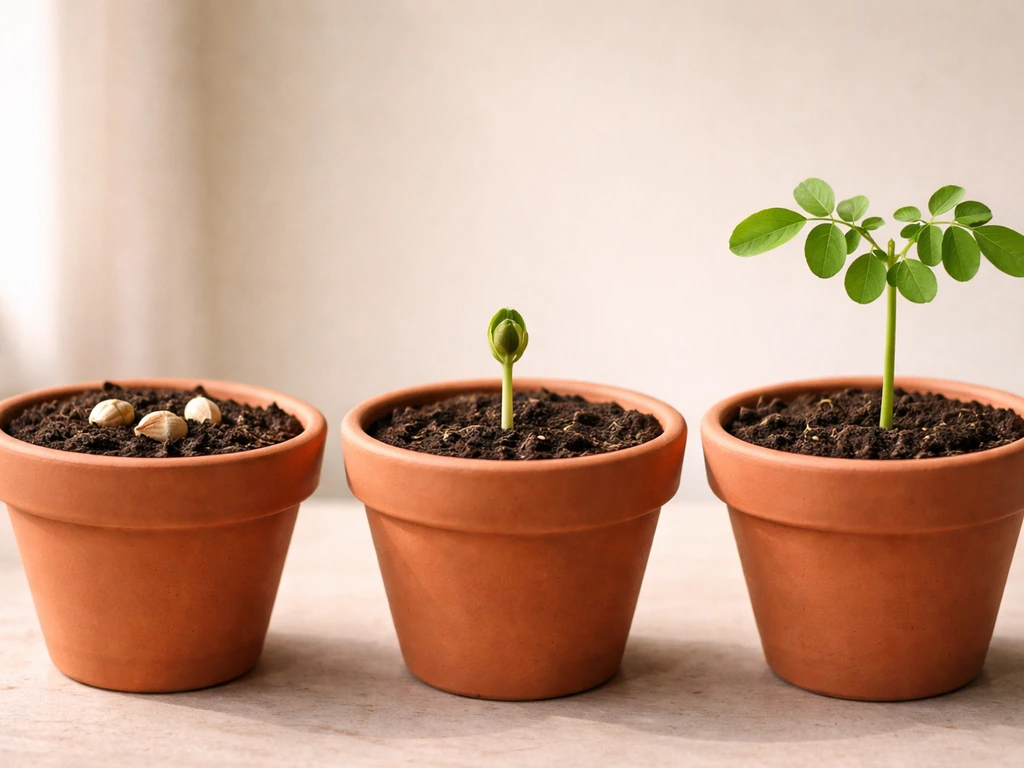
Peyote (Lophophora williamsii) takes about 2 to 4 weeks to germinate from seed under good conditions, but reaching a recognizable, established cactus takes years, not months. Realistically, expect 3 to 10 years from seed to a mature, flowering plant, depending on your setup and how much patience you can muster. If you are planning a grow right now, that range is the most important number to hold onto before you start.
How Long Does Peyote Take to Grow From Seed? Timelines
Marcus Henley
19 Apr 2026
Typical peyote seed germination timeline
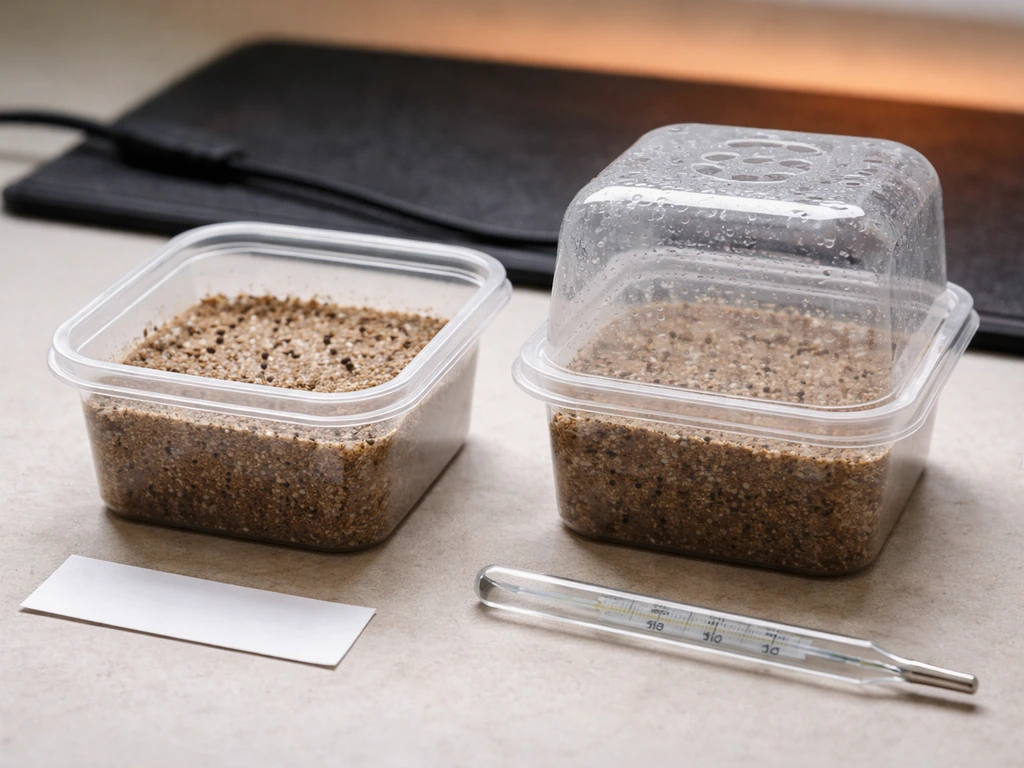
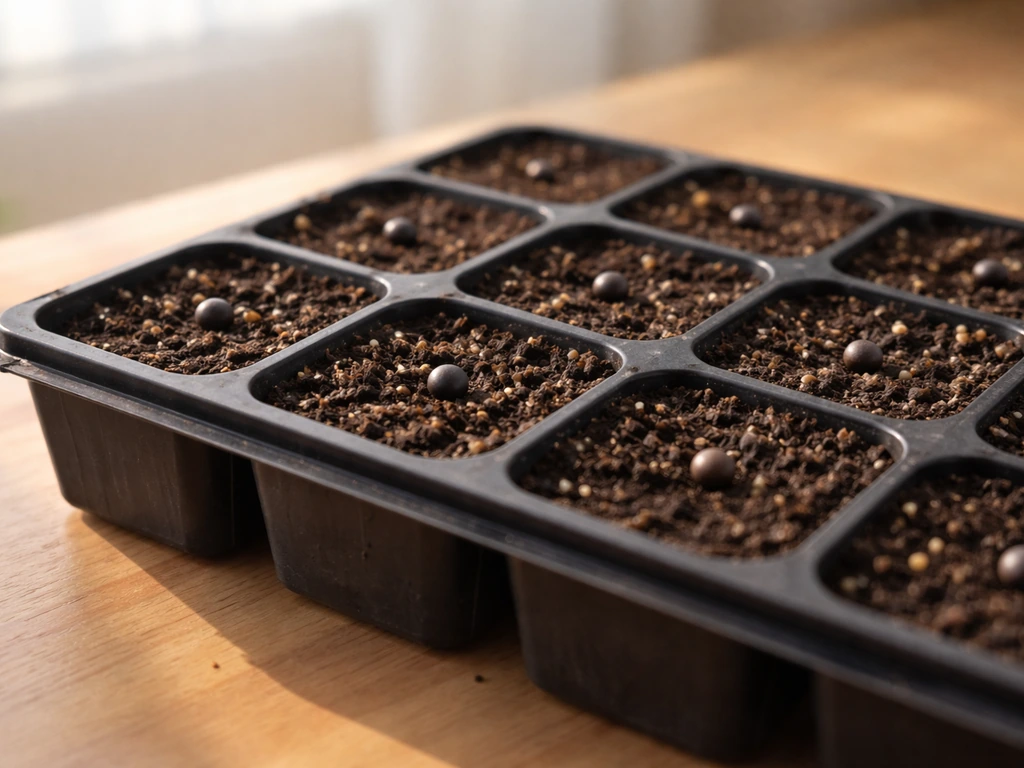
Under ideal conditions, peyote seeds typically sprout within 7 to 21 days after sowing. A germination window of 14 to 28 days is more realistic for home growers. In a controlled lab assay, meaningful germination activity was already visible within the first 14 days after sowing, with final rates of roughly 67 to 75 percent by day 49. That means if nothing has happened by week 7, the remaining seeds are unlikely to catch up.
What makes that window work is warmth, moisture consistency, and sterility. You want your sowing mix to stay moist but never soggy, your grow space to sit at 21 to 27°C (70 to 80°F), and humidity around 70 to 80 percent. A humidity dome or loose plastic cover does that job cheaply and effectively. Use a grow light set to 12 to 14 hours per day or place the tray in bright, indirect light. Surface-sow the seeds and barely cover them with a dusting of fine sand. They need light to germinate, and burying them is one of the most common mistakes people make.
One thing worth knowing: a portion of seeds will simply delay germination as a natural survival strategy. This is well-documented in Lophophora and not a sign of bad seeds. You might sow 20 seeds, see 12 sprout in week 2, and then find 3 more popping up weeks later. That is normal. Do not throw out the tray too quickly.
How long until slow-growing seedlings establish
Once sprouts appear, you are looking at a very slow transition from tiny green dot to an actual seedling. If you are curious how fast mustard seeds grow instead, their sprouting timeline is much quicker than slow cacti seedlings how fast do mustard seeds grow. Early on, seedlings are fragile, measuring just 0.3 to 1 cm in diameter, and they stay in that size range for longer than you would expect from almost any other cactus. Monthly growth increments are small enough that a growth log is genuinely useful here, not just a hobby-journal indulgence.
Most growers keep seedlings in their original humidity-controlled setup for the first several months. The first repotting milestone usually comes around 1 to 2 years in, when roots begin to fill the starter pot. That is your practical signal that the seedling has established and can handle a slightly more open environment. Until then, stable warmth and consistent (but cautious) watering is the entire job.
Estimating time to reach usable cactus maturity
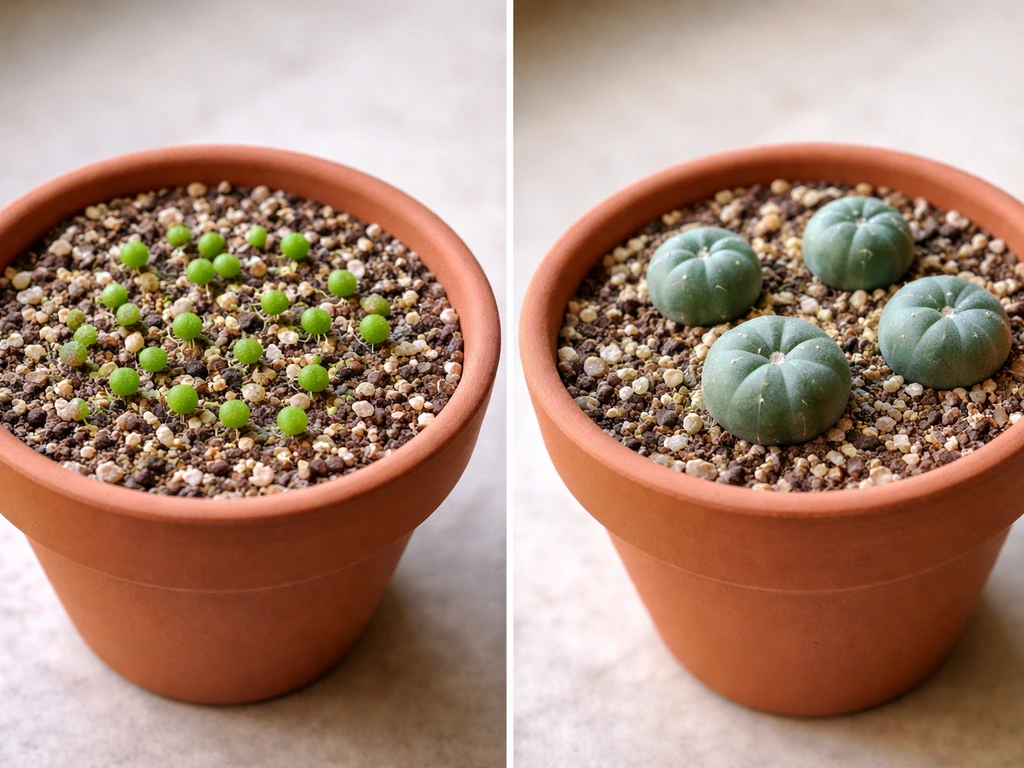
This is where expectations really need calibrating. Peyote is widely considered one of the slowest-growing cacti in cultivation. Here are the realistic ranges to plan around:
| Growth Phase | Typical Timeline | What You're Seeing |
|---|---|---|
| Germination | 7 to 28 days | Tiny green sprout at soil surface |
| Early seedling | 1 to 12 months | Coin-shaped button, 0.3 to 1 cm across |
| Established seedling | 1 to 3 years | Defined ribs, small root system forming |
| First flowering | 2 to 5 years (ideal conditions) | Small pink-white flower at crown |
| Full cactus maturity | 5 to 10+ years | Adult-sized button, 4 to 12 cm across |
You will occasionally see community reports of first flowers appearing in as little as 6 to 7 months under highly optimized setups, and on the other end of the spectrum, growers noting it takes closer to 15 years to reach a substantial size in natural conditions. Wild peyote regularly takes 10 to 15 or more years. For a home grower with good indoor lighting and consistent care, 5 to 10 years is the honest, working estimate for a fully mature plant. If you are wondering how long it takes a mustard seed to grow, that timeline is typically much faster than for slow cactus species like peyote how long does it take a mustard seed to grow.
What actually speeds up or slows down peyote growth
Temperature is the single biggest lever. Keep daytime temps in the 21 to 27°C (70 to 80°F) range consistently and growth picks up noticeably. Drop below 15°C or fluctuate wildly and the plant basically stalls. Peyote in the wild handles cold winters by going dormant, and your seedlings will do the same even when you do not want them to.
Light duration matters more than intensity at the seedling stage. Running a grow light for 13 to 14 hours per day, suspended 12 to 18 inches above the seedlings, gives you the photoperiod these plants respond to. Less than 10 hours and growth slows dramatically. Bright indirect light can work but is less consistent than a controlled grow light setup.
Soil mix and watering approach are closely linked. Peyote needs a fast-draining, sterile mix, think a cactus mix cut with coarse perlite or fine pumice. The medium should never stay wet for more than a day or two. Overwatering at the seedling stage is probably the most common cause of collapse. During germination, you need consistent moisture, but once seedlings are a few months old, start letting the top layer dry between waterings. Ventilation in your grow space also matters: stuffy, humid air after the germination phase invites fungus and rot.
Seed freshness is worth calling out separately. Peyote seeds reportedly begin losing viable germination rates after about a year in storage. If you are working with older seeds, expect lower germination percentages and longer delays, not zero germination, but noticeably worse results than fresh seed.
What peyote looks like at 6, 12, and 24-plus months
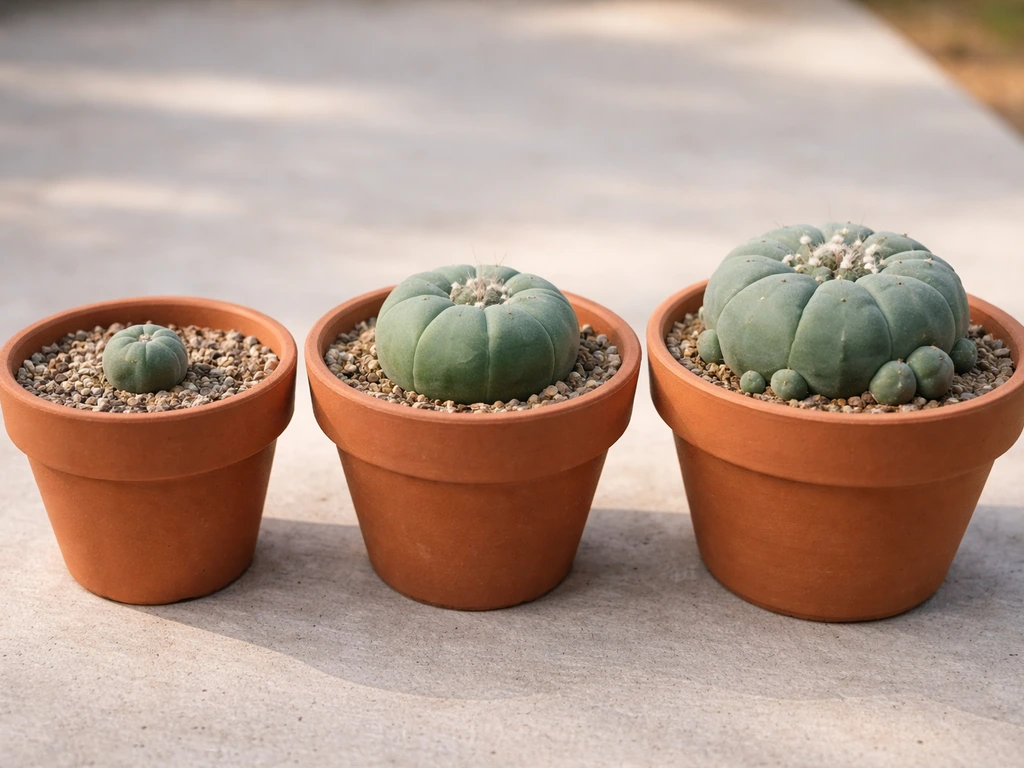
Having a visual benchmark for each stage helps you know whether your plant is on track or lagging. Here is what to realistically expect:
- 6 months: A tiny, rounded green button roughly 0.5 to 1 cm across. The surface is smooth, slightly glaucous (bluish-green), and you may be able to make out the faint start of ribs or tubercles. It looks almost like a small green pea sitting on the soil surface. If it has not grown at all since sprouting, check your temperature and watering frequency.
- 12 months: The button is typically 1 to 2 cm across, more clearly disc-shaped, with defined tubercles becoming visible. The tap root is developing underneath. Growth is still slow enough that you might question whether anything is happening, but measured over weeks it is moving.
- 24 months and beyond: A well-cared-for plant can reach 2 to 4 cm in diameter by the 2-year mark. The classic peyote button shape is now unmistakable. Roots likely fill the starter container and repotting is probably overdue or imminent. Some plants in ideal conditions will show their first flower around this window, though 3 to 5 years is more typical.
Troubleshooting slow or failed germination
If nothing has sprouted after 4 weeks, run through this checklist before giving up or resowing:
- Check your temperature. If the soil temp is below 20°C (68°F), germination will be extremely slow or may not happen. Use a soil thermometer, not just an ambient room thermometer.
- Check moisture levels. The medium should be evenly moist to the touch but not glistening or sitting in water. Soggy conditions promote rot and inhibit sprouting. Bone-dry conditions stop germination entirely.
- Confirm the seeds are at or very near the surface. Buried seeds may not germinate at all. If you can see them on the surface with a thin sand dusting, that is correct.
- Assess seed age. Seeds older than one year have declining viability. If you sourced seeds from an unknown storage period, low or zero germination is a real possibility.
- Check for contamination. If you see fuzzy mold growth on the soil surface, remove the dome, let it air for a short period, and consider a dilute fungicide-free treatment with hydrogen peroxide and water (1 part H2O2 to 4 parts water) misted lightly over the surface.
- Be patient with delayed sprouters. Some proportion of any Lophophora seed batch will germinate weeks or even months later than the main flush. Mark your tray with the sow date and revisit at 6 and 8 weeks before writing off the remaining seeds.
Slow seedling growth after germination is almost always a temperature or light problem. If your seedlings are alive but visibly smaller at 6 months than the 0.5 to 1 cm benchmark, add a few more hours of grow-light time per day and make sure overnight temps are not dropping below 18°C.
Your practical planning checklist before you sow
Peyote growing rewards patience and punishes rushing. If you are also trying another slow grower, the timing for centipede seed will be different, so it helps to check its specific schedule how long does centipede seed take to grow. If you are serious about taking a plant from seed to maturity, use this checklist to set up realistically before you even open the seed packet.
- Secure fresh seeds: Source seeds sown within the past 6 to 12 months for the best germination rates. Ask suppliers about harvest or packaging dates.
- Set up a warm, stable environment: Target 21 to 27°C (70 to 80°F) consistently. A heat mat under the tray is more reliable than depending on ambient room temperature.
- Prepare a sterile, fast-draining mix: Combine a quality cactus mix with 30 to 50 percent perlite or pumice. Sterilize with boiling water before sowing to reduce mold risk.
- Arrange lighting: Plan for 13 to 14 hours of light per day with an LED grow light suspended 12 to 18 inches above the tray. A basic timer eliminates guesswork.
- Cover for humidity: Have a clear humidity dome or plastic wrap ready to maintain 70 to 80 percent humidity during germination.
- Plan a 4-week wait: Expect the bulk of germination in week 2 through week 4. Mark the date and resist the urge to disturb the tray during this window.
- Reserve space for 1 to 2 years of seedling care: These plants will not be going anywhere fast. Make sure you have a stable dedicated spot, not just a temporary windowsill.
- Set your expectations for the long game: Write down your start date and remind yourself that a 5-year timeline is completely normal. Plants that look tiny at year 1 are on track. Compare progress in 6-month intervals, not week to week.
- Plan repotting at the 1 to 2 year mark: When roots start pushing through drainage holes or circling the bottom of the pot, it is time to move up one pot size with fresh mix.
- Keep a simple growth log: Monthly diameter measurements keep you from losing perspective. Even 1 to 2 mm of new growth per month is progress for a young peyote.
Peyote is a genuinely rewarding plant to grow from seed, but it is not for anyone who wants quick results. If you are used to faster-growing plants, the timelines here might seem extreme, and comparing to something like sesame or mustard, which can go from seed to harvest in a matter of weeks, the difference is stark.
If you are comparing cacti timelines with other crops, you may also be wondering how long does it take for sesame to grow, since sesame is typically much faster than peyote. Mustard seed growth is much faster, so the size you see is typically from weeks rather than years. If you are comparing timelines, learn how fast do mustard seeds grow from seed to harvest so you can plan your expectations.
Even slower-growing woody plants like moringa or mango move faster in their early years. If you are also curious about how long moringa takes, check the typical seed-to-growth timeline for this plant before you plan your schedule. Peyote is its own category: slow, steady, and worth planning your whole setup around before you sow the first seed.
If you are asking how long centipede seed takes to grow, it generally follows a slow timeline similar to other hardy cacti-like plants slow, steady, and worth planning your whole setup around. Mango seeds have a different timeline, so if that is your goal, it helps to check how long it takes for a mango seed to grow in your conditions how long does a mango seed take to grow.
FAQ
If my peyote seeds do not sprout by 4 weeks, should I keep waiting or resow?
In many home setups, a good sign is activity by week 3 to 4 (some seeds sprouting). If you have absolutely no visible change by week 4, the most likely causes are seeds being too old, the tray being too cold, or seeds being buried (or covered too thickly). At that point, it is usually better to correct conditions and resow rather than waiting indefinitely.
Can old peyote seeds take much longer to germinate?
Yes, especially with older seed. Viability often drops after about a year in storage, so you might still get some germination but with lower rates and longer delays. Fresh seed usually compresses the timeline, older seed spreads it out, which can make your “expected day” window feel wrong.
Is it normal for peyote seedlings to stay tiny for a long time?
Most growers should treat “seedlings look small” as normal. Peyote seedlings can remain tiny for a long time, even after sprouting. The better checkpoint is whether they are alive and gradually thickening over months, not whether they reach 1 cm quickly.
Why are my peyote seedlings alive but growing slower than expected, even with the same light schedule?
Temperature swings matter. Even if daytime warmth is correct, dropping below about 18°C at night can slow growth enough that you will feel stalled out during the first year. Use a consistent heat source or move the tray away from cold drafts.
Should I keep the humidity dome on after the seeds sprout?
If you are using a humidity dome or plastic cover, remove or loosen it gradually after germination. Keeping it sealed too long after sprouts appear can encourage stale, overly humid air and increase fungus or rot risk. Ventilation becomes more important once seedlings are established.
How should my watering routine change once peyote seedlings appear?
Growth can stall when you shift from “keep moist” to “let dry” at the wrong time. During germination, moisture must be consistent but not soggy. After seedlings are a few months old, letting the top layer dry between waterings reduces rot risk, which indirectly supports faster, steadier growth.
What light schedule is most important for speeding up early peyote growth?
You do not need high intensity early on, but you do need enough total daily light. If you run the grow light for fewer than about 10 hours a day, growth often slows noticeably. A practical approach is to keep a consistent photoperiod around 13 to 14 hours until you see steady thickening.
When is the first repotting milestone for peyote seedlings, and is repotting early a bad idea?
You will typically repot when roots start filling the starter pot, commonly around 1 to 2 years in. Repotting earlier can stress very small seedlings, especially if the medium is not yet aligned with their slow, careful moisture tolerance.
Does fertilizing help peyote grow faster from seed?
No single fertilizer regimen reliably speeds peyote to maturity in a predictable way, and heavy feeding can backfire by stressing plants that are already slow-growing. If you choose to feed, do it lightly only after seedlings are clearly established (often after the first year or after repotting), and match your watering so the medium does not stay wet.
How should I plan timelines for flowering without getting discouraged?
For planning, use the flowering timeline as a wide range, but for sanity check focus on intermediate markers. A realistic expectation is a few years to reach a robust, obviously “cactus-like” stage, and then several more years toward size that is capable of flowering. If you only look at “months,” you will think you have failed even when plants are progressing normally.
Next Article
How Long Does Moringa Take to Grow From Seed?
Moringa from seed timeline: sprout to harvest and maturity, plus factors like heat, light, water, and seed prep that spe