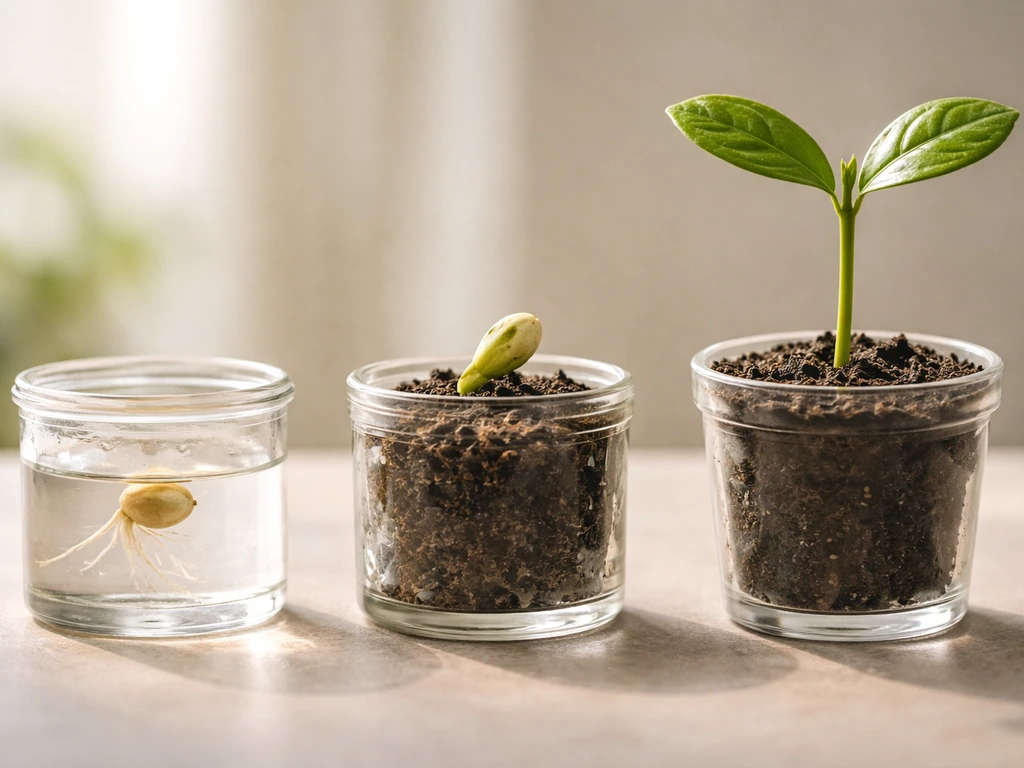
Growing a nectarine from seed takes roughly 3 to 5 years before you see your first fruit, and the seed itself needs anywhere from 3 to 5 months of preparation and germination time before it even sprouts. That's the honest answer. It's a long game, but it's completely doable at home if you go in with realistic expectations and a clear plan.
How Long to Grow Nectarine From Seed: Timeline
Marcus Henley
13 May 2026
Germination timeline for nectarine seeds
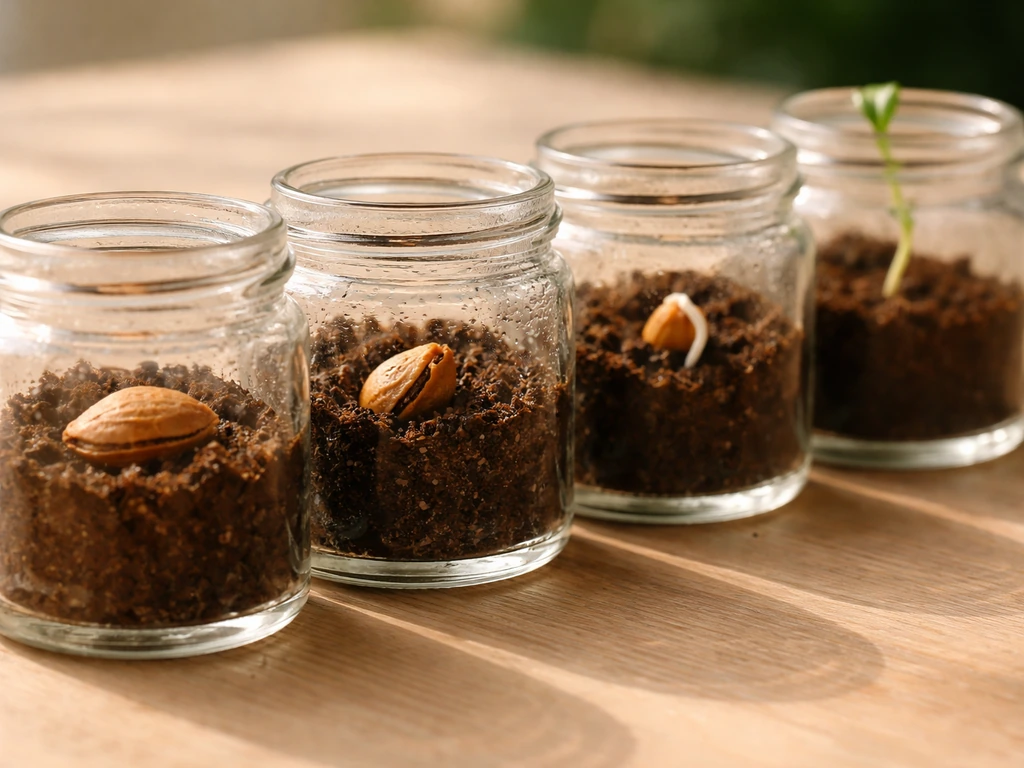
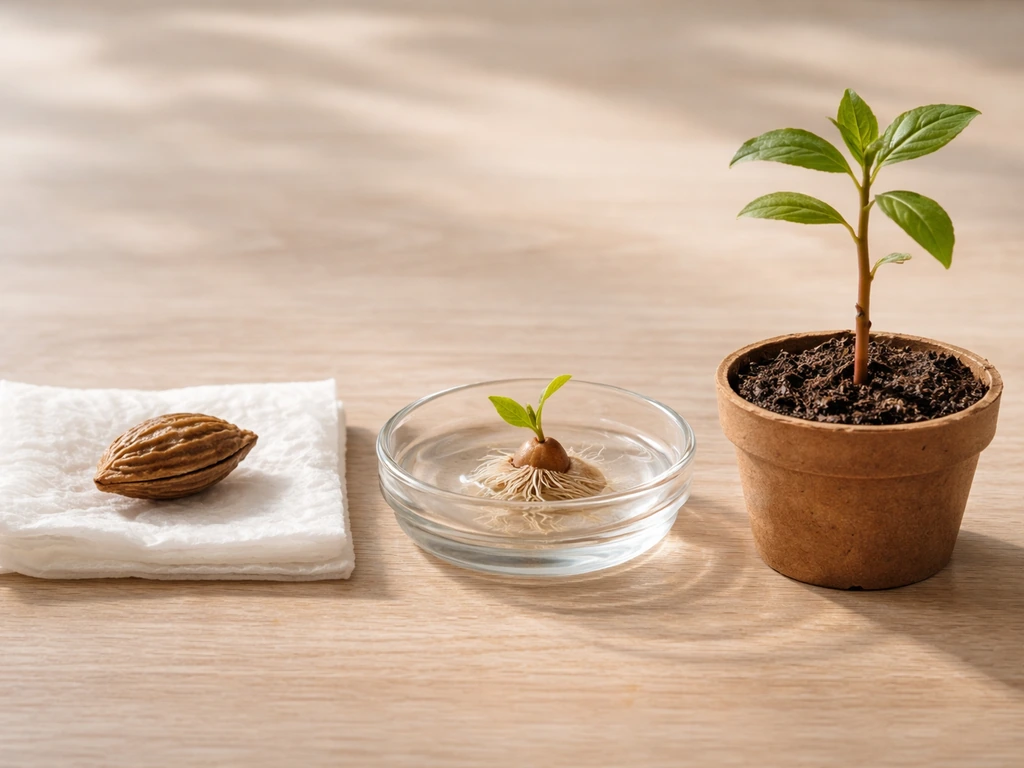
Nectarines are just smooth-skinned peaches (Prunus persica), so their seeds behave identically. Once you've properly prepared the pit and given it the cold treatment it needs, germination typically takes 4 to 6 weeks after you move the seed to warm soil. From the moment you start cold stratification to the moment a seedling breaks the surface, you're usually looking at a total of 3 to 5 months. Some seeds push through faster at the 10-week mark; others drag out past 16 weeks. That range is completely normal.
The key thing to understand is that nectarine seeds don't just germinate on demand. The embryo inside the pit is biologically programmed to wait for a cold winter before it wakes up. Skip that cold period and most seeds simply won't sprout, no matter how long you wait.
Cold stratification and scarification requirements
Cold stratification is non-negotiable for nectarine seeds. Iowa State University Extension puts the stratification requirement for peach (Prunus persica) at about 98 to 105 days at 32°F to 40°F. Oklahoma State University extension offers a slightly shorter window of 20 to 40 days at 32°F to 45°F for stratified peach seeds, though in practice most home growers find that closer to 3 months produces the most reliable results. The safest approach: plan for a full 10 to 12 weeks of cold treatment.
Here's exactly how to do it at home. Crack open the hard outer shell of the nectarine pit carefully with a nutcracker or a gentle tap with a hammer to reveal the almond-shaped seed inside. This is scarification, and it significantly speeds things up by letting moisture reach the embryo faster. Without it, the thick shell can delay germination by weeks. Once you have the bare seed, wrap it in a damp paper towel, seal it inside a zip-lock bag, and put it in your refrigerator (not the freezer) at around 34°F to 40°F. Check on it every couple of weeks to make sure the towel stays moist but isn't dripping wet, and watch for any sign of mold.
You can also skip the refrigerator entirely by planting directly outdoors in fall. The natural winter cold does the stratification for you. Oklahoma State extension specifically recommends fall planting of unstratified seed as an effective alternative. Oklahoma State University extension notes that peach seeds can be stratified at a low temperature between 32°F and 45°F for about 20, 40 days, and also states that fall planting of unstratified seed can be effective for breaking dormancy and forcing germination fall planting of unstratified seed as an effective alternative.. The downside is that you lose control over timing and moisture, and critters can dig up the pit before spring. Both methods work; the fridge method just gives you more control.
Seedling emergence vs. early growth: what to expect week by week
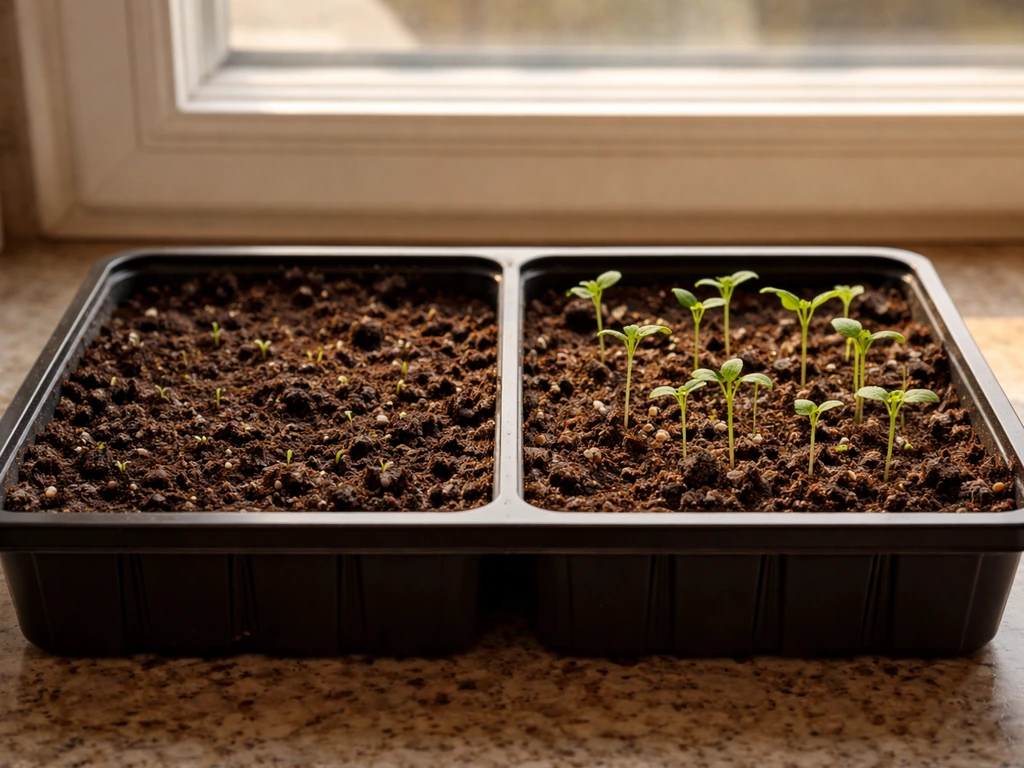
Once stratification is done, plant the seed about 2 to 3 inches deep in loose, well-draining potting mix and keep it in a warm spot around 65°F to 75°F. Here's a rough week-by-week picture of what to expect.
| Timeframe | What's Happening |
|---|---|
| Week 1–2 | Nothing visible above soil. Root radicle may be emerging underground. |
| Week 3–4 | Shoot tip begins pushing upward. Still no visible sprout. |
| Week 4–6 | Seedling breaks the soil surface. First cotyledons appear. |
| Week 6–8 | True leaves emerge. Seedling is 2–4 inches tall. |
| Month 3–4 | Seedling is 6–12 inches tall and ready for a larger container or outdoor planting. |
| Month 6–12 | Vigorous young tree, 1–3 feet tall, establishing its root system. |
| Year 2–3 | Tree reaches 4–8 feet depending on rootstock and conditions. |
| Year 3–5 | First flowers and potentially first fruit appear. |
The early weeks feel painfully slow. I've had nectarine seeds sit in the pot for five full weeks before a single sprout emerged, and I nearly gave up twice. Give it at least 8 weeks in warm soil before you write off a seed as a failure.
From seed to a usable tree: when it starts fruiting
This is the part most people don't expect. A nectarine grown from seed will typically take 3 to 5 years to produce its first fruit, and that's under good conditions. Pomelo grown from seed also takes years to fruit, so planning around long timelines helps set expectations how long to grow pomelo from seed. Some seed-grown trees take as long as 6 years. Compare that to a grafted nursery tree, which often fruits in year 2 or 3, and you can see why patience is the biggest requirement for this project.
There's another important caveat: seed-grown nectarines almost certainly won't be identical to the fruit you ate. Nectarines are hybrids and don't breed true from seed. Your tree might produce fantastic fruit, mediocre fruit, or something closer to a wild peach. That genetic lottery is part of the adventure, but it's worth knowing upfront. If your goal is to reliably reproduce a specific nectarine variety, grafting is the only way to do it. If you're happy growing something new and seeing what shows up, seeds are a fun, low-cost path.
Factors that speed up or delay growth
Several variables have a real impact on how quickly your nectarine moves through each stage. Get these right and you can shave weeks off the germination phase and months off the establishment phase.
- Temperature: Seeds need cold (32°F–45°F) during stratification, then warmth (65°F–75°F) to germinate. Soil that's too cold after planting stalls germination; too hot (above 85°F) can cook the seed.
- Moisture: The stratification medium needs to stay consistently damp, not soggy. During active growth, allow the top inch of soil to dry slightly between waterings to prevent rot.
- Light: Seedlings need at least 6 to 8 hours of direct light daily. Low light produces leggy, weak growth that's slower to establish.
- Planting depth: 2 to 3 inches is the sweet spot. Too shallow and the seed dries out or gets disturbed; too deep and the seedling burns its energy trying to reach the surface.
- Scarification: Cracking the outer pit before stratification can cut germination time by 2 to 4 weeks by allowing water into the seed more quickly.
- Soil quality: Loose, fast-draining mix with some organic matter supports faster root development than dense or clay-heavy soil.
- Climate and hardiness zone: Trees in USDA zones 6 to 8 (the ideal nectarine range) mature faster than those in colder or hotter climates where the tree spends more energy adapting.
Troubleshooting slow, moldy, or non-germinating seeds
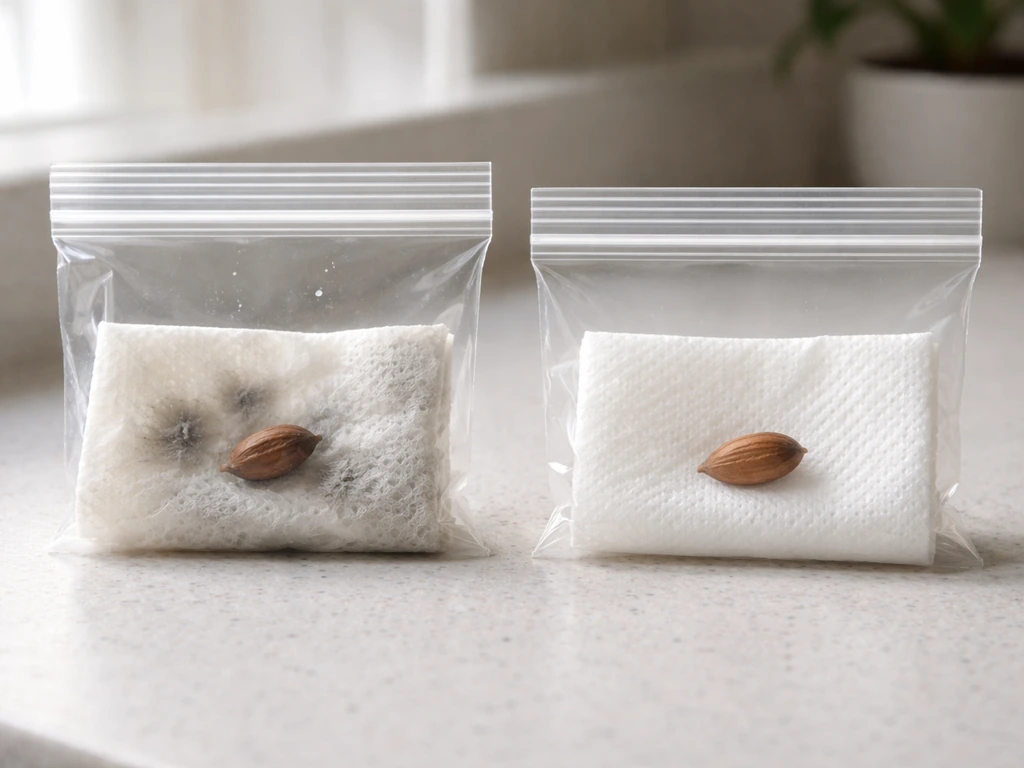
Mold is the most common problem during refrigerator stratification. If you see white or grey fuzz on the paper towel or the seed itself, don't panic yet. Rinse the seed gently under cool water, treat it with a diluted hydrogen peroxide solution (about 1 part peroxide to 9 parts water) for a few minutes, dry it lightly, wrap it in a fresh damp towel, and return it to the fridge. Mold usually means the towel was too wet. Going forward, it should feel barely damp, like a well-wrung sponge.
If the seed hasn't sprouted after 8 weeks in warm soil, try these steps before giving up. First, check that you maintained the full stratification period. Cutting it short by even 2 to 3 weeks is one of the most common reasons seeds fail to germinate. Second, confirm soil temperature is actually warm enough. A soil thermometer will tell you if the pot is sitting in a spot that looks warm but is actually cooler than 60°F. Third, check whether the seed is viable: after removing it from the soil, do a float test in water. Seeds that sink are usually still viable; seeds that float have often dried out or rotted internally.
Completely non-germinating seeds are often simply dead seeds. Nectarine pits from grocery store fruit are sometimes irradiated or treated in ways that reduce viability. For the best germination rates, use pits from locally grown or farmers market nectarines that you know haven't been treated. Fresh pits (used within a few weeks of eating the fruit) also germinate more reliably than pits that have been sitting in a drawer for months.
Realistic expectations and best practices for home growers
Growing a nectarine from seed is genuinely rewarding, but you need to plan for the long haul. Budget 3 to 5 months from pit to seedling, and 3 to 5 years from seedling to first fruit. That's not a failure timeline; that's just how fruit trees work. Even faster-maturing stone fruits like plums tend to take several years from seed to fruiting, so nectarines aren't uniquely slow in the stone fruit family.
A few practices that consistently improve results for home growers:
- Start cold stratification in October or November so your seed is ready to plant in late February or early March, giving it the full warm growing season to establish.
- Grow at least 2 to 3 seeds simultaneously. Even with perfect technique, germination rates for nectarine seeds often hover around 50 to 70%. Multiple seeds improve your odds of getting at least one strong seedling.
- Transplant outdoors only after the last frost, once the seedling has at least 4 true leaves and is actively growing.
- Feed with a balanced fertilizer (like a 10-10-10) once the seedling is 6 inches tall, then transition to a lower-nitrogen, higher-phosphorus feed as the tree matures to encourage fruiting over foliage.
- Be patient with fruiting. If your tree hits year 4 with no blossoms, don't cut it down. Some seed-grown nectarines just need an extra season or two.
If you've already grown other stone fruits or tropical trees from seed, like plums or grapefruit, you'll find nectarines follow a similar slow-but-steady pattern. If you're also wondering how long it takes to grow plums from seed, expect a similarly slow timeline with cold treatment and several years before fruiting how long does it take to grow plums from seed.
How long to grow grapefruit from seed follows a similarly slow schedule, with patience needed for dormancy and early establishment. The principles are the same: prep the seed properly, respect the dormancy requirements, give the seedling the right conditions, and let time do its work. The wait is long, but the moment you pick a nectarine from a tree you grew entirely from a pit is genuinely one of the better feelings in gardening.
FAQ
Does “how long to grow nectarine from seed” include the refrigerator (cold stratification) time?:
It depends on whether you count cold stratification as part of the timeline. If you include it, plan about 3 to 5 months from starting the fridge cold treatment to sprouting. If you start timing only once you move the seed into warm soil, expect roughly 4 to 6 weeks for most seeds, with slower ones taking closer to 8 weeks.
If my nectarine seed sprouts early, will it fruit sooner than 3 to 5 years?
Not usually. Even if the seed sprouts, you still need several seasons before fruiting, because seed-grown nectarines are not the same age as grafted trees. A good target is 3 to 5 years from when you see a true seedling established, and some trees can take up to 6 years.
If I plant the pit outdoors in fall, how long until I see sprouts?
Yes, and it changes how you should measure success. If you plant immediately outdoors in fall without stratifying in the fridge, sprouting commonly lines up with spring conditions. The upside is less work, the downside is you may not know whether failure is due to dormancy not breaking yet versus poor viability.
Can scarifying by cracking the pit make germination fail if done too aggressively?
Cracking the pit helps, but it can also reduce viability if you damage the seed itself. A safe approach is partial shell opening or careful tapping until the hard coat loosens enough to remove the seed, without cutting or nicking the embryo.
What should I do if there is still no sprout after 8 weeks in warm soil?
Stop thinking “until it sprouts” and start thinking “check viability and reset conditions.” After about 8 weeks in warm soil with no sprout, re-verify cold treatment length, soil temperature, and seed viability with a float test, then consider re-stratifying a viable seed rather than repeatedly disturbing it in place.
Why might my pot look warm but my nectarine seed still won’t germinate?
Yes, and the most common one is soil that is warm on top but cool deeper down. Use a soil thermometer at the seed depth (around 2 to 3 inches) and keep it consistently above about 60°F.
How wet should the paper towel be during refrigerator stratification?
Use a schedule that keeps moisture barely damp throughout the cold period. If it looks wet enough to cause pooling or the towel feels slippery, reduce moisture because excess wetness strongly increases mold risk.
Is the float test reliable for checking whether a nectarine pit seed is viable?
A seed that floats often dried out or rotted internally, but a single test result is not always perfect. If you have many seeds, it is worth repeating the float test on a few others for confidence before discarding everything.
Are there any shortcuts to get nectarine fruit faster from seed (pruning, fertilizer, or heat)?
You generally cannot force a true fruiting shortcut with pruning or special fertilizer, because dormancy and genetic maturity still take time. What you can do is reduce setbacks, by keeping the seedling healthy through its first year and ensuring consistent light and drainage.
How will I know if my seed-grown nectarine is “worth keeping” if it produces different fruit?
If your tree is producing fruit, check whether it is actually a nectarine and not a peach-like variation, because seed-grown seedlings can revert in traits. The more important point is that fruit quality and timing can vary widely, so compare performance over multiple seasons rather than judging from a single crop.
Next Article
How Long to Grow Pomelo From Seed: Realistic Timeline
Realistic pomelo-from-seed timeline: germination to healthy seedling and when fruit might happen, plus today fixes.