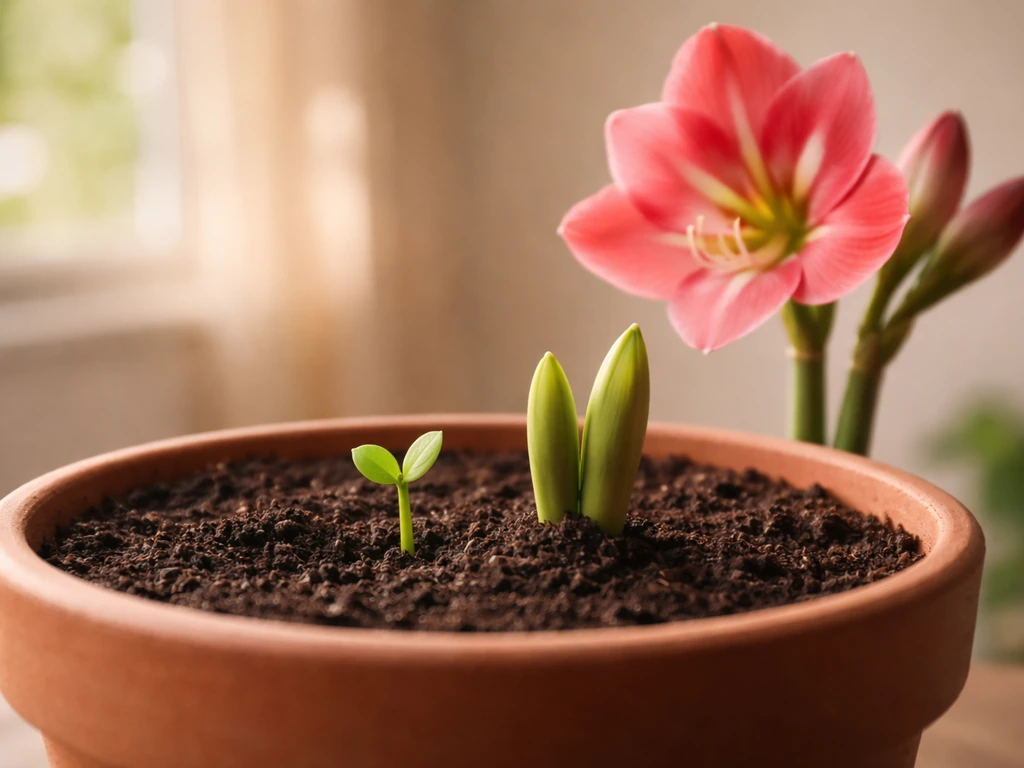
If you're starting from fresh seed under warm conditions, expect your desert rose (Adenium obesum) to germinate in about 7 days. That's the fast end. With older seeds, cooler temps, or less-than-ideal soil, you might wait 2 to 3 weeks. From that first sprout to a seedling ready to transplant takes roughly a month. Getting to a plant with a noticeable swelling caudex and its first bloom? That's more like 6 months to 2 years, depending on your setup and climate. None of that is bad news, it just means you need to plan ahead and know what 'normal' looks like at each stage. If you’re wondering how long to grow lantana from seed, the timeline depends mostly on temperature and how fresh your seeds are. For snapdragons, the timeline depends heavily on temperature, but many gardeners see sprouts in about 1 to 2 weeks after sowing how long do snapdragons take to grow from seed.
How Long to Grow Desert Rose From Seed: Timelines
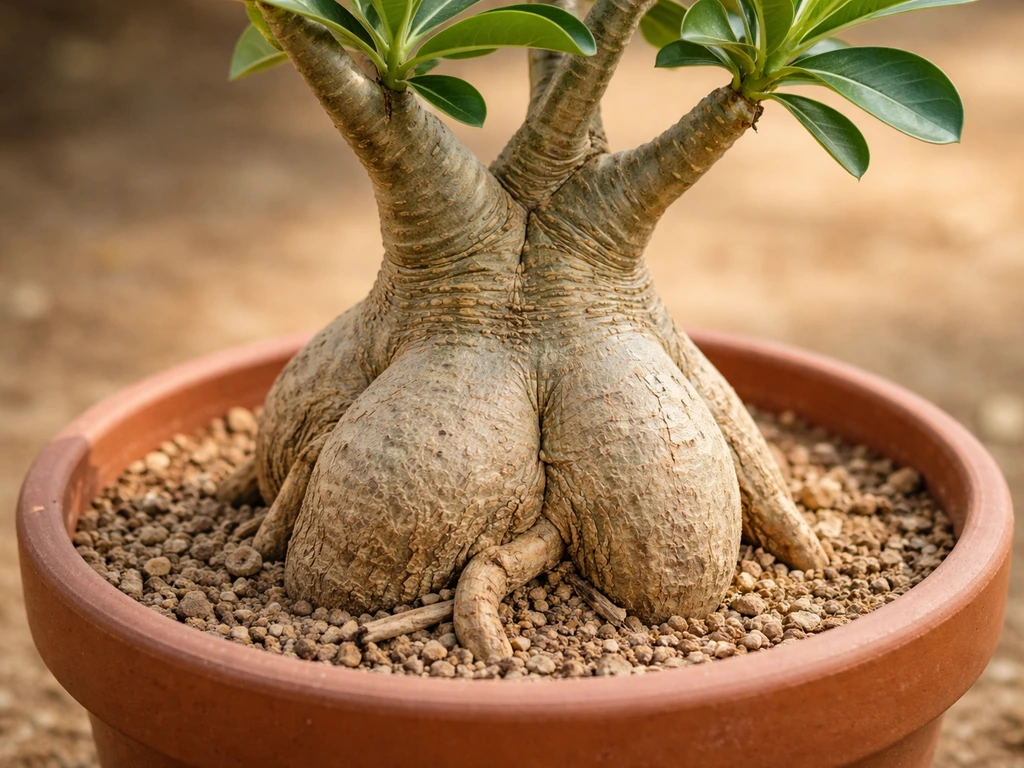
The full desert rose timeline, seed to mature plant
Here's how the stages typically stack up when conditions are good (think warm temperatures, bright light, and fresh seeds):
| Stage | Typical Timeframe | What to Watch For |
|---|---|---|
| Germination (first sprout) | 7–21 days after sowing | Seed coat splits, tiny stem loop emerges |
| Seed leaves (cotyledons) | Days 7–14 | Two fleshy oval leaves appear |
| First true leaves | Weeks 2–4 | Narrower, more pointed than cotyledons |
| 6+ true leaves (transplant-ready) | ~4 weeks from germination | Seedling looks like a miniature desert rose |
| Small caudex begins forming | 2–4 months | Slight swelling at the stem base |
| First bloom (earliest) | 6–9 months under ideal conditions | More common with grow lights and heat |
| First bloom (typical home grower) | 1–2 years | Depends heavily on light and season length |
The 7-day germination window applies when you're keeping things at around 85°F (roughly 30°C) and using seeds that are genuinely fresh. A seeds-world retailer summary suggests the window stretches to 7–21 days for most home growers, which matches what I've seen. One grower growing under heated grow lights reported a first bloom at about 9 months, which is the optimistic scenario. For most people growing in a window or on a patio, 18 months to 2 years before flowers is more realistic.
What actually changes how fast desert rose grows from seed
Temperature is the biggest lever
Adeniums are native to hot, dry climates, and they behave accordingly. Research on closely related Adenium swazicum found near-perfect germination rates (96–100%) across a temperature range of 20–35°C (68–95°F). The sweet spot for desert rose is roughly 24–35°C (75–95°F). Below 18°C (about 65°F), germination slows dramatically or stops altogether. If your seeds are sitting in a room that dips into the low 60s at night, they may not sprout at all, and you'll spend weeks wondering what went wrong.
Seed freshness matters more than most people realize
Desert rose seeds don't store well. Viability starts dropping noticeably after a few months, and some specialty growers won't sell seeds older than 3 months for exactly that reason. Fresh seeds from a recently opened pod can germinate in as little as 6–12 hours after soaking. Older seeds need a longer soak (closer to 24 hours) and still may have patchy germination. If you're buying seeds online, look for harvest dates or freshness guarantees.
Light keeps seedlings on track after they sprout
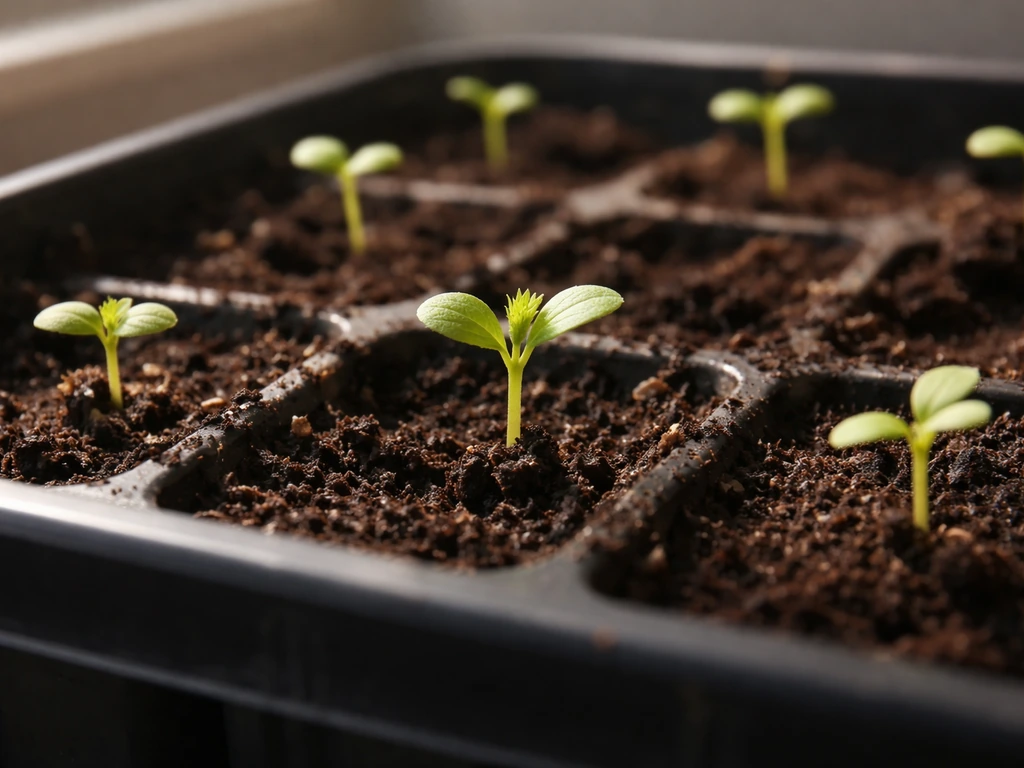
Light doesn't play a huge role in the germination event itself, but it becomes critical within days of sprouting. Seedlings without enough direct sun or strong grow-light coverage get leggy fast, and a stretched-out seedling rarely catches up. Adeniums want as much bright light as you can give them. A south-facing windowsill in peak summer can work, but a dedicated grow light (kept close, on for 14–16 hours a day) gives you much more reliable results and faster growth toward that first caudex.
Soil drainage and moisture control
This one trips up a lot of new growers. Adeniums are succulents that can rot fast in heavy, wet media. A mix of 3 parts compost to 1 part coarse river sand (targeting a pH of 6.5–6.9) works well for germination. Once seedlings are established, lean toward a cactus/succulent mix. The goal is soil that drains completely between waterings, not soil that stays moist. During active growth, watering about twice a week is typically right. During cold months, water should be withheld almost entirely for a 3–4 month rest period.
How to sow desert rose seeds for fast, reliable germination
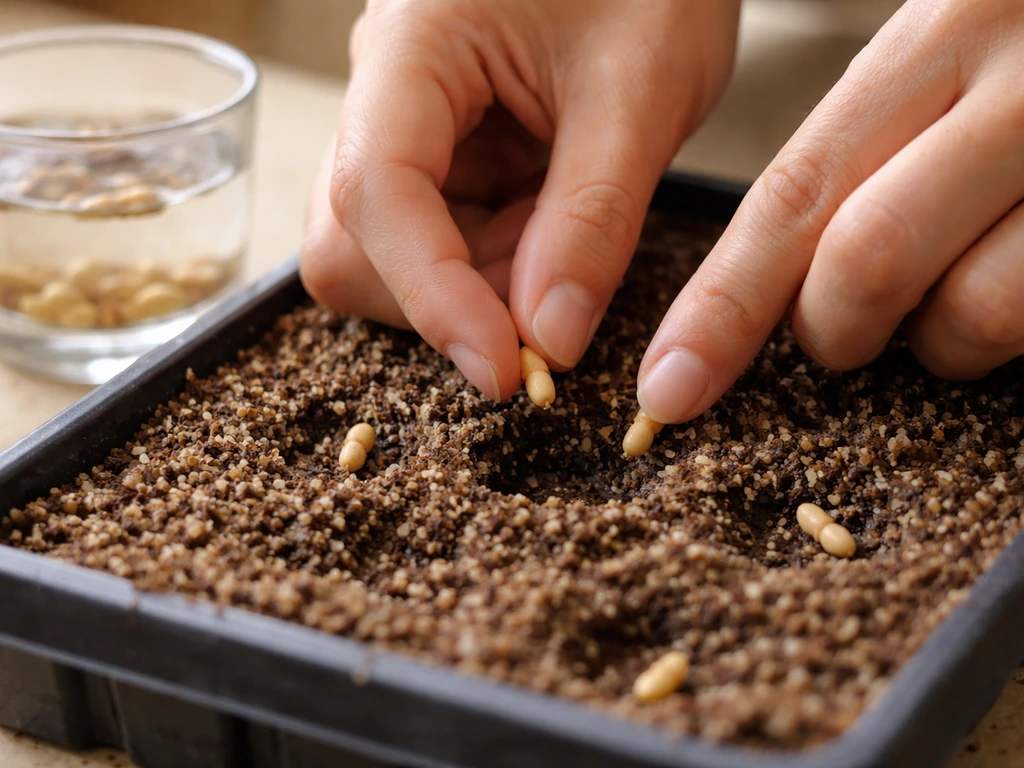
The sowing process itself is simple, but the details make a real difference in how quickly and reliably things sprout. Here's what works:
- Pre-soak your seeds. For fresh seeds, soak in lukewarm water for 2–12 hours. For older seeds, extend that to 24 hours. One useful option is a light hydrogen peroxide soak (1 tablespoon of 3% hydrogen peroxide in 1 cup of lukewarm water) overnight, which helps with surface sterilization and softens the seed coat.
- Use well-draining media. A mix of compost and coarse sand (3: 1 ratio) or a commercial cactus seed mix works well. Avoid standard potting soil, which holds too much moisture.
- Plant at the right depth. About 1/4 inch (roughly 6mm) deep is the target. Don't bury them deeper than that or emergence slows significantly.
- Keep temperature steady and warm. Use a heat mat set to 80–90°F if your ambient temperature is below 75°F. Consistency matters more than hitting a perfect number.
- Cover loosely with plastic wrap or a humidity dome. This traps warmth and moisture during germination, but remove it as soon as sprouts appear to prevent damping off.
- Place in bright light. Even during germination, warmth from a grow light helps. Once sprouted, keep seedlings under strong light immediately.
One thing worth noting: some sources suggest a very short soak of 2–4 hours is enough if your seeds are genuinely fresh. If you're working with seeds you're confident were harvested recently, that shorter soak is fine. The longer soaks are an insurance policy for seeds of uncertain age.
Seedling milestones and how to care for them
Week 1–2: The sprout appears
Once the seed coat cracks and the seedling pushes up, you'll see two fleshy seed leaves (cotyledons) within a day or two. Don't celebrate too early here. The seedling is incredibly fragile at this point. Keep the medium just barely moist, not wet. Keep the medium just barely moist, which helps seedlings stay on track as they grow into the transplant window. Overwatering in the first 2 weeks is the number one way to lose seedlings to damping off, which is a fungal rot that collapses the stem at soil level almost overnight.
Week 2–4: True leaves and the transplant window
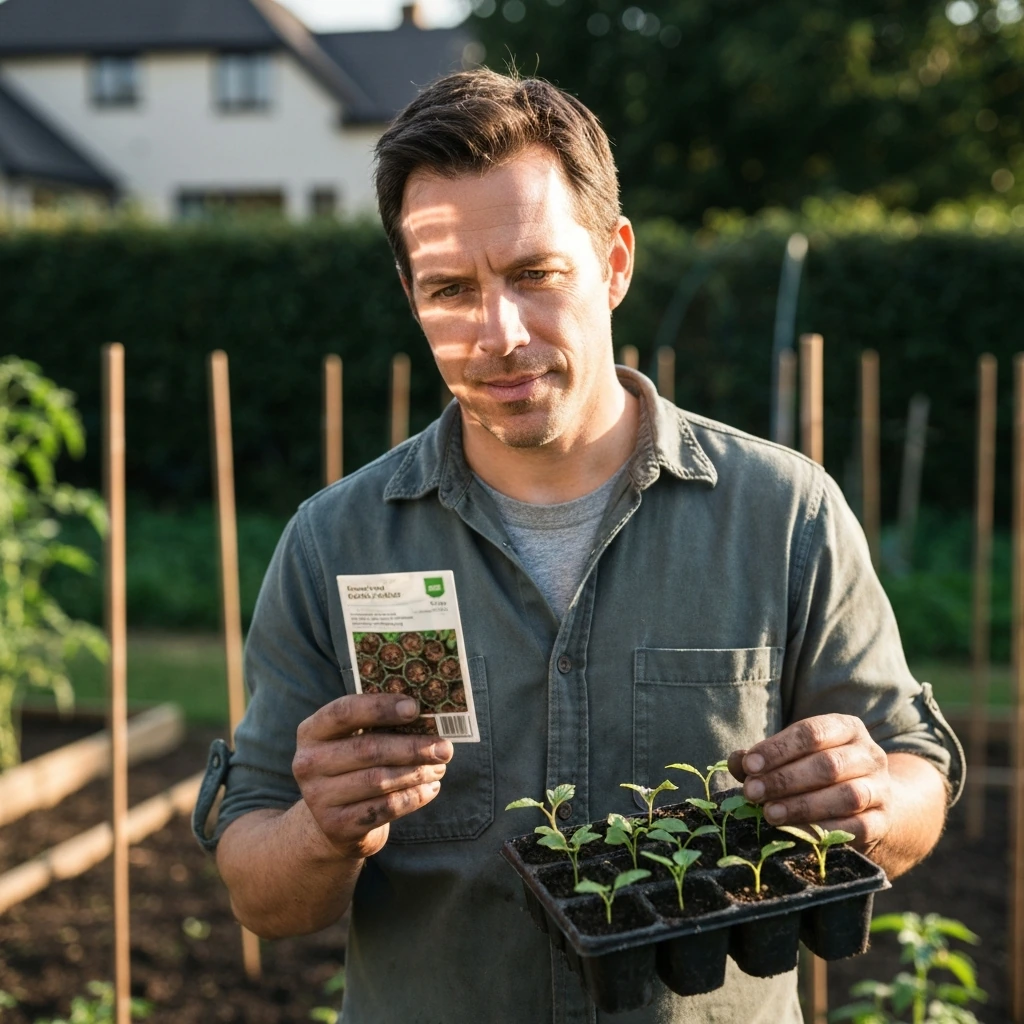
True leaves (narrower, more pointed than the cotyledons) start appearing around week 2. By the end of week 4, a healthy seedling growing in warm conditions with good light should have 6 or more true leaves and be ready to transplant into its own pot. This is your first milestone check: if you're past 4 weeks and still seeing only 1–2 true leaves, something in the growing conditions (usually light or temperature) needs adjusting.
Month 2–4: Caudex development begins
This is the stage where patience pays off. Once transplanted into individual pots, seedlings that are getting 6+ hours of direct sun (or equivalent grow light time), warm temperatures, and a balanced liquid fertilizer weekly during the growing season will start to show that distinctive swelling at the stem base. It's subtle at first, but that caudex thickening is the sign your plant is doing well. UF/IFAS recommends a low-dose liquid fertilizer applied weekly during summer, which aligns with what growers report helps move this stage along.
Common seedling mistakes to avoid
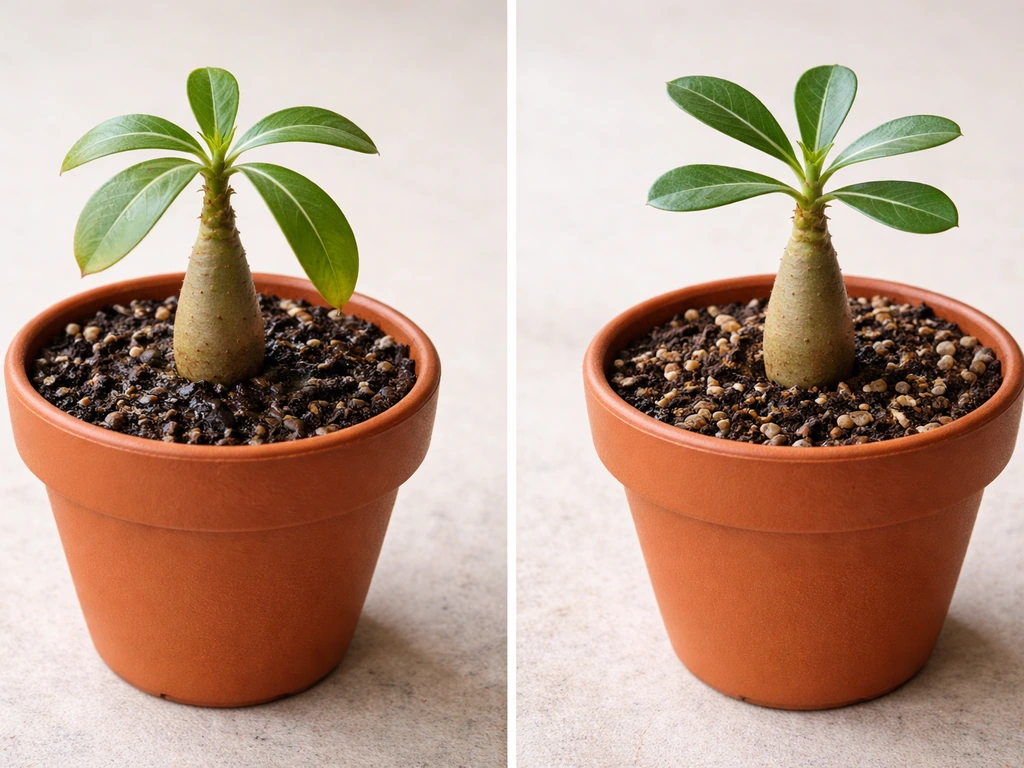
- Overwatering: the single most common killer of desert rose seedlings. When in doubt, wait another day.
- Too little light: seedlings need strong, direct light within hours of sprouting. A dim windowsill produces weak, stretched plants.
- Planting too deep: seeds buried more than 1/4 inch deep take longer to emerge and are more prone to rot.
- Cold drafts or cold windows at night: if your window drops below 65°F at night, move seedlings to a heat mat or warmer location.
- Transplanting too early: wait for at least 6 true leaves before moving to an individual pot.
When germination is slow or nothing happens at all
If you're past day 21 with no sign of life, go through this checklist before giving up:
- Check temperature. Use a thermometer, not a guess. If anything in the germination zone is dipping below 65°F (18°C), especially at night, germination will stall or fail. Add a heat mat.
- Question seed freshness. If you can't confirm the seeds were harvested within the last 3 months, viability may be the issue. Order fresh seeds from a reliable source.
- Check planting depth. If seeds were buried more than 1/2 inch, dig one up carefully and resow at 1/4 inch.
- Check for rot. Gently probe the soil near a seed. If the seed feels soft and mushy, it rotted in the soil, usually from a medium that holds too much moisture. Improve drainage and start fresh.
- Try re-soaking. If seeds haven't germinated by day 14, some growers have success pulling them, soaking for another 12–24 hours, and resowing.
- Rule out fungal issues. If seedlings are sprouting and then collapsing at the soil line, that's damping off. Improve airflow, reduce moisture, and consider a light dusting of cinnamon (a natural antifungal) on the soil surface.
It's also worth knowing that even experienced growers don't get 100% germination rates every time. An 80% germination rate under good conditions (heated grow shed, grow lights) is a realistic benchmark. If you're getting half your seeds to sprout in a home windowsill setup, that's not unusual, it just means sow a few extra seeds to ensure you end up with the number of plants you want.
Planning your grow calendar week by week
Because desert rose is so temperature-dependent, when you start matters. If you're in a temperate climate, the best time to sow is late winter to early spring (February through April in the Northern Hemisphere), so seedlings have the full warm season ahead of them. If you're also growing gazania, you can use a similar seed-starting approach for planning, including how long it takes to grow gazania from seed how long does it take to grow gazania from seed. In warm climates like Florida, Arizona, or similar, you have more flexibility, but avoid starting in the months when nighttime temps will drop below 65°F.
| Timeframe | What's Happening | Your Job |
|---|---|---|
| Day 0 | Sow pre-soaked seeds at 1/4 inch depth | Set up heat mat, humidity dome, and grow light |
| Days 7–14 | Germination: first sprouts appear | Remove dome, maintain warmth, reduce moisture slightly |
| Days 14–21 | First true leaves emerge | Increase light exposure, begin very light bottom watering |
| Weeks 3–4 | 6+ true leaves present | Transplant to individual small pots with well-draining mix |
| Months 2–3 | Active leafy growth, caudex starts to form | Weekly diluted liquid fertilizer, full sun or grow lights |
| Months 4–6 | Caudex thickening visible, plant establishes | Continue warm conditions, taper watering frequency slightly |
| Months 6–9 | Possible first bloom (heat/light-optimized setups) | Keep fertilizing, watch for pests like aphids or spider mites |
| Year 1–2 | First bloom for most home growers | Allow winter rest (reduce water for 3–4 months in cold climates) |
One practical note: if you started your seeds in spring and your plant isn't blooming by autumn of the same year, that's completely normal. Don't push it with extra fertilizer hoping to force a bloom. Let the plant go through its natural rest period over winter (withhold water, keep it warm and dry), and you'll often see it reward you with flowers in the following spring or summer. Rushing the timeline by overwatering or over-fertilizing in cooler months tends to cause root rot rather than faster growth.
Desert rose seeds are genuinely one of the more satisfying things to grow from scratch, partly because the timeline is long enough that every new milestone feels earned. If you've grown other slow ornamentals like amaryllis from seed (which can take 3–5 years to bloom) or even standard roses from seed (typically 2–3 years to first flower), you'll find the desert rose timeline is actually quite reasonable. If you are curious about another bulb from seed, the amaryllis timeline is just as long, with blooms typically taking several years amaryllis from seed. For a full answer to how long it takes to grow roses from seeds, you can follow the same seed-starting timeline approach and adjust for temperature and light how long does it take to grow roses from seeds. Keep your setup warm, your soil dry between waterings, and your light strong, and the plant will do the rest on its own schedule.
FAQ
What should I do if my desert rose seeds do not sprout by day 21?
If you are past day 21 and nothing has sprouted, the first things to verify are temperature and seed age. Aim for consistent warmth around 75–95°F (24–35°C), and check that the medium is not staying cold overnight. If the seeds are older than a few months, viability can be too low even in perfect conditions.
How wet should the soil be during germination and the first couple of weeks?
Because desert rose is prone to rot, you generally should not keep the seed-starting mix continuously wet. After soaking, water just enough to settle the soil and then keep it barely moist, letting the top surface lighten before adding more. Using a very fast-draining mix is more important than adding extra water.
My seedlings are tall and skinny, does that mean I will never catch up to the usual timeline?
A lack of strong light after sprouting is one of the biggest reasons growth seems delayed. If seedlings look stretched or weak, move them to brighter conditions immediately (direct sun in peak summer or a grow light kept close). Leggy seedlings often do not catch up quickly, so correcting light early matters.
Is it worth saving or reusing desert rose seed, or do I need fresh seed for predictable results?
Yes. Desert rose viability drops fast, and germination can be poor with older seed. If you cannot find a harvest date, buy from sellers that provide freshness guarantees, and consider sowing extra seeds since an 80% germination rate is considered good under ideal setup.
How can I encourage caudex thickening without over-fertilizing or causing root rot?
For the caudex-thickening stage, stop trying to force speed with heavy fertilizer, especially when temperatures are cool. Stick to light, regular feeding during active growth, then pause during rest months, and keep watering controlled so the mix drains completely between waterings.
Can I still germinate desert rose seeds if my nights get cold?
If your room frequently dips below about 65°F (18°C), germination may be drastically slower or may fail. In that case, you can use bottom heat or a warm growing location, or delay sowing until daytime and nighttime temps stay consistently in the warm range.
How long should I soak desert rose seeds before sowing, and does soaking time really change results?
Soaking time depends on seed freshness. Fresh seeds may sprout with shorter soaking, while uncertain-age seeds benefit from a longer soak (around a day). After soaking, drain well and plant promptly to avoid leaving seeds waterlogged.
When exactly should I transplant, if my seedlings are growing slower than expected?
Your transplant readiness is mainly about the seedling’s strength, not the calendar alone. A practical checkpoint is around the end of week 4, when you should see several true leaves and a sturdy enough seedling to handle without damage. If you are still stuck at 1 to 2 true leaves, adjust light and temperature first.
Is it normal if my desert rose does not bloom the same year I started it from seed?
A bloom timeline of 6 months to 2 years is realistic, but it is heavily seasonal. If you miss flowering by autumn of the same year, that is often normal, since the plant may need its winter rest before flowering the next spring or summer.
How Long to Grow Amaryllis From Seed: Timelines
Get realistic timelines for amaryllis from seed: germination to transplant and first bloom, plus tips to speed growth.