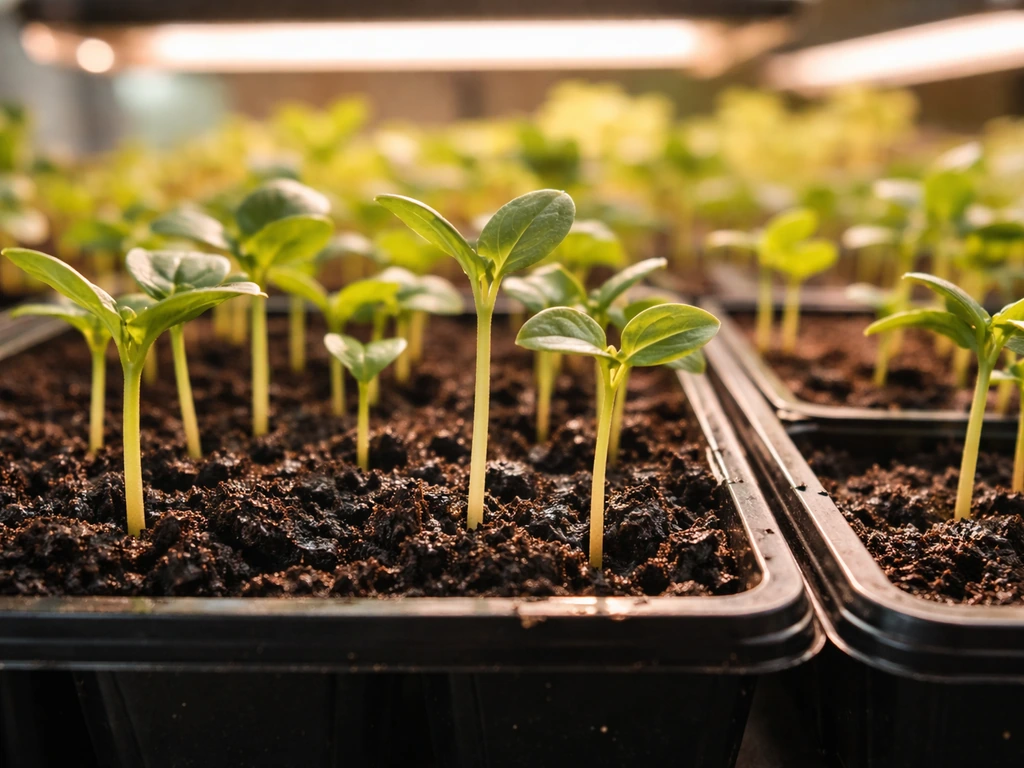
Most vegetable seedlings germinate within 5 to 14 days and reach transplantable size 4 to 10 weeks after sowing, depending on the plant and your conditions. Fast starters like lettuce and radishes can sprout in 5 days and be ready to move outdoors in about 4 weeks. Slower crops like peppers and onions can take 10 to 14 days just to sprout and another 8 to 10 weeks before they're big enough to go in the ground. Knowing which category your plant falls into before you sow saves a lot of frustration.
How Fast Do Seedlings Grow From Seed to Transplant
Marcus Henley
6 May 2026
How long it takes seeds to sprout
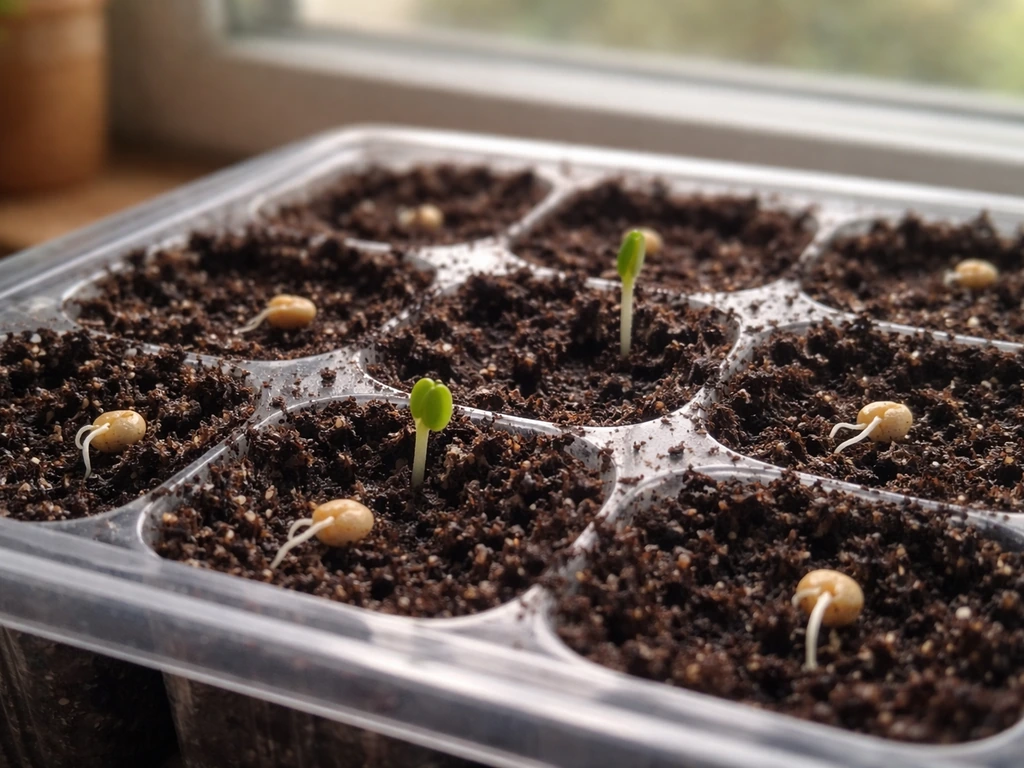
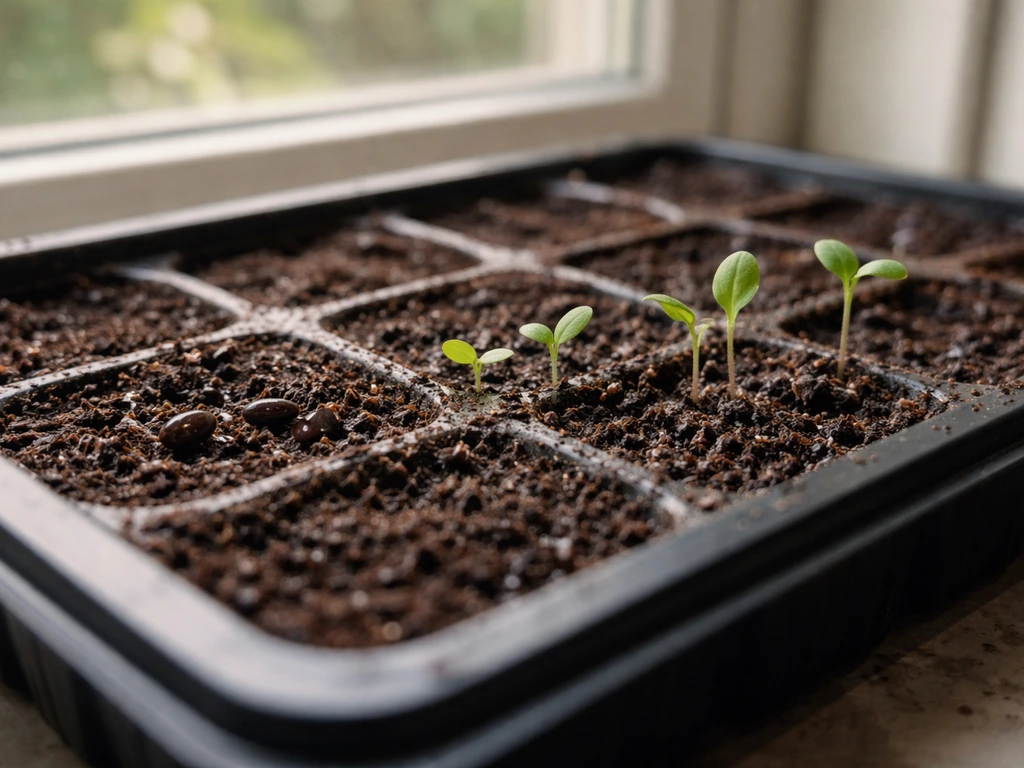
Germination is the window between planting a seed and seeing a sprout push through the soil surface. For most common vegetables, that window is somewhere between 5 and 14 days under decent conditions. Lettuce, spinach, and kohlrabi tend to sprout in 5 to 10 days. Tomatoes typically emerge in 6 to 12 days (closer to 6 or 7 if your soil temperature is around 75°F). Peppers and parsley are notoriously pokey and can take 14 to 21 days even in good conditions.
The key number to watch isn't the calendar date, it's soil temperature. Tomatoes, for example, will germinate across a range of about 60°F to 95°F, but they do it fastest between 75°F and 90°F. Drop below that and emergence slows noticeably. Cool-season crops like broccoli, cabbage, and spinach actually prefer cooler soil, around 55°F to 65°F, so don't try to rush them with bottom heat if you're growing those.
| Crop | Days to Germination | Optimal Soil Temp |
|---|---|---|
| Lettuce | 5–10 days | 60–65°F |
| Spinach | 5–10 days | 55–65°F |
| Kohlrabi | 6–9 days | 65–75°F |
| Tomato | 6–12 days | 75–90°F |
| Pepper | 10–21 days | 80–85°F |
| Onion | 10–14 days | 65–75°F |
| Cucumber | 6–10 days | 70–85°F |
| Parsley | 14–21 days | 65–70°F |
How fast seedlings grow after sprouting
Once a seedling breaks the surface, it's running on stored energy from the seed itself. Those first little leaves (called cotyledons) are not true leaves, they're just the seed's fuel source unfolding. True leaves usually appear after the cotyledons have formed, so factoring in that cotyledon-to-true-leaf stage helps you estimate when your seedlings will be ready. Real, identifiable true leaves come next, and that's your signal the plant has shifted to photosynthesis-driven growth. Penn State Extension puts it clearly: seedlings are ready for transplanting when that first pair of true leaves is established. From sprout to that point, you're usually looking at 2 to 6 weeks, again depending on the crop.
Tomatoes, for instance, are typically started 5 to 6 weeks before their outdoor transplant date. That timing accounts for both the germination period and the weeks needed to build a sturdy seedling. Lettuce moves faster and can hit transplant size in about 4 weeks from sowing. Onions are on the slow end and often need 10 to 12 weeks of indoor growing before they're ready to go outside.
| Crop | Weeks from Sow to Transplant Size |
|---|---|
| Lettuce | 4 weeks |
| Broccoli / Cabbage | 4–6 weeks |
| Tomato | 5–7 weeks |
| Pepper | 8–10 weeks |
| Onion | 10–12 weeks |
| Eggplant | 6–8 weeks |
| Annual flowers (most) | 6–10 weeks |
| Herbs (basil, parsley) | 4–6 weeks |
What speeds up or slows down seedling growth
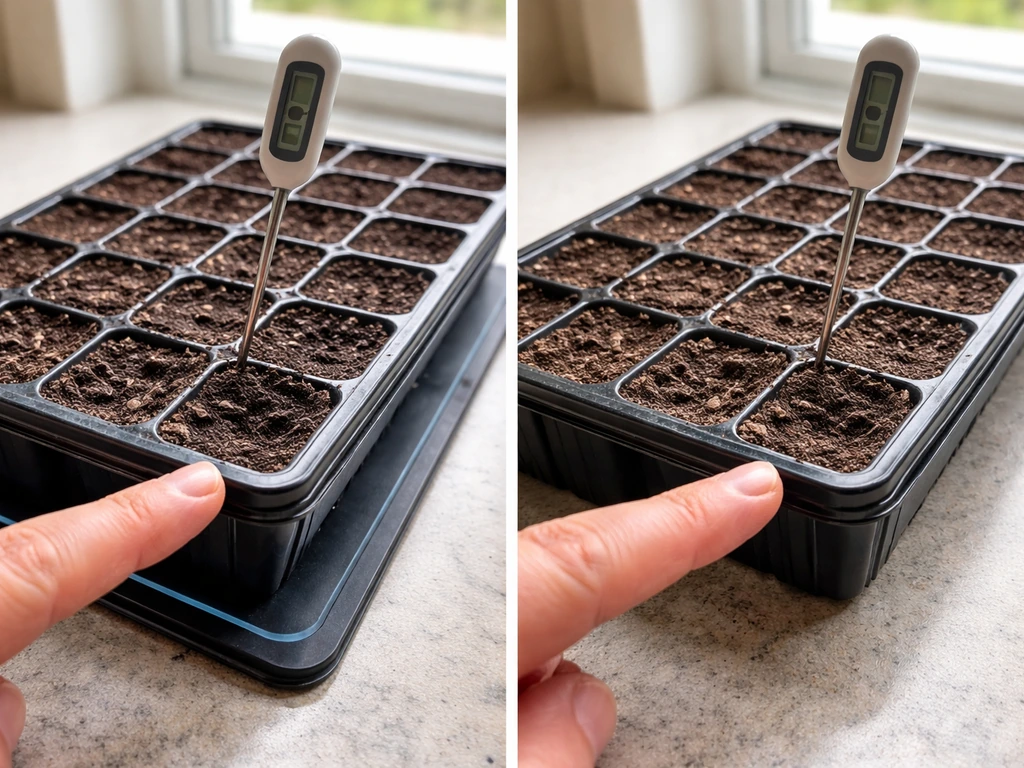
Temperature is the biggest lever you can pull. Every crop has a minimum, an optimum, and a maximum soil temperature for germination. OSU Extension provides a crop-by-crop table with specific minimum, optimum range, optimum, and maximum soil temperatures for vegetable seed germination Every crop has a minimum, an optimum, and a maximum soil temperature for germination.. Fall below the minimum and seeds may just sit there, sometimes for weeks, without sprouting. Push past the maximum and germination can fail entirely, which is actually a real concern if you're direct-sowing in hot summer soil. A cheap soil thermometer pays for itself quickly when you're troubleshooting slow germination.
Moisture matters almost as much. The seed-starting mix needs to stay consistently moist but never waterlogged. Dry spells interrupt germination mid-process, which can kill the embryo. Too much water leads to oxygen deprivation and fungal problems. Think of the medium as a wrung-out sponge: damp through and through, but not dripping.
Light is trickier because it's crop-specific. Some seeds need light to germinate and shouldn't be buried at all, just pressed onto the surface and covered with a thin layer of fine vermiculite so they stay moist without being blocked from light. Others actually need darkness to trigger germination and should be placed in dark plastic bags or covered with newspaper until they sprout. If you skip this detail, germination rates drop noticeably. Always check the seed packet.
Planting depth also plays a role. As a general rule, seeds should be planted at a depth of about twice their diameter. Tiny seeds like lettuce go barely under the surface; larger seeds like squash go about an inch deep. Plant too deep and the seedling runs out of stored energy before it breaks the surface. Once seedlings are up, light becomes critical fast: without enough of it, they stretch toward any available light source and become leggy and weak.
- Temperature: keep soil at the crop's optimal range using a heat mat for warm-season crops
- Moisture: consistent, not saturated; use a spray bottle or bottom-watering to avoid disturbing seeds
- Light: know whether your seeds need light or dark to germinate, then switch to 14–16 hours of light after sprouting
- Planting depth: follow the 2x seed diameter rule; don't bury fine seeds
- Seed age and quality: old seeds germinate slower and at lower rates; buy fresh seed each season for crops that matter
- Air circulation: a gentle fan after sprouting strengthens stems and reduces fungal risk
How to estimate your own seedling timeline
The most reliable way to estimate your timeline is to count days from your sowing date using the germination and transplant-size windows on your seed packet, then adjust for your actual conditions. Start with the days-to-germination range for your crop, then add the weeks-to-transplant-size figure. That gives you a total window from sow to garden-ready.
For a more precise estimate, especially for outdoor direct-sowing, you can use degree days (also called heat units or growing degree days). A degree day is calculated by taking the average of the day's high and low temperatures and subtracting the crop's base temperature (the minimum for growth). Accumulate those values each day and you get a running total of heat available to the plant. OSU Extension notes that degree-day models predict development timing more accurately than rough calendar guidelines, because two weeks in cool April delivers far less heat to a seedling than two weeks in warm June. You don't need a spreadsheet for this: just track daily highs and lows, average them, subtract the base temp, and add to a running total.
For most home gardeners, the simpler version works fine: count your calendar days from sowing, keep conditions in the optimal range for your crop, and add a buffer of 3 to 5 days for variability. If your germination hasn't happened by the outer edge of the listed window, that's when to start troubleshooting rather than waiting indefinitely.
Seedling growth timelines by plant group
Vegetables
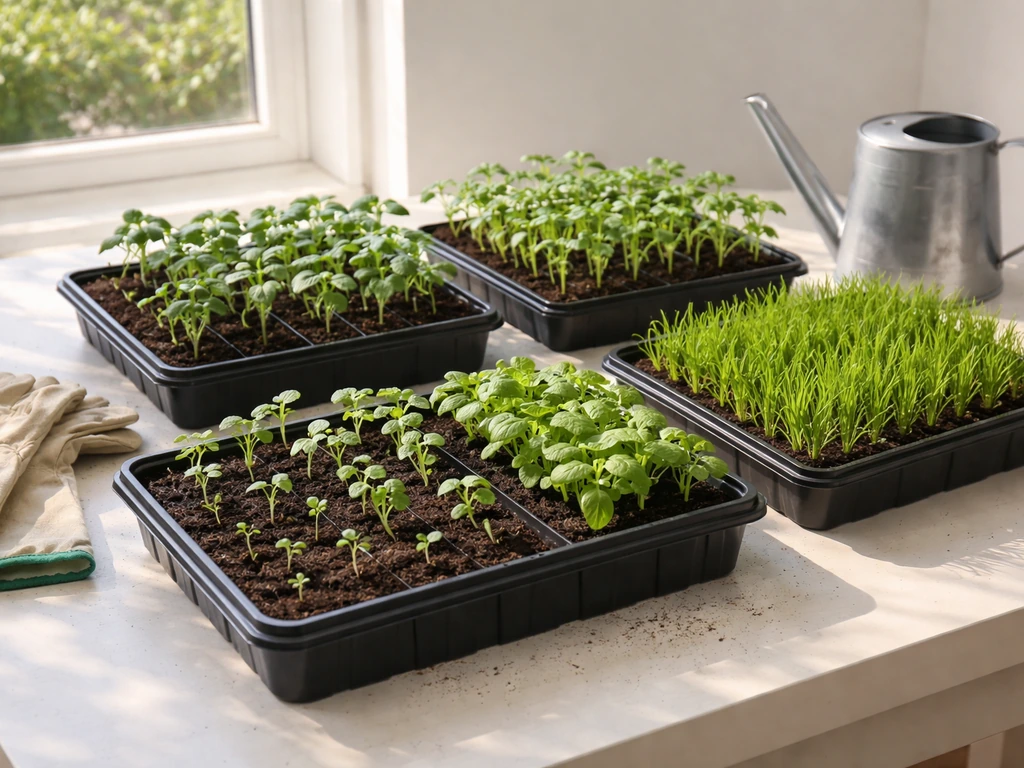
Vegetables cover the widest range of germination speeds. Cool-season crops like lettuce, spinach, and broccoli sprout in 5 to 10 days and reach transplant size in 4 to 6 weeks. Warm-season crops like tomatoes and peppers take longer at both stages: 6 to 14 days to sprout and 6 to 10 weeks to transplant size. Cucumbers and squash are fast once conditions are warm, germinating in 6 to 10 days but often skipped as transplants because they dislike root disturbance.
Herbs
Herbs vary a lot. Basil is one of the faster ones, sprouting in 5 to 10 days at warm temperatures (above 70°F). Parsley is notoriously slow, sometimes taking 14 to 21 days to germinate, and many gardeners soak the seeds overnight to speed things up. Chives and cilantro fall in the middle at about 7 to 14 days. Most herb seedlings reach a usable size in 4 to 6 weeks from sowing.
Annual and perennial flowers
Annual flowers like marigolds and zinnias germinate quickly, often in 5 to 10 days, and can be transplant-ready in 4 to 6 weeks. Slower-to-bloom perennials and some specialty annuals need 10 to 12 weeks of indoor growing before transplant. UMN Extension's indoor seed-starting schedules often show early March start dates with 10 to 11 week lead times for certain annual flowers to hit the transplant window in late May. Snapdragons, petunias, and impatiens are typical examples that need that longer runway.
Grasses
Lawn and ornamental grasses germinate faster than most people expect when conditions are right. Cool-season turf grasses like Kentucky bluegrass and fescue sprout in 7 to 21 days at soil temperatures between 50°F and 65°F. Warm-season grasses like bermuda and zoysia need warmer soil (above 65°F) and take 10 to 30 days. Ornamental grasses started from seed indoors typically reach transplant size in 8 to 12 weeks.
Ornamentals and perennials
Woody ornamentals and perennials started from seed are the slowest group and the most variable. Many require stratification (a cold, moist period that mimics winter) before they'll germinate at all. Once that requirement is met, germination can still take 3 to 8 weeks. Seedling growth to any usable size often takes a full season or longer. If you're starting perennials from seed, the realistic expectation is flowering in year two, not year one.
Troubleshooting slow or failed seedling growth
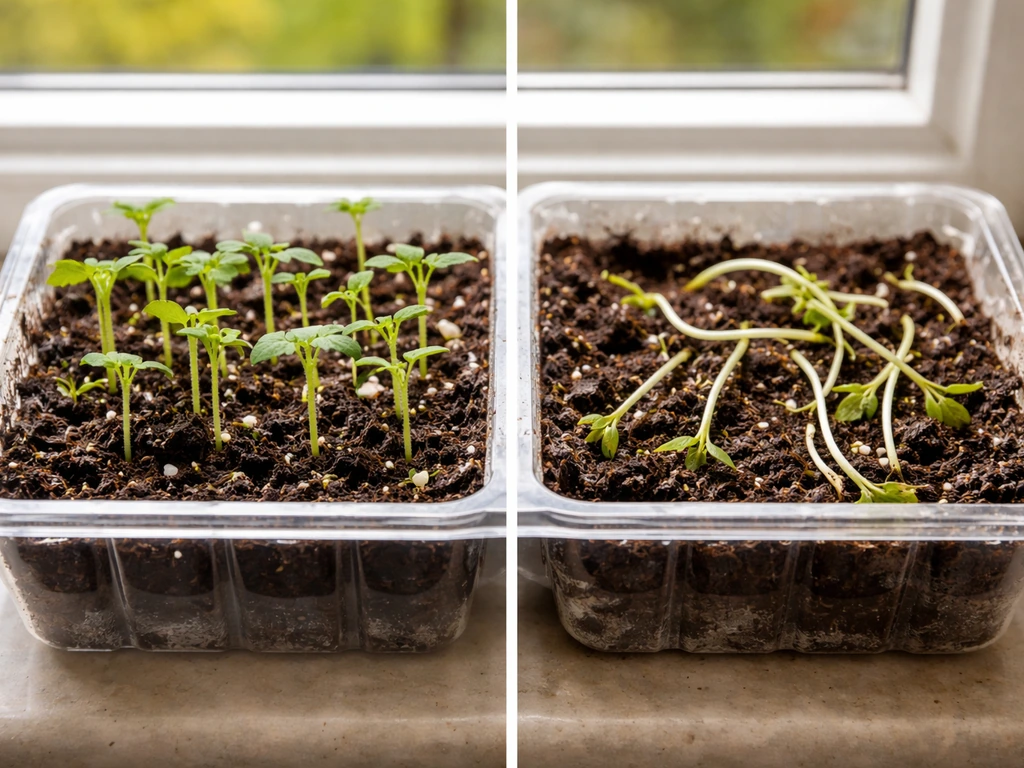
The most common reason seeds don't sprout on time is temperature. If you are seeing slow growth after they sprout, the next thing to check is how fast seedlings grow after sprouting, since temperature and light can still be the limiting factors. If your germination medium is too cool, the seeds just sit there. Grab a soil thermometer, check the actual temperature at seed depth, and compare it to the crop's optimal range. A seedling heat mat under the tray can bring soil temperature up 10 to 20 degrees above room temperature, which often makes a dramatic difference for warm-season crops.
The second most common issue is damping off, a fungal condition where seedlings that sprouted fine suddenly fall over and die. You'll see brown, water-soaked areas at the base of the stem right at the soil line. This is caused by overwatering and poor air circulation, and it can spread across an entire tray quickly through shared potting media. There's no cure once it hits, but prevention is straightforward: don't overwater, run a gentle fan, and sterilize reused trays by soaking them for 30 minutes in a 10% bleach solution before use.
If seeds haven't sprouted by the far end of the listed germination window, consider whether they may have been planted too deep, whether the mix dried out at any point, or whether the seeds themselves were old. Seed viability drops each year of storage, and some seeds (like onions and parsley) lose viability quickly. A simple germination test, placing 10 seeds on a damp paper towel in a warm spot for the listed germination period, tells you your germination rate before you invest in a full tray.
- No germination after expected window: check soil temperature, test seed viability on a damp paper towel
- Seedlings falling over at the base: damping off from overwatering; remove affected plants, reduce watering, improve airflow
- Leggy, stretched seedlings: not enough light; move closer to grow light or a south-facing window
- Seedlings growing very slowly after sprouting: soil too cold, too wet, or not enough light for photosynthesis to kick in
- Pale yellow seedlings: nitrogen deficiency or insufficient light; consider a diluted liquid fertilizer once true leaves appear
- Uneven germination in a tray: temperature or moisture inconsistency; rotate trays and ensure even bottom heat
Knowing when to give up and re-sow is a real skill. If you're past twice the maximum listed germination period and conditions have been correct, re-sow. Don't wait another two weeks hoping for stragglers. The time lost to waiting usually costs more than just starting fresh, especially with fast crops like lettuce where you can sow again and catch up quickly.
Building a planting schedule from seed to harvest or first bloom
The cleanest way to build a schedule is to work backward from your target date. For vegetables, your target is usually your last frost date (for transplanting warm-season crops) or your first harvest date. For flowers, it's the date you want blooms. Start there, subtract the weeks-to-transplant-size, subtract the days-to-germination, and that's your sowing date.
Here's how that looks in practice for a few common crops, assuming a May 20 last frost date and working backward:
| Crop | Transplant Date | Start Indoors | Days to First Harvest / Bloom |
|---|---|---|---|
| Tomato | May 20 | ~April 1 (7 weeks prior) | 60–80 days after transplant |
| Pepper | May 20 | ~March 11 (10 weeks prior) | 70–90 days after transplant |
| Broccoli (spring) | April 1 | ~Feb 18 (6 weeks prior) | 50–70 days after transplant |
| Lettuce (spring) | March 25 | ~Feb 25 (4 weeks prior) | 45–60 days after transplant |
| Marigolds | May 20 | ~April 8 (6 weeks prior) | 6–8 weeks after transplant |
| Petunia | May 20 | ~March 11 (10 weeks prior) | Blooms within weeks of transplant |
If you're direct sowing outdoors, the math simplifies: sow on the right date for your climate (after soil reaches the minimum germination temperature), count days to germination, then count days or weeks to harvest from the seed packet's 'days to maturity' figure. For direct-sown carrots, for example, germination takes 10 to 17 days and maturity is another 70 to 80 days, putting total seed-to-table time around 80 to 100 days from sowing.
Once seedlings have their first true leaves, you'll also need to think about the transition to a larger container or to the garden. Once seedlings have their first true leaves, a Reddit r/vegetablegardening discussion notes that gardeners often use the true-leaf stage to time transplanting and clarify what counts as a “set” of true leaves. That step, when to move seedlings from their starting cell to individual pots or outdoors, is worth understanding in detail, especially for crops that resent root disturbance. The closer you match transplanting timing to that true-leaf window, the better the plant establishes. Getting that transition right is just as important as nailing the germination stage, and it directly affects how fast your seedlings will grow after being moved.
FAQ
Why are my seedlings sprouting slower than the days-to-germination on the packet?
Check your seed-starting soil temperature, not room temperature. Use a thermometer probe at actual seed depth, and expect a slower germination rate if the soil is below the crop’s minimum for that species.
What happens if my seed-starting mix dries out for a day?
If the medium stays dry for even a short stretch during germination, the embryo can fail, even if you re-wet it later. Aim for consistently damp mix (wrung-sponge feel) and water from the bottom or with a gentle mist to avoid drying at the top.
Is it okay to use a heat mat to speed up germination for all plants?
Bottom heat can help warm-season crops, but it can also cause uneven germination across a tray (edges warm, center cooler). If you use a heat mat, rotate the tray daily and verify soil temperature stays within the crop’s optimum range.
How can I tell whether slow growth is from germination or after seedlings sprout?
A common sign is seedlings that emerge but then stall and look pale or stretched. That usually points to insufficient light intensity and cool conditions after sprouting, so add light right away and confirm soil and air temps are in-range.
My seeds sprouted, but they look leggy. Does that affect how fast they grow to transplant size?
Do not keep seedlings in dim light while you wait for “more days.” Once sprouts appear, they need strong light quickly to prevent leggy, weak growth that slows later establishment.
When is the best time to transplant if I want maximum growth speed?
Yes, but timing matters. Transplant too early can stunt seedlings if they lack a first pair of true leaves, and transplant too late can make them rootbound or more fragile. Use the true-leaf stage as your main cue, then harden off before outdoor planting.
What should I do if my crop dislikes transplanting, like cucumbers or squash?
Many plants can tolerate transplanting when young, but others resent root disturbance. For crops like cucumbers and squash, starting in individual pots or using root-friendly systems can reduce shock and help them keep growing after the move.
Can I speed up seedling growth by potting up earlier?
You can do it, but don’t move into bigger pots too frequently. If you’re going larger, do it promptly when roots fill the cell and still aim to transplant based on true leaves, not just container size.
How do I know if my seeds need light or darkness to germinate?
For seeds that require darkness, light exposure can reduce germination rate. If you suspect this, rerun the batch using the correct covering method from the seed packet, and keep the surface either covered or pressed lightly according to the instructions.
What are the signs that I planted seeds too deep, and how do I fix it next time?
Planting too deep can cause stored-energy depletion before seedlings reach the surface, leading to poor emergence. If you’re re-sowing, use the “twice the seed diameter” rule as a starting point, then adjust for your specific seed type (especially tiny seeds).
When should I stop waiting and re-sow if seeds are still not sprouting?
If you’re past the outer edge of the germination window and conditions were correct, don’t wait indefinitely. Consider a germination test first (10 seeds on damp paper towel for the expected window), then re-sow if the rate is low.
Could seed age be the reason my germination is uneven, and how can I check quickly?
Old seed is a major cause of late or uneven germination. If you notice patchy emergence, test a small batch for viability before committing to full trays.
How do I recognize damping off versus slow germination?
Damping off typically shows up as seedlings collapsing at the soil line after they’ve emerged or shortly after. Improve airflow (gentle fan), water less, avoid water pooling, and discard affected seedlings promptly because it can spread through shared media.
Do I really need degree days to estimate how fast seedlings grow?
Degree-day tracking is most useful when you have temperature swings and want more accuracy than calendar days. It’s especially helpful for cool springs and for crops with defined base temperatures, since two weeks of mild weather can be much less “heat” than two weeks of warmth.
How should I adjust my timeline when I direct sow outdoors instead of starting indoors?
When you’re direct sowing, don’t count on “days to maturity” alone, because local soil temperature governs emergence timing. Start counting after germination for harvest estimates, or extend your schedule using a realistic germination range.
Next Article
Why Are My Seedlings Taking So Long to Grow? Fix It Fast
Troubleshoot slow seedling growth with timelines, diagnostics for light, temp, moisture, depth, and soil to fix fast.