Chrysanthemums take about three months from seed to flower. You'll see sprouts in 7 to 14 days, seedlings ready to transplant in roughly four weeks, and full blooms somewhere between 80 and 100 days from sowing under good conditions. In general, the overall answer to how long it takes to grow flowers from seed depends on species and conditions, but chrysanthemum’s timeline gives a useful benchmark. Those numbers hold up pretty consistently whether you're starting indoors in late winter or direct sowing in late spring, as long as you keep temperatures around 20 to 22°C (68 to 72°F) and give the seeds plenty of light from day one.
How Long Does It Take to Grow Chrysanthemums from Seeds
Marcus Henley
28 May 2026
The full chrysanthemum seed-to-flower timeline
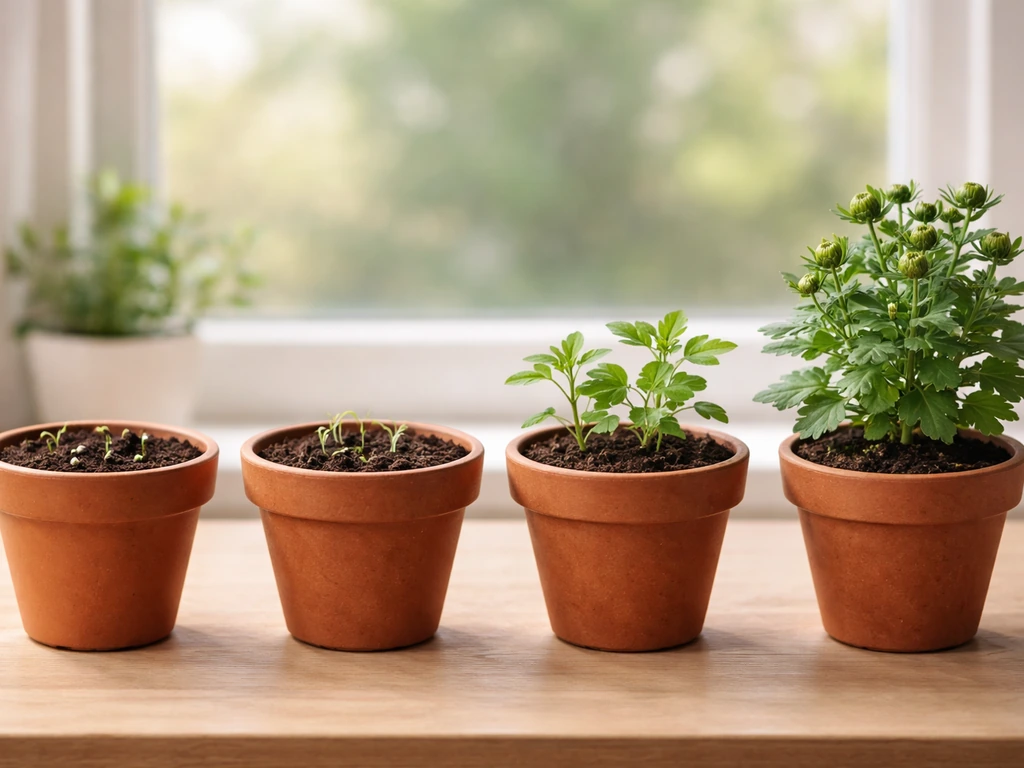
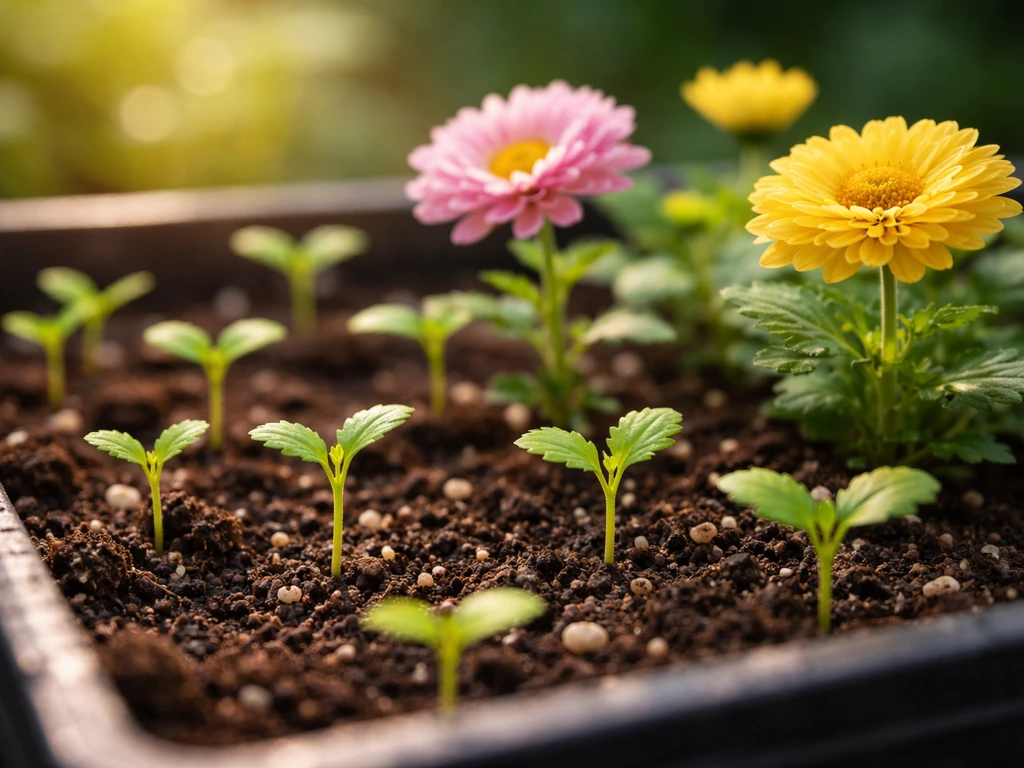
Here's what the whole journey looks like from the moment you press those tiny seeds into the soil to the day you're cutting flowers for a vase. Keep in mind this is a general map, not a strict schedule, because your specific conditions will shift things by a week or two in either direction.
| Stage | Typical Timeframe | Notes |
|---|---|---|
| Sowing to radicle emergence | 3 to 5 days | The first tiny root tip pokes out before you see anything above soil |
| Sowing to visible sprout | 7 to 14 days | Full germination under good light and warmth |
| Seedling ready to transplant | About 4 weeks from sowing | Wait for true leaves, not just cotyledons |
| Hardening off | 1 to 2 weeks before outdoor planting | Gradual exposure to outdoor conditions |
| Transplant to first flowers | Around 8 to 9 weeks after transplant | Bloom timing is also influenced by day length |
| Seed to full flowering (total) | 80 to 100 days (about 3 months) | Consistent warmth and light push the lower end |
That three-month window is a reliable anchor for planning. Penn State Extension confirms chrysanthemums flower in about three months after sowing, and independent seed guides from Australia put the range at 80 to 100 days, which lines up well. If you're working backward from when you want blooms, start counting about 90 days back and that's your sowing date.
Germination: what to expect in the first two weeks
Chrysanthemum seeds germinate in 7 to 14 days under the right conditions. The root tip actually emerges in as little as 3 to 5 days, but you won't see a green shoot above the soil surface until a few days later. That gap is normal and not a reason to panic or re-sow.
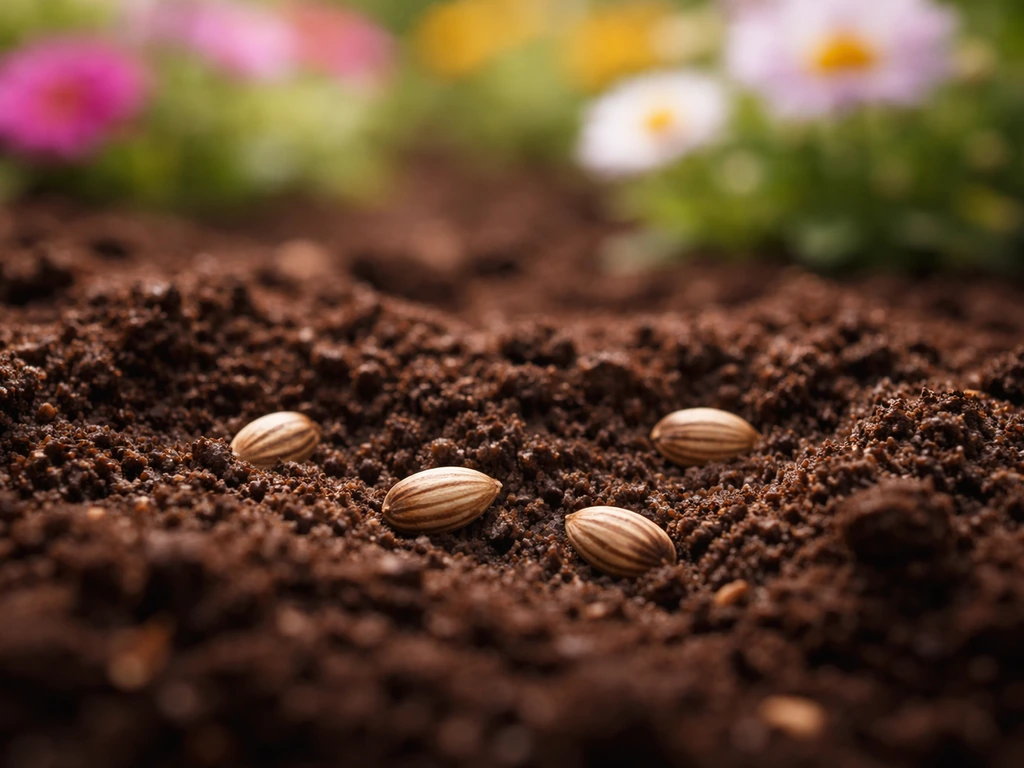
The single biggest thing people get wrong with chrysanthemum seeds is burying them. These seeds need light to germinate. Press them gently into moist seed-starting mix so they make good contact with the surface, but don't cover them with soil. A very light dusting of coarse vermiculite is fine if you're worried about moisture retention, but thick soil coverage will drop your germination rate noticeably. Some growers skip even the vermiculite and just mist the surface well, which works too.
Temperature matters just as much as light. Seeds germinate most reliably at a soil temperature of 20 to 22°C (68 to 72°F). A seedling heat mat set under your tray is the easiest way to hit that range consistently, especially if you're starting in late winter when indoor rooms can run cooler than you'd expect. Syngenta's controlled germination protocols even specify night temperatures of 64 to 66°F (18 to 19°C) for consistent results, which confirms that cool nights slow things down but don't stop germination entirely.
What slows germination down
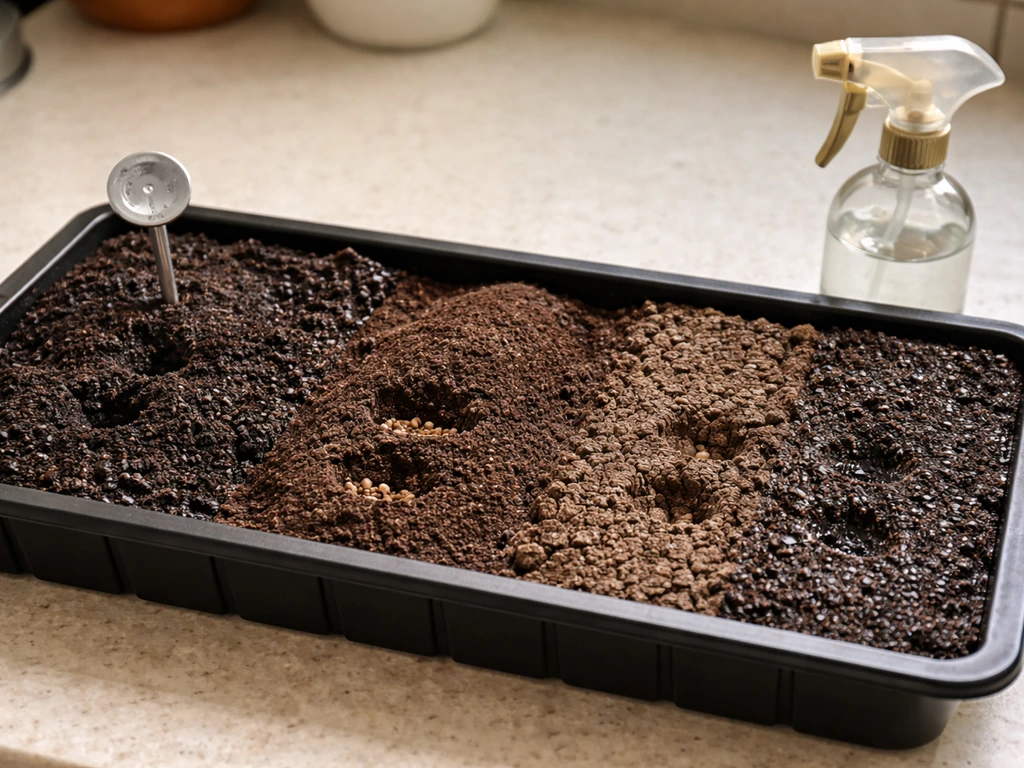
- Soil temps below 18°C (65°F) — seeds can sit dormant or sprout very slowly
- Covering seeds too deeply — blocks the light they need
- Inconsistent moisture — letting the surface dry out kills germinating seeds before they emerge
- Old or low-viability seed — always buy fresh and store in a cool, dry spot
The seedling stage: weeks 2 through 4
Once sprouts appear, you enter the seedling stage. For the first week or so, you'll see just the seed leaves, called cotyledons. These look nothing like a mature mum leaf and that's fine. The seedlings are technically alive and growing, but they're not ready for transplanting yet. Wait until the first true leaves appear between the cotyledons. That's your actual green light to move them. UNH Extension specifically calls out true leaf emergence as the readiness marker for transplanting, and I think that's the clearest indicator there is.
The whole seedling stage, from sowing to transplant readiness, takes about four weeks. Penn State Extension puts the transplant point at roughly one month after sowing, and that matches what I've seen consistently. By week four you'll typically have seedlings with one or two sets of true leaves, a sturdy stem, and a developing root system that can handle being moved.
One thing to watch during this stage is light intensity. Seedlings that don't get enough light stretch upward looking for it, becoming tall, thin, and weak. That's called leggy growth, and it's a setup for problems later because those stems struggle to support the plant as it matures. If you're growing indoors, a grow light running 14 hours a day placed close to the seedlings makes a real difference. Natural windowsill light often isn't enough, especially in late winter.
When to transplant seedlings
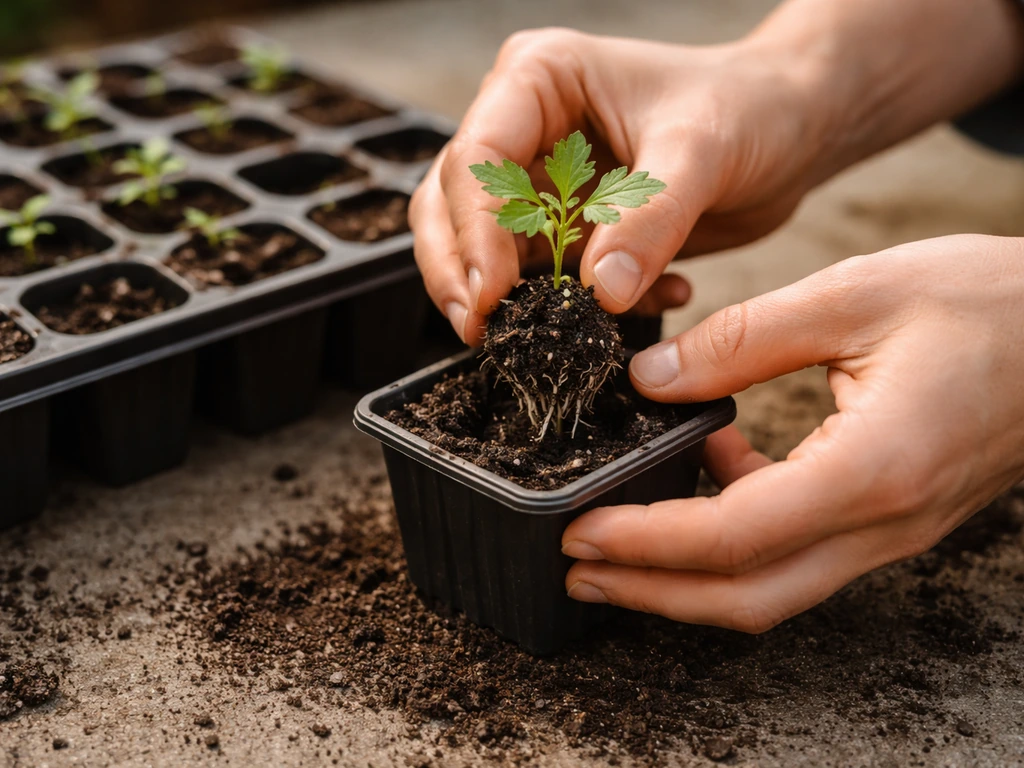
Plan to transplant chrysanthemum seedlings about four weeks after sowing, once they have true leaves and look sturdy. But don't rush them straight outdoors. Seedlings grown inside need a hardening-off period of one to two weeks where you gradually introduce them to outdoor conditions. Start with an hour or two of outdoor time in a sheltered spot, then increase exposure over the following days. Skipping this step leads to transplant shock and stunted growth that can set your entire timeline back by weeks.
For timing against your local season: Penn State Extension recommends sowing at least two months before your first frost date. That gives you your four-week indoor seedling period, a couple weeks of hardening off, and still enough warm growing time for the plants to establish and flower before cold sets in. For most regions in the northern hemisphere, that means starting seeds indoors in late winter or early spring for summer flowering, or in late spring for fall bloom.
One temperature warning worth flagging: if night temperatures at transplant time are too low, chrysanthemums can begin forming flower buds prematurely. That sounds like a good thing but it usually means smaller plants, fewer flowers, and bloom timing that's off your schedule. Try to transplant when nighttime lows are consistently above 10°C (50°F).
Growing conditions that speed up or slow down the timeline
Light
Light is probably the most impactful variable after temperature. Chrysanthemum seedlings need 14 hours of light per day for sturdy, compact growth. Outdoors, long summer days usually provide this naturally. Indoors, you'll need a grow light to hit that mark reliably. Beyond seedling vigor, chrysanthemums are short-day plants, meaning they initiate flower buds when nights are longer than a critical threshold. This is why most mums bloom in autumn: the nights are getting longer. Understanding this explains why plants started in midsummer may sit and grow vegetatively for a while before triggering bloom, even if they're otherwise healthy.
Temperature
The sweet spot for germination and early seedling growth is 20 to 22°C (68 to 72°F). Temperatures above or below this range slow things down. Very warm conditions above 27°C can actually reduce germination rates too, so if you're in a hot climate and starting seeds outdoors, do it in a shaded spot or wait until temperatures moderate in early autumn.
Soil and media
For indoor seed starting, use a soilless seed-starting mix rather than garden soil. It drains better and has far fewer pathogens. If you're aiming for professional-level consistency, keep the media pH between 5.8 and 6.4 with an EC below 1.0. For most home gardeners, a quality bagged seed-starting mix is fine without testing, but if seedlings look pale or stunted despite good light and temperature, a pH check is worth doing.
Moisture
Consistent moisture is critical during germination because the seeds are right at the surface where the growing medium dries out fastest. Use a spray bottle to mist rather than pouring water, which can dislodge ungerminated seeds. Once seedlings are established, water at the base rather than overhead. Wet foliage creates perfect conditions for damping-off disease, which can wipe out a whole tray in days. Drip irrigation or bottom-watering (setting the tray in shallow water and letting it absorb upward) both work well at this stage.
Troubleshooting: when seeds won't sprout or seedlings struggle
Seeds not germinating after 14 days
First, check whether the surface is staying consistently moist. If it dries out even briefly during germination, you can lose seeds that were just days from emerging. Second, check your soil temperature with a thermometer rather than guessing by room feel. Third, confirm the seeds weren't buried. If all three of those check out and you're past day 14 with nothing, the seed batch itself may be the issue. Chrysanthemum seed viability drops off with age and poor storage, so ordering fresh seed and starting again is sometimes the most efficient fix.
Seedlings falling over or rotting at the stem
That's damping-off, a fungal problem that causes the stem to collapse right at soil level. It's almost always linked to overwatering, poor drainage, or water sitting on foliage. The bad news is that once a seedling has damping-off, it won't recover. The good news is it's preventable: use fresh sterile seed-starting mix, water from below, don't mist foliage, and make sure trays have drainage holes. If it hits a shared tray, remove affected seedlings immediately because the pathogens spread through shared moisture.
Leggy, thin seedlings
Leggy growth means not enough light. The seedlings are stretching toward a light source that's too far away or too dim. Move them closer to a grow light or window, or add a reflective surface behind them to bounce more light onto the plants. If the grow light is the issue, dropping it to within a few inches of the seedling canopy and running it for 14 hours a day usually sorts things out within a week.
Seedlings growing slowly after true leaves appear
Slow growth after the seedling stage is often a temperature or soil issue. Check that the growing environment is consistently warm (not just warm during the day and cold at night), and consider whether the seedlings have outgrown their starting cells and need potting up. Roots circling the bottom of a small cell will stall growth noticeably.
Planning your sowing dates by season and climate
Chrysanthemums are naturally autumn bloomers because their flowering is triggered by lengthening nights. So the most common goal is to have plants large enough and established enough to bloom in September through November in the northern hemisphere. Working backward from that, here's how to set your sowing dates.
| Climate / Region | Recommended Indoor Sow Date | Transplant Outdoors | Expected Bloom |
|---|---|---|---|
| Cool temperate (e.g., northern US, UK, Canada) | Late January to mid-February | Late April to May (after last frost) | September to October |
| Mild temperate (e.g., Pacific Northwest, southern UK) | February to March | April to May | September to November |
| Warm / subtropical (e.g., southern US, Australia) | March to April (or autumn for spring flowers) | May (or March in autumn sowing) | October to November (or spring) |
| Mediterranean / dry climate | February to March indoors | April, with irrigation support | September to October |
The guiding rule Penn State Extension gives is simple: sow at least two months before your first expected frost. That covers the four-week indoor seedling phase, the two-week hardening-off window, and leaves time for the plant to establish outdoors before cold arrives. If you're in a warmer climate without hard frosts, work backward 90 days from when you want flowers and that's your sow date.
One thing that trips people up: if you sow too early in the season, your plants may stay in a long vegetative phase because the days are still too long to trigger flowering. That's not necessarily a problem since you'll get bigger, bushier plants, but it means blooms may not arrive until day length naturally shortens in autumn regardless of when you sowed. Commercial growers use shade cloth to artificially shorten day length and trigger earlier flowering, but for home gardeners, working with the natural autumn trigger is usually the simplest approach.
If you're curious how chrysanthemum timelines compare to other flowers you might be growing alongside them, the general picture for flowering annuals from seed sits in a similar range, though some varieties move much faster or slower depending on how day length sensitive they are. If you’re also growing other flowers, you can use this guide on how long to grow flowers from seed to estimate timelines for your specific plants. Planning a full cutting garden means thinking through all those windows at once, which is worth doing before you commit to a sowing schedule.
The bottom line: expect 90 days from seed to flower, plant at the surface for good germination, keep things warm and consistently moist until sprouts appear, and then flood those seedlings with light. Clover generally germinates and establishes fairly quickly, so it can be a lot faster than slow-blooming ornamentals like chrysanthemums. The timeline is very manageable once you understand what chrysanthemums actually need at each stage. If you want the same kind of timing for other flower seeds, the answer to how long does it take flower seeds to grow depends on the species and your growing conditions.
FAQ
If my chrysanthemum seeds germinate in 10 to 14 days, does that guarantee flowers in about three months?
Not always. Strong early germination helps, but flowering timing is also driven by temperature during establishment and night-length triggers. If nights are too cool when you transplant or if plants stay too small at the start of autumn, blooms can lag even when germination is on schedule.
What should I do if nothing sprouts after two weeks?
First re-check three things: seed burial (they should be at the surface), moisture consistency (surface must not dry during germination), and soil temperature (aim for about 20 to 22°C). If all match and you are past day 14, the batch may have low viability due to age or storage, so restarting with fresh seed is often faster than waiting much longer.
Can I speed up chrysanthemums by putting them in a warmer room?
Warmer is not always faster. Around 20 to 22°C is the reliable target for germination, and heat above about 27°C can reduce germination. For seedlings, avoid large day-to-night swings, because uneven temperatures can slow growth even if daytime feels warm.
How much light do indoor seedlings really need beyond “14 hours a day”?
Use 14 hours as the baseline, but also watch plant shape. If seedlings look pale or stretch, the light intensity or distance is likely too low even if the timer is correct. A grow light placed a few inches above the canopy and positioned to cover the tray evenly usually prevents leggy growth.
Do chrysanthemums need fertilizer before they flower?
They generally benefit after seedlings establish and start growing actively, but avoid heavy feeding right at germination when roots are fragile. If seedlings look weak despite correct light and temperature, use a diluted balanced fertilizer at a mild rate rather than starting with strong feed or compost, which can increase damping-off risk if moisture stays high.
Is it ever okay to sow chrysanthemum seeds directly outdoors?
It can work when outdoor temperatures are within the germination range and you can manage moisture at the surface. However, direct sowing is more exposed to drying out, temperature dips, and pests, and the timeline may stretch if soil stays cooler than 20 to 22°C. Many growers start indoors to control both temperature and early light.
How do I know when to transplant if I missed the true-leaf stage?
True leaves between the cotyledons are the clearest readiness marker. If you transplant too early, seedlings often stall and you effectively lose weeks. If you missed it and plants are still small, consider waiting a few more days under strong light and stable warmth rather than forcing an early move.
What nighttime temperature is safest to avoid premature bud formation?
Try to transplant when nighttime lows are consistently above about 10°C (50°F). Cool nights around transplant time can push plants into earlier bud development, which often results in smaller plants and off-schedule flowering.
Do I still need hardening-off if I’m transplanting to a sheltered porch?
Yes, typically. Even sheltered spots can be cooler or windier than indoors, and light levels are much higher outdoors. A one to two week gradual increase helps prevent shock and keeps the flowering timeline on track.
Can I use garden soil instead of seed-starting mix?
You can, but seed-starting mix is safer for consistency. Garden soil drains less predictably and often carries pathogens that raise damping-off risk, especially when seedlings sit in consistently moist conditions. If using something other than seed-starting mix, prioritize fine texture, good drainage, and sterile or freshly prepared media.
Why are my seedlings collapsing even though I water carefully?
Damping-off is usually tied to staying too wet at the surface and around foliage, poor drainage, or reusing contaminated trays. Bottom-watering or setting trays in shallow water helps, and you should avoid misting foliage. If a few seedlings collapse in a shared tray, remove them promptly because the problem spreads through moist conditions.
If I want blooms for a specific month, how should I work backward?
A practical method is to count back about 90 days from your target bloom period, then adjust for your local frost timing. Also remember plants may need a bit more time if they are transplanted later than planned, remain small, or start flowering late due to day-length triggers.
Next Article
How Fast Do Flower Seeds Grow From Sowing to Bloom
Get realistic timelines for flower seed growth from germination to bloom, plus factors that speed or slow sprouting.