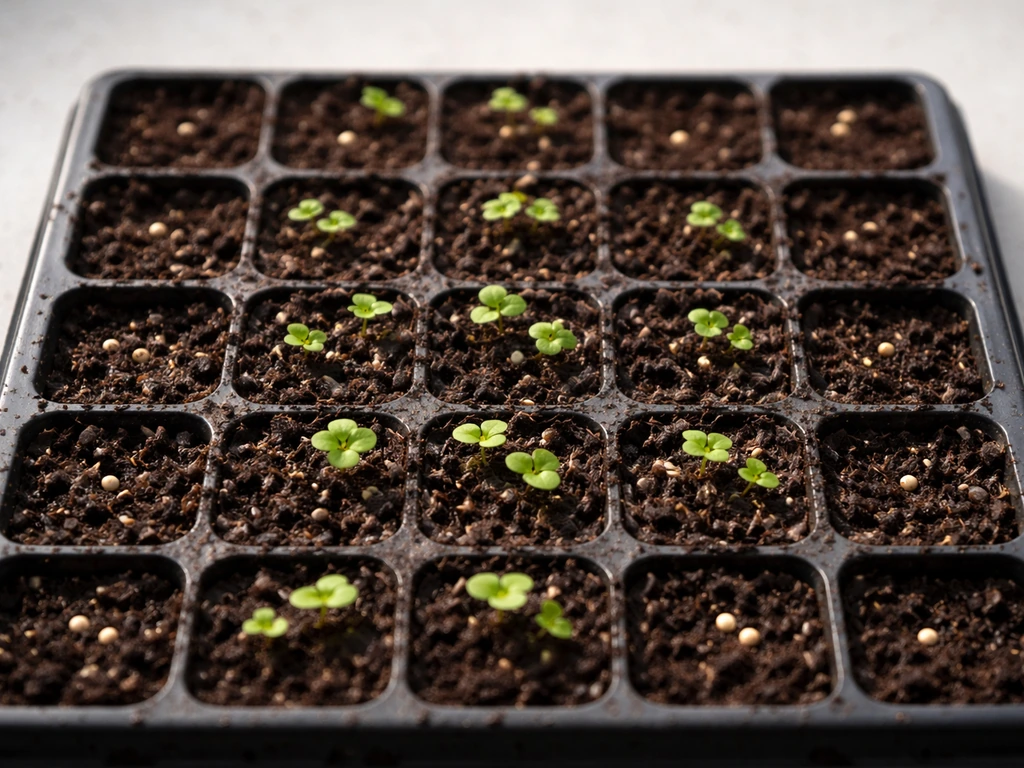
Growing geraniums (technically pelargoniums) from seed takes roughly 13 to 16 weeks from sowing to first flowers under typical home conditions. That breaks down to about 7 to 14 days to germinate, another 6 to 10 weeks to reach transplant size, and then 4 to 6 more weeks before you see blooms. It's a longer road than starting from cuttings or plugs, but it's absolutely doable and often cheaper when you want a lot of plants.
How Long Does It Take to Grow Geraniums from Seed
Marcus Henley
18 Apr 2026
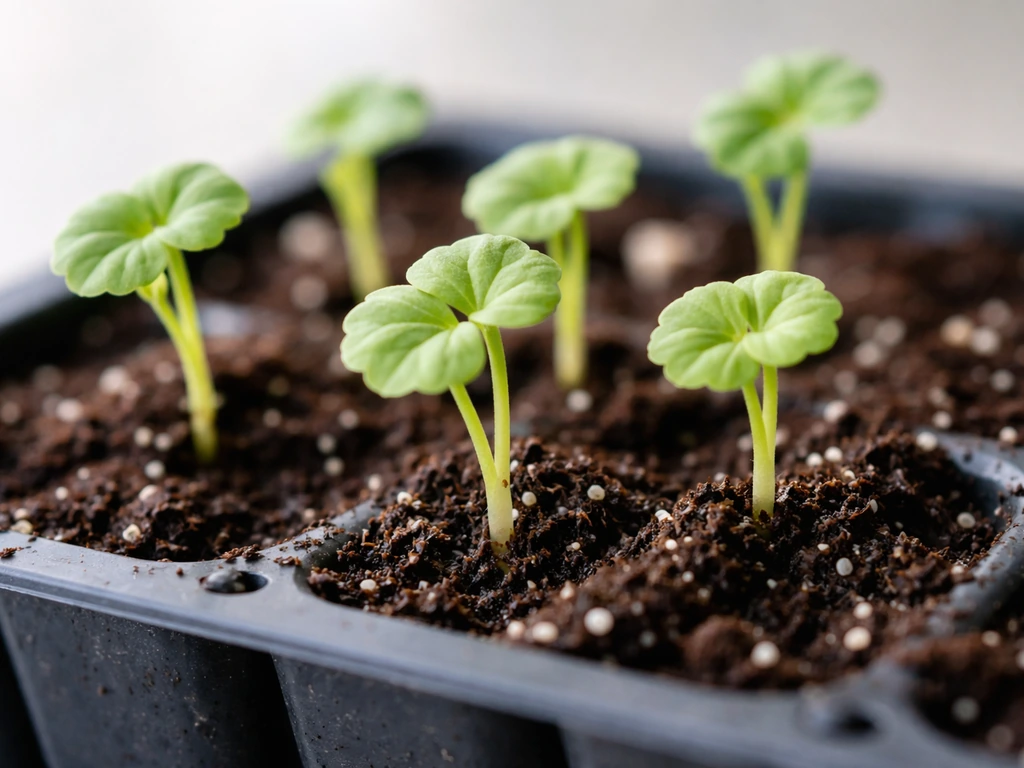
One quick clarification before we dig in: when most gardeners say "geranium," they usually mean Pelargonium, specifically zonal geraniums (Pelargonium × hortorum) or ivy-leaf geraniums (Pelargonium peltatum). True hardy geraniums are a different plant entirely. This guide covers the Pelargonium types you'd find at most garden centers, because those are the ones people typically start from seed.
How long until seeds actually germinate
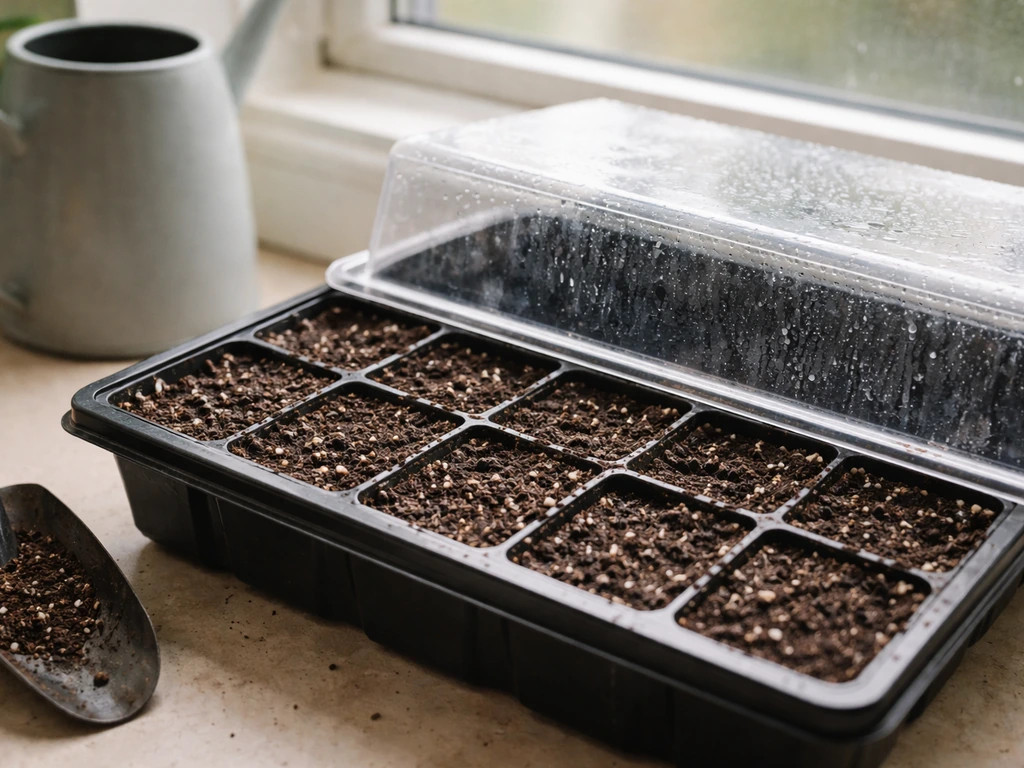
Under ideal conditions, zonal geranium seeds (Pelargonium × hortorum) germinate in 7 to 10 days at a soil temperature of 70 to 75°F (21 to 24°C). Ivy-leaf types can actually be a bit faster, with some commercial varieties like Syngenta's ivy-leaf pelargoniums showing germination as quickly as 3 to 5 days when soil temps hit the higher end of the range, around 75 to 81°F (24 to 27°C). The University of Minnesota Extension puts the realistic home-grower range at 1 to 3 weeks, which honestly matches what most gardeners experience, especially if soil temps fluctuate a bit.
The key thing to know is that geranium seeds do not need light to germinate. Cover them with about 1/8 inch of growing media and keep that media consistently moist but not soggy. Bottom-watering with warm water or using a fine mist works better than overhead watering, which can disturb the seeds or cause uneven moisture. The media should be well-saturated before you even sow.
The seedling stage: what to expect in the first weeks
Once those first sprouts appear, drop the temperature slightly. Aim for 70 to 75°F during the day and 60 to 65°F at night for sturdy, compact seedling growth. Iowa State Extension recommends this day-to-night temperature split, and it really does make a difference. Seedlings kept too warm around the clock can get leggy fast.
This seedling phase, from germination to a plant with three sets of true leaves, typically takes 4 to 6 weeks under good conditions. A real-world example: Bullseye pelargonium seedlings started on March 16 were about 3 inches tall with at least three sets of true leaves and well-established roots by May 26, roughly 10 weeks after sowing. That 10-week mark included germination time, so actual seedling development was around 8 to 9 weeks. If your temps and light are dialed in, you can be closer to the 6-week end. If conditions are marginal, budget 8 to 10 weeks just for this stage.
Light is critical during the seedling stage. Geranium seedlings need 12 to 16 hours of strong light per day. A south-facing window in winter often isn't enough, especially in northern climates. A simple fluorescent or LED grow light hung a few inches above the seedlings makes a real difference and helps prevent that stretched, weak-stemmed look.
When to pot up and how to know they're ready
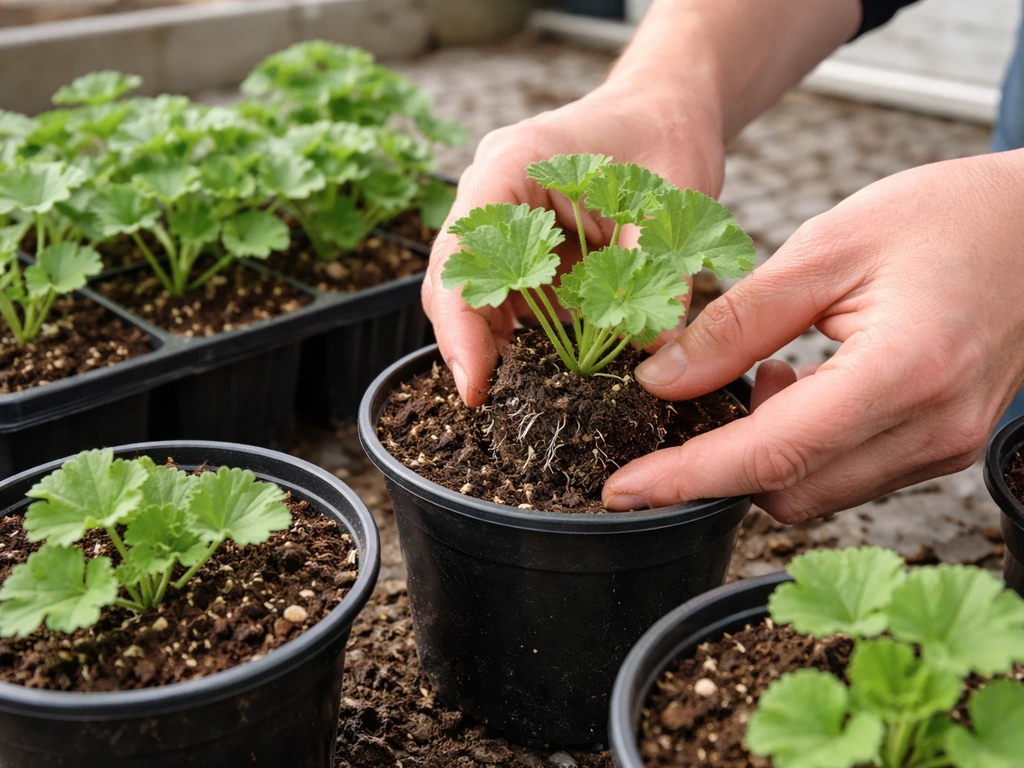
The standard trigger for potting up is three sets of true leaves, at which point you move seedlings into 4-inch pots. This typically happens somewhere between 6 and 10 weeks after sowing, depending on your growing conditions. Commercially, Syngenta's easy-grow guide puts the seed-to-transplant window at 4 to 6 weeks, but that assumes commercial-grade temperature control and supplemental lighting. Syngenta’s Grower Success Guide for ivy-leaf pelargoniums also lists plug timing and germination time, including germination of about 3 to 5 days when soil temperatures are in the 72 to 75°F range for that production context blank" rel="noopener noreferrer">Syngenta's easy-grow guide puts the seed-to-transplant window at 4 to 6 weeks. At home, 6 to 10 weeks is more realistic.
If you're starting in small cells (128 to 288-cell flats), plan to pot up and then grow on before transplanting outdoors. Johnny's Selected Seeds recommends sowing 7 to 9 weeks before your planned outdoor planting date for 128 to 288-cell sizes, or 9 to 11 weeks for larger cell sizes or seedling containers. Their flower growing guide suggests sowing 8 to 10 weeks before planting out when using 128-cell flats.
If you're curious how this compares to buying ready-to-plant starts, how long geranium plugs take to grow gives you a good sense of how commercial plug growers handle the same seedling-to-transplant window and why plug-grown plants hit garden centers looking so much more advanced.
Time to first flowers and full plant maturity
Zonal geraniums started from seed need roughly 13 to 15 weeks from sowing to first bloom. Ivy-leaf types tend to run a bit longer, about 12 to 16 weeks from sowing to flowers, because they have a slower establishment phase even though their initial germination can be faster. Those ranges account for normal home-growing variability in light and temperature.
For "full" maturity in the sense of a well-branched, heavily flowering plant, budget another 4 to 6 weeks beyond first bloom. Commercially, a 12-inch hanging basket of geraniums takes 12 to 13 weeks of grow-on time after transplant, which gives you a sense of just how much development happens after those first flowers appear. At home in a 4- to 6-inch pot, plants fill in faster, but a really impressive plant still takes most of the season to develop.
| Growth Stage | Typical Timeline (Home Conditions) | Notes |
|---|---|---|
| Germination | 7–14 days (up to 3 weeks) | 70–75°F soil temp; ivy-leaf can be 3–5 days at higher temps |
| Seedling to 3 sets of leaves | 4–6 weeks after germination | Needs 12–16 hrs light; keep temps 70–75°F day, 60–65°F night |
| Transplant/pot-up size | 6–10 weeks from sowing | Move to 4-inch pot at 3 sets of true leaves |
| First flowers | 13–15 weeks from sowing (zonals) | Ivy-leaf types: 12–16 weeks |
| Full, bushy plant | 18–20+ weeks from sowing | Continues developing through the season |
What makes geraniums grow faster or slower
Temperature
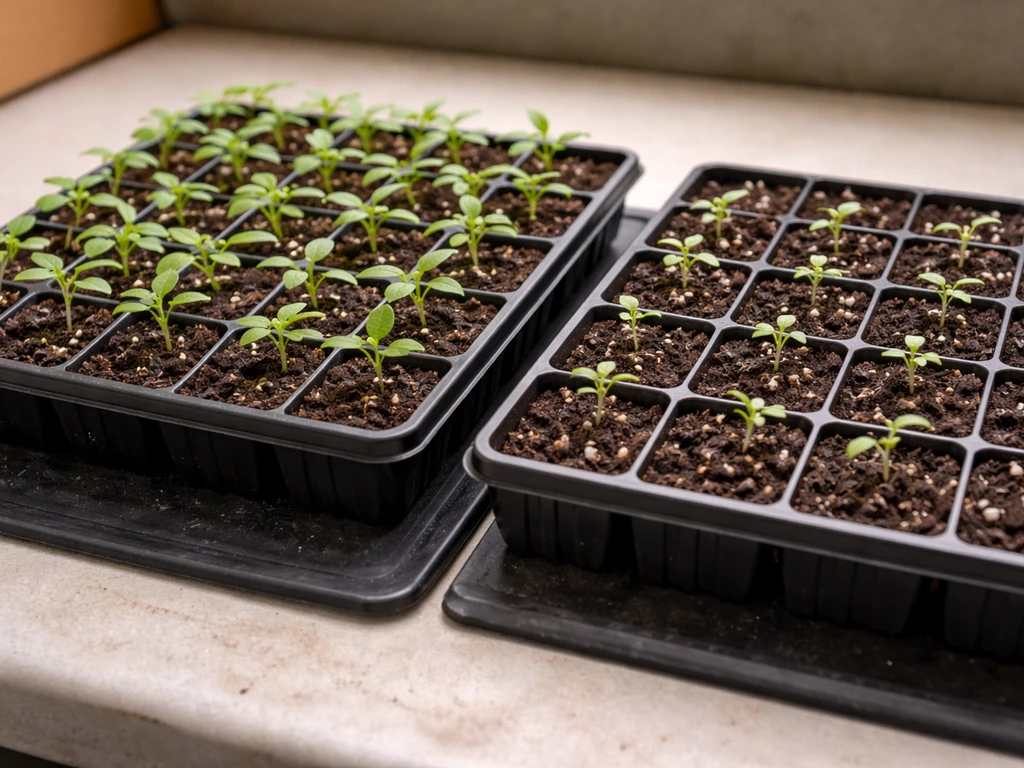
Temperature is probably the single biggest lever you have. Below 65°F, germination slows dramatically and seedling development stalls. Thompson & Morgan specifically notes that plants take longer to develop in low temperatures and suggests reducing soil temp to around 65°F after germination to manage timing without shocking the seedlings. Getting your germination media to a consistent 70 to 75°F is worth investing in a heat mat if your home runs cool.
Light intensity and duration
After germination, light becomes the controlling factor for speed. Syngenta's grower guides specifically call out that low light slows flowering and that supplemental HID lighting can speed progress in commercial settings. At home, a quality grow light running 14 to 16 hours a day is the closest equivalent. Weak or short-duration light produces pale, stretched seedlings that take much longer to reach transplant size and flowering.
Moisture consistency
Inconsistent moisture, whether too dry between waterings or constantly soggy, slows growth and sets up disease problems. During germination especially, the media should stay evenly moist. Syngenta's guides emphasize saturating the media before sowing and maintaining controlled moisture throughout emergence. Once seedlings are up, let the top of the media dry slightly between waterings to encourage root development.
Seed quality and freshness
Geranium seed viability drops noticeably with age. Fresh seed from reputable suppliers germinates in the 7 to 10-day window reliably. Older or poorly stored seed stretches to 2 to 3 weeks and has more failures. If you're using seed more than a year old, do a quick germination test on a damp paper towel before committing to a full tray.
Zonal vs. ivy-leaf vs. other types
Zonal geraniums (Pelargonium × hortorum) are the most commonly grown from seed and hit the 13 to 15-week timeline most reliably. Ivy-leaf types are sometimes faster to germinate but slower to flower in low-light home conditions. Scented geraniums are almost always propagated from cuttings rather than seed. If you've shopped around and compared geranium seed-to-flower timelines with other flowers, it's worth knowing that petunias, for instance, follow a faster path, which you can see in detail in this look at how long petunias take to grow from seed.
Troubleshooting slow germination or seedling problems
If it's been two weeks and you're not seeing any sprouts, work through these possibilities before giving up:
- Check your soil temperature. Use a thermometer, not just room temperature. A heat mat set to 72°F with an air temp of 68°F can still produce soil temps below 65°F if the mat isn't insulated underneath.
- Check moisture. Dig gently next to a seed. If the media is bone dry even an inch down, you've had a moisture failure during the critical germination window. Re-wet thoroughly and be more consistent going forward.
- Inspect the seeds. If seeds are shriveled, discolored, or smell off, they may have been stored poorly or are just old.
- Sowing depth. Seeds planted deeper than 1/8 inch can exhaust their energy before the shoot reaches the surface. Geranium seeds need only a thin covering of media.
- Wait one more week. If conditions are correct but on the cool end, 3 weeks is a normal outer limit. Don't throw the tray out prematurely.
Damping off, where seedlings collapse at the soil line and die suddenly, is the other common disaster. It's caused by fungal pathogens and is far worse under cool, wet, low-light conditions. UC Statewide IPM also explains that damping-off is favored by cool, wet conditions for some pathogens and can be managed with proper irrigation and appropriate seedling conditions. The University of Minnesota Extension specifically links damping off risk to cool temperatures and poor light. The Royal Horticultural Society notes it can happen rapidly, especially in spring when temperatures and light are both low. To prevent it: use fresh, sterile seed-starting mix, don't overwater, keep air moving with a small fan, and give seedlings strong light for 12 to 16 hours a day. Once damping off hits a tray, it spreads quickly, so remove affected seedlings immediately.
Slow but healthy growth (seedlings that are green and compact but just not rushing) is usually a light problem. Adding a few more hours under a grow light or moving trays closer to a brighter window often kicks things into gear within a week. For comparison, other popular annuals like impatiens grown from seed show similar sensitivity to low light during the seedling phase, so if this is your first year starting annuals indoors, it's a common learning curve.
Planning your sowing schedule around your climate
The simple rule: count back 10 to 12 weeks from your last frost date to find your indoor sowing date. Mosser Lee's seed-starting chart recommends starting pelargoniums about 10 weeks before last frost for home growers. Johnny's recommends 7 to 9 weeks before planting out for smaller cell sizes, and 9 to 11 weeks for larger containers. Splitting the difference and aiming for 10 weeks gives you a solid buffer.
Here's how that plays out across different climate zones:
| Climate / Last Frost Date | Sow Seeds Indoors | Transplant to 4-inch Pots | Plant Outdoors |
|---|---|---|---|
| Zone 5–6 (last frost ~May 15) | ~March 1–7 | ~April 12–19 | After May 15 |
| Zone 6–7 (last frost ~April 30) | ~Feb 15–21 | ~March 28–April 4 | After April 30 |
| Zone 7–8 (last frost ~April 1) | ~Jan 18–24 | ~March 1–7 | After April 1 |
| Zone 9–10 (last frost ~Feb 28) | ~Dec 15–21 | ~Jan 26–Feb 2 | After Feb 28 |
If you're in a climate with a very short frost-free window, like much of Minnesota or the upper Midwest, you'll want to start at the earlier end and plan for 10 to 12 weeks. UMN Extension emphasizes hardening off plants before outdoor planting, and Iowa State Extension recommends a 7 to 10-day hardening period where you gradually introduce plants to outdoor conditions before they stay outside permanently.
If you missed the ideal indoor start date and your last frost is coming up fast, you have a few options: buy transplants, start seeds now for late-season bloom (geraniums bloom all summer once they start), or direct-sow in a mild climate where frost isn't a concern. In USDA zones 9 and 10, direct outdoor sowing in late winter is genuinely viable.
How geraniums compare to other flowers you might be starting
Geraniums are on the slower end of the spectrum for annual flowers started from seed. They take longer than petunias or impatiens, and considerably longer than poppies, which you can see in this breakdown of how long poppies take to grow from seed. Begonias are actually comparable to geraniums in their seed-to-flower timeline, and if you're starting both, they pair well in the same light and temperature setup. You can read more about that in this piece on how long begonias take to grow from seed.
Peonies and pansies sit at opposite ends of the patience spectrum. Pansies grown from seed actually do well when started early and can flower in a similar window to geraniums, while peonies are a completely different commitment, as explained in this article about how long peonies take to grow from seed. Knowing where geraniums fall in the overall seed-starting timeline helps you organize your indoor growing setup more efficiently, especially if you're managing multiple trays under a single grow light.
The short version if you need it
Start geranium seeds indoors 10 to 12 weeks before your last frost date. Expect germination in 7 to 14 days at 70 to 75°F soil temperature. Plan for 6 to 10 weeks of seedling development before plants are ready to pot up. Count on 13 to 16 weeks from sowing to first flowers. Harden plants off for 7 to 10 days before moving them outside after your last frost. If you keep temperatures steady, light strong, and moisture consistent, you'll be at the faster end of every one of those ranges.
FAQ
Why did my geraniums take longer than the usual 13 to 16 weeks to bloom?
Most delays come from soil temperatures staying too cool after germination or from insufficient light during the 4 to 6 week seedling window. If your room runs under about 65°F, growth can stall even if you have decent watering. Also check that you are giving 12 to 16 hours of strong light daily, not just bright window light, because low light tends to slow flowering even when seedlings look green.
Can I start geranium seeds later than 10 weeks before my last frost and still get flowers?
Yes, but expect late blooms. Since geraniums often need roughly 13 to 16 weeks from sowing to first flowers, starting about 6 to 8 weeks before your last frost usually pushes you into later-season or you will miss the earliest outdoor flowering. If you are short on time, buy plugs or starts, then you can focus on hardening off and finishing in the garden.
What happens if I keep seedlings warmer than recommended, like 75 to 80°F day and night?
They may grow faster in height but you will often get weaker, leggy stems and slower development into a compact, transplant-ready plant. That in turn can delay the overall timeline to bloom. Use the day-night drop (around 70 to 75°F daytime, 60 to 65°F nighttime) mainly to keep them sturdy, not just alive.
Should I fertilize right away after germination to speed things up?
Usually not. If you fertilize too early, especially with strong feed, you can scorch delicate roots or encourage uneven, soft growth. A safer approach is to begin light feeding only after you see multiple sets of true leaves and steady growth, and keep fertilizer concentration gentle while you are still under grow lights.
Do geranium seeds need bottom heat to germinate on time?
Bottom heat helps most when your home is cool or uneven, but it is not strictly required if your starting area stays around the target range. If you do not have a heat mat, expect germination to stretch toward the longer end, especially for older seed or winter indoor setups where temperatures fluctuate.
How do I know my seedlings are ready to pot up if they have fewer than three true leaf sets?
Use both leaf number and root readiness. If roots are circling the cell or seedlings feel easily loosened when you gently lift them, pot up even if the leaf count is slightly behind. Waiting too long can root-bind seedlings, and it usually costs you time later during the bloom phase.
My germination took 2 to 3 weeks. Does that mean I should restart the tray?
Not automatically. Older seed or cool temperatures can delay emergence without meaning the entire batch is doomed. First do a quick viability check next time, but for the current tray, give it until you see a clear spread of sprouts, then remove non-germinated seeds rather than discarding everything early.
How much can I influence the timeline by changing light height and intensity?
Quite a bit. If seedlings look pale or stretch, lower the light source closer to the canopy and keep the light on long enough daily. A common mistake is hanging grow lights too high, which reduces effective intensity and slows both getting to transplant size and eventual flowering.
What moisture routine prevents both slow growth and damping-off?
Keep the germination media consistently evenly moist, not wet, and ensure good airflow. After seedlings emerge, let the top layer dry slightly between waterings so the surface is not constantly soggy. Overwatering is one of the fastest ways to create conditions for damping-off, especially when temperatures are on the cool side.
Can I speed up blooming by potting outdoors earlier than the recommended hardening-off schedule?
Rushing outdoors without proper hardening-off often causes shock, which can delay growth and flowers. Plan for a 7 to 10 day hardening period where you gradually increase outdoor exposure, even if your climate is mild, because wind and sun levels outdoors can be far more intense than indoors.
Why did my seedlings look healthy but still did not bloom when expected?
Healthy leaves do not always mean the plant has enough light energy to initiate flowering. If you gave fewer hours of strong light than needed or your light intensity was weak, plants can stay vegetative longer. Confirm your daily light schedule, and make sure seedlings are not crowded enough to reduce light levels at the bottom of the tray.
Are scented geraniums realistically achievable from seed with the same timing as zonal and ivy-leaf types?
Typically no. Scented pelargoniums are usually propagated from cuttings, so seed may not come true and the timeline for a reliable, flowering plant can be unpredictable. If your goal is the scent type, plan on cuttings or purchased plants rather than expecting a consistent seed-to-bloom schedule.
Next Article
How Long Does It Take to Grow Impatiens From Seed
Day-by-day timing for growing impatiens from seed, from germination to transplant, plus tips to speed or troubleshoot.