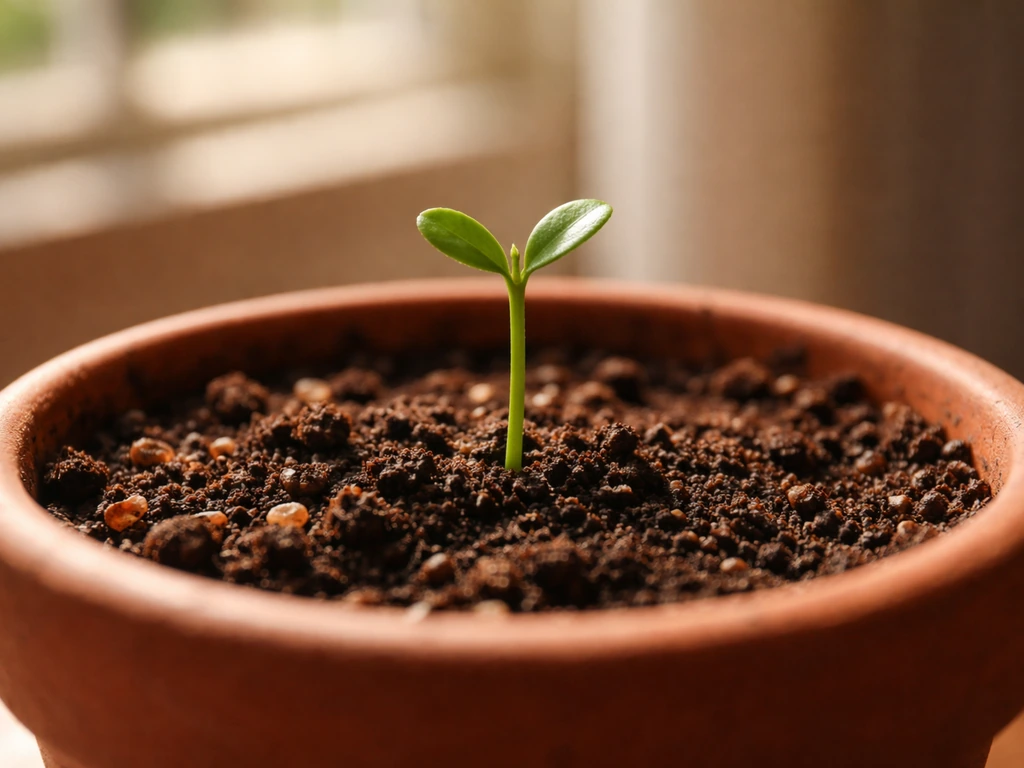
Butternut squash takes about 110 to 120 days from seed to harvest when you direct-sow outdoors, or roughly 95 to 110 days from transplant if you start seeds indoors first. Germination happens fast under warm conditions: expect seedlings to push up through the soil in 4 to 6 days when your soil is at least 70°F, and as quickly as 3 days when it's closer to 85 to 95°F. From there, you're looking at a long, satisfying grow to a tan, hard-rinded squash that stores beautifully through winter.
How Long to Grow Butternut Squash From Seed
Marcus Henley
3 May 2026
The full timeline from seed to harvest
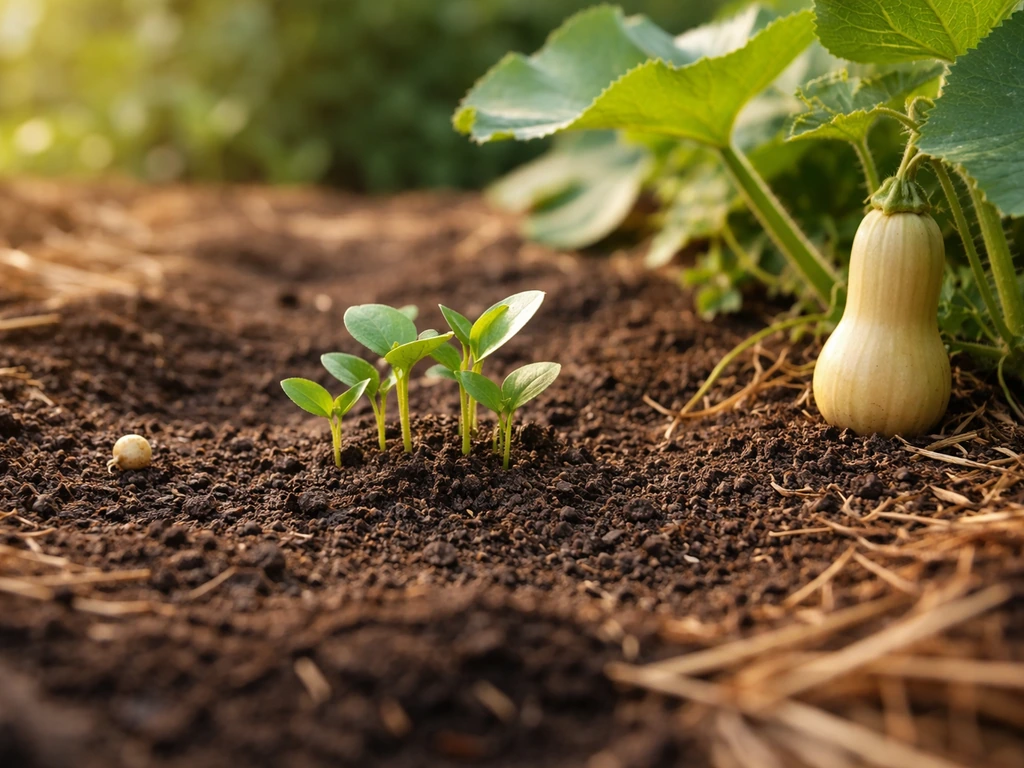
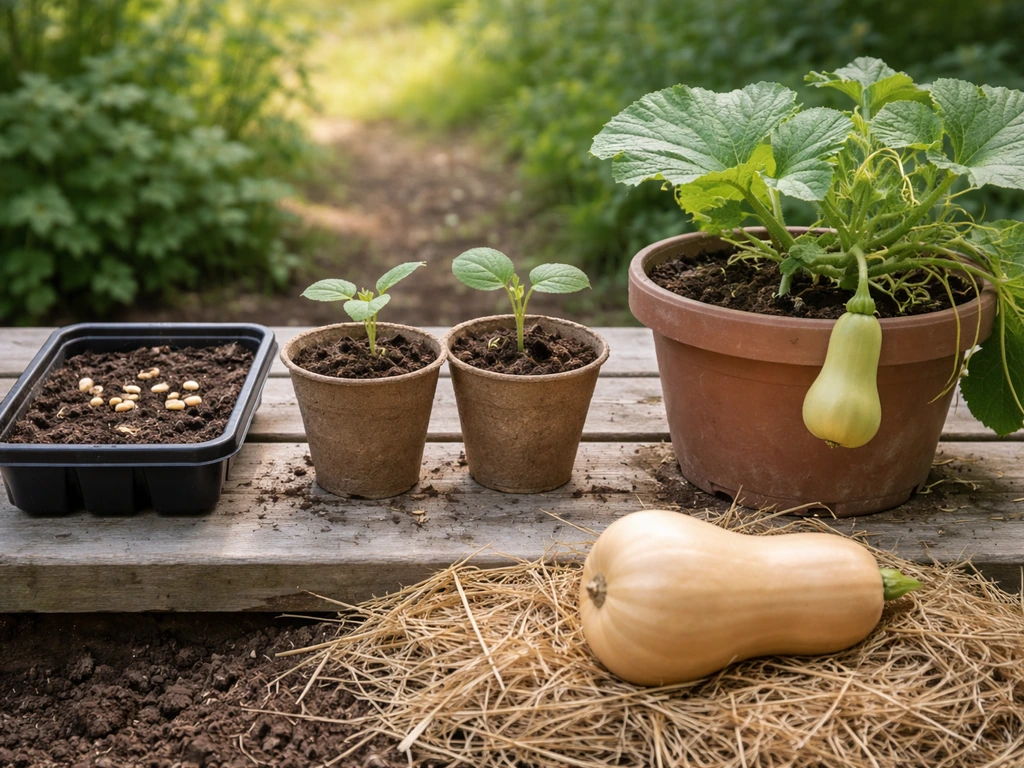
Here's how a typical butternut squash season breaks down, from the moment the seed hits soil to the day you carry it inside:
| Stage | Timeframe | Notes |
|---|---|---|
| Germination | 3–6 days | Soil must be 70°F minimum; 85–95°F is ideal |
| Seedling establishment (indoors) | 3–4 weeks after germination | Two true leaves, sturdy stem, ready to transplant |
| Vine and flowering (outdoors) | 5–7 weeks after transplant or direct sow | Vines spread rapidly; male flowers appear first |
| Fruit set to near-maturity | 45–60 days after pollination | Fruit turns tan around day 45 but needs more time |
| Full harvest maturity | 95–110 days from transplant / 105–115 days from direct seed | Waltham Butternut: 105–115 days from direct seed |
The Waltham Butternut is the classic variety most home gardeners grow, and it's a good benchmark: roughly 105 to 115 days from direct seeding, or 95 to 110 days when you start indoors and transplant out. Other varieties can be a bit quicker (some clock in around 85 days) or slower, so always check your specific seed packet.
What affects how fast your squash grows
Soil and air temperature
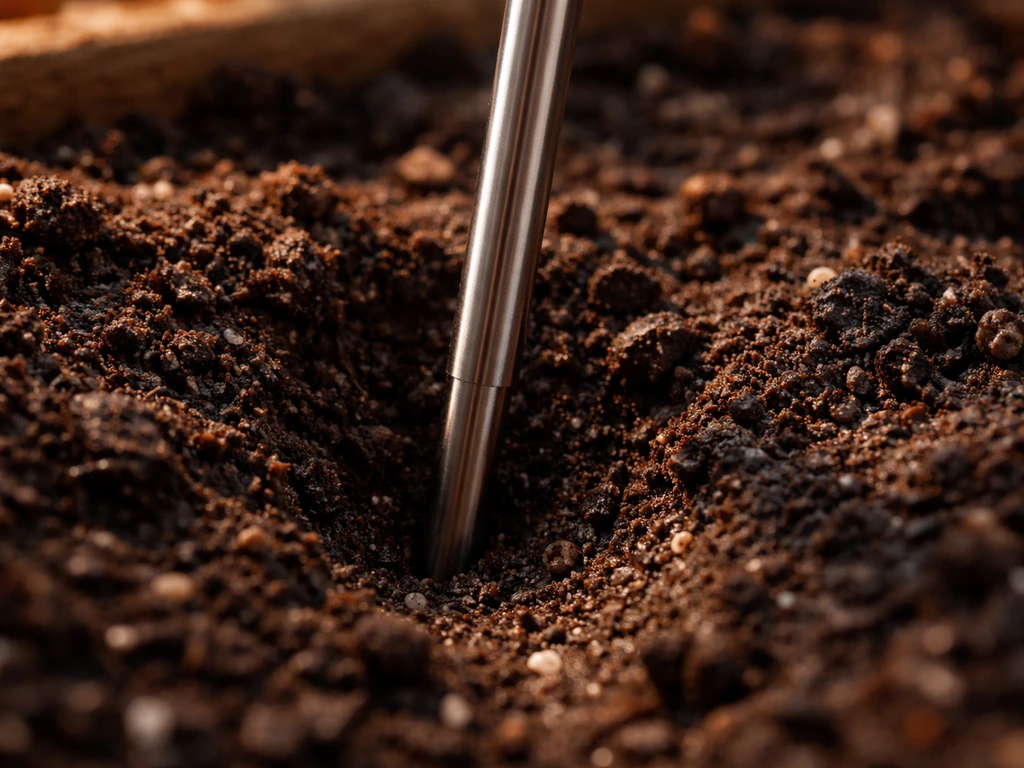
Temperature is the single biggest variable. Butternut squash is a heat-loving crop with a base growing temperature around 50°F, meaning development essentially stalls below that mark. The sweet spot for germination is 70 to 95°F in the soil. At 95°F soil temp you can see sprouts in 3 days; at 70°F it's closer to 6 or 7. Once plants are established, warm days (75 to 85°F) and mild nights accelerate vine growth and fruit development. A cool, rainy summer stretches that 110-day estimate noticeably. If you've had a slower-than-average summer, add at least a week to your expected harvest window.
Agronomists actually track squash development using growing degree days (GDD), which accumulates heat units above a base temperature, often with an upper cutoff around 86°F where development plateaus. You don't need to calculate GDD to grow great squash, but it's useful to understand that two gardens with the same calendar date can be at very different biological stages if one is in the Deep South and one is in northern Minnesota.
Soil quality and moisture
Butternut squash is surprisingly water-sensitive at key stages. Inconsistent moisture around flowering and fruit set causes misshapen fruits, poor flavor development, and can even trigger blossom end rot. Aim for about 1 to 2 inches of water per week, and try to keep that supply steady rather than alternating between droughts and soaks. Drip irrigation is ideal because it delivers water to roots without wetting the crown, which matters because wet crowns invite Phytophthora blight, a soil-borne disease that can kill plants seemingly overnight in poorly drained spots. Mulching around the base of plants helps maintain consistent moisture during hot stretches.
Variety differences
Days-to-maturity figures on seed packets are real but imprecise. Waltham Butternut runs 105 to 115 days from direct seed. Some newer hybrid varieties are bred for shorter seasons and can come in around 85 to 95 days. If you're gardening in a short-season climate (think Zone 4 or 5), choosing one of those faster varieties is a smarter move than trying to force a longer-season type to finish before frost.
How to plant for the fastest, most reliable results
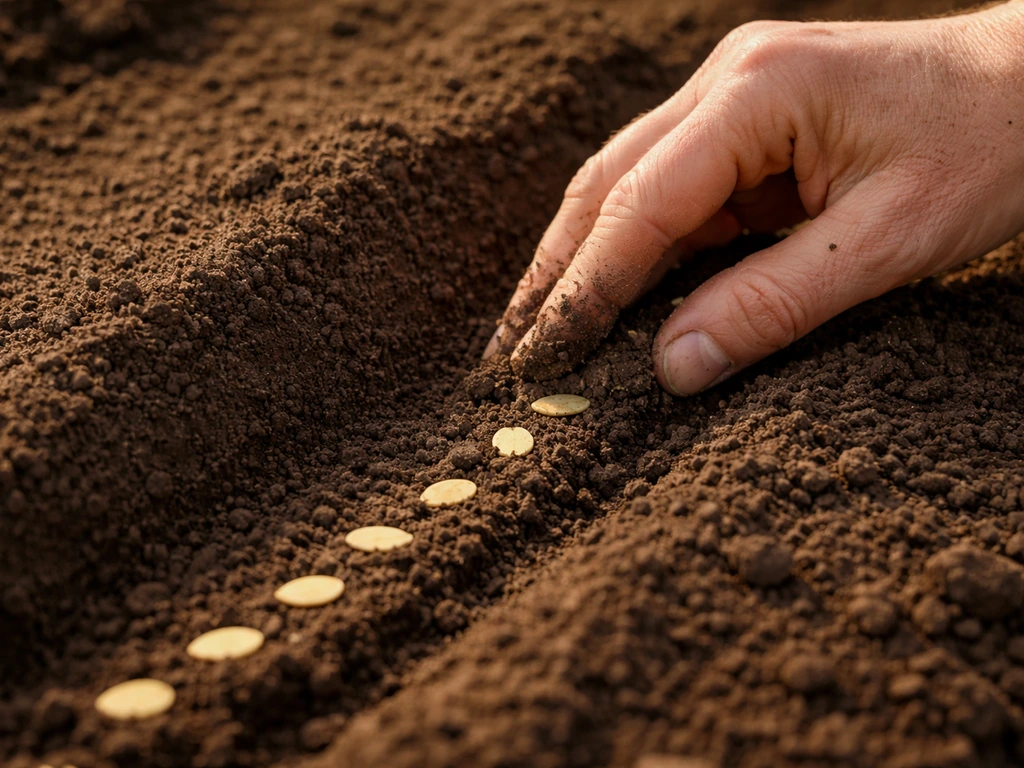
Timing your planting correctly does more for your success rate than almost anything else. Butternut squash seeds planted in cold soil will sit and rot before they germinate. Wait until soil temperature reaches at least 60°F, and ideally 70°F or warmer, before direct sowing outdoors.
- Check soil temperature at 2 to 3 inches deep with a soil thermometer before planting. Don't guess based on air temperature alone.
- Sow seeds 1 inch deep, two to three seeds per hole, then thin to the strongest plant after germination.
- Space hills or transplants 4 to 6 feet apart in rows at least 6 to 8 feet wide. Butternut vines spread far and fast.
- After planting, water well and cover with black plastic mulch if your soil is on the cool side. It warms soil 5 to 10°F and speeds germination noticeably.
- Plant in full sun. Butternut needs at least 6 to 8 hours of direct sunlight daily for strong vine growth and fruit development.
For timing on the calendar, count backward from your average first fall frost date. If your first frost is around October 1 and you're direct sowing, you need to be in the ground by mid-May (assuming a 110-day variety). If that doesn't give you enough warm-soil days, start indoors.
Indoor starts vs direct sowing: how the timelines differ
Butternut squash doesn't transplant as easily as tomatoes or peppers. The roots are sensitive and any significant root disturbance at transplant can set plants back by a week or two. That said, for gardeners in short-season climates, starting indoors is often the only practical way to get a full harvest before frost. The key is keeping the indoor start brief and transplanting carefully.
| Method | Start timing | Days to harvest (from seed) | Best for |
|---|---|---|---|
| Direct sow outdoors | When soil hits 60–70°F | 105–115 days | Zones 6–9, long-season climates |
| Indoor start + transplant | 3–4 weeks before last frost | 95–110 days from transplant (add ~3–4 weeks to total) | Zones 4–5, short-season climates |
| Transplant outdoors after last frost | 2 weeks after last frost date when soil is warm | Fastest overall if roots are undisturbed | Any zone with warm summer guaranteed |
If you start indoors, sow into biodegradable pots (peat or coir) so you can transplant pot-and-all without disturbing roots. Start 3 to 4 weeks before your last frost date, not the full 8 to 10 weeks you might use for peppers or tomatoes. Squash grows fast indoors and gets leggy and stressed quickly. Transplant outdoors only after the last frost date has passed and soil is genuinely warm.
One practical note: the indoor head start saves you about 2 to 3 weeks of calendar time compared to direct sowing, but you do add back a week or so for transplant adjustment. The net gain in a short-season garden is typically 10 to 14 days of useful growing time, which can be the difference between a full harvest and a frost-killed half-mature squash.
Signs you're on track (and what to do if you're not)
What healthy progress looks like
- Germination within 4 to 7 days of planting in warm soil (70°F+)
- First true leaves appearing within 10 to 14 days of germination
- Rapid, vigorous vine growth once temperatures consistently hit the 70s°F
- Male flowers (narrow stem below bloom) appearing first, followed by female flowers (small proto-squash at the base of the bloom) a week or two later
- Fruit visibly swelling and developing tan skin color around 45 days after pollination
- Rind hardening and turning fully tan/beige 2 to 3 weeks after that first color change
Troubleshooting slow or failed growth
If seeds haven't germinated after 10 days, the most common culprits are cold soil, old seeds, or overwatering that caused rot. Check soil temp first. If it's below 65°F, germination will be very slow or won't happen at all. If you have warm soil and still nothing, dig up a seed and check: if it's soft and disintegrating, it rotted. Start fresh with new seeds and back off on watering until sprouts appear.
If plants germinated fine but growth stalled after the seedling stage, look at temperature again. A cold snap that drops nighttime temps into the 50s for several days can put squash into near-dormancy. Plants will resume once warmth returns, but you've lost calendar days and your harvest window has shifted accordingly. This is when knowing your variety's days-to-maturity and counting forward from your last hard-frost date really matters.
Misshapen or small fruit is almost always a watering issue. Uneven moisture during fruit set is the top cause. Check that you're hitting that 1 to 2 inches per week mark, especially during dry spells. If your fruit zones look fine but the plant's crown is sitting in a low, wet area after rain, consider that Phytophthora crown rot is a risk in poorly drained spots. Prevention is much easier than cure: site squash in well-drained soil and keep irrigation away from the crown.
How to tell when butternut squash is actually ready to harvest
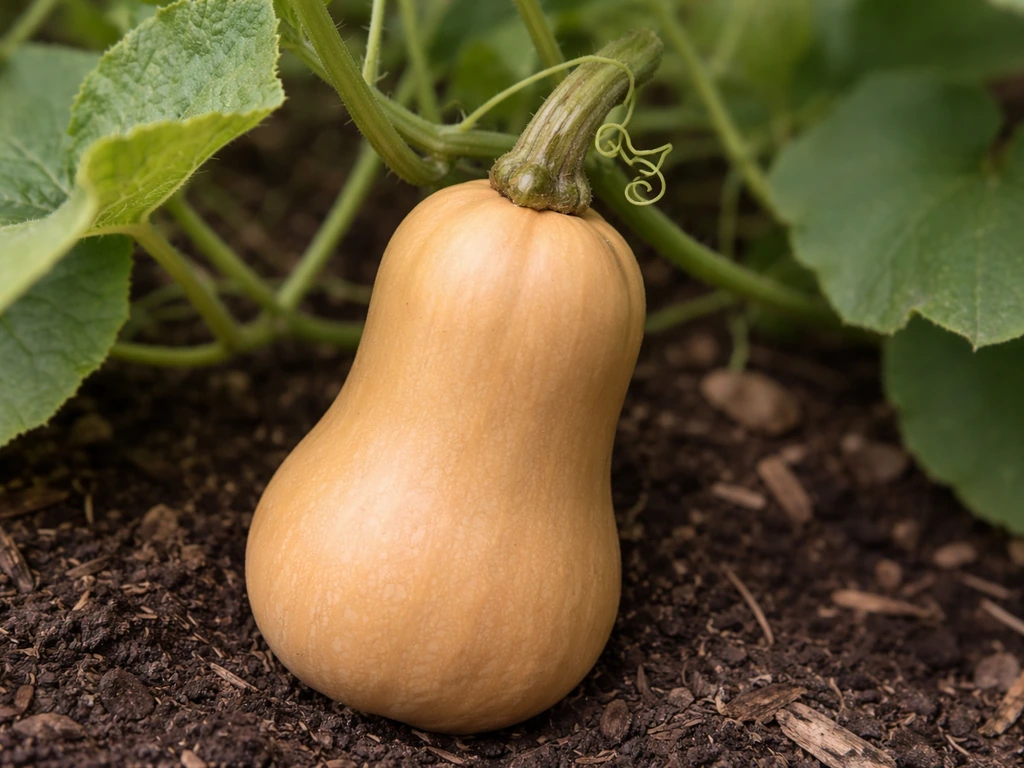
This is where a lot of gardeners get impatient and harvest too early. Butternut squash, like other winter squash, does not ripen or sweeten after it's picked. Winter squash and pumpkins do not continue ripening after harvest, so they should be allowed to ripen to full maturity on the vine for best results. What you harvest is what you get. So getting harvest timing right matters a lot, both for flavor and for how long the squash will store.
The skin turns tan around day 45 after pollination, but that's not a harvest signal. It's a starting point. Wait another 2 weeks minimum after you notice that full tan color developing. By that point you're looking for the following cues together, not just one:
- The stem connecting the squash to the vine has turned dry, hard, and corky. A green, soft stem means the squash is still drawing nutrients from the plant.
- The rind is hard enough that you can't dent it with your thumbnail. A soft spot means it's not done.
- The skin color is a uniform, matte tan with no green patches remaining.
- The vine near the fruit is beginning to die back naturally.
If frost is coming and your squash doesn't quite meet all those criteria, you can harvest early, but understand the trade-off: it won't sweeten further and will store for a shorter period. A fully mature butternut stored properly (around 50 to 55°F, moderate humidity) can last 3 to 6 months. An early-harvested one might only hold a few weeks before softening.
After harvest, cure the squash at room temperature (around 80 to 85°F) for 10 to 14 days if possible. Curing toughens the rind further and improves flavor and storage life. Then move to a cool, dry location for long-term storage.
Planning your planting window by zone
Here's a practical way to work backward from your frost date. Take your average first fall frost date, subtract 115 days for a standard Waltham Butternut from direct seed, and that's your target outdoor sowing date. If that date falls before your last spring frost or before soil reliably hits 60°F, plan to start indoors 3 to 4 weeks beforehand and transplant after conditions are right.
| USDA Zone (approximate) | Last spring frost | Target direct-sow date | Expected harvest window |
|---|---|---|---|
| Zone 4 (e.g., Minneapolis) | Late May | Late May (tight margin; start indoors) | Late September |
| Zone 5 (e.g., Chicago) | Mid-May | Mid-May | Mid-September to early October |
| Zone 6 (e.g., St. Louis) | Late April | Early to mid-May (when soil is warm) | Late August to mid-September |
| Zone 7 (e.g., Nashville) | Mid-April | Late April to early May | Late August to September |
| Zone 8–9 (e.g., Dallas, Sacramento) | March or earlier | April (or even late March) | July to August |
These are ballpark targets based on a 110-day variety. Always verify your local last and first frost dates with your county extension office or a reliable almanac tool, because microclimates can vary your actual frost dates by 2 to 3 weeks from regional averages.
If you enjoy tracking grow times across different crops, butternut squash sits in an interesting middle ground: much faster to fruit than long-season perennial seeds like kiwi or jujube, which can take years to fruit from seed, but considerably slower than quick-maturing annual vegetables. If you’re curious about a non-squash fruit, the question of how long it takes to grow kumquat from seed is a similar way to plan your timeline in advance.
If you are specifically growing jujube, the seed-to-fruit timeline is typically much longer, so plan around the years it can take before harvest. Kiwi grown from seed is much slower to mature, often taking several years to reach fruiting. Papaya generally takes about 9 to 11 months from seed to first harvest, depending on warmth and growing conditions how long to grow papaya from seed.
Within the squash family itself, the timeline is fairly consistent from seed to harvest compared to other cucurbits, so the practices here apply broadly.
FAQ
Can I plant butternut squash before the soil reaches 70°F?
Yes, but only if you have a protected setup. If you must plant before the soil reliably warms, use cloches or row cover to keep heat at the seed zone, and avoid watering so much that the soil turns waterlogged. Even with protection, cold, wet ground is the main reason seeds rot instead of germinate.
How close to the first fall frost can I sow or transplant butternut squash?
Cutting it closer is risky, but you can estimate your odds. Use the seed packet’s days-to-maturity plus extra time for your local weather, then subtract from the first fall frost date. If you are relying on a fast variety, target having fruits close to mature (tan skin, firm rind) before frost, because harvested squash will not sweeten further.
If I harvest early because frost is coming, will butternut squash continue to ripen?
If you harvest early due to frost, the squash is still usable, but expect a shorter storage window and less developed sweetness. Fully cured, mature butternut can keep 3 to 6 months in cool, dry conditions, while early-picked fruit often softens in weeks rather than months.
Why do some gardens harvest later than the seed packet days-to-maturity?
Typically, no. Days-to-maturity assumes average warmth and steady growth, but if your nights stay cool for a week or more, development slows and you effectively lose calendar time. In practice, the safest approach is to add at least a week to your harvest estimate for cool, rainy stretches.
What’s the most common reason butternut squash seeds fail to germinate on time?
The key is not just warm air, it is warm soil at planting depth. A common mistake is waiting for daytime temperatures while the ground is still cool, or using mulch too early that keeps the soil from warming. Check soil temperature with a probe near where the seed will sit.
Does planting depth change how long it takes butternut squash to sprout?
For most home gardens, sowing deeper can make germination slower rather than faster. If the soil is marginally warm, keep planting depth shallow enough for emerging growth, and make sure the seed bed drains well. In cold, wet beds, deeper seeds are more likely to rot.
If seeds don’t sprout after 10 days, should I keep waiting or replant?
If you need to replant, give the seed bed time to dry slightly and restart with fresh seed. Don’t keep re-sowing into the same cold or overwatered soil. Also confirm spacing once plants emerge, because crowding can slow vine growth even when warmth is correct.
How early should I start butternut squash indoors if I want a longer season?
You can start earlier, but it often backfires. Squash started too long indoors can become leggy and stressed, and transplanting can set them back. A practical rule is to start indoors about 3 to 4 weeks before the last frost, not the 8 to 10 weeks used for peppers.
What are the best signs the butternut squash is ready to harvest, beyond skin color?
Use the post-pollination timing cues together with fruit firmness and skin color. Tan color alone is not a harvest trigger, and harvesting right at the first tan stage usually reduces flavor and storage life. Wait at least two additional weeks after full tan color develops if you can.
Do I need to cure butternut squash after harvest, and how long?
Curing is a step many people skip, but it makes a real difference. Cure at room temperature (about 80 to 85°F) for 10 to 14 days when possible, then store in a cool, dry place. Without curing, rind may not harden fully, and storage failures are more common.
Next Article
How Long Does It Take to Grow Kumquat From Seed
Timeline for kumquat seed from germination to established plant and when fruit may finally appear, plus fixes to speed i