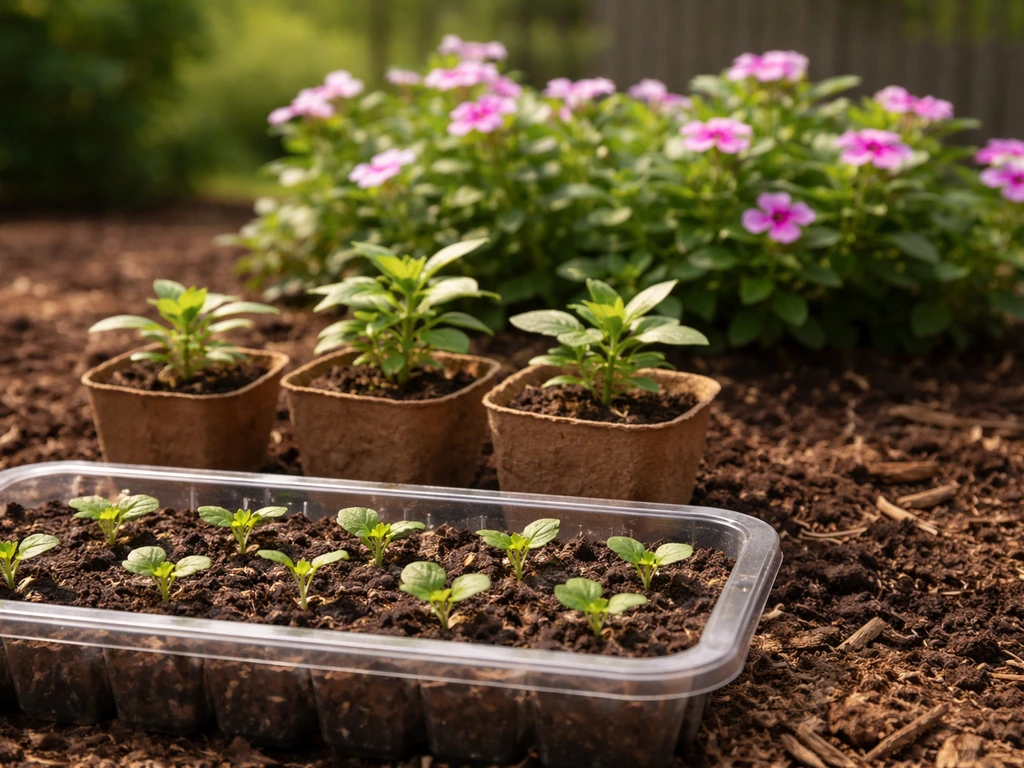
Verbena takes about 14 to 16 weeks from seed to first flowers under good conditions. That breaks down to roughly 7 to 21 days for germination (often faster, closer to 4 to 10 days at ideal temperatures), another 5 to 7 weeks to reach a transplant-ready seedling stage, and then several more weeks in the garden before bloom. If you're starting indoors, plan to sow 8 to 12 weeks before your last frost date, depending on your verbena type and how quickly you want to hit the ground running once spring arrives.
How Long to Grow Verbena From Seed: Timeline Guide
Marcus Henley
23 May 2026
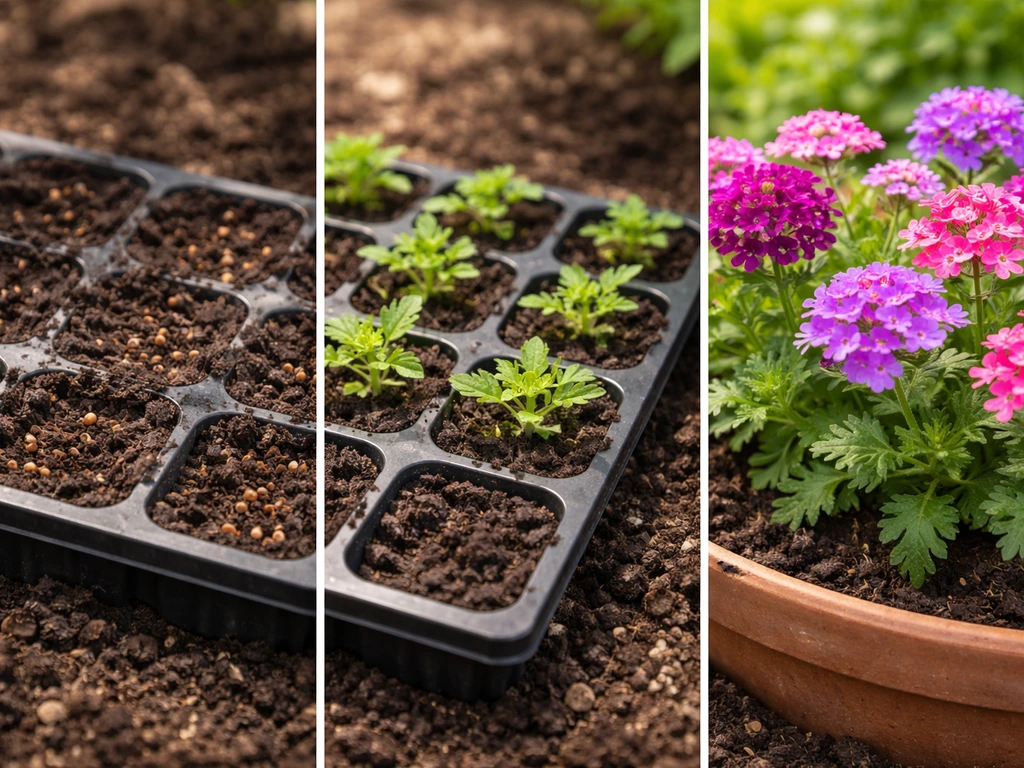
The full verbena growth timeline at a glance
The most useful way to think about growing verbena from seed is in three distinct phases: germination, seedling development, and time to flower. Each phase has its own requirements and potential sticking points. Here's the overall picture for the two types most people are growing from seed.
| Stage | Garden Verbena (Verbena × hybrida) | Tall Verbena (Verbena bonariensis) |
|---|---|---|
| Germination | 4–10 days at 68–76°F | 7–21 days at 65–75°F |
| Transplant-ready seedlings | 6–8 weeks from sowing | 6–8 weeks from sowing |
| First flowers (from sowing) | 12–16 weeks | 14–16 weeks (90–100 days) |
| Start indoors before last frost | 8–10 weeks | 10–12 weeks |
| Typical flowering season | Late spring through fall | Mid-summer through fall |
Garden verbena (Verbena × hybrida) is the spreading, colorful annual type you see in hanging baskets and borders. It germinates a little faster and can start flowering slightly sooner than its tall cousin. Verbena bonariensis, the tall purple-flowered species, takes a touch longer and behaves more like a tender perennial in warmer climates (USDA zones 7 and above) but is almost always grown as an annual from seed. Both are worth the wait.
Starting indoors vs. direct sowing: which to choose and when
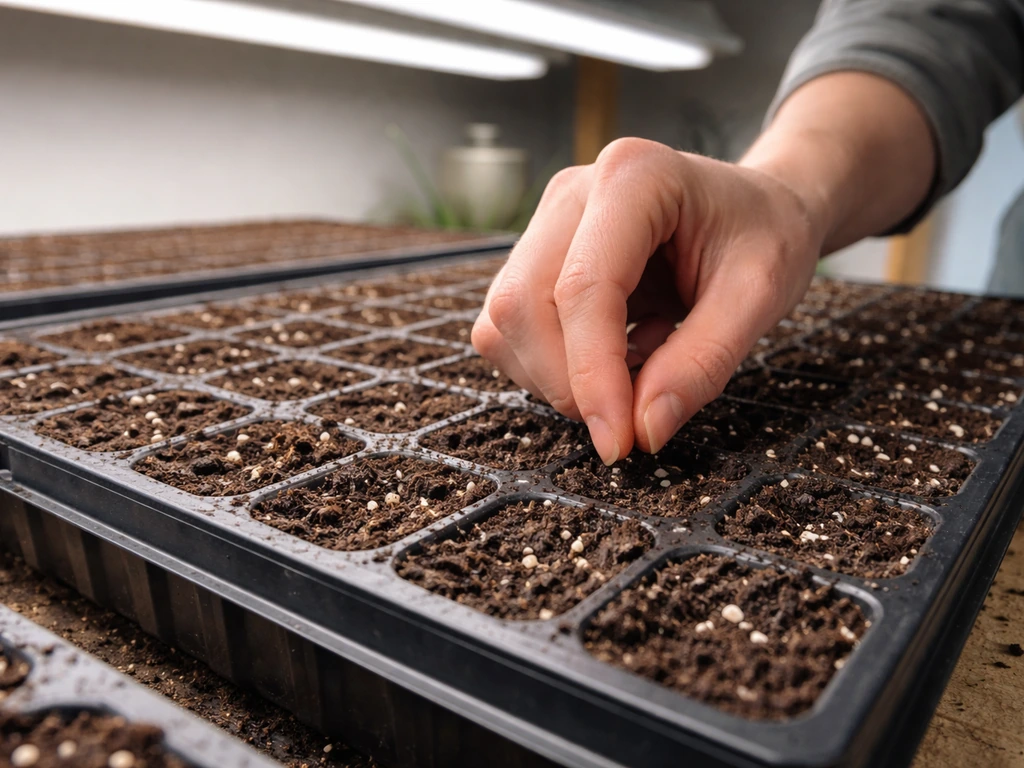
Almost everyone growing verbena from seed should start indoors. Verbena needs a long lead time to flower, and direct sowing outdoors just delays everything. If you direct sow after your last frost, you might not see blooms until late summer at best, and you lose those prime late-spring weeks when the weather is perfect.
The standard advice is to start indoors 8 to 10 weeks before your last frost date for garden verbena hybrids, and 10 to 12 weeks for Verbena bonariensis, which is a slower developer. So if your last frost is May 15, you'd be sowing hybrid verbena around early to mid-March and bonariensis as early as late February. These windows are not arbitrary: they're built around the 6 to 8 weeks it takes to produce a transplant-ready seedling plus a week or two buffer for hardening off.
Direct sowing outdoors is an option only if you live in a warm climate (zones 9 and above) where winter temperatures are mild and the growing season is long. In those areas, you can sow directly in early spring or even late fall for a spring crop. Everywhere else, treat verbena as a strictly indoor-start plant.
Hardening off before transplanting
Verbena seedlings are genuinely cold sensitive. Even seedlings that look sturdy indoors can sulk or set back when moved outside too fast. Give them 7 to 10 days of gradual outdoor exposure, starting with an hour or two of morning shade and working up to full sun. Wait until nighttime temperatures are reliably above 50°F before leaving them out overnight. Rushing this step can cost you two or three weeks of growth.
Germination conditions that actually move the needle
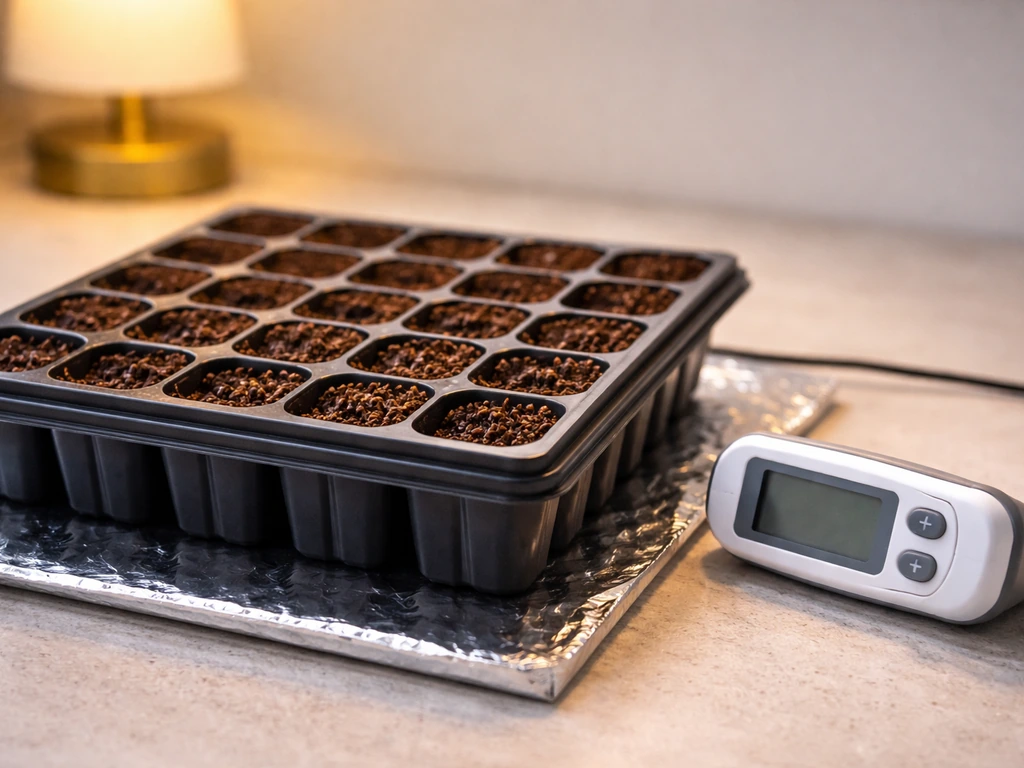
Getting verbena to germinate reliably comes down to temperature, moisture consistency, and understanding the light question, which is genuinely confusing because different sources say different things.
Temperature is the single biggest factor
The target soil temperature for verbena germination is 65 to 75°F, with most commercial growers aiming for 68 to 72°F as the sweet spot. At the low end of that range or below it, germination slows dramatically or stalls completely. At temperatures above 80°F, germination rates also drop. A heat mat under your seed tray is probably the most useful tool you can buy for verbena: it reliably brings soil temps into range without you guessing at room temperature. Aim for consistent warmth, not fluctuating cold nights and warm days.
The light question for germination
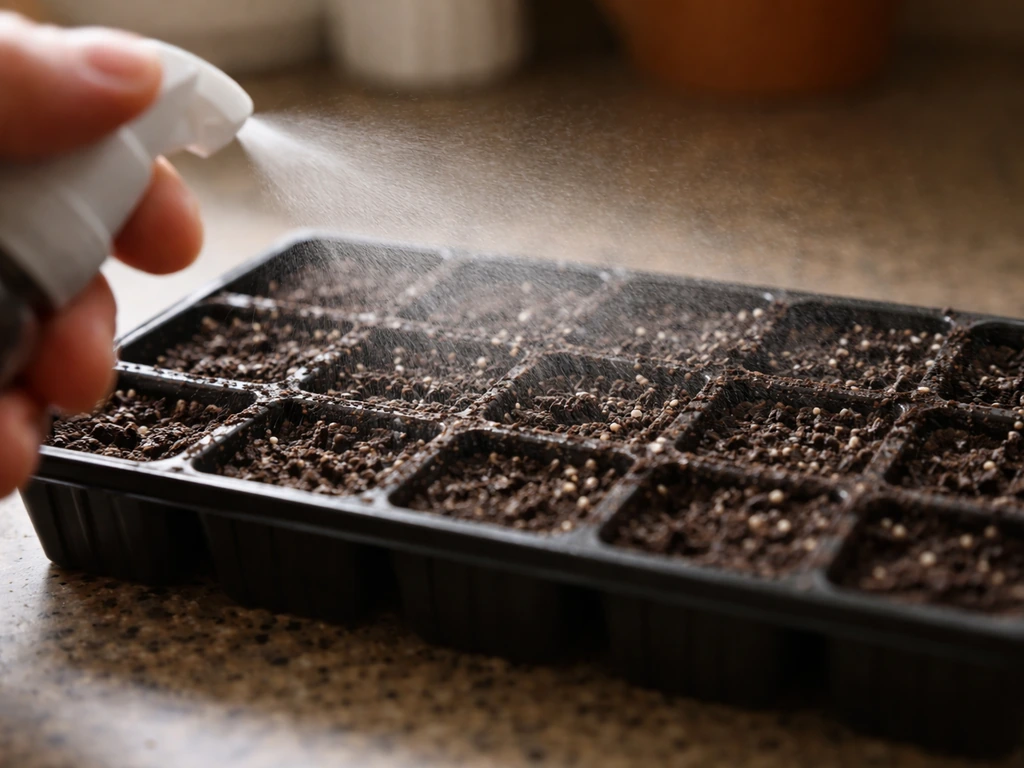
Here is where it gets a little complicated. Some growers say verbena needs light to germinate and recommend a very shallow cover of no more than 1/8 inch. Others, including commercial seed producers like PanAmerican Seed and Benary, specify that light is not required for germination and actually recommend covering seeds with a thin layer of growing medium or coarse vermiculite and even blocking light with black paper until sprouts appear. Select Seeds reports a similar approach for tall verbena, recommending keeping seeds covered and blank" rel="noopener noreferrer">excluding light with black paper or cardboard until germination begins. Panamseed’s 2016 spread HR catalog for Verbena bonariensis also specifies germination conditions of 68, 72°F (20, 22°C), says “light not required,” and lists 7, 10 days to germination PanAmerican Seed. In practice, the seeds that germinate most reliably are covered very lightly (just barely, with fine vermiculite or a thin press into moist media) and kept in darkness or dim conditions until the first sprouts emerge, then moved immediately to bright light. A very thin cover also helps maintain moisture around the seed, which matters a lot.
Moisture and media
Verbena seeds are tiny, and they need consistent, even moisture during germination. The medium should feel like a wrung-out sponge: moist but not soggy. Letting it dry out even once during the first week can kill germinating seeds before they break the surface. Covering the tray with a humidity dome keeps moisture stable and reduces how often you need to check it. Once you see sprouts, remove the dome immediately to prevent damping off.
Cold pretreatment: is it worth it?
Some growers recommend chilling verbena seeds in the refrigerator for 7 to 10 days before sowing, a simplified cold stratification step. For native verbena species with tougher dormancy requirements, cold stratification at 35 to 40°F for several weeks is more formal protocol. For standard garden verbena and Verbena bonariensis, the cold pretreatment is optional and not universally agreed upon. That said, if you're getting poor germination with fresh seeds at the right temperature, a week in the fridge before sowing is a low-effort thing to try. It won't hurt, and some gardeners swear it improves their results.
What to expect from seedlings: transplant timing and growth spurts
Once verbena germinates, the seedlings look fragile for longer than you'd like. The first couple of weeks after germination, you'll mostly see just the seed leaves (cotyledons) and barely any growth above the soil. Don't panic. Verbena is developing its root system underground before it puts energy into top growth.
The real growth spurt happens once seedlings develop 4 to 6 true leaves, which is also when flower initiation begins (at least for Verbena bonariensis under long-day conditions). This is typically 5 to 7 weeks after germination. At this point, the plants are ready to transplant into larger containers or outdoors. Transplanting too early, before 4 true leaves, tends to stress the plant and slow the whole schedule. Wait for that 4-leaf stage and you'll see much faster establishment.
Keep seedlings under strong light from the moment they germinate. Under a grow light, keep it 2 to 4 inches above the seedlings and run it for 14 to 16 hours a day. Leggy, stretched seedlings are a sure sign of insufficient light, and they take longer to reach transplant readiness and flowering. Verbena bonariensis is a facultative long-day plant, meaning longer days actively push it toward flowering. Short days or dim indoor light can delay that transition noticeably.
Time to flowering: what to expect by verbena type
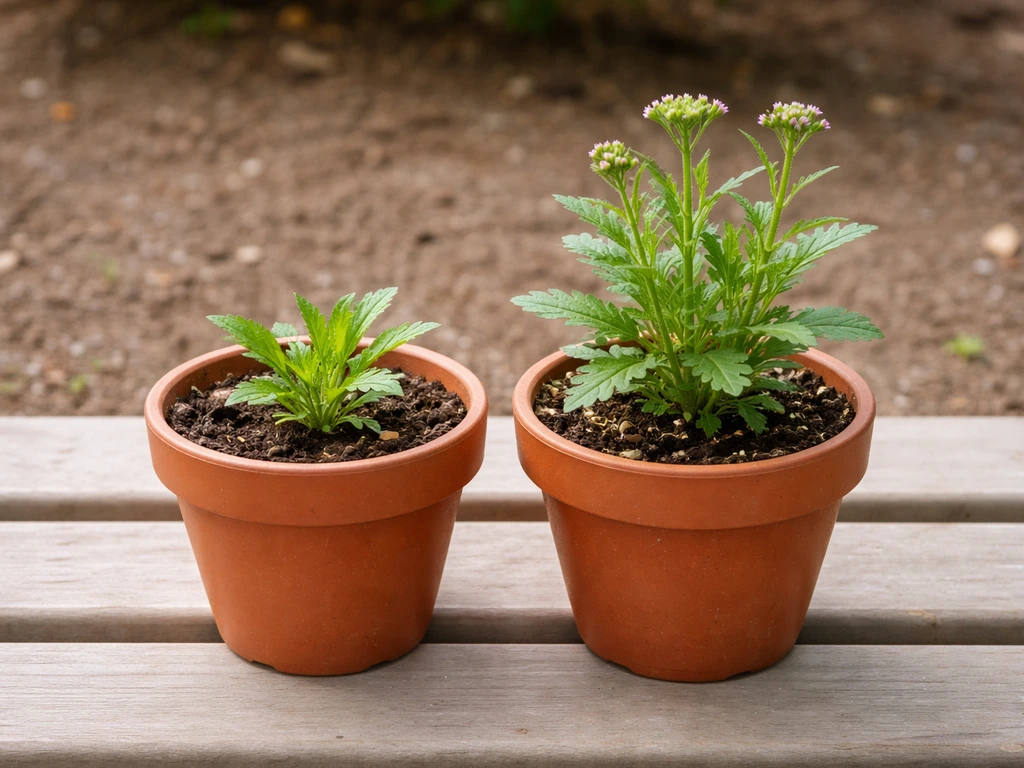
Flowering time from seed varies more than people expect, and it depends a lot on which type of verbena you're growing and whether your seedlings got good light from the start.
Garden verbena (Verbena × hybrida)
Hybrid garden verbenas, including popular series like Obsession and similar cultivars, are bred for speed. Expect first flowers 12 to 14 weeks from sowing under good indoor light conditions and warm temperatures. These are the plants most people are growing for patio containers and summer color, and they're generally the faster germinators in the verbena world: 4 to 7 days is common at 68 to 76°F. If you started your seeds in early to mid-March, you should be seeing color by late May or early June in most temperate climates.
Tall verbena (Verbena bonariensis)
Verbena bonariensis is a later bloomer. Most growers see first flowers 14 to 16 weeks from sowing, or roughly 90 to 100 days. If you're wondering how long to grow vinca from seed, the timeline is different from verbena and depends heavily on temperature and starting indoors. If you’re growing wisteria from seed instead, the timeline is much longer, so it helps to plan ahead before you start first flowers 14 to 16 weeks from sowing. It's a mid-summer to fall performer rather than a late-spring bloomer, even with an early indoor start. Commercial plug growers put it at 6 to 7 weeks to transplant-ready plugs, then another 16 to 18 weeks from transplant to finished plant, though that's a commercial standard for full container fill. In a home garden, you'll see flowers well before the plant is fully established. If you started seeds in late February, expect blooms to begin in June or July.
Perennial verbena types
Some verbena species, including Verbena canadensis and Verbena rigida, are true perennials or short-lived perennials in milder climates. These typically take longer to flower from seed in their first year and may require a full season to establish before delivering a strong bloom display. Native species may also require formal cold stratification before seeds will germinate reliably, which adds several more weeks to the front end of the timeline.
Why your verbena isn't germinating (and how to fix it)
Most verbena germination failures come down to a handful of fixable problems. If you're past day 21 and seeing nothing, work through this list before giving up on the seeds.
- Soil too cold: This is the number one cause. If your growing space drops below 60°F at night, germination can stall completely. Check actual soil temperature with a thermometer, not just room temperature. Room air can be 65°F while a seed tray sitting on a cold surface reads 55°F.
- Drying out between waterings: Verbena seeds that dry out during germination rarely recover. The tiny seedling can desiccate before it ever emerges. A humidity dome or plastic wrap over the tray eliminates this problem.
- Sown too deep: More than 1/8 inch of cover can prevent germination entirely for some verbena lines, especially those that need light exposure to trigger germination. Stick to a light press or barely-there vermiculite cover.
- Overwatering and crusting: Saturated media can cause the surface to crust, blocking seedling emergence. It also creates conditions for fungal problems. Medium moisture, not wet, is the target.
- Old seeds: Verbena seed viability is notoriously short. Seeds older than 1 to 2 years often have significantly reduced germination rates, and even seeds that do sprout from old stock may produce weak seedlings. If your seeds are from a packet more than a year old, buy fresh. It's almost always the cheapest fix.
- Wrong light conditions during germination: If you followed the 'light required' advice and placed uncovered seeds under strong light but forgot moisture management, the surface dries too fast. Use a thin cover of vermiculite and keep it moist instead of relying on light to do the work.
If you're seeing germination but seedlings are collapsing at the soil line, that's damping off, a fungal problem caused by too much moisture combined with poor airflow. Remove the humidity dome immediately once sprouts appear, water from the bottom rather than overhead, and improve air circulation around your seed tray. There's no saving damped-off seedlings, but you can prevent it from spreading to the rest of the tray by moving quickly.
How to speed up the schedule and plan ahead
If you want verbena blooming as early as possible, there are a few practical levers you can pull. None of these are magic, but stacking them together can shave two to three weeks off your total timeline.
- Start with fresh seeds from the current season. This single step makes more difference than anything else. Fresh, high-viability seeds germinate faster, more uniformly, and produce stronger seedlings from the start.
- Use a heat mat to hold soil at 70 to 72°F consistently. You'll hit the faster end of the germination window (4 to 7 days rather than 14 to 21) almost every time.
- Put seedlings under a grow light immediately after sprouts emerge. Verbena needs strong light from day one. Fourteen to sixteen hours a day under a full-spectrum LED grow light keeps seedlings compact, prevents stretching, and pushes flower initiation faster, especially for Verbena bonariensis.
- Don't sow too early. This sounds counterintuitive, but starting 12 weeks before your last frost gives you a larger window than 16 weeks does. Very large transplants that have been waiting too long indoors can actually become root-bound and stall after transplanting.
- Time your transplant precisely. Move seedlings outdoors when they have 4 to 6 true leaves and nighttime temps are above 50°F. A well-timed transplant into warm soil will establish and start flowering faster than one done too early into cold ground.
- Pinch seedlings once before transplanting. Removing the growing tip when seedlings have 4 to 6 leaves encourages branching, which leads to more flower stems and a bushier, earlier-blooming plant overall.
One thing worth knowing: verbena is not a fast-gratification plant compared to something like violas, which can flower in as little as 8 to 10 weeks from seed. If you're used to quick-flowering annuals, verbena's 14 to 16-week timeline requires some patience and a firm start date. The payoff is a long flowering season that runs well into fall, especially for Verbena bonariensis, which keeps going until frost. Commit to the early start date and the conditions listed above, and the schedule takes care of itself.
FAQ
Can I shorten how long to grow verbena from seed by transplanting earlier?
Yes, but it depends on your goal. If you start indoors and then transplant outdoors, you still need the plant to reach the 4 to 6 true leaf stage before it can “catch up.” Skipping ahead by transplanting too early usually adds delay rather than saving time because stressed seedlings grow more slowly and recover later.
My verbena seeds are past day 21 with no sprouts, what should I check first?
If germination has not started by about day 21, first recheck temperature, moisture, and whether seeds were covered too deeply. Most failures in that window are from cold soil, drying out once during the first week, or burying seeds deeper than about 1/8 inch (or pressing them too far down). Also verify you are using fresh or properly stored seed, since older seed can be slower or nonviable.
What actually speeds up verbena from seed, feeding or light and temperature?
Faster is usually about better conditions, not more fertilizer. Prioritize stable warmth (about 68 to 72°F soil range), consistent moisture, and strong light. Once seedlings have true leaves, a light, balanced feed helps, but heavy feeding during the fragile early stage can stress them and promote weak, leggy growth.
How deep should I plant verbena seeds to hit the shortest timeline?
Sowing depth is one of the biggest controllable variables. Even if sources disagree about light, your most reliable home-garden approach is a very light cover (fine vermiculite or a thin press into moist medium) and keeping the tray in dim or dark conditions until sprouts emerge, then moving immediately to bright light.
Will putting my seed tray somewhere warmer always make verbena germinate faster?
Extra heat can backfire if it goes too high. Aim to keep germination-zone temperatures roughly in the high-60s to low-70s. If your room is hot and your seed tray runs above about 80°F, you may see slower or reduced germination even if everything else is perfect.
Should I wait until 4 true leaves before potting up, or can I move them sooner?
For most cases, yes. Verbena seedlings are slow and delicate above ground until they build roots, so transplanting into containers is generally safer than trying to restart outdoors after a failed indoor start. If you must pot up, handle by the leaves carefully, keep the root ball intact, and move to bright light quickly to prevent stretching.
If seedlings start collapsing at the soil line, can I save them?
When you see damping off, there is not a good rescue for collapsed seedlings. Remove the dome immediately once sprouts appear, switch to bottom watering, and increase airflow. Act quickly because the problem can spread through the tray when moisture and humidity stay high.
Do I need a humidity dome to get good germination timing for verbena?
You can, but choose the method that prevents drying cycles. If you use a dome, monitor closely and remove it as soon as you see sprouts. If you do not use a dome, you must check moisture daily and water from the bottom when the medium feels like a wrung-out sponge, not dry.
How do I harden off verbena seedlings without delaying first flowers?
To maximize early flowering, use hardening off as a schedule, not a one-time move. Start with 1 to 2 hours outdoors in morning shade, then gradually increase over about a week. Leave seedlings out overnight only when night temperatures are consistently above about 50°F, otherwise setbacks can add weeks.
Should I refrigerate verbena seeds before sowing to reach the quickest timeline?
Cold pretreatment is optional for most standard garden verbena and Verbena bonariensis, so the biggest decision aid is seed performance. If your seeds are fresh and germinating well at the right temperature, you can skip the fridge. If germination is poor despite correct warmth and moisture, a 7 to 10 day chill before sowing is a low-effort experiment.
Next Article
How Long to Grow Vinca From Seed: Full Timeline
Exact vinca seed timeline: germination, transplant size, outdoor readiness, and when flowers start, plus fixes for slow