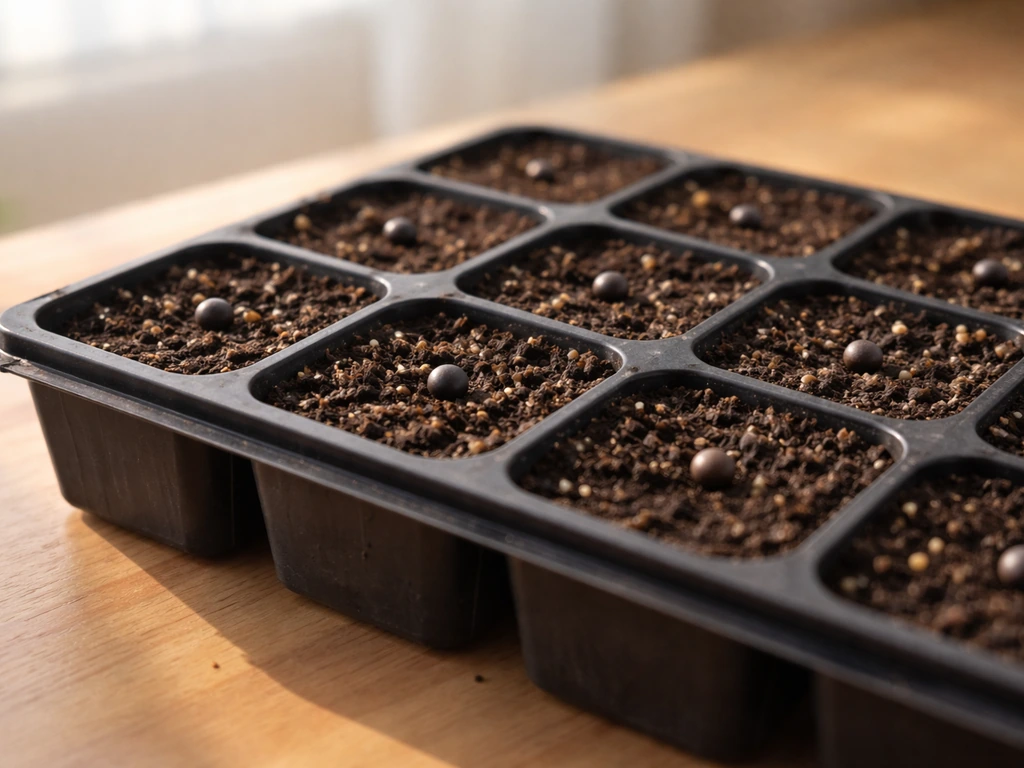
A mango seed typically takes 2 to 4 weeks to sprout under warm home conditions. Centipede seeds take a similarly warm, steady approach, but the exact timing depends on freshness and conditions centipede seed take to grow. That is the honest, direct answer. If you have good warmth, a fresh seed, and decent moisture, you can expect to see the first signs of germination somewhere between 14 and 28 days. Some seeds push through as early as 7 to 10 days when conditions are ideal. Others take the full four weeks or a bit beyond. The wider you drift from optimal temperature (roughly 25 to 30 °C / 77 to 86 °F), the slower and less reliable things get.
How Long Does a Mango Seed Take to Grow From Seed?
Marcus Henley
19 Apr 2026
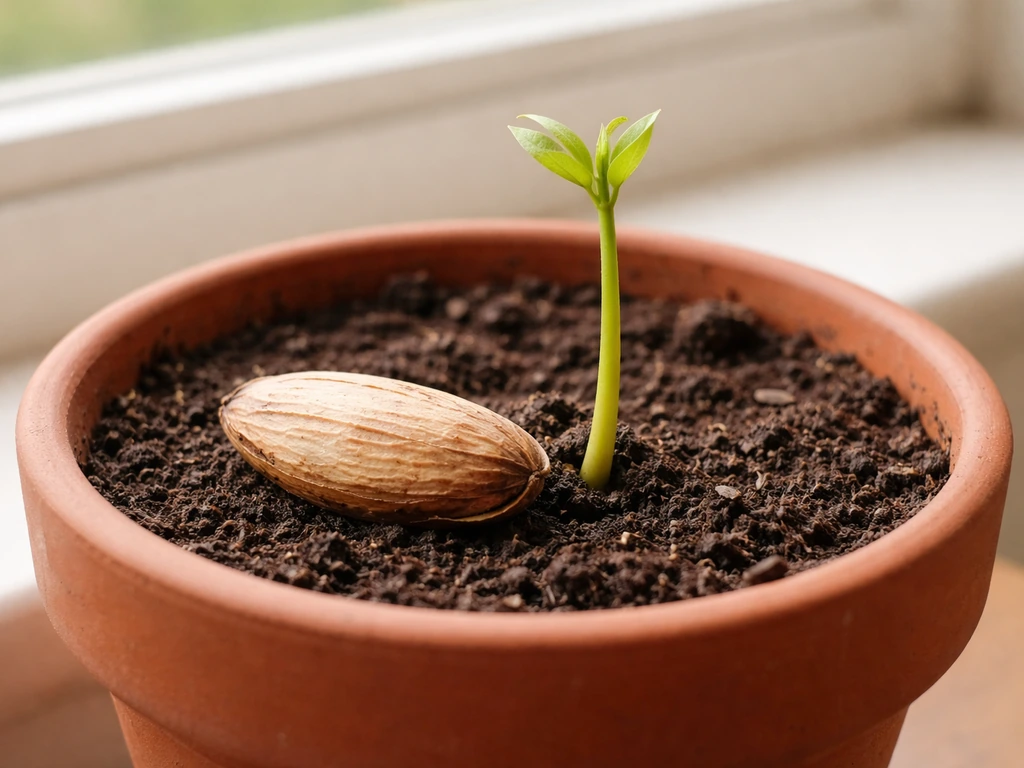
Typical timeline from mango seed to sprout
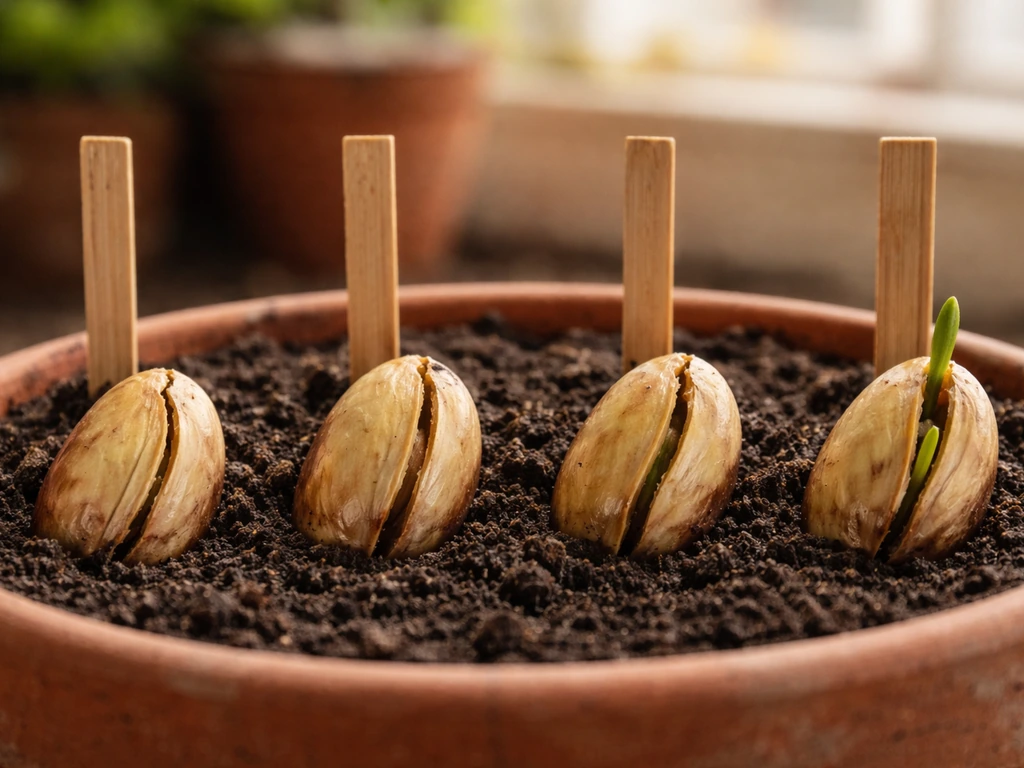
The germination window sits between about 7 and 28 days for fresh mango seeds in warm conditions. One education-based resource puts it at 7 to 14 days for seeds soaked in open water at room temperature, while a broader horticultural standard puts the normal range at 2 to 4 weeks. Both are right depending on your conditions. The reason for that spread is mostly temperature and seed freshness, which I will cover in detail below.
Here is a simple way to picture the early timeline. Days 1 through 14 are the waiting phase where nothing visible happens above soil. By days 14 to 21 a small shoot tip or radicle should appear if all is well. By days 21 to 30 you typically see a recognizable seedling pushing upward. One propagation guide notes that at around 25 to 30 days after sowing, seedlings commonly have two to three pairs of green leaves and are ready for their first transplant. At that point you have a real seedling, not just a sprout.
One thing worth knowing up front: mango seeds are recalcitrant. That means they lose viability fast. Research indicates a mango seed can lose all germination ability within about 7 days of open storage at around 30 °C. If you got your seed from a mango sitting on the counter for a week and then let it dry out further before planting, your germination window may already be closing. Fresh is everything with mango.
When mango seedlings become a tree (growth stages)
After sprouting, a mango seedling goes through several fairly predictable phases before it looks anything like a tree. Here is a realistic stage-by-stage breakdown.
| Stage | Typical timeframe | What you see |
|---|---|---|
| Germination / sprouting | 7 to 28 days from planting | Radicle emerges, shoot tip breaks soil |
| Cotyledon and first leaves | Weeks 3 to 5 | Seed leaves open, first true leaves begin to unfurl |
| Established seedling | 6 to 8 weeks | 2 to 3 pairs of true leaves, strong single stem |
| Young plant / transplant-ready | 2 to 3 months | Root system filling a small container, active top growth |
| Juvenile tree (vegetative) | 1 to 3 years | Rapid flushing of new growth, trunk forming, no flowers |
| Mature tree capable of fruiting | 3 to 6 years from seed (seedling-grown) | Regular flush cycles, first flower panicles possible |
The first true leaves typically appear around weeks 4 to 5, following the initial cotyledon flush. Mango growth happens in bursts (called flushes) where the plant puts out a wave of new leaves, then pauses. This is totally normal and does not mean growth has stalled. In nursery practice, seedlings are often grown for about 120 days before field planting, giving the root system time to develop properly before facing outdoor conditions.
The juvenile period is the long phase between having a healthy seedling and having a tree that can actually flower. Research on floral initiation in mango confirms that young plants simply lack the physiological maturity to flower, even when they look lush and established. For some cultivars the juvenile period is around 3 years. In general, seedling-grown mango trees bloom and bear fruit roughly 3 to 6 years after field planting, sometimes longer. That timeline is important and I come back to it at the end.
What affects how long it takes
Temperature
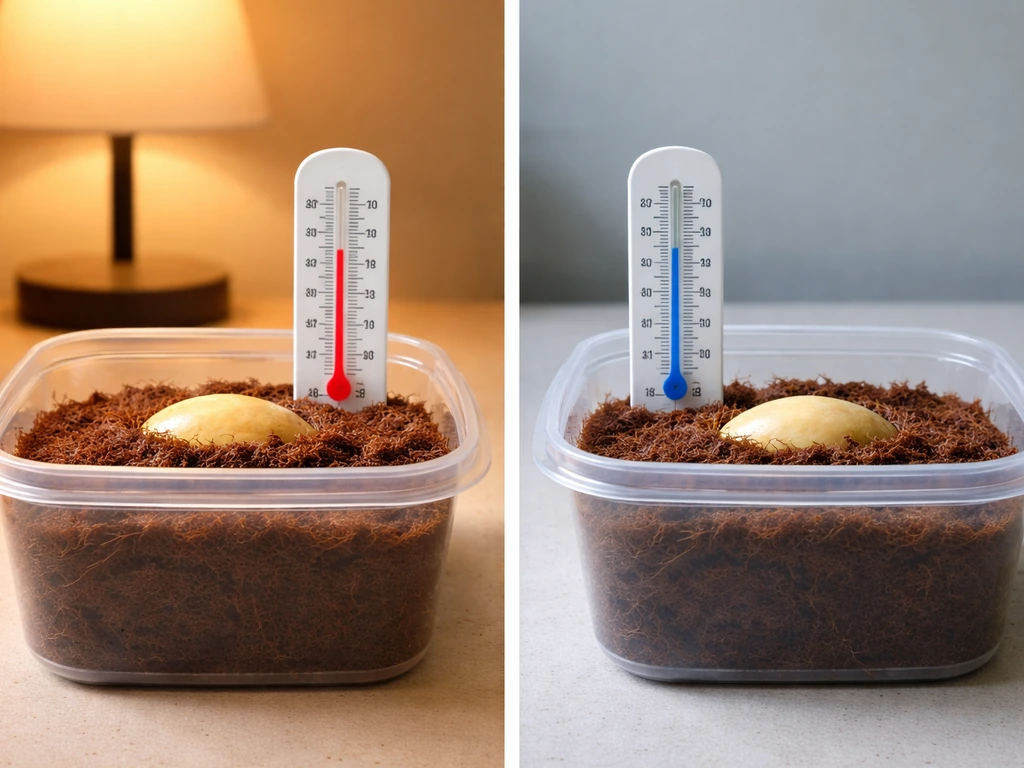
Temperature is the single biggest variable in how fast a mango seed germinates. Mango seeds can technically germinate anywhere from about 5 °C to 40 °C, but germination is fastest near the upper end of that range. The sweet spot for both germination speed and early seedling growth is close to 30 °C (86 °F). If you are starting seeds indoors in spring with soil temps around 20 °C (68 °F) or lower, expect germination to drag toward the four-week mark or beyond. A heat mat that keeps the root zone near 29 to 30 °C makes a real difference. University extension guidance specifically recommends bottom heat for mango seed germination.
Seed freshness
As mentioned above, mango seeds are recalcitrant. They are not like tomato or herb seeds that you can store for years in a packet. Plant the seed as soon as possible after eating the mango, ideally the same day or within a few days. The longer it sits, especially in a warm dry environment, the lower your chances of germination.
Seed coat and preparation
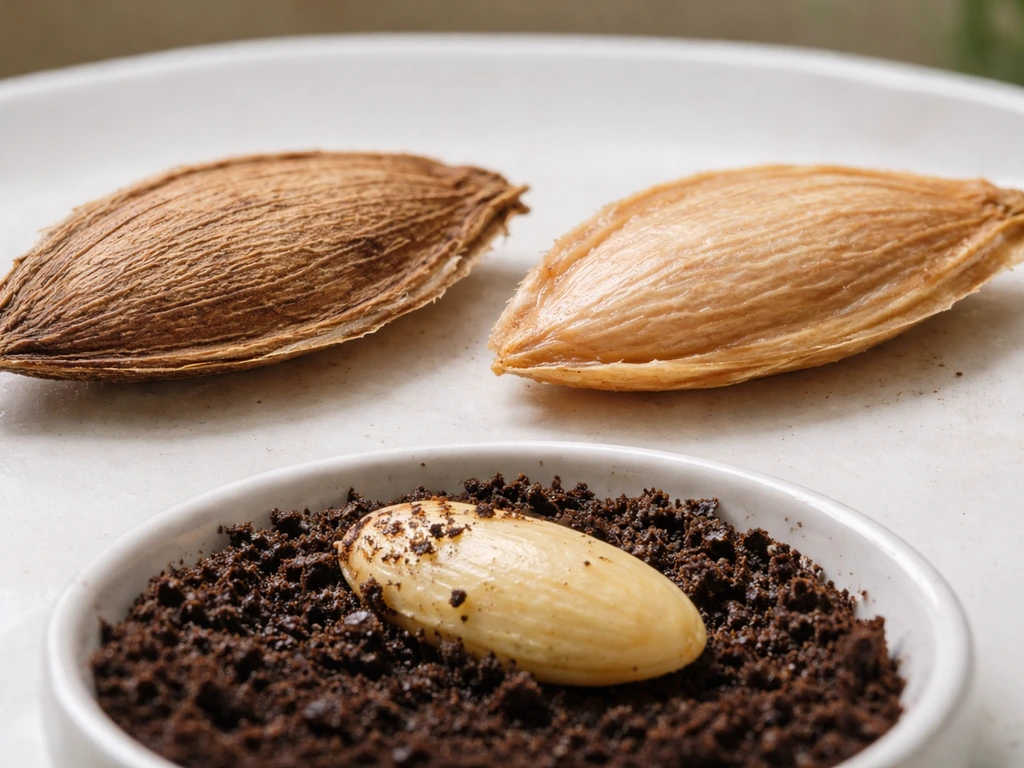
The hard woody endocarp (the outer husk of the mango pit) can slow water uptake and slow germination. Soaking the cleaned seed in clean water for 24 to 48 hours helps soften the coat and speeds things up. Research on seed coat removal shows that removing or cracking the outer coat can push germination rates up significantly, with one study recording germination as high as around 85 percent for treated cultivars compared to much lower rates for untreated seeds. You do not need to fully remove the coat at home, but soaking and inspecting it for damage is worth doing before you plant.
Soil, container, and planting depth
Planting depth matters more than most people expect. Research comparing germination at different depths found that around 7.5 cm was optimal in one study. A common nursery standard is a 2 cm sowing depth, which works well for shallow containers or seed trays. At home, a depth of about 2 to 5 cm in a well-draining mix is a reasonable target. Containers need to be deep enough to accommodate the full root depth from early on. A shallow pot restricts roots and slows everything down.
Light and watering
Pre-germination, light matters less than heat and moisture. Once the seedling is up, it needs bright indirect light and consistent watering without waterlogging. A nursery study using twice-weekly irrigation over 120 days produced strong seedlings, which gives a good benchmark: you want the soil moist but not soggy. As the seedling matures and moves to brighter outdoor conditions, full sun becomes important for healthy flushing.
Variety
Mango cultivars vary in how quickly they germinate, how vigorously they grow as seedlings, and critically, how long their juvenile phase lasts before they can flower. Some cultivars have a juvenile period as short as 3 years; others drag it out longer. Polyembryonic varieties (common in Southeast Asian mangoes) tend to produce seedlings that are genetically identical to the parent and often fruit sooner than monoembryonic varieties. If you bought a grocery store mango and saved the seed, you usually do not know which type you have, so fruiting timeline uncertainty is higher.
How to speed up germination and early growth
These are the steps I would take if I wanted the fastest, most reliable result from a fresh mango seed.
- Plant immediately after eating the mango. Do not let the seed dry out. Rinse off the flesh, let it air dry for just a few hours, then plant or soak.
- Soak in clean water for 24 to 48 hours at warm room temperature (around 29 °C / 85 °F if possible). This softens the husk and jumpstarts water uptake.
- Optionally, carefully crack or partially peel the outer husk to expose the inner seed without damaging it. Research supports that this significantly improves germination rates.
- Inspect the seed for signs of mango weevil damage or rot before planting. Damaged seeds rarely produce a healthy seedling.
- Plant in a well-draining mix at a depth of about 2 to 5 cm with the curved side up and the flat side down.
- Use a deep enough container (at least 20 to 30 cm deep) to give roots room from the start.
- Place the pot in the warmest spot available, ideally with a heat mat set to around 29 to 30 °C under the pot.
- Keep the soil consistently moist but not waterlogged. Cover the pot loosely with plastic wrap or a humidity dome until sprouts appear.
- Once the seedling is up and has its first true leaves, move it to a bright, warm location and remove the humidity cover.
If you follow those steps with a truly fresh seed and keep things warm, germination within 2 weeks is realistic. Cutting corners on warmth or seed freshness is usually why people end up waiting four weeks or more, or seeing nothing at all.
Common delays or failures and how to troubleshoot
If your mango seed has not sprouted by the four-week mark, something in the setup is working against you. Here are the most common culprits and what to do about them.
- Seed was too old or dried out before planting: This is the most common reason mango seeds simply never germinate. Mango seeds can lose viability within a week of sitting at room temperature in open air. If you have any doubt about freshness, try a new seed from a fresh mango rather than waiting longer.
- Soil is too cold: Below about 20 °C, germination slows dramatically. Check your soil temperature, not just the air temperature of the room. Add a heat mat if needed.
- Overwatering or poor drainage: A waterlogged seed rots rather than germinates. If you squeeze the soil and water drips out freely, it is too wet. Let it dry slightly between waterings.
- Planted too shallow: Seeds planted at 1 cm or less may dry out too quickly. Try replanting at 3 to 5 cm depth.
- Hard, intact husk blocking germination: If you planted the seed with the full intact endocarp and did not soak it, water uptake may be severely restricted. You can carefully remove the seed and gently crack the husk before replanting.
- Pest or disease damage inside the seed: Mango weevil damage can look fine from the outside but the inside of the seed is hollowed out. If you suspect this, crack open the husk gently and check before investing more time.
- Wrong seed type: Some commercial mangoes are treated or irradiated post-harvest, which can reduce seed viability. Seeds from locally grown or farmers-market mangoes tend to germinate more reliably than seeds from heavily processed grocery store fruit.
If the seedling sprouts but then stalls for several weeks with no new leaf growth, check two things: temperature and root restriction. A seedling that has filled its small starter pot and hit the bottom stops pushing foliage until it gets more root space. Move it up to a larger, deeper container and watch for a flush of new growth within a couple of weeks.
Realistic expectations: growing a mango plant vs actually getting fruit
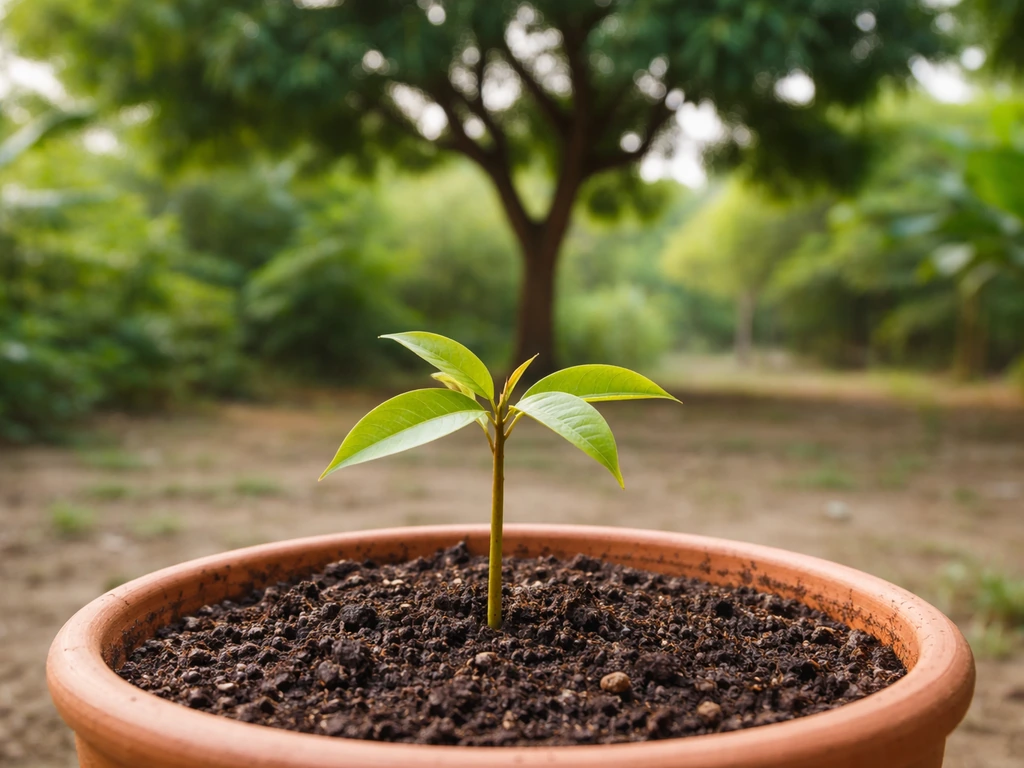
This is the part most people do not hear clearly enough, so I want to be direct. Getting a mango seed to sprout and grow into a leafy plant is the easy part. If you are also comparing growth speeds across plants, the faster timeline for how fast do mustard seeds grow can help set expectations for your overall garden schedule. Sesame has a much different growth timeline than mango, so knowing the right expectations for how long sesame takes to grow can help you plan your garden. <a data-article-id="2C6AEE7C-E7A8-44E4-B142-6C5DF83E5514">how long does it take a mustard seed to grow</a>. If you are also comparing to other plants, you may find how long does peyote take to grow from seed helps you plan a longer timeline how long does it take a mustard seed to grow. <a data-article-id="2C6AEE7C-E7A8-44E4-B142-6C5DF83E5514"><a data-article-id="29DE4161-F3D5-4CD7-8D20-DA302CC79178">Mustard seed growth</a></a> is much faster, and the plant typically reaches its harvestable size within weeks rather than years. Getting fruit from a seed-grown mango is a multi-year commitment.
Mango trees grown from seed have a juvenile phase during which they simply cannot flower, regardless of how healthy they look or how well you care for them. This is not a care problem, it is a biological one. Research on floral initiation confirms that even vigorous, well-fed seedlings show no floral structures for up to 2 years or more, with the full juvenile period typically lasting around 3 years for many cultivars. In orchard practice, the general expectation is that seedling mangoes bloom and bear fruit 3 to 6 years after field planting. In a home garden or container, where growing conditions are often less consistent, the lower end of that range is achievable but not guaranteed.
If you specifically want fruit sooner, the standard advice from propagation specialists is to buy a grafted tree rather than growing from seed. A grafted tree from a named fruiting cultivar typically starts producing within 2 to 4 years because it is already past the juvenile phase. Growing from seed is a rewarding long-term project, and there is something genuinely satisfying about watching a mango seedling develop from a pit you cleaned yourself, but going in with the right expectations makes the journey easier.
It is also worth knowing that seed-grown mango trees do not reliably reproduce the parent fruit. Unless the mango was polyembryonic (where one seed produces multiple shoots, at least some of which are clones of the parent), the seedling may produce fruit that is quite different from what you ate. For growing a beautiful tropical tree for shade or ornamental value, that is fine. For recreating your favorite mango variety, it is not the right method.
If you enjoy tracking seed-to-harvest timelines across different plants, mango sits at the long end of the spectrum compared to something like moringa, which can produce leaves within weeks and even flower in its first year from seed. Fast-growing tropical and subtropical seeds are genuinely fascinating to compare, and mango's slow arc from sprout to fruit is one of the things that makes it feel like such an achievement when it finally happens.
FAQ
What should I do if my mango seed has not sprouted after 4 weeks?
If you do not see any visible radicle or shoot by 28 to 30 days, it usually means the seed has lost viability, conditions are too cool, or the seed coat did not take up water well. Before discarding, remove the seed from the mix and check for softness and internal moisture, then replant only if the kernel still feels viable. If it has dried out, assume it will not germinate.
Will soaking a mango seed make it sprout faster, and how much faster?
Yes, but it changes the timing. Soaked seeds often show signs closer to the shorter end of the range (around 7 to 14 days) because the seed coat has already absorbed water and begins the hydration phase faster. The key is to keep the seed moist but not waterlogged during soaking.
How can I tell the difference between swelling and real germination?
Mango seeds can sprout from an unusual position, so look for the radicle first, not only a top shoot. After the first signs, you should see a small greenish shoot tip rise over the next 1 to 2 weeks. If you only see swelling with no radicle, that is usually hydration without true germination and may indicate temperature is still too low or the seed is aging.
Can I store a mango seed for a week or more before planting?
You can keep the seed from drying out while you wait, but you cannot “save” a recalcitrant mango seed the way you can with typical pantry seeds. If it is already been exposed to warm storage for days, chances drop quickly. Best practice is to plant immediately after cleaning, and if you must hold it, keep it consistently moist and cool, then plant as soon as possible.
Why does my mango sprout stop growing after it comes up?
If your seed sprouts but the growth pauses, root restriction and temperature swings are the most common causes. A cramped or shallow container can stop leaf production until roots expand. Move to a deeper pot, then keep the root zone consistently warm, ideally near the upper end of the recommended temperature range.
How wet should the soil be while a mango seed is germinating?
Too much water is a common mistake. If the medium stays soggy, the seed can rot before it ever pushes a shoot, and later the seedling can suffer root problems. Use a well-draining mix, water enough to keep it moist, and allow excess water to drain, so the seed is not sitting in a wet layer.
What planting depth is best for faster mango germination in a home pot?
Depth affects access to oxygen and warmth. A shallow depth can dry out or overheat, while excessive depth can delay emergence. A practical target for most containers is roughly 2 to 5 cm, and you should ensure the pot is deep enough for the early root system rather than just the seed.
Does using a heat mat really improve mango seed germination speed?
A heat mat helps by warming the root zone more consistently than room air alone. If you have stable warmth, germination typically lands nearer the 2-week mark; if the root zone sits around 20 °C or below, germination often drifts toward the 4-week end. Place the seed tray so the medium reaches the warm sweet spot, not just the air above it.
Will all mango seeds fruit at the same time, or does seed type matter?
Polyembryonic mango seeds can produce genetically identical seedlings to the parent, which often means earlier fruiting relative to monoembryonic types. However, grocery store mango seeds usually do not come with clear cultivar identity, so you should plan for uncertainty and a multi-year wait either way.
Can I speed up fruiting if my mango seed germinates quickly?
Even if you provide excellent care, seed-grown mango trees have a juvenile phase during which flowering does not happen. That means “slow sprouting” and “slow fruiting” are separate issues, and you cannot speed the fruit stage to match grafted trees. If fruit sooner is the goal, start with a grafted tree rather than relying on seedling biology.
Next Article
How Long Does Peyote Take to Grow From Seed? Timelines
Stage-by-stage timelines for growing peyote from seed, from germination to cactus maturity, plus factors and troubleshoo