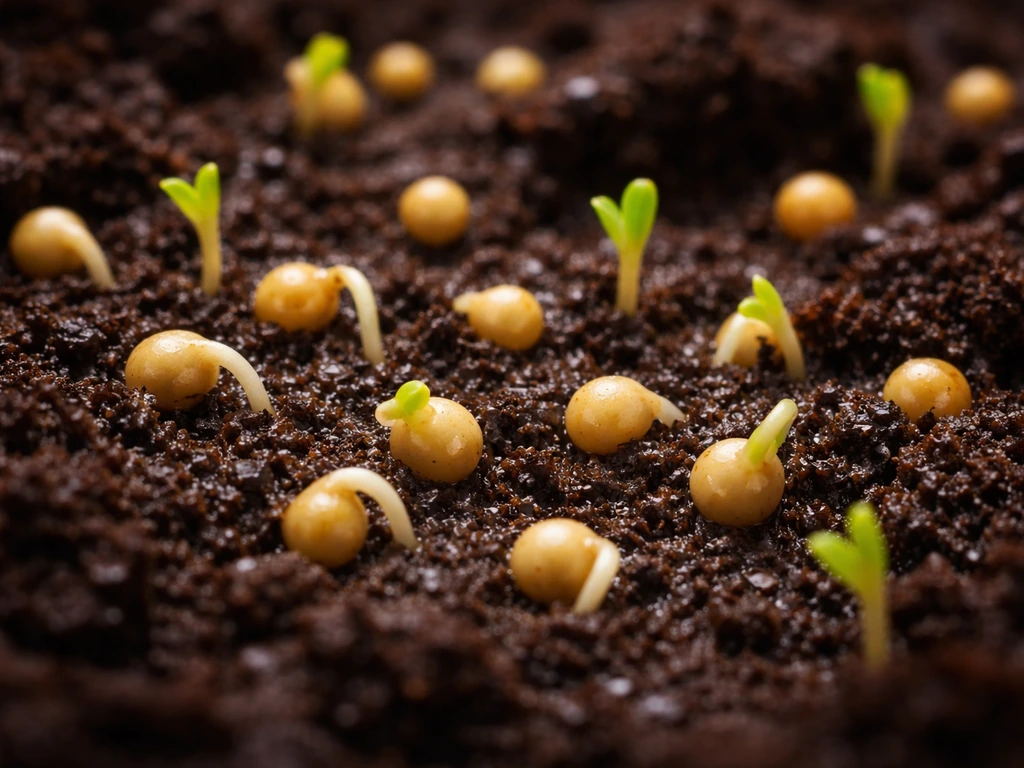
Sesame takes about 90 to 135 days from planting to harvest, depending on your variety and location. Germination happens fast (3 to 7 days in warm soil), flowering kicks in around 38 to 45 days after planting, and dry seed harvest typically lands between 100 and 110 days out, with another 7 to 14 days of dry-down before you actually cut. If your summers are long and warm, you're in the ideal window. If you're working with a shorter season or cooler soils, plan for the longer end of that range. Mango seeds typically take several weeks to germinate and then months to grow into a healthy plant how long does a mango seed take to grow.
How Long Does It Take for Sesame to Grow From Seed
Marcus Henley
3 May 2026
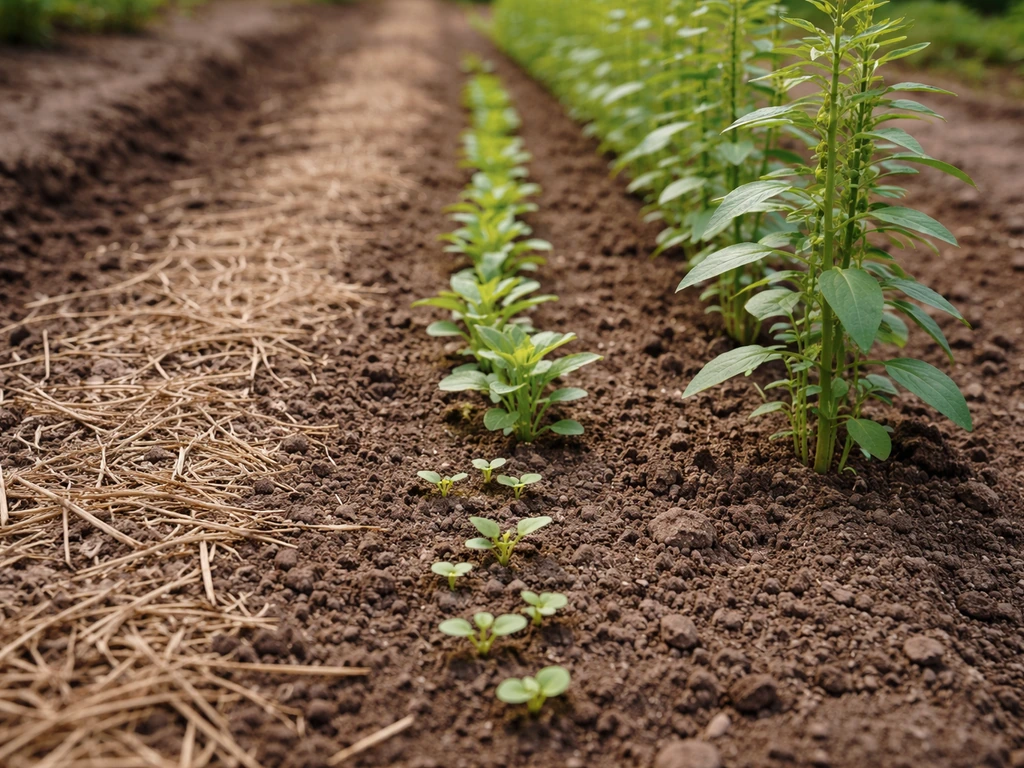
The full sesame growth timeline at a glance
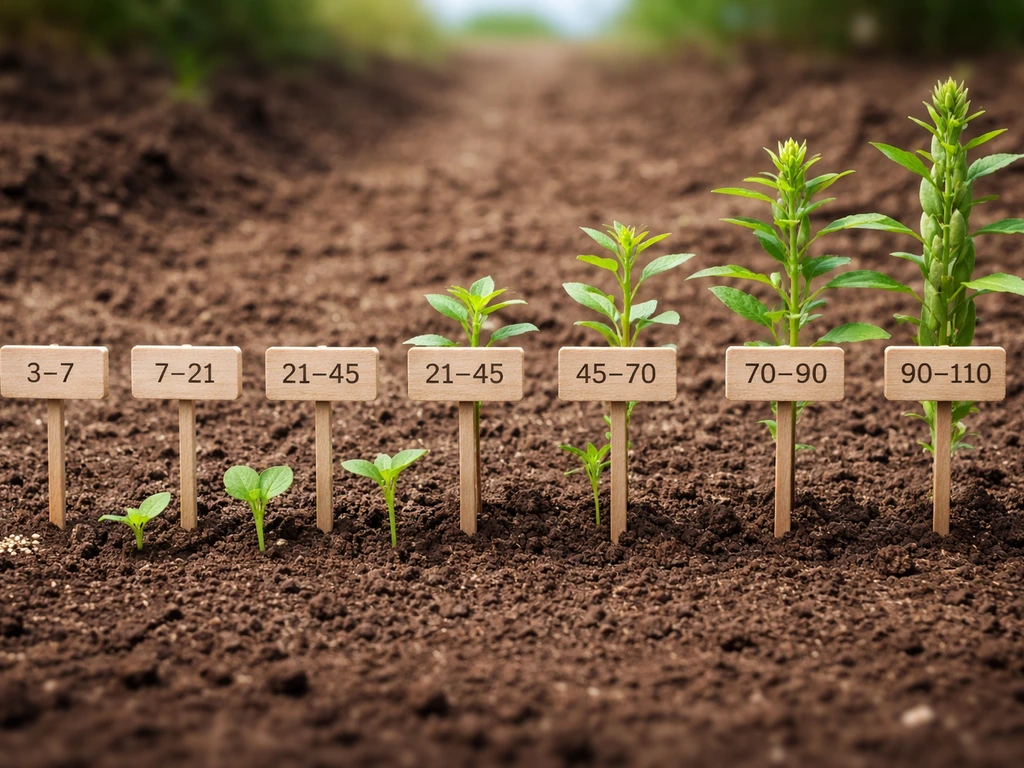
Here's how the sesame calendar stacks up from seed to harvest. These ranges are real-world figures from university extension research, not best-case scenarios.
| Growth Stage | Days After Planting | What to Look For |
|---|---|---|
| Germination / emergence | 3–7 days | Seedlings break soil surface; cotyledons unfold |
| Vegetative / seedling establishment | 7–40 days | Rapid leaf development; plants reach 3–4 inches by ~4–5 weeks |
| First flowers open | 38–45 days | Flowers appear on stems; 2 per stem per day for 35–40 days |
| Full seed maturity (physiological) | 90–110 days (common); up to 125–135 days in cooler regions | Leaves and stems shift from green to yellow to red; capsules fill |
| Dry-down for harvest | Add 7–14 days after physiological maturity | Seeds rattle in dried capsules; stems dry and brittle |
The 90–110 day window is the commercial sweet spot. In warmer southern climates, that's the norm. Growers in places like Missouri or the upper Midwest often see the full 125–135 days. Either way, sesame is a long-season crop, and rushing it or planting too late is one of the most common planning mistakes I see.
Germination: what those first 3 to 7 days actually depend on
Sesame germinates quickly when conditions are right, and painfully slowly when they're not. The single biggest driver is soil temperature. Seeds don't germinate well when soil temps are below 70°F, and growth stays sluggish even after emergence if the soil is cool. The practical benchmark: your soil at the 8-inch depth should average around 68°F for at least 10 consecutive days before you plant. Check that reading at 8 a.m. for the most accurate picture of what your seeds are actually sitting in.
Optimal daytime air temperature for sesame is around 77 to 80°F. Below 68°F, growth slows noticeably. At 50°F, germination and early growth stall almost completely. If your forecast shows a cold snap coming within the first week after planting, you'll likely be waiting much longer than 7 days, and some seeds may rot before they emerge.
Planting depth also matters. The recommended range is 0.5 to 1.5 inches deep, with most growers landing between 0.75 and 1 inch. Deeper planting means slightly longer emergence times and more risk of the seedling running out of energy before it reaches light. In dry soils, you might plant a touch deeper to reach moisture; in cool, wet soils, stay shallow.
Seedling establishment to flowering: the 5-week window that sets your whole season
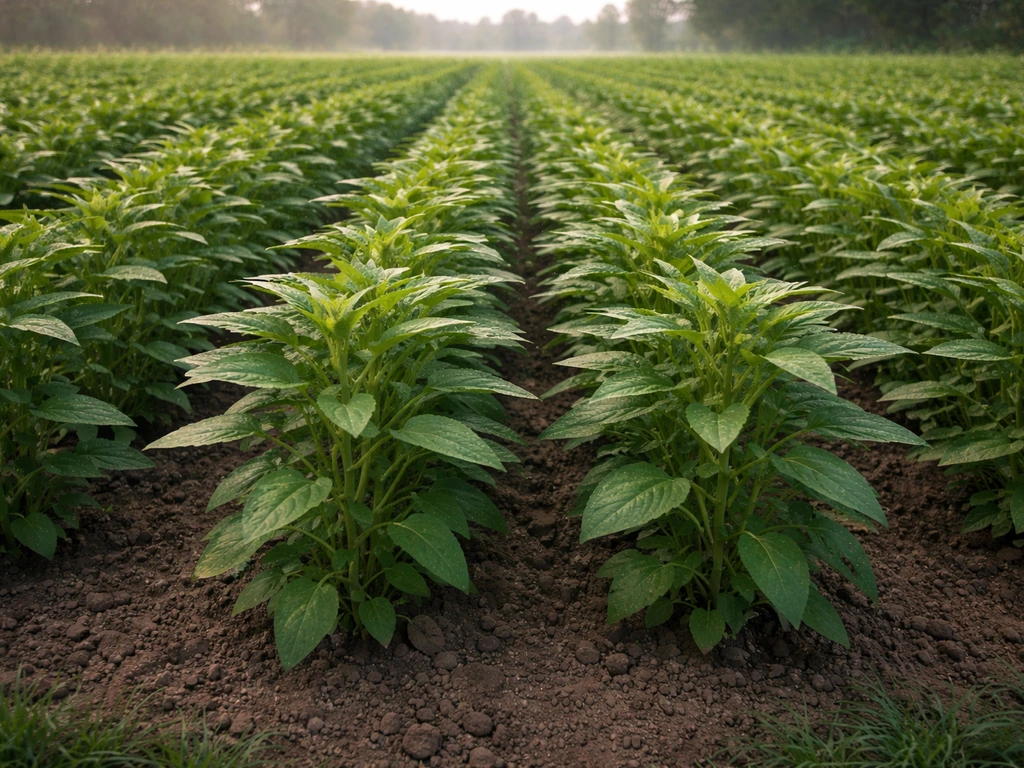
After emergence, sesame enters a vegetative phase that lasts through roughly day 40. This is when the plant builds the structure it needs to support all those capsules. During this window, the job is mostly keeping the plant alive and not stressed. Sesame is surprisingly sensitive at this stage.
The most important thing I can tell you about this phase: sesame is extremely susceptible to waterlogging at any growth stage. One wet week with poor drainage can set back or kill plants that were otherwise doing fine. Make sure your soil drains well before you ever drop a seed. At the same time, you can't let seedlings dry out either. Good soil moisture without saturation is the target, and it requires more attention than most crops during those first few weeks.
By about 4 to 5 weeks after emergence, plants are roughly 3 to 4 inches tall and entering a period of rapid growth. This is a good time to do any needed cultivation for weeds, because sesame won't outcompete weeds easily when it's young. Once flowering begins around day 38 to 45, the plant is in full reproductive mode and nitrogen uptake spikes. If your plants look light green or unthrifty at this point, that's a signal they may be short on nitrogen heading into the most demanding phase of the season.
Sesame is an indeterminate grower, which means it keeps producing leaves, flowers, and capsules simultaneously as long as the weather cooperates. That's part of why harvest timing gets a little nuanced, which we'll get into next.
Time to harvest: green leaves vs dry seed, and why it matters
Harvesting for dry seed
Most people growing sesame are after the seeds, and that means waiting for physiological maturity plus dry-down. Physiological maturity typically lands around 90 to 110 days for most commercial varieties, though the full window across all environments and varieties runs from 75 to 150 days. Once the plant hits maturity, the leaves and stems shift from green to yellow to red. That color change is your visual cue.
After physiological maturity, you still need 7 to 14 days of dry-down before harvest. Seeds should rattle in the dried capsules when you shake the stem. Cutting too early means lower yields and wetter seed that's harder to store. Because sesame is indeterminate, not all capsules mature at the same time, so most growers cut when the majority of lower capsules are dry and mature, accepting some variation in the upper ones.
Harvesting for green leaves
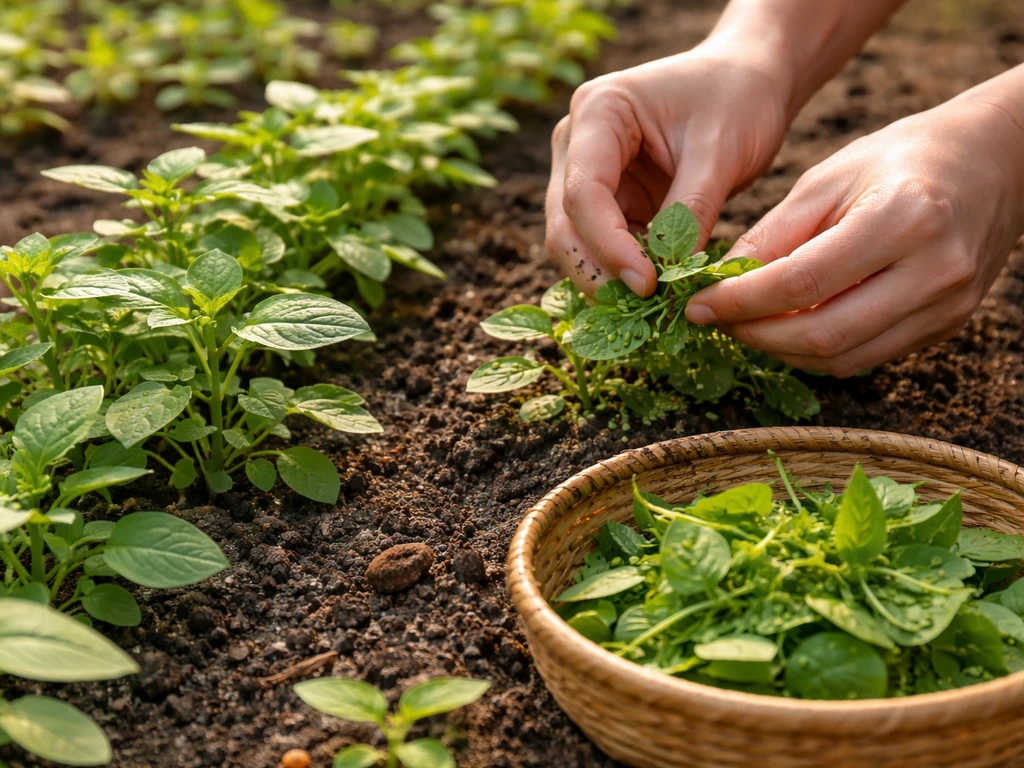
If you're growing sesame for the leaves (used in some cuisines and as a cooked green), your timeline is much shorter. Leaves are typically ready to harvest from the seedling and early vegetative stage, roughly 3 to 6 weeks after emergence. You can take outer leaves while the plant keeps growing, similar to cutting lettuce. This approach doesn't require waiting through the full 90+ day seed cycle, so if leaves are your goal, you'll be harvesting long before your neighbors who want the seeds.
How to calculate your own harvest ETA
The simplest way to estimate your timeline is to start from your planting date and add the stage durations, adjusted for your local temperatures. University Extension systems use region-specific planting calendars and maturity-day concepts to help growers time planting and estimate harvest more reliably University Extension planting calendars and maturity-day concepts. Here's a practical method:
- Confirm your soil is warm enough: check that your 8-inch soil temperature averages at least 68°F for 10 days before planting. If you're in a cool spring, your planting date may need to slide later.
- Add 3 to 7 days for emergence: use 3 days if soil is consistently above 75°F, closer to 7 days if you're right at the 68–70°F threshold.
- Add 38 to 45 days to your planting date to estimate first flowering. If daily highs are consistently above 80°F, lean toward the shorter end.
- Add 90 to 110 days from planting for physiological maturity (use 125–135 days if you're in a northern region with shorter warm seasons or average highs below 77°F).
- Add another 7 to 14 days for dry-down before harvest.
- Check your first frost date: count backward from that date. If your planting-to-harvest window doesn't fit before frost, you need to plant earlier or choose a shorter-season variety.
For a more precise estimate, you can use growing degree days (GDD). Sesame accumulates heat units above a base temperature (around 50°F) to reach each stage. Calculate your daily GDD as: ((daily high + daily low) / 2) minus 50. Add those up each day from planting. This approach accounts for the actual temperatures your crop experiences rather than just calendar days, which is especially useful in variable climates. The PLOS Climate photothermal modeling research confirms this GDD-based method works well for predicting sesame flowering and maturity across different environments.
As a quick example: if you plant on May 15 in a warm southern climate with consistent highs around 90°F and lows around 65°F, you're accumulating roughly 27.5 GDD per day. Your first flowers would be expected around late June, and dry seed harvest would likely fall in late August to early September, well before fall frost. In contrast, planting that same date in Missouri with cooler average temps buys you fewer GDD per day and pushes harvest into late September or October, where frost risk becomes a real concern.
Troubleshooting slow growth, failed germination, and thin stands
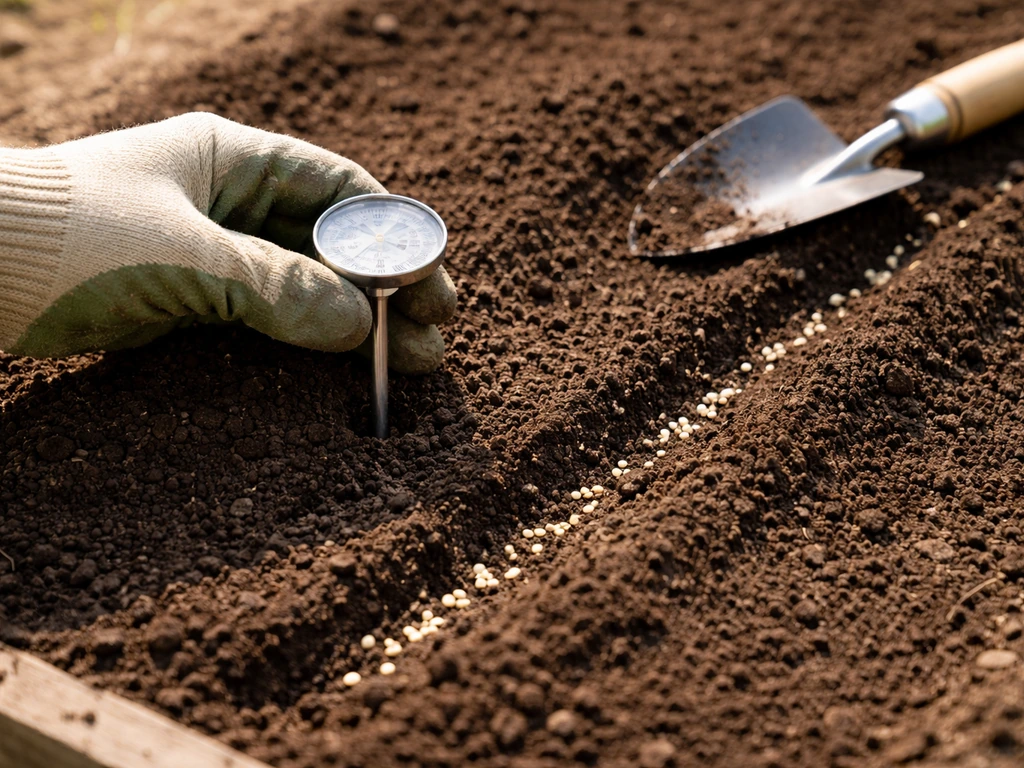
Sesame is less forgiving than a lot of crops during germination and early establishment. When things go wrong, it's almost always one of these causes:
- Soil too cold: this is the number one cause of slow or failed germination. If your soil is below 70°F, seeds sit and wait, and some will rot. Wait for consistent warmth before planting, even if it feels late in the season.
- Soil crust blocking emergence: if you watered or got rain after planting, a surface crust can form and physically trap seedlings underground. Sesame seedlings are weak and cannot break through even a thin crust. Gently break or scratch the crust surface if emergence is stalled and you know the soil underneath is moist and warm.
- Damping-off: if seeds rotted before emerging, or young seedlings are collapsing at the soil line, damping-off fungi are likely involved. This is most common in wet or infected soils. Avoid overwatering, ensure good drainage, and don't plant too deep in wet conditions.
- Waterlogging: sesame is extremely sensitive to saturated soil at any stage. Standing water for even a short period can kill plants or severely stunt them. If your field or bed has drainage issues, this needs to be fixed before you plant.
- Planting too deep: going deeper than 1.5 inches significantly reduces emergence rates and delays timing. In heavy or wet soils, keep it to 0.5 to 1 inch.
- Moisture stress during establishment: seedlings need consistent moisture but not saturation. Letting the seed zone dry out after planting is a reliable way to lose your stand. Check soil moisture at seed depth regularly for the first two weeks.
If your stand looks thin after 10 to 14 days and temperatures have been warm, something went wrong at or just below the surface. Dig a few seeds from the row and check: are they rotted (damping-off or cold/wet), or are they intact but not sprouted yet (still too cold)? That tells you whether to wait or replant.
Tips to speed things up and get a better stand
You can't control the calendar, but you can stack the conditions in your favor. Centipede grass seed typically takes about 7 to 21 days to germinate, with full establishment often taking several weeks to a couple of months depending on temperature and watering how long does centipede seed take to grow. These are the highest-impact things to focus on:
- Don't plant until the soil is genuinely warm: waiting an extra week or two for soil temps to hit 70°F consistently will result in faster emergence and a stronger stand than planting early into cold soil.
- Prepare a fine, firm seedbed: sesame seeds are small. A cloddy or rough seedbed means poor seed-to-soil contact and uneven emergence. Work the soil to a smooth, fine texture and firm it slightly before seeding.
- Plant at the right depth for your moisture conditions: in dry soils, plant closer to 1 to 1.5 inches to reach moisture. In moist, warm soils, 0.5 to 0.75 inches is ideal for faster emergence.
- Avoid overhead irrigation right after planting: this is the main cause of soil crusting. If you must water, use gentle, even application and be ready to break the crust if seedlings stall.
- Control weeds early: sesame can't compete well with weeds when young. Cultivate at around 4 to 5 weeks after emergence (when plants are 3 to 4 inches), before rapid growth begins. Missing this window can cost you weeks of effective growing time.
- Keep up with irrigation: once established, sesame may need watering every 7 to 12 days without rain, especially through flowering and seed fill. Drought stress during flowering cuts yield and delays maturity.
- Watch nitrogen through flowering: if plants look pale or light green as flowers begin, side-dress with nitrogen. Sesame takes up the most nitrogen during the flowering and seed-fill period, and a deficiency here slows everything down.
One thing worth knowing if you've grown other fast crops like mustard (which can be ready in as little as 60 to 80 days) or fast-maturing herbs: sesame operates on a completely different schedule. If you’re also comparing timelines, learn more about how fast do mustard seeds grow and what affects their sprouting and early growth.
If you are growing mustard from seed, the sprouting and harvest timing can be quite different from sesame, so it helps to estimate the full growing timeline for mustard as well. Mustard seeds also take time to size up, but the growth rate and final plant height depend on similar factors like warmth, soil moisture, and planting depth.
It's genuinely a long-season crop, and the first-time grower who plants in June expecting a late-summer harvest in a northern climate is setting themselves up for disappointment. If you're starting with moringa from seed, the timeline is longer than many quick herbs, so plan for several weeks before you see steady growth and months before you can expect meaningful harvest.
Plan for the full window, count your frost-free days before you commit to a planting date, and check your plants weekly from emergence onward. The University of Wisconsin, Madison notes that commercial sesame requires about 90, 120 frost-free days to reach maturity [count your frost-free days](https://corn. agronomy. wisc.
edu/Crops/Sesame. aspx). For a similar estimate with peyote, you also need to think in terms of stages from seed and allow extra time because germination and early growth are slow compared with many common plants peyote take to grow from seed. By the time flowers appear around week 6, you'll have a solid read on whether you're tracking ahead, on schedule, or behind, and you'll still have time to adjust irrigation and fertilization to finish strong.
FAQ
If germination takes 3 to 7 days, why does harvest still take about 90 to 135 days?
Because sesame’s long timeline is driven by reproductive development and drying, not sprouting. After emergence, it spends roughly 40 days building biomass, then moves into flowering and capsule filling (around days 38 to 45 onward). Even after the plant reaches physiological maturity, you still need about 7 to 14 days of dry-down so the seed can handle storage.
How can I tell early whether my sesame is “behind schedule” without waiting weeks?
Use plant-stage checks tied to time since emergence. By 4 to 5 weeks after emergence, plants should be around 3 to 4 inches tall and starting rapid growth. If they stay small and pale during the same window, look first at nitrogen status and check drainage, since waterlogging can cause a hidden setback even when seedlings look okay.
Should I start counting from planting day or from the day seeds actually emerge?
For accuracy, count from emergence for stage-based guidance (for example, vegetative growth through roughly day 40, flowering around day 38 to 45 after planting). Calendar day counting can mislead if your germination was slow due to cool soil, so emergence-based timing helps you spot problems sooner.
What happens if I plant sesame and a cold snap hits within the first week?
Cold during the first week can delay emergence beyond the typical 3 to 7 days and may increase seed loss from cold, wet conditions. A practical response is to dig and inspect several seeds after about 10 to 14 days. If many are rotted, you may need replanting rather than waiting indefinitely.
Can I speed up sesame by using more fertilizer or heavier irrigation?
Extra inputs usually do not shorten the plant’s heat and stage requirements. The key limiter is temperature-driven development, often better handled with growing degree days. Also, irrigation is a risk factor early on, since sesame is highly susceptible to waterlogging, one wet week can set plants back regardless of how much fertilizer you add.
How do I decide when to harvest if sesame is indeterminate and capsules mature unevenly?
Plan for a “majority rule” harvest. Cut when most lower capsules are dry and mature, but accept that upper capsules may still be greener. Then finish with proper drying and storage-safe moisture handling, because cutting early tends to increase wetter seed and lower yields.
What soil conditions are most likely to reduce stand quality, even if temperatures are warm?
Poor drainage and uneven moisture are the main stand killers. Even when soils warm enough to germinate, saturated conditions can cause damping-off or prevent seedlings from establishing. Aim for moisture without saturation, and if you see a thin stand after 10 to 14 days, inspect seeds in the row to confirm whether they rotted or simply never sprouted.
If I’m growing sesame for leaves instead of seeds, does the 90 to 135 day timeline still apply?
No. Leaf harvest is typically much sooner, about 3 to 6 weeks after emergence for outer leaves, and you can keep harvesting while the plant continues growing. This route bypasses the long seed physiological maturity and dry-down portion of the timeline.
What’s the best way to use growing degree days if my temperatures fluctuate a lot?
Accumulate daily heat units starting from planting using daily highs and lows and subtract the base temperature of about 50°F. This smooths out day-to-day swings and gives a better estimate than calendar days, especially in climates where spring or fall weather swings between warm days and cool nights.
How should I plan sesame planting around frost risk?
Work backward from your first expected fall frost, using the longer end of the sesame window when conditions are cool or soils are slow to warm. Because dry-down adds another 7 to 14 days after maturity, leaving a buffer matters. If you plant too late, frost can arrive while capsules are still maturing or drying, which makes both yield and seed quality harder to manage.
Next Article
How Fast Do Mustard Seeds Grow: Timelines and Tips
Mustard seed growth timeline: germination, seedling emergence, baby-greens harvest, maturity and seed timing plus speed