
Speedy Seed by Pronto Seed is a fast-germinating lawn seed shaker containing a mix of annual ryegrass and perennial ryegrass. Under good conditions, you should see first shoots poking through within 6 to 7 days, with full germination across the sown area typically happening between 7 and 14 days. The company markets it as capable of producing a full lawn in around 10 days, which is achievable if your soil temperature, moisture, and prep are all dialed in.
How Long Does Speedy Seed Take to Grow? Timeline Guide
Marcus Henley
18 May 2026
What Speedy Seed Actually Is (and What You're Growing)
Before diving into timelines, it's worth being clear about what's in the shaker. Speedy Seed is a lawn product made by Pronto Seed, and it contains a blend of annual ryegrass and perennial ryegrass. Annual ryegrass establishes extremely quickly and gives you fast coverage, while perennial ryegrass fills in to create a durable, longer-lasting lawn. So when you sow Speedy Seed, you're growing grass, not a vegetable or herb crop. The 'sprouts' you're waiting on are grass blades, not seedling leaves. This matters because the care routine, watering frequency, and what 'ready' looks like are all turf-specific.
One thing to note: a few other seed companies use the word 'speedy' in their product names for entirely different crops. If you picked up something labeled 'Speedy' from Territorial Seed Company, for example, you may be looking at a fast bean variety, which has completely different timelines. This article focuses specifically on Pronto Seed's Speedy Seed lawn product. If you're growing something different, the core principles around temperature, moisture, and seed-to-soil contact still apply, but the day counts will vary.
When to Expect Germination and First Sprouts
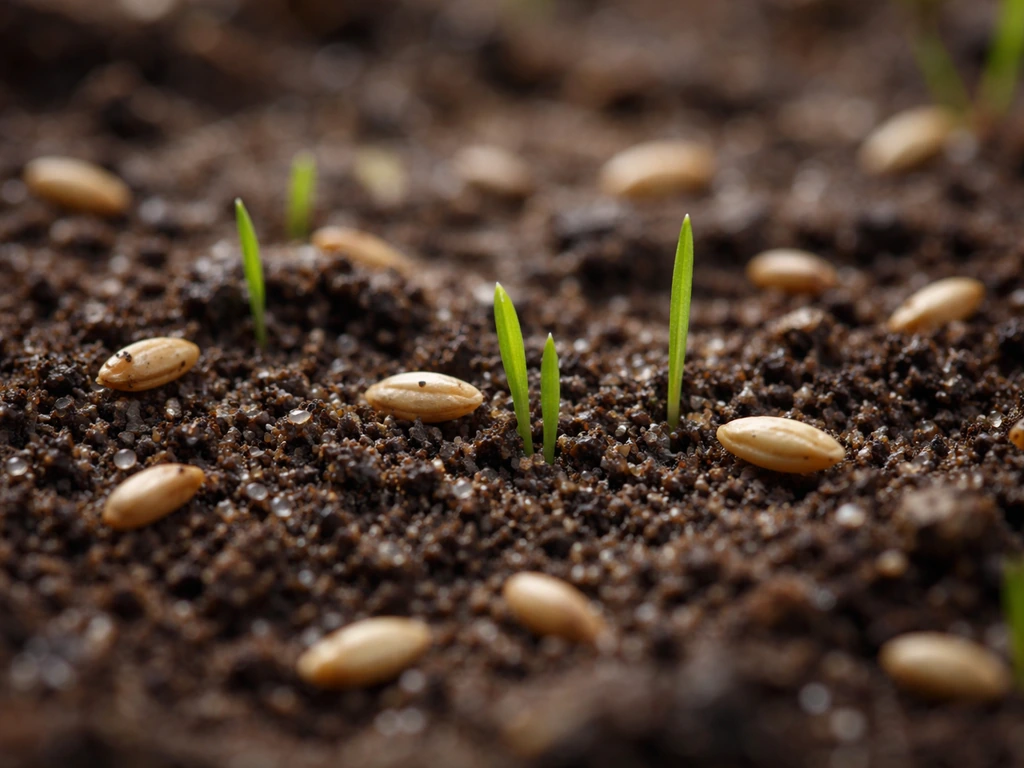
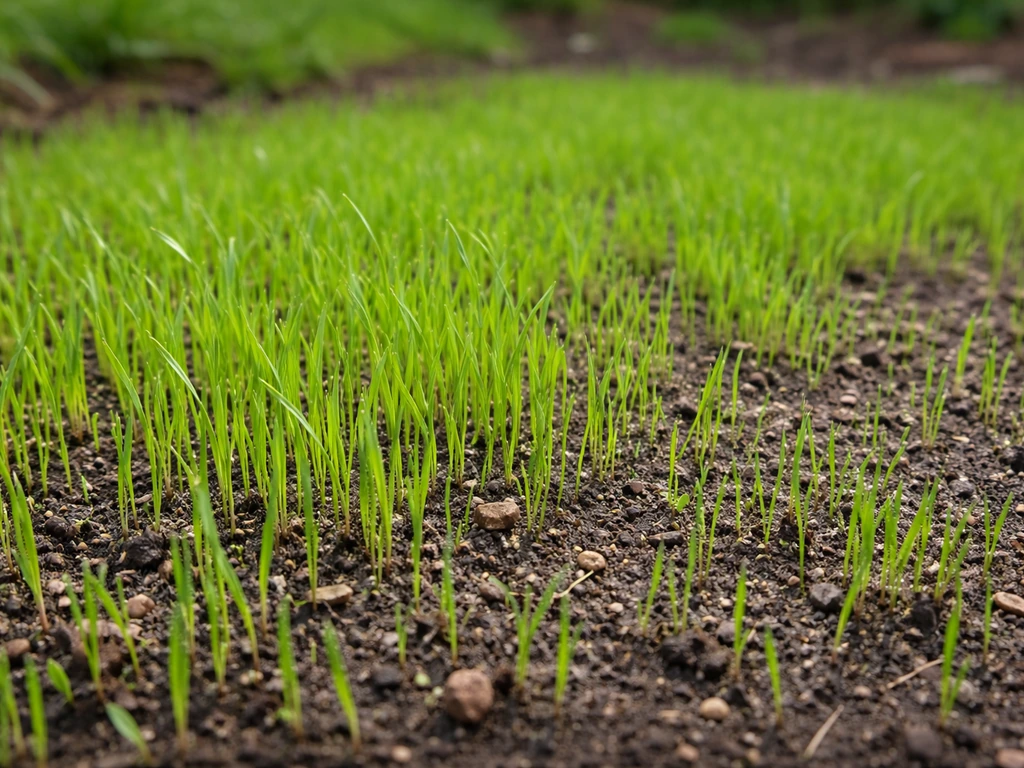
In ideal conditions, you can see the very first grass blades pushing through as early as day 6. Realistically, most people see germination beginning around day 7 to 10, with the bulk of the sown area covered by day 14. The key phrase there is 'ideal conditions,' and for ryegrass that means soil temperatures sitting in the 60 to 70°F (around 15 to 21°C) range. This is the sweet spot confirmed by horticulture guidance from sources like Oregon State University's forage information system. Below that range, germination slows noticeably. Above it, annual ryegrass can still manage, but perennial ryegrass starts to struggle.
If you're sowing in spring or early autumn when soil temps are naturally in that range, you're in the best possible position. Midsummer sowings on sun-baked ground, or late autumn sowings when the soil is dropping toward cold, will push that timeline out significantly. I've seen patches sown on warm autumn soil spring up in under a week, while the same product scattered on cold spring ground took close to three weeks to show anything meaningful.
| Stage | Expected Timeframe | What You Should See |
|---|---|---|
| First shoots appear | Day 6–7 (ideal conditions) | Thin, pale green grass blades just breaking the surface |
| Active germination across patch | Day 7–14 | Spreading coverage of fine grass shoots |
| Full germination of sown area | By day 14 | Even green across most of the seeded area |
Seedling Growth and Early Establishment
Once those first shoots appear, the grass enters a rapid establishment phase. Annual ryegrass, in particular, is genuinely fast at this stage. Over the second and third weeks, the lawn begins to fill in and the shoots thicken. You'll notice the colour deepen from pale lime green to a richer, more consistent green as chlorophyll production ramps up. This is also the stage where patchy areas become obvious, because germination is never perfectly uniform across a whole lawn. Bare spots after day 14 can often be given a little longer before you start worrying.
During this entire early phase, watering is the most important thing you're doing. Pronto Seed recommends keeping the top layer of soil damp (not waterlogged) for the first two weeks, watering once or twice daily, with morning and late afternoon being ideal times. Letting the surface dry out even briefly at this stage can stall or kill germinating seeds. This is non-negotiable, especially if you're sowing during warmer or windier weather when evaporation is faster.
When Is It Ready? The Path to a Full Lawn
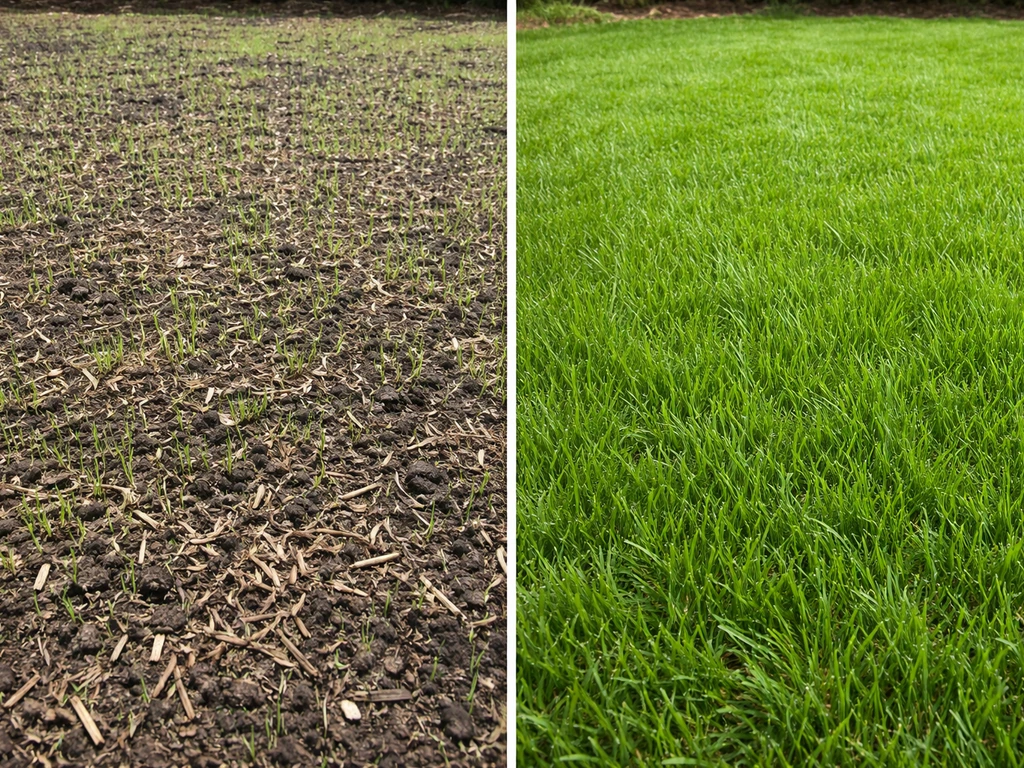
Pronto Seed's own guidance puts 'a full lawn' at around 10 days after sowing under optimal conditions. In most home-garden setups, you can use these milestones to estimate how long it takes for apple seed to grow, since early sprouting depends heavily on conditions a full lawn. In practice, 'full lawn' at day 10 means you have visible, consistent grass coverage rather than a lawn ready for entertaining. The grass is still fragile at this point, and the root system is shallow. You'll want to avoid heavy foot traffic for at least the first few weeks.
The first mow milestone is the most useful marker for when the lawn is becoming properly established. Pronto Seed advises mowing for the first time when the grass reaches approximately 8cm (about 3 inches) in height. That typically happens somewhere between week 3 and week 5 depending on conditions, growth rate, and weather. When you do mow, set your blade high, take off no more than a third of the blade height, and make sure the ground is firm enough that the mower won't rip young shoots out of the soil.
| Growth Stage | Approximate Timeframe | Notes |
|---|---|---|
| First shoots visible | Day 6–7 | Best case, warm and moist soil |
| Most of area germinated | Day 7–14 | Typical range for home growers |
| Full visible lawn coverage | ~Day 10–14 | Marketing claim; realistic in good conditions |
| First mow ready | Week 3–5 | When grass hits ~8cm tall |
| Established, traffic-tolerant lawn | 6–8 weeks | Depends on watering, weather, and soil quality |
Why Your Lawn Is Taking Longer Than Expected
Ryegrass germination is genuinely fast compared to most seeds, but a handful of common issues can push that 7-to-14-day window into 3 or 4 weeks. Here are the main culprits:
- Soil temperature too low: below 10°C (50°F), perennial ryegrass germination slows dramatically. If you're sowing in cold weather, this alone can double the timeline.
- Soil drying out between waterings: ryegrass seeds need consistent surface moisture. Even one day of drying at the wrong moment can interrupt germination and reduce emergence rates.
- Poor seed-to-soil contact: Pronto Seed emphasises raking the soil to a fine 'breadcrumb' texture to a depth of 8–10cm before sowing. If you scatter seed on compacted, lumpy, or hard ground, many seeds simply won't make proper contact and won't germinate reliably.
- Sowing too deep: grass seed is tiny and should only be lightly raked or pressed into the top few millimetres of soil. Burying it deeper cuts off the light stimulus and reduces emergence rates.
- Old or poorly stored seed: seed viability declines with age and improper storage. If your shaker has been sitting in a shed for a year or two, germination rates will be lower and slower.
- Waterlogged soil: too much water is just as damaging as too little. Waterlogged conditions reduce oxygen availability and can cause seed rot before emergence.
Troubleshooting Slow or Failed Germination Right Now
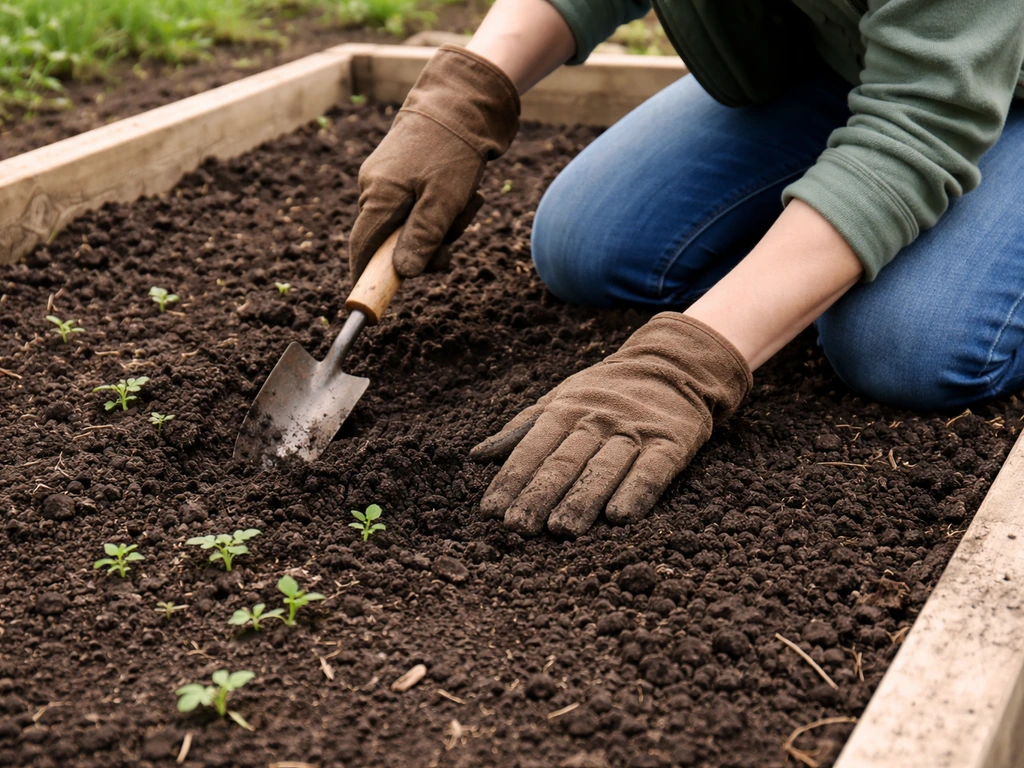
If you're past day 14 and still seeing thin or patchy results, here's what to check and do today rather than just waiting it out.
- Check your soil temperature: push a basic soil thermometer 2–3cm into the ground. If it's reading below 10°C, you're likely in a cold-germination scenario. You can try covering the area with a light horticultural fleece or clear plastic sheeting to warm the soil by a few degrees and accelerate things.
- Assess your watering: feel the top 1cm of soil. If it's dry to the touch even mid-morning, you're not watering enough. Increase to twice daily and water in the morning and late afternoon as Pronto Seed recommends.
- Look at your soil surface: if it's crusted, compacted, or has formed a hard cap after watering, lightly rake the surface to break it up and improve aeration. This helps emerging shoots break through.
- Overseed bare patches: if it's been 3 weeks and you have significant bare areas, don't wait. Lightly rake those spots, scatter additional seed, and re-establish your watering routine for those sections.
- Rule out bird or pest damage: birds love freshly sown grass seed. If you're losing seed quickly after sowing, consider covering the area with a fine netting or using a reflective tape deterrent.
- Consider starting over if conditions have fundamentally changed: if you sowed during an unexpected cold snap or the area has been waterlogged, the seed may have rotted. Assess the soil, let it drain or warm appropriately, prepare the surface again, and re-sow.
Planning Your Sowing Schedule Around Your Season and Location
Getting the timing right before you even open the shaker makes the biggest difference. Ryegrass is a cool-season grass, which means it performs best when sown in spring (once soil temps have lifted above 10°C) or in early autumn (before soil cools below that threshold again). Wisconsin Horticulture Extension notes that bush bean seeds germinate best when soil is around 72°F minimum and about 80°F optimum, with viable germination roughly between 60°F and 95°F soil temperatures lifted above 10°C. In the UK, where Pronto Seed is primarily sold, that typically means April through May or August through September are your best sowing windows.
If you're in a warmer climate, push your sowing toward early spring or early autumn when soil temperatures are moderated. In the height of summer, soil temps can climb well above the optimal 60 to 70°F range, which stresses germinating perennial ryegrass even if the annual component manages fine. Conversely, sowing in late autumn when soil is cold means stretching that expected 7-to-14-day germination window to 3 or even 4 weeks.
A practical way to plan your schedule is to count backwards from when you want a usable lawn. If you need established grass by a specific date, aim to sow at least 6 to 8 weeks before that point to allow for full establishment, not just germination. If you are also using seed paper for a project, the timeline can be different, so check how long does seed paper take to grow before you plan your date. If you're just filling in a patchy area and need visual coverage quickly, sow 2 to 3 weeks out and manage your expectations around traffic and durability.
A Week-by-Week Reference for What to Expect
| Week | What to Expect | Action to Take |
|---|---|---|
| Week 1 (Days 1–7) | Soil preparation complete, seed sown; first shoots may appear by day 6–7 | Water once or twice daily; keep surface damp |
| Week 2 (Days 8–14) | Germination spreading across area; thin green coverage appearing | Continue daily watering; avoid walking on the area |
| Week 3 (Days 15–21) | Lawn filling in; thickening shoots; colour deepening | Water regularly; overseed any persistent bare patches |
| Week 4–5 | Grass approaching 8cm height; ready for first mow | Mow high when grass hits 8cm; keep mower blade sharp |
| Week 6–8 | Lawn becoming established and more traffic-tolerant | Reduce watering frequency; begin normal lawn care routine |
If you enjoy chasing fast-growing plants in general, ryegrass is genuinely one of the quicker options out there. It's worth knowing that among all the seed types gardeners grow, grasses like ryegrass sit near the fast end of the spectrum, not far behind the very fastest-germinating seeds like radish or certain microgreens.
If you are wondering what seed will grow in a week, radish and some microgreens are often the quickest picks when conditions are right very fastest-germinating seeds like radish or certain microgreens. If your interest extends to comparing how different seeds stack up on speed, the variation across species is surprisingly wide, from a few days to several years for slower-germinating trees and shrubs.
If you’re wondering what seed takes the longest to grow, trees and shrubs are often among the slowest to establish slower-germinating trees and shrubs.
FAQ
If I see grass by day 10, can I walk or play on the lawn right away?
No, a “full lawn” at around day 10 usually means consistent visible coverage, not a lawn that can handle heavy use. For ryegrass from this mix, aim to delay foot traffic for at least a few weeks, and treat the first mow (about 3 inches tall) as the point where establishment is starting to stabilize.
What if it’s warm or windy, can I water more than once daily to speed things up?
Yes, but only if you manage the moisture carefully. If the surface dries even briefly after sowing, germination can stall, so in hot or windy spells you may need more frequent light watering to keep the top layer damp, without creating standing water.
My lawn is still patchy after two weeks, what should I check first?
If you see nothing by day 14, don’t keep watering “as usual” and wait blindly. First, check soil-to-seed contact (look for seed lying on top), confirm the soil is still in a workable temperature range, and verify you did not overwater to the point of waterlogging. If seed was shallow or washed away, reseeding is often faster than continuing the same routine.
Can I hurt Speedy Seed by watering too much?
Overwatering can delay or prevent germination by reducing oxygen around the seed. The target is damp topsoil, not saturated soil. If your ground feels muddy or looks puddled, ease off, improve drainage if possible, and focus on keeping moisture even for the first two weeks.
How can I tell whether the seed is failing to germinate or just growing slowly?
There’s a practical check you can do: press a small area gently, lift a corner of turf-free soil, and look for softened or sprouting seeds just below the surface. If seeds are intact and dry or you see no change, the issue is usually temperature or moisture, or the seed is too deep or not in contact with soil.
How does planting depth affect how long it takes Speedy Seed to show up?
Yes, depth matters. If seed is buried too deeply, ryegrass can take much longer to emerge, sometimes stretching the timeline toward 3 to 4 weeks. If it’s sitting on top without good contact, it can dry out or wash away, also extending emergence.
Does the timeline change if I’m over-seeding instead of sowing new ground?
If you’re overseeding an existing lawn, the key difference is competing roots and inconsistent soil moisture. Expect uneven germination where thatch is thick or where seed is blocked from reaching damp soil. Light raking or dethatching to improve seed-to-soil contact usually gives faster, more uniform emergence.
When is it safe to mow, and what mistakes make it set back establishment?
Mowing can slow down some fragile shoots if you mow too early, too low, or on soft ground. The safest rule for this product is to wait until the grass is about 8 cm (3 inches) and then raise the blade, taking no more than a third, only once the ground is firm.
If soil temperatures are below 60°F, how should I adjust my expectations?
If your soil is consistently below the ideal range (around 60 to 70°F, or 15 to 21°C), germination can extend toward several weeks. In that case, planning around a longer lead time is more reliable than trying to force speed with extra watering alone.
How far in advance should I sow Speedy Seed to have an actually usable lawn by a deadline?
If you need a lawn for a specific date, don’t count only emergence days. Use a conservative schedule and sow about 6 to 8 weeks ahead of when you need an actually usable lawn, since germination is only the first step and the roots are still developing during weeks 3 to 5.
Next Article
What Seed Will Grow in a Week: Fast Options
Seeds that sprout or establish fast: which varieties germinate in a week, what success looks like, and fixes for failed