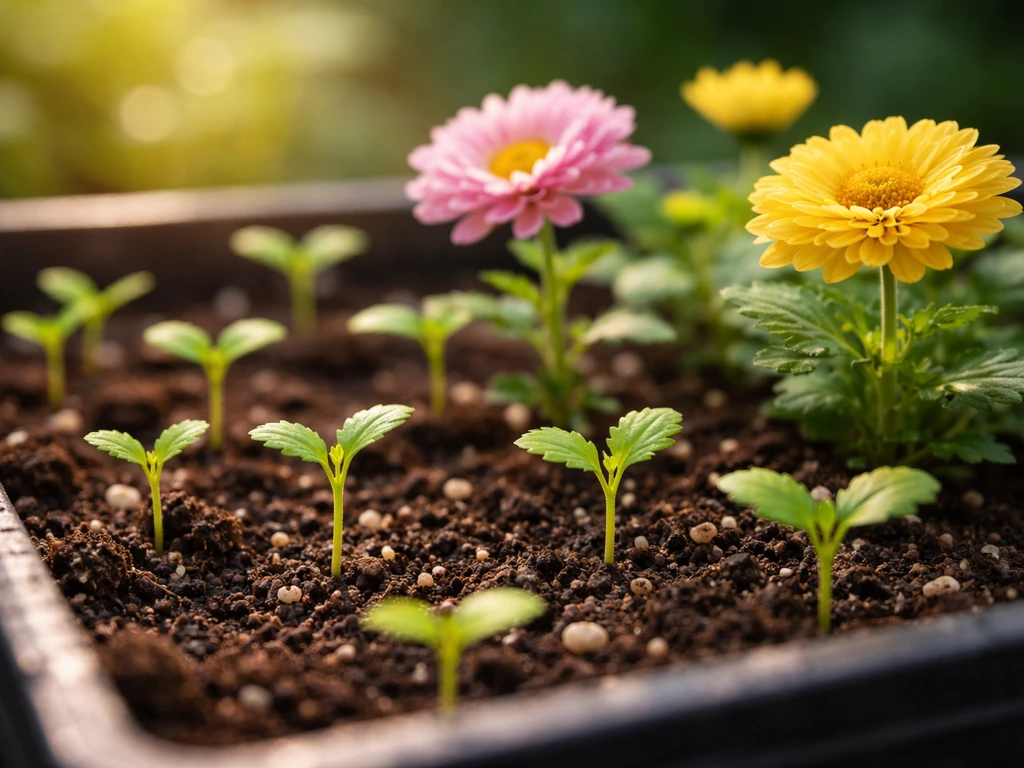
Basil takes 5 to 10 days to germinate from seed under warm conditions, around 4 to 6 weeks to grow into a transplant-ready seedling, and roughly 60 to 90 days from sowing to your first real harvest. If you keep soil temperatures between 70°F and 80°F and give seedlings plenty of light, you can expect to be pinching fresh leaves about two months after you first drop seeds in soil. That's the short answer. But the specific number that matters to you depends on your variety, your setup, and when you're planting, so let's walk through each stage.
How Long Does Basil Take to Grow From Seed to Harvest
Marcus Henley
4 Apr 2026
How long until basil sprouts: germination timeline
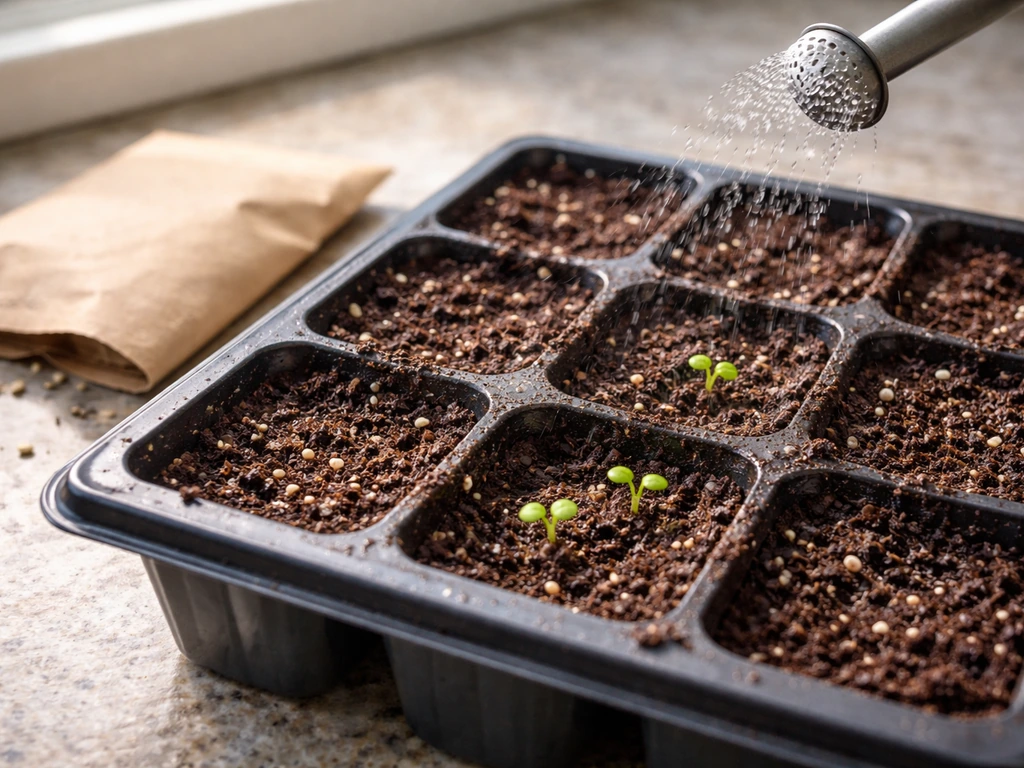
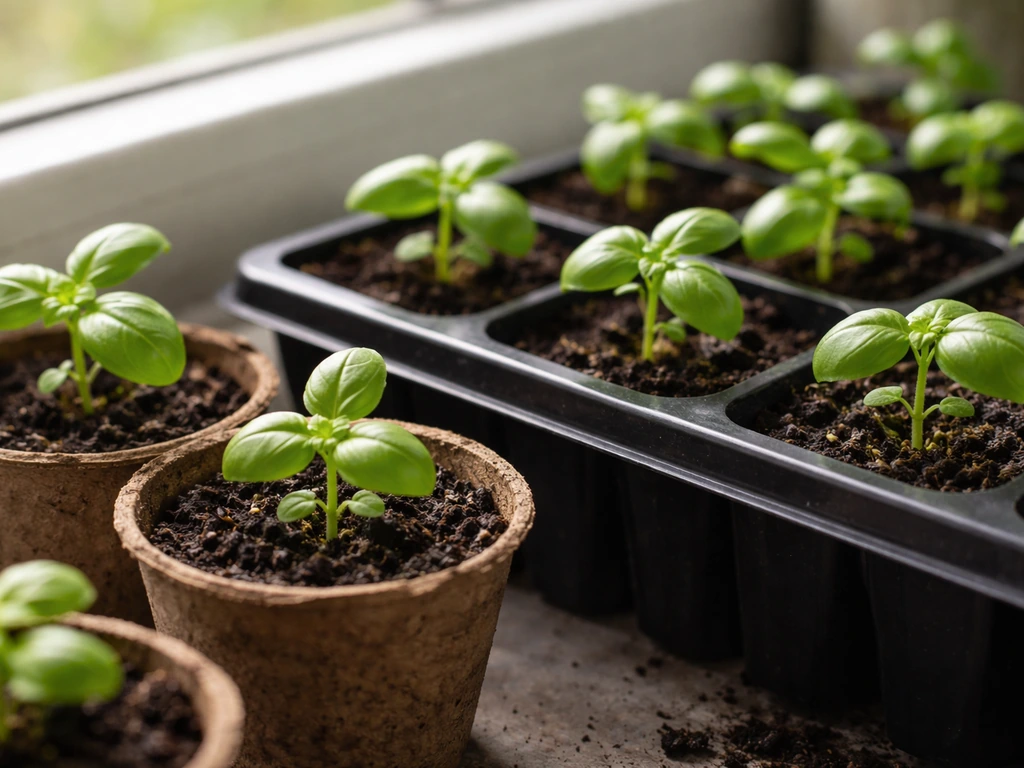
At the optimal soil temperature of 70°F to 80°F (21°C to 27°C), basil seeds typically germinate in 5 to 10 days. Keep conditions consistently warm and moist, and you'll often see sprouts closer to the 5-day mark. Let things cool off or dry out, and you're looking at closer to 10 days or even longer. Soil temperature is the biggest lever here, not air temperature. A heating mat under your seed tray makes a genuine difference if you're starting indoors in early spring when ambient room temperatures tend to dip overnight.
One thing that trips up a lot of first-time basil growers: basil seeds need light to germinate properly. That means you shouldn't bury them deep. Sow at about 1/4 inch depth, press the soil gently, and don't cover with anything that blocks light. If you're using a seed tray, water from the bottom by setting the tray in a shallow container of water and letting the soil wick up moisture. This keeps the top layer consistently damp without disturbing the seeds or creating a crust that blocks sprouts.
At cooler soil temperatures around 60°F, germination slows to 7 to 10 days at best, and you risk uneven sprouting across the tray. Below 50°F at night, basil basically stalls. Cold conditions don't just slow germination, they can cause seeds to rot before they ever sprout.
From sprout to transplant-ready seedling
Once your basil seedlings emerge, expect to spend another 4 to 6 weeks growing them out before they're ready to move into a larger pot or into the garden. The benchmark most experienced growers use is true leaves, not cotyledons. You want to see 4 to 6 true leaves before transplanting, which typically takes about 4 to 6 weeks after germination. If you're starting in small cell trays, bump seedlings up to a larger container once they've developed at least 3 pairs of leaves.
During this seedling stage, light is critical. Grow lights should be positioned about 3 to 4 inches above your seedlings and run for roughly 16 hours per day, with 8 hours of darkness. This mimics a long summer day and prevents the leggy, weak-stemmed seedlings that are common when basil doesn't get enough light indoors. West Virginia University Extension specifically pegs basil transplant age at 6 weeks, which lines up with the 4-to-6-week range I just mentioned and gives you a solid planning anchor.
Seed to harvest: when can you actually start picking?
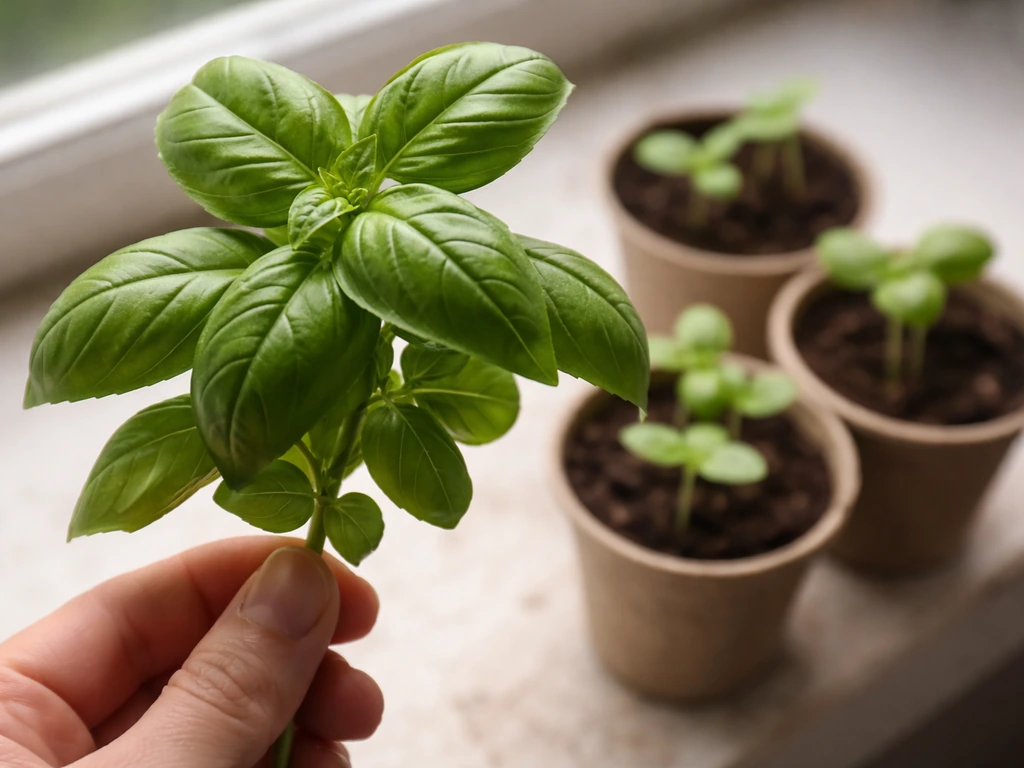
This is the number most people actually want. From the day you sow seed to your first real harvest, expect somewhere between 60 and 95 days depending on conditions and variety. Here's how that breaks down in a more practical way:
| Stage | Typical Timeframe | Notes |
|---|---|---|
| Germination | 5–10 days | Faster at 75–80°F soil temp |
| Seedling to transplant-ready | 4–6 weeks (28–42 days) | Needs 4–6 true leaves |
| Transplant to first harvest | 50–60 days | From transplant date |
| Full maturity (seed to mature plant) | 70–90 days | Varies by variety |
| Seed to first harvest (direct sow) | 60–95 days | Includes germination + grow-out |
For most standard sweet basil varieties like Genovese, you're looking at around 70 days from seed to a fully productive plant. True Leaf Market puts transplant-to-harvest at 50 to 60 days, and with a 5 to 6 week indoor start, total seed-to-harvest time from a transplant approach lands right around 90 to 100 days from first sow. True Leaf Market lists “Days to Harvest: 50, 60 days (from date of transplanting)” and “Days to Maturity: 70 days” for basil Days to Harvest: 50–60 days (from date of transplanting). Direct sowing outdoors into warm soil cuts some of that setup time and tends to run 60 to 70 days to first harvest when conditions are ideal.
When it comes to harvesting, don't wait for the plant to look fully mature before picking. Pick leaves just before the plant flowers and pinch off any flower buds you see forming. Once basil bolts (sends up flower stalks), leaf production drops and the flavor turns bitter. Regular harvesting and consistent pinching is what keeps a basil plant productive for months.
What actually changes how fast basil grows
Temperature
Temperature is the single biggest variable. Basil is a warm-season annual that actively dislikes cold. For germination, soil temperature between 70°F and 85°F produces the fastest, most uniform sprouting. Anything below 65°F slows things noticeably, and seeds in cold soil are vulnerable to rotting before they ever germinate. Night temperatures should stay above 50°F for seedlings to thrive. If you're growing outdoors, don't rush to plant early hoping to get a jump on the season. Cold soil will set you back, not help.
Light
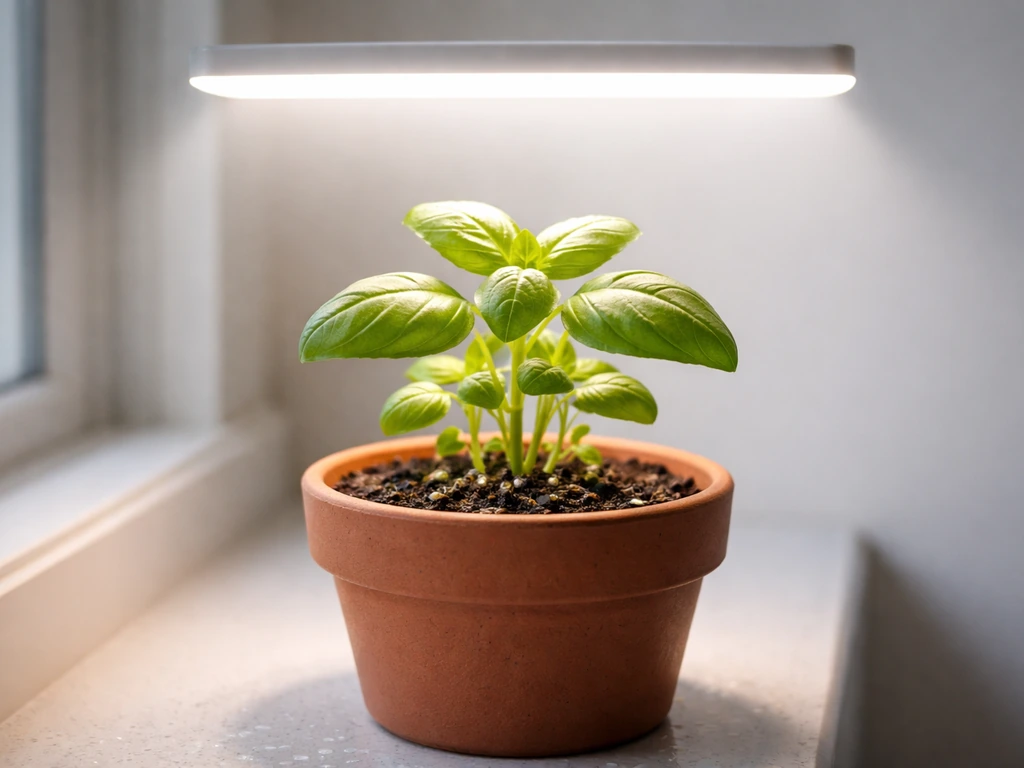
Basil is a light-hungry plant from the moment it sprouts. Indoors, natural windowsill light is usually not enough, especially in early spring when days are still short. Running grow lights at 16 hours per day during the seedling stage accelerates growth considerably compared to relying on ambient indoor light. Outdoors, basil planted in full sun (6 or more hours of direct sun daily) matures faster and produces more leaf mass than plants grown in partial shade.
Moisture
Seeds need consistently moist (but not soggy) soil to germinate. Letting the surface dry out even briefly during the germination window can stall or kill the process. Bottom watering works well for seed trays because it keeps moisture even without washing seeds around or compacting the surface. Once seedlings are established, basil prefers evenly moist soil but doesn't like sitting in waterlogged conditions, which leads directly to root rot and damping-off.
Variety
Not all basil is the same. Genovese (sweet basil) is the standard reference point at roughly 70 days to maturity. Purple and ornamental varieties like Purple Ruffles can run 70 to 80 days from transplant to full harvest. Thai basil tends to be a slightly slower grower. Compact varieties bred for container growing often reach harvest stage a bit faster than full-size types. If your goal is speed, stick with Genovese or a compact sweet basil variety.
Sowing method
Starting indoors and transplanting gives you more control over germination conditions and lets you get a head start on the season. Direct sowing outdoors is simpler but relies on outdoor soil reaching the right temperature, which in many climates doesn't happen until late spring. If you direct sow into warm soil, you can sometimes hit harvest in 60 days. If you start indoors in a controlled environment and transplant, total time from first sow is longer but the transplanted seedling catches up quickly once it's in the ground.
Indoor vs outdoor planting schedules
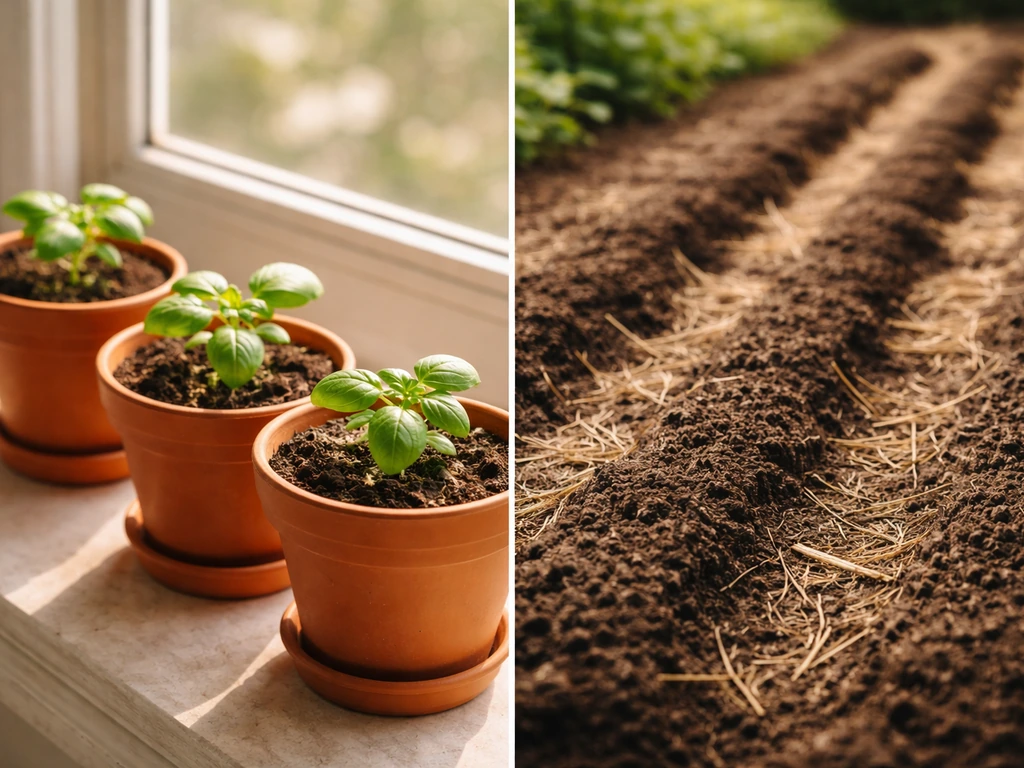
Burpee recommends starting basil indoors 6 to 8 weeks before your last expected frost date. That 6-to-8-week window gives seedlings enough time to reach transplant size (4 to 6 true leaves) while the outdoor soil is still too cold for basil. After your last frost passes and nighttime temperatures are consistently above 50°F, you can move seedlings outside. Plan on a hardening-off period of about 7 to 10 days where you gradually expose seedlings to outdoor conditions before leaving them out full time.
For outdoor direct sowing, wait until your soil temperature reaches at least 65°F to 70°F. In most of the continental US, that's late April through May. In warmer climates (zones 9 to 11), direct sowing can start in early March. Timing direct-sown basil and understanding how different herbs fit into your planting calendar is something you'll get better at over seasons. For reference, if you're also growing leafy herbs alongside basil, knowing how long mint takes to grow from seed is worth comparing since mint has a notably different temperature tolerance and growth pace.
| Method | When to Start | Transplant/Move Outdoors | Days to First Harvest |
|---|---|---|---|
| Indoor start | 6–8 weeks before last frost | After last frost, once nights stay above 50°F | 90–100 days from sow |
| Direct sow outdoors | Once soil hits 65–70°F | Already in final location | 60–75 days from sow |
| Container/indoor year-round | Anytime with grow lights + heat mat | Stays indoors | 65–85 days from sow |
If you're planning a full herb garden and trying to coordinate planting schedules across multiple crops, it's also useful to know that cool-season herbs and greens like spinach work on a very different timeline from basil. You can find a detailed breakdown in this guide on how long spinach takes to grow from seed, which can help you stagger plantings so something is always ready to harvest.
Troubleshooting slow or failed basil germination
If it's been more than 14 days and you're seeing nothing, something in your setup is off. Here are the most common culprits and how to fix them:
- Soil too cold: This is the number one reason basil fails to germinate. Check actual soil temperature with a thermometer, not just room temperature. Add a heat mat if your readings are below 65°F.
- Soil too dry: Seeds need consistent moisture through the entire germination window. If the top layer dries out even once, germination can fail. Mist gently or bottom-water regularly.
- Buried too deep: Basil seeds need light exposure to germinate. If you planted deeper than 1/4 inch, the seeds may struggle to reach the surface. Sow shallowly next time.
- Old or improperly stored seed: Basil seed stored below 50°F or in humid conditions loses viability fast. If your seed is more than a year old or was stored poorly, low germination rates are expected. Always start with fresh seed from a reputable supplier.
- Damping-off: If seedlings sprout and then suddenly collapse at the base, you're dealing with damping-off, a fungal condition driven by high humidity, poor airflow, and overly wet soil. The RHS identifies sowing too thickly and poor air circulation as the main culprits. Thin seedlings, reduce watering frequency, and improve ventilation around your trays.
- Waterlogged soil: Soggy conditions invite rot. Soil should feel moist like a wrung-out sponge, not wet.
One more thing worth knowing: successful germination depends primarily on soil temperature, moisture, and in some cases light, not air temperature alone. You can have a warm room and still have cold soil if your tray is sitting on a cool surface like a tile floor or concrete. A heat mat specifically addresses this by warming from below where it matters.
If you've ruled out the basics and still have patchy germination, consider whether your growing medium is the issue. Overly heavy potting mix retains too much water and can suffocate seeds. A lighter seed-starting mix with good drainage gives basil seeds a better environment to wake up in.
Planning your grow to hit your target harvest date
Work backward from when you want to harvest. If you want fresh basil by late June, and you're in a zone where the last frost is mid-May, your math looks like this: transplant outdoors after mid-May, meaning you need seedlings ready by then, meaning you start seeds indoors around late March to early April. That gives you 6 to 8 weeks of indoor growth before transplant, then 50 to 60 days to first harvest after transplanting, landing you right at late June to mid-July.
For direct-sowing into warm garden soil, sow when soil temperatures are reliably at 65°F or above, and count forward 60 to 75 days to your first harvest. Mark the date. Check the plant around week 8 and start harvesting as soon as you have enough leaf mass to take without stressing the plant.
One habit worth building early: keep a simple seed-to-harvest log. Write down when you sow, the soil temperature at sowing, when you see the first sprout, and when you first harvest. After one or two seasons, you'll have your own personalized basil timeline tuned to your specific climate and setup, which is more useful than any general chart.
If you're expanding your herb garden beyond basil, it helps to understand the timelines for other herbs you might grow alongside it. For example, how long it takes to grow stevia from seed is worth knowing if you want a natural sweetener growing next to your culinary herbs, since stevia has its own specific temperature requirements for germination that differ from basil's. And if you're thinking about longer-term plantings for your property, the growth timeline for something like arborvitae grown from seed is a completely different scale and worth understanding separately.
The bottom line: basil is a fast, rewarding herb to grow from seed as long as you respect its need for warmth. Keep soil above 70°F for germination, give seedlings strong light, don't overwater, and you'll have harvestable basil in about 60 to 90 days from sowing. If things are running slow, check temperature first. It's almost always temperature.
FAQ
What’s the fastest way to get basil harvest once I start from seed?
To shorten the timeline, focus on soil warmth first, keep germination soil around 75 to 80°F, sow shallow (about 1/4 inch), and use bottom watering so the surface stays evenly moist. After germination, run grow lights about 16 hours daily and transplant as soon as you have 4 to 6 true leaves, not just cotyledons.
Can I speed up basil growth by increasing air temperature instead of soil temperature?
Usually not. Basil’s germination speed depends far more on soil temperature than the surrounding air. A warm room can still produce slow or uneven sprouting if the seed tray sits on a cool surface, so warming the soil (heat mat or insulated tray) is what actually helps.
Why are my basil seedlings tall and weak even though they sprouted?
Leggy growth almost always comes from insufficient light or lights placed too far away. Aim to keep the light close (roughly 3 to 4 inches above seedlings) and use a long photoperiod, about 16 hours per day, to encourage sturdier stems and better leaf output.
How can I tell when basil is ready to harvest without waiting too long?
Start harvesting when the plant has enough leaf mass that taking a few leaves won’t strip the center growth. The key sign to avoid is bolting, once flower buds form and the plant sends up a stalk, leaf flavor declines quickly, so keep picking and pinch off buds as soon as you see them.
Is it better to harvest often or leave basil alone for bigger harvests later?
For basil, frequent, light-to-moderate harvesting and regular pinching generally produces more total leaf over time because it encourages branching. If you wait for a huge harvest and remove a lot at once, the plant can stall and may take longer to regrow.
How long will basil keep producing after the first harvest?
In warm conditions, basil can keep producing for weeks to a couple of months if you prevent bolting and keep the plant fed and watered consistently. Once it flowers, leaf production drops, so expect the productive window to end sooner in hotter weather or if buds are left to develop.
What should I do if germination is uneven across the tray?
Uneven sprouting commonly comes from temperature swings or moisture inconsistency. Check that the tray is warmed from below, keep the top from drying even briefly during the germination window, and consider thinning only after most viable seeds have had time to sprout (instead of removing early gaps right away).
Does basil need fertilizer during the seedling stage to reach harvest faster?
Not typically. Basil mostly needs stable warmth, light, and moisture while it establishes. If seedlings are pale or growth is very slow after true leaves appear, you can use a diluted fertilizer at low strength, but avoid heavy feeding early because it can worsen damping-off risks in overly wet media.
Should I cover basil seeds with soil or keep them on the surface?
Keep them lightly covered, about 1/4 inch deep. Basil seeds need light to germinate properly, so burying too deeply blocks emergence and slows or stops sprouting.
How long after transplant should I wait before harvesting?
In general, you can plan for first harvest about 50 to 60 days after transplant for many sweet basil types, assuming strong light and warm temperatures. If your transplant goes into cool conditions or partial shade, it can take noticeably longer.
What’s a good rule for when to transplant outdoors?
Transplant when nighttime temperatures are reliably above about 50°F, and ideally after your seedlings have 4 to 6 true leaves. Also harden them off gradually over about a week so the move outdoors does not shock the seedlings and delay growth.
Next Article
How Long Does It Take to Grow Chrysanthemums from Seeds
Timeline for growing mums from seeds: sowing to germination, transplant readiness, flowering and maturity, plus key vari