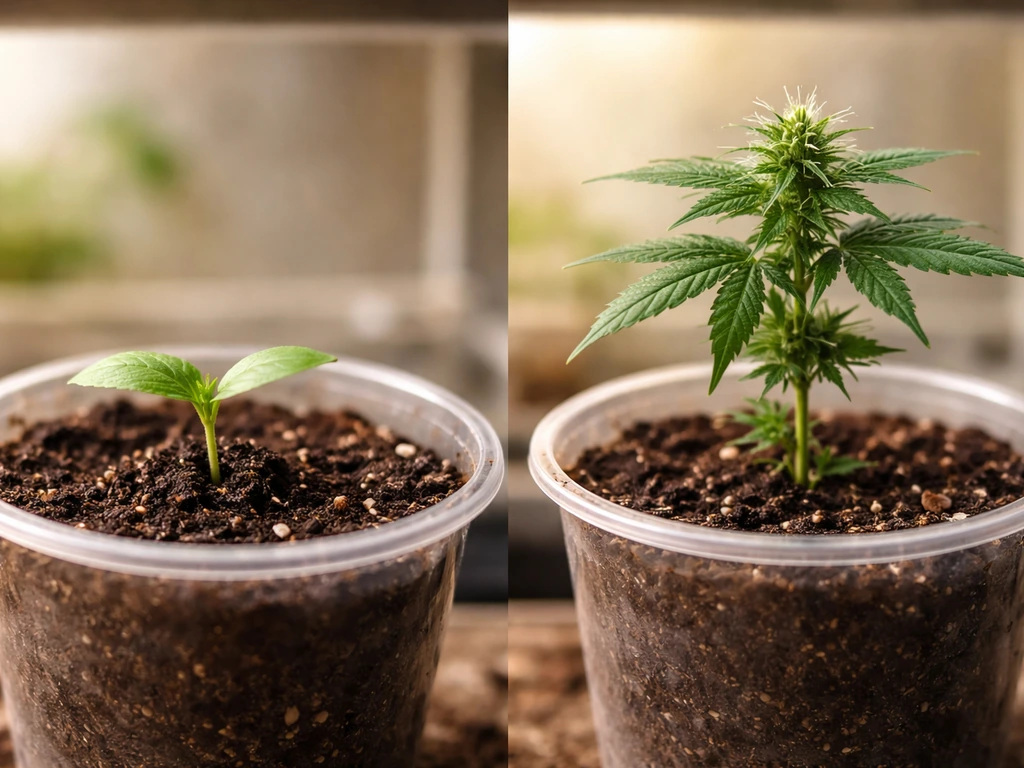
Most aquarium seeds take anywhere from 7 to 30 days to germinate (show a sprout), and then another 4 to 12 weeks to grow into a reasonably established plant. If you want a quick answer for how long do autoflower seeds take to grow, the timeline is typically measured in weeks once germination starts. The wide range is real and not a cop-out: water temperature, light hours, substrate depth, and whether your seeds are actually aquatic all make a massive difference. If you're seeing nothing at day 10, that's not necessarily a failed batch. If you're seeing nothing at day 30 with warm, well-lit water, something specific needs to change.
How Long Do Aquarium Seeds Take to Grow
Marcus Henley
1 May 2026
What 'aquarium seeds' usually means (and why it matters for timing)
When people search for aquarium seeds, they're almost always talking about one of two things: seeds for true aquatic or semi-aquatic plants meant to carpet the bottom of a freshwater planted tank, or seeds for emergent plants that root underwater but grow leaves above the surface. The timing and technique are different for each, and mixing them up is the single most common reason growers get confused about why their seeds aren't performing as expected.
Submerged (fully aquatic) plants are grown entirely under water. Species like Eleocharis parvula (dwarf hairgrass), Helanthium tenellum, and Marsilea (water clover) fall into this category. They're popular foreground and carpet plants, and seeds for them are sold online and in aquarium stores, often in little foil packets. Emergent plants, by contrast, start rooted in a wet substrate but grow upward through or above the water line. Some sellers market semi-aquatic plants like Hemianthus callitrichoides (dwarf baby tears, sometimes listed as 'Mini Dwarf Pearl Seeds') as carpet seeds for fully submerged setups, even though HC is technically semi-aquatic and performs best when germinated emersed or in very shallow water first.
There's also a well-documented scam worth knowing about: many cheap 'aquarium carpet seed' packets sold online (sometimes marketed as 'magic seeds') contain terrestrial grass or flower seeds that will sprout underwater for a week or two, then rot and die. The planted-tank community has flagged this repeatedly. If your seeds sprout quickly underwater but collapse into a slimy mess within two to three weeks, that's likely what happened. Stick to reputable aquarium plant suppliers and look for species names on the packet, not just marketing copy.
Realistic timelines: germination through mature plant
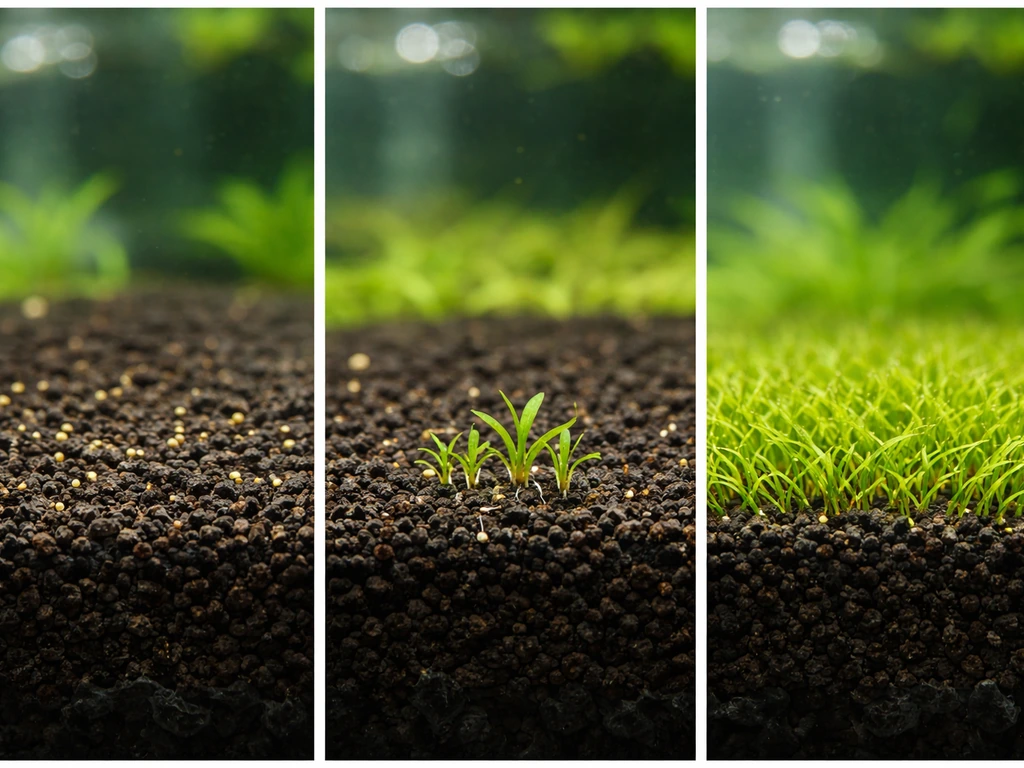
Here's how the timeline typically breaks down for legitimate aquatic plant seeds, split into two stages that every grower should track separately.
Stage 1: Seed to first sprout (germination)
| Plant / Type | Germination (days) | Notes |
|---|---|---|
| Dwarf hairgrass (Eleocharis parvula) | 7–21 days | Faster in warm water (24–27°C); slower in cooler tanks |
| Dwarf baby tears / HC (Hemianthus callitrichoides) | 10–21 days | Best germinated emersed or in very shallow water first |
| Water clover (Marsilea spp.) | 7–14 days | Among the faster aquatic seeds; tolerates a range of conditions |
| Helanthium tenellum | 10–21 days | Needs consistent warmth and light; slow in low-tech tanks |
| Generic 'carpet seed' packets (unknown species) | 3–10 days (then dies) | Fast sprout is a red flag if no species name on the packet |
Stage 2: Seedling to established plant
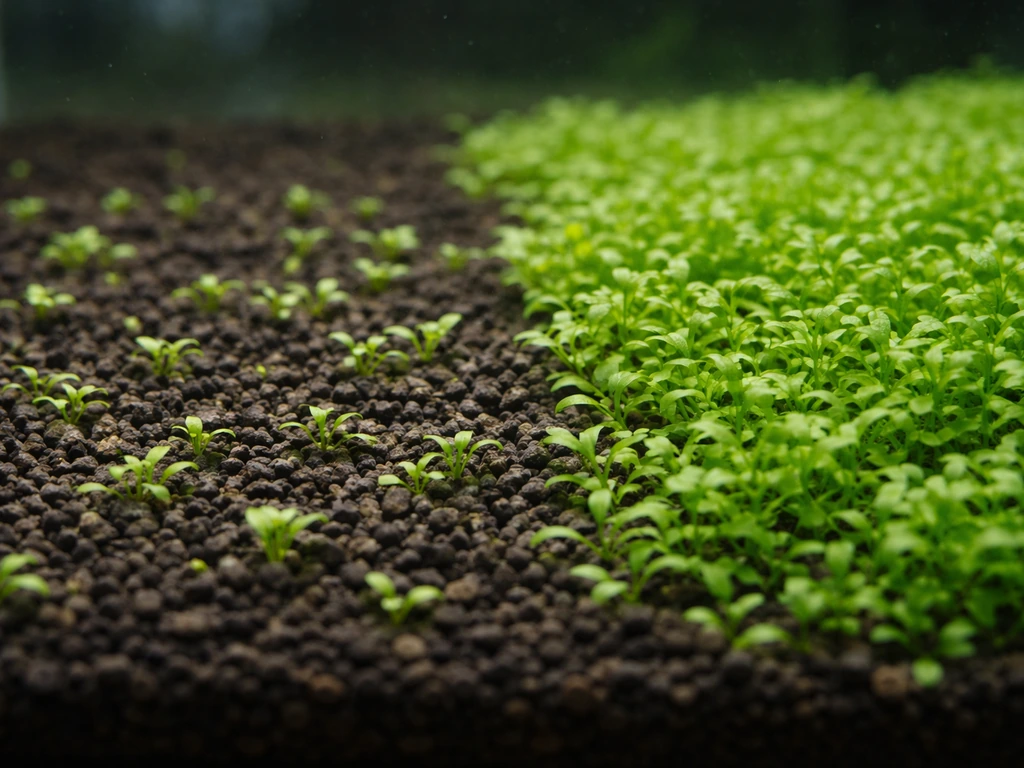
After germination, the seedling phase is where most growers lose patience. A sprout is not a carpet. For most aquatic carpet plants, you're looking at 4 to 8 weeks from first sprout to a reasonably filled-in, healthy stand in optimal conditions. In a low-tech tank without CO2 injection, that can stretch to 10 to 14 weeks, and some patches may never fully fill in without supplemental nutrients. True full carpet density, where the foreground looks lush and complete, typically takes 3 to 4 months from seeding in a well-maintained setup.
What makes aquarium seeds grow faster or slower
Temperature is the biggest lever you have. Most aquatic carpet plant seeds germinate best between 22°C and 28°C (72°F to 82°F). Drop below 20°C and germination slows dramatically or stalls entirely. Keep a thermometer in the tank and don't assume your room temperature equals your water temperature, especially if you're germinating in a shallow tray or open container.
Light intensity and photoperiod matter almost as much as temperature. A minimum of 8 hours of light per day is needed, and 10 to 12 hours is better for germination. Intensity matters too: a single low-watt LED positioned too high over a shallow seed tray can be far too dim at the substrate level. If you're germinating emersed (which is often the smarter approach for species like HC), a simple grow light 15 to 20 cm above the seed bed makes a significant difference.
- Water temperature: 22–28°C is the sweet spot for most aquatic carpet seeds; below 20°C stalls growth
- Light: 10–12 hours per day at adequate intensity (PAR at substrate level matters more than bulb wattage on the box)
- CO2 and nutrients: CO2 injection speeds up growth considerably after germination; liquid fertilizers help fill in the seedling phase
- Substrate type: fine-grained aquatic substrate (like sand or specialized planted-tank soil) gives roots a better hold than coarse gravel
- Seeding depth: aquatic seeds should barely be covered or left on the surface in shallow water; burying them more than 2–3 mm typically prevents germination
- Water flow and oxygenation: gentle surface agitation is fine, but direct flow blowing seeds around will prevent establishment
- Emersed vs submerged start: many species germinate faster and more reliably when started in a very thin film of water or a misted humid environment before being transitioned to full submersion
How to set up conditions today for the best results
The most reliable method I've seen work consistently is the emersed start, especially for tricky species like dwarf baby tears. Fill a flat container (a seed tray, a Tupperware, the tank itself drained down low) with 2 to 4 cm of fine aquatic soil. Mist the surface until it's visibly damp but not pooled. Scatter seeds lightly across the surface and press them gently in, blank" rel="noopener noreferrer">but don't bury them. Cover loosely with plastic wrap or a humid dome, and place under a grow light set to 10 to 12 hours per day. Check daily, mist when the surface starts to look dry, and watch for tiny green sprouts within 7 to 21 days depending on species. Aloe vera seeds follow a different growth schedule, but consistent warmth and moisture are key how long do aloe vera seeds take to grow. For sedum specifically, plan on a longer wait to see germination and then more time for seedlings to become established.
If you're going straight into a tank (the submerged method), drain or lower water to about 2 to 3 cm above the substrate. Sprinkle seeds gently and evenly, then leave the water level low for the first 1 to 2 weeks while germination happens. Avoid strong filtration flow during this phase. A temperature of 24 to 26°C is ideal. Once you see consistent sprouts, you can gradually raise the water level over several days.
- Use a fine-grain aquatic substrate: aim for 4–6 cm depth so roots have room to anchor as seedlings develop
- Set water temperature to 24–26°C and verify it with a thermometer, not a guess
- Run lighting for 10–12 hours daily; use a timer so it's consistent from day one
- Keep water level low (2–3 cm above substrate) during germination to maximize light penetration and warmth at the seed bed
- Add liquid fertilizer at quarter-dose once sprouts appear; full-dose feeding starts when seedlings are visibly established
- If you have a CO2 system, run it from the start of the seedling phase, not just once the tank looks mature
- Leave seeds at the surface or barely pressed in; a depth of more than 2–3 mm is too deep for most aquatic carpet seeds
Troubleshooting slow or failed aquarium seed growth
Slow germination after 21 days is the most common complaint, and it usually traces back to one of a handful of fixable problems. Before you give up on a batch, work through these systematically.
| Problem | Likely Cause | Fix |
|---|---|---|
| No sprouts after 21 days | Water too cold, seeds buried too deep, or seeds are non-aquatic fakes | Raise temp to 25°C+, re-scatter seeds on surface, check if packet lists a species name |
| Seeds sprouted then turned slimy/rotted | Seeds are terrestrial (not aquatic), or fungal/mold issue in low-flow setup | Source seeds from a reputable aquatic plant supplier; improve gentle surface circulation |
| Sprouts appear but stay tiny for weeks | Insufficient light, no CO2, or nutrient deficiency | Increase photoperiod, add CO2 or liquid carbon, begin diluted fertilizer dosing |
| Patchy germination (some spots sprouting, others not) | Uneven seed scatter, inconsistent substrate depth, or flow blowing seeds into clusters | Re-seed bare patches; reduce filter flow during early germination phase |
| Mold on the surface (emersed setup) | Too much moisture, not enough airflow | Remove plastic wrap periodically to allow brief air exchange; reduce misting frequency |
| Seeds float away instead of settling | Seeds not pressed in, or water flow too strong | Press seeds gently onto substrate surface; lower water level and reduce flow at start |
One thing worth knowing: some aquatic plant seeds genuinely need stratification (a cold period to break dormancy) or scarification (light abrasion of the seed coat) before they'll germinate reliably. This is more common with wild-collected or specialty Marsilea species than with mainstream commercially sold packets. If you've had zero germination at 30 days under good conditions, check whether your specific species has a documented stratification requirement before you decide the whole batch is dead.
How to track progress and decide when to re-seed or move on
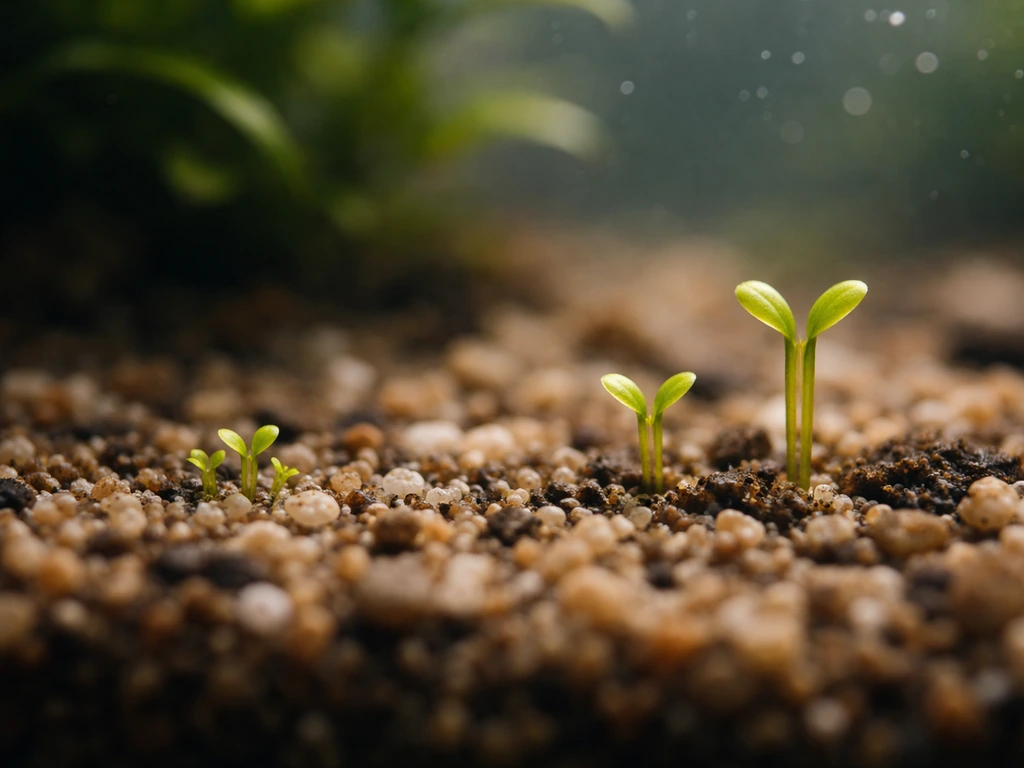
Keep a simple log from the day you seed: note the date, species, water temperature, light hours, and water level. Check and photograph the substrate every 3 to 4 days. This gives you something concrete to compare against instead of just staring at what looks like nothing is happening. Germination in aquatic plants can be subtler than terrestrial seedlings; you're looking for tiny pale green threads or nodes right at the substrate surface before they start reaching upward.
Here's how I think about the decision timeline. By day 14, you should see at least some germination if conditions are right. If you have zero sprouts by day 21, adjust one variable (usually temperature first, then light), wait another 7 to 10 days. If you still have nothing by day 30, that batch is almost certainly a failure. At that point, gently remove the substrate surface layer, check if the seeds look intact (a firm, pale seed) or have rotted (soft, dark, mushy), and make a call.
- Day 7–14: First signs of germination expected in warm, well-lit conditions
- Day 14–21: If no sprouts yet, adjust one variable (raise temperature, increase light hours)
- Day 21–30: Minimal or zero germination after changes suggests a failed batch or non-aquatic seeds
- Day 30+: Re-seed with a new source, or switch methods (buy tissue culture or stem plant cuttings instead of seeds)
- Week 4–8 from sprouting: Seedlings should be visibly growing; if they're stagnant, check nutrients and CO2
- Week 8–14: Reasonable carpet density expected in a well-maintained tank; patchy areas can be spot-reseeded
If you've had two consecutive failed batches, honestly consider switching to an alternative method. Tissue culture plants, small plugs, or divisions of dwarf hairgrass or Marsilea establish far more reliably than seeds and sidestep the germination problem entirely. Seeds are genuinely more satisfying when they work, but they're also the riskiest starting point in the planted tank hobby. Many experienced aquarists who want a quick carpet skip seeds entirely and go straight to plugs for the foreground, then use seeds only when they're happy to wait and experiment.
For growers who enjoy the seed-starting process more broadly, the patience and variable-tracking skills here are very similar to what you'd apply when starting something like cosmos from seed or germinating aloe vera seeds, where timing is equally variable and conditions matter far more than the seed itself. The fundamentals transfer: warmth, consistent light, the right moisture level, and a willingness to troubleshoot one thing at a time.
FAQ
Do aquarium seeds mean “carpet ready” or just “sprouted,” and how long should I wait for each?
It depends on whether you mean “first sprout” or “carpet density.” For many aquatic carpet plants, you typically see a sprout in 7 to 21 days (if conditions are right), then 4 to 12 weeks for a decent stand, and about 3 to 4 months for a truly full look. Track germination and growth as separate milestones so you do not judge the batch too early.
What’s the fastest way to fix slow germination if my aquarium seeds are taking too long?
If you are waiting for sprouts, a drop in water temperature is one of the most common reasons for slow or stalled germination. Use an in-tank thermometer, and aim for roughly 22°C to 28°C. Also make sure the light schedule is consistent (at least 8 hours per day), since long gaps or very dim lighting can delay visible growth even when the tank is warm.
Can aquarium seed packets look like they germinated but still fail later?
Yes, a seed can rot even while “something seems to be happening.” The big warning sign is early sprouting followed by collapse into a slimy mess within about 2 to 3 weeks, which is consistent with terrestrial “magic seed” packets. If you see this pattern, do not keep them running hoping they recover, remove the rot, and switch to reputable aquarium plant suppliers that list true species names.
How should I judge progress if I’m not seeing obvious green growth?
For many carpet plants, you should expect the seedling to be slower to prove itself than you think, meaning you may not see a “full” patch by day 14. A practical check is to photograph the substrate every 3 to 4 days and look for subtle pale green nodes or threads at the sediment surface, not just upward growth. If you see absolutely nothing by day 21 under warm, well-lit conditions, then it is time to troubleshoot rather than wait indefinitely.
Should I run strong filtration or let water stay still when starting aquarium seeds?
High flow from strong filtration can physically disturb seeds and seedlings, especially right after seeding. If you are using the submerged method, keep the water level low for the first 1 to 2 weeks during germination and avoid aggressive flow across the substrate.
Is starting seeds emersed always better than starting them submerged?
Emersed starts often perform better for tricky species because conditions are easier to control, and it reduces the stress of keeping everything balanced underwater. A typical emersed setup is 2 to 4 cm of fine aquatic soil in a tray, seeds pressed gently in (not buried), a humid cover, and a grow light on a 10 to 12 hour schedule.
What should I do if I see nothing after 30 days, and how can I tell if the seeds are still viable?
If you have zero germination after 21 to 30 days under good conditions, you can do a “batch health” check rather than assume the seeds are fine. Gently remove the top substrate layer, then inspect: firm, pale seeds suggest they are still viable, while soft, dark, mushy seeds indicate rotting. Based on that, decide whether to re-seed, change method, or discard.
Do all aquarium plant seeds germinate without special treatments like stratification?
Some species may require dormancy-breaking steps like stratification (cold period) or scarification (light abrasion), especially with specialty or wild-collected seeds. If your specific species is known to need one of these, applying the correct pre-treatment can be the difference between zero germination and normal sprouting. Check the packet for species name and any stated dormancy requirements rather than relying on generic timing.
How important is temperature when the tank and room are at the same temperature?
Don’t assume your room temperature is your seed temperature, particularly in shallow trays or open containers. Measure water or tray temperature directly near the seed bed, since small differences can slow germination. For many aquatic seeds, aim for about 24 to 26°C for best germination during the submerged phase.
Can my water depth be the reason seeds are taking longer to grow?
Yes, water level can affect germination success. In submerged seeding, keep the water about 2 to 3 cm above the substrate initially, then raise gradually once you see consistent sprouts. In emersed starts, maintain moist (not pooled) conditions so seeds do not dry out, but still get access to air-like humidity for early growth.
Next Article
How Long Do Auto Seeds Take to Grow A Complete Timeline
Autoflower seed timeline: germination to harvest in typical days, best vs slow cases, plus week-by-week tips to prevent