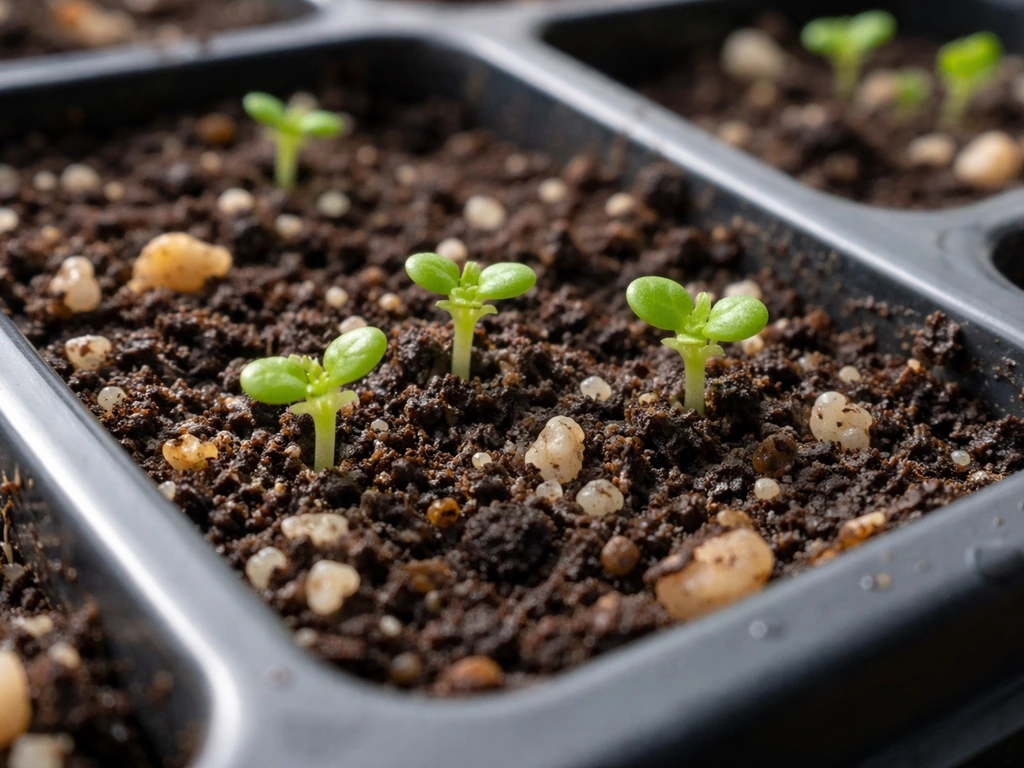
Most autoflower seeds take between 70 and 90 days from germination to harvest, with 75 days being a commonly cited average for fast-finishing strains. Some quicker genetics can be done in as little as 8 weeks (around 56 days), while longer-duration varieties like Auto Ultimate can push closer to 12 weeks (84 days). If you're planning a grow right now, pencil in 10–11 weeks as your realistic target and treat anything under 9 weeks as a bonus. If you're growing in summer conditions, the main question becomes how long summer seeds take to grow and how quickly they finish in warm weather how long do summer seeds take to grow.
How Long Do Auto Seeds Take to Grow A Complete Timeline
Marcus Henley
30 Apr 2026
What people usually mean by "auto seeds"
When most growers type "auto seeds," they mean autoflowering cannabis seeds, sometimes just called "autos." These are plants bred to flower automatically based on age rather than requiring a shift in the light cycle. A regular photoperiod cannabis plant needs you to switch to a 12/12 light schedule to trigger flowering. An autoflower just does it on its own at about 4 to 5 weeks old, no light manipulation needed. That makes them a favorite for home growers, people with small spaces, and anyone who wants a faster, lower-fuss grow. It's worth noting that "auto" sometimes gets used loosely for other seed types (auto-starting vegetables, for instance), but in most growing contexts today, it almost always means autoflowering cannabis genetics, and that's what this guide covers. If you're looking at other seed types, the timelines here won't apply directly.
The full seed-to-harvest timeline at a glance
Here's how autoflowers compare to photoperiod plants in terms of total time from seed to harvest, plus a quick look at where they sit relative to other commonly grown seeds.
| Seed Type | Germination | Vegetative Stage | Flowering Stage | Total Seed to Harvest/Maturity |
|---|---|---|---|---|
| Autoflower cannabis (fast) | 1–3 days | ~3–4 weeks | ~5–6 weeks | 8–10 weeks (56–70 days) |
| Autoflower cannabis (average) | 1–3 days | ~4–5 weeks | ~6–7 weeks | 10–12 weeks (~75–84 days) |
| Autoflower cannabis (slow/large) | 1–3 days | ~5 weeks | ~7–8 weeks | 12–14 weeks (84–98 days) |
| Photoperiod cannabis (indoor) | 1–5 days | 4–8 weeks (grower-controlled) | 8–12 weeks | 16–20+ weeks total |
| Cosmos (flower) | 7–21 days | 4–6 weeks | Blooms 8–10 weeks from seed | ~60–90 days to first bloom |
The big advantage of autos over photoperiod plants is obvious in that table: you're cutting total grow time nearly in half in many cases. That's a meaningful difference when you're working with a small indoor tent or trying to squeeze in an outdoor run before cold weather hits. Cosmos and other fast-growing flower seeds have comparable seed-to-bloom windows, but the autoflower timeline is uniquely self-managing because you never have to adjust your light schedule.
Germination and the seedling stage: the first 1–2 weeks
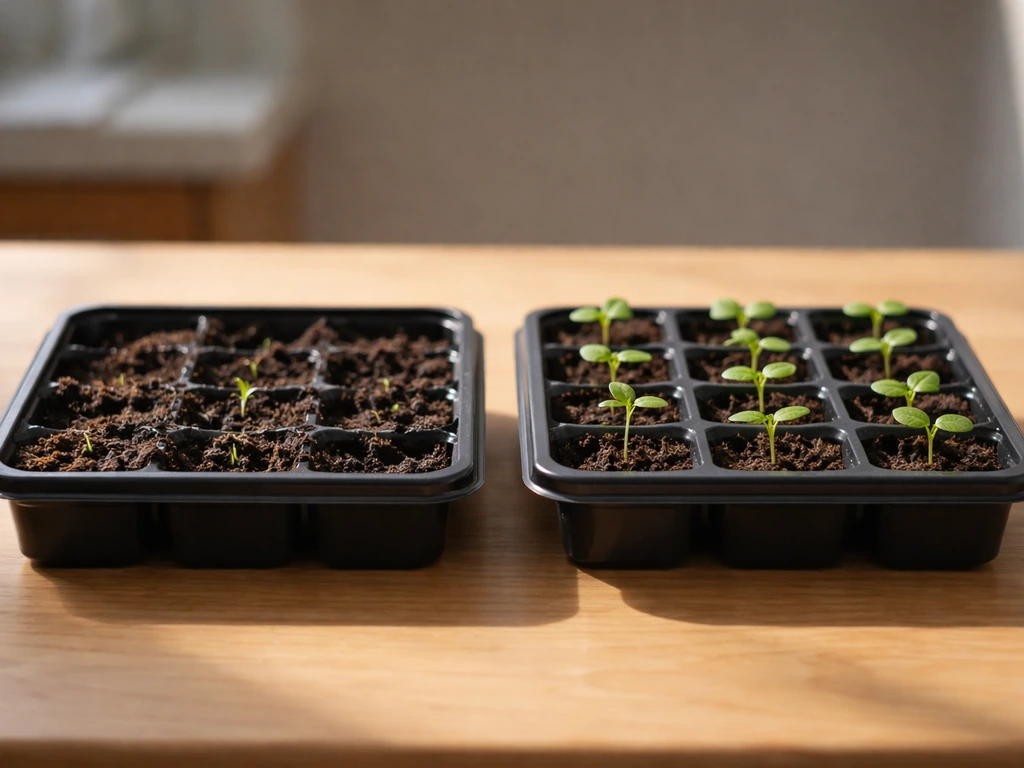
Germination itself is fast when conditions are right. Most autoflower seeds sprout a visible taproot within 1 to 3 days when kept in a warm, dark, moist environment. If you’re also asking about the overall timeline, most people measure it from germination, so seedling progress helps estimate how long your aquarium seeds take to grow how long do aquarium seeds take to grow. If you are growing sedum from seed instead, the waiting game is different, so it helps to know the typical germination and seedling timelines for sedum Most autoflower seeds sprout a visible taproot. If you're germinating in damp cotton pads (paper towels work too), you can check after 24 hours and usually see the first signs of life. Planting directly into your final pot also works well and reduces the risk of transplant stress, which matters more for autos than for most other plants because they're on such a tight timeline. Any stress in the first couple of weeks can directly reduce the plant's final size and yield.
Once the seedling breaks soil, you're in the seedling stage for roughly the first week to ten days. This is when the cotyledons (the first rounded leaves) open up and the first set of true serrated leaves start to form. It looks slow on the surface, but the root system is building fast underground. Days 1 through 14 are arguably the most important window in the whole grow, because problems here create a deficit the plant can never fully recover from given how short its total life is.
What slows down germination
- Temperature too low or too high: the ideal germination range is 21–29°C (70–85°F). Below 18°C (65°F), germination can stall for days or not happen at all.
- Medium too wet: soggy soil or oversaturated cotton pads suffocate the seed before it can sprout.
- Medium too dry: the seed needs consistent moisture to activate germination enzymes.
- Old or poor-quality seeds: seeds stored in warm, light, or humid conditions lose viability quickly.
- Planting too deep: seeds planted deeper than about 1 cm (half an inch) in soil can take longer to emerge or fail entirely.
Vegetative and flowering stages: week by week
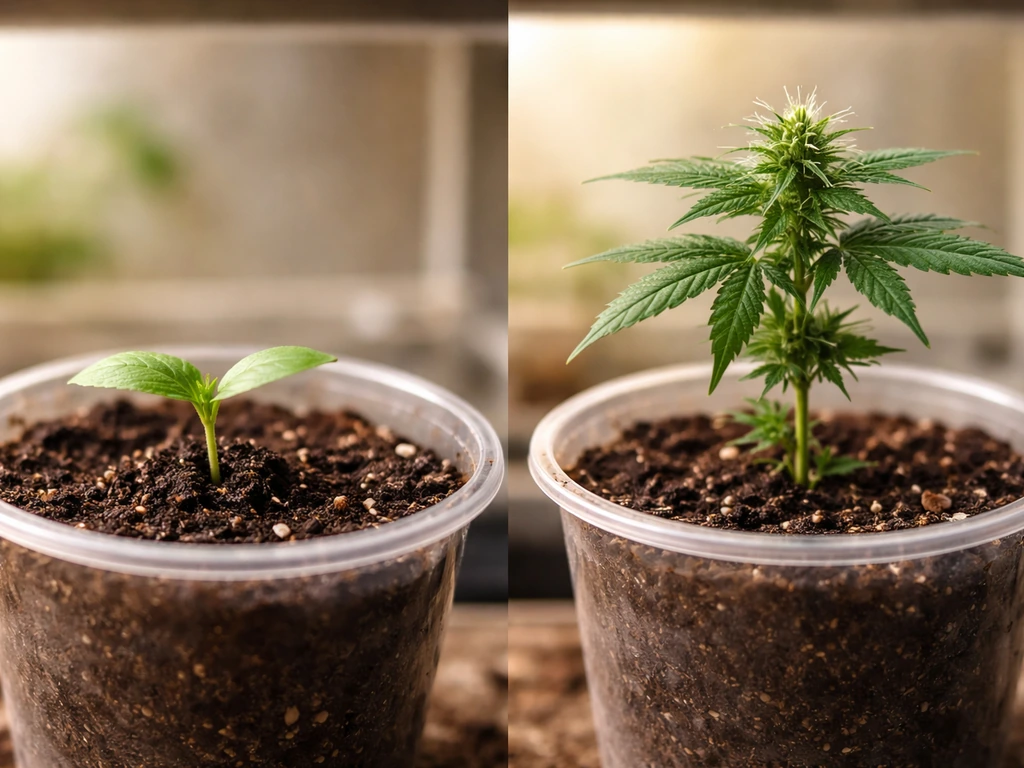
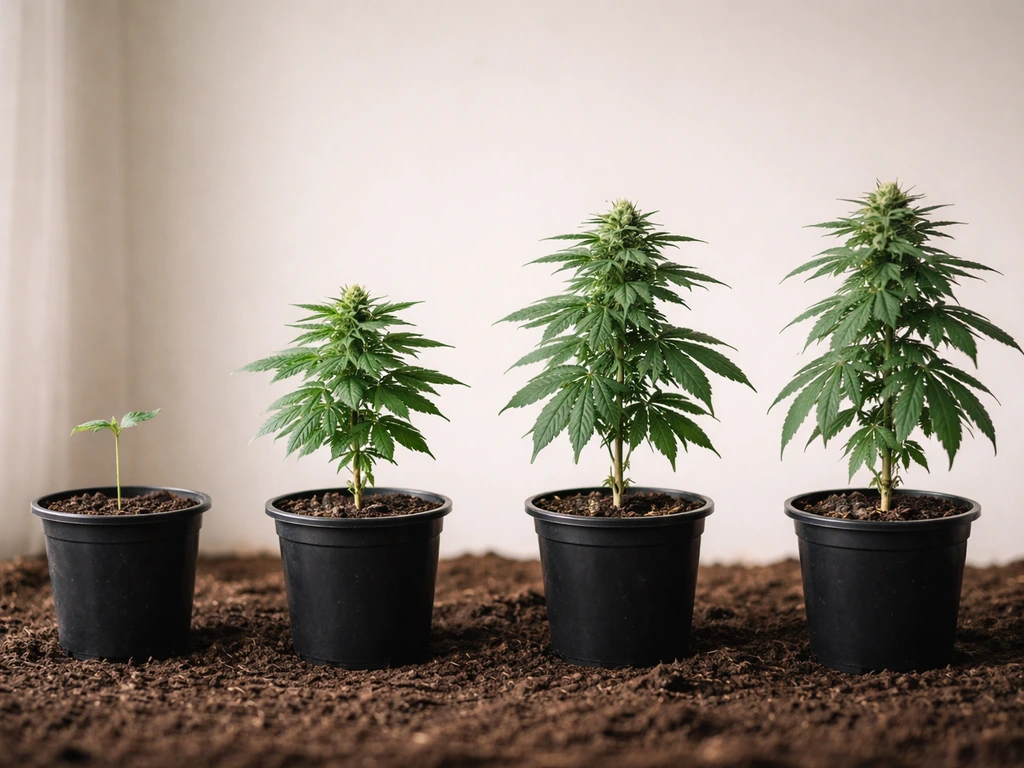
After the seedling stage wraps up around week 2, the plant moves into its vegetative phase. For autoflowers, this is short, typically just 3 to 5 weeks before flowering kicks in automatically. By weeks 4 to 5 from germination, you'll usually see the first signs of pre-flowers forming at the nodes, pistils (small white hairs) appearing, and the plant starting to stretch. This is flowering beginning, and it happens whether you change the lights or not.
Early flower runs from roughly weeks 5 through 8. The plant fills out, develops bud sites, and puts on significant vertical growth during this window. Late flower, the final ripening phase, generally falls in weeks 9 through 12 depending on the strain. This is when trichomes develop fully and you start watching for the amber-to-cloudy shift that signals harvest readiness. Checking trichomes under magnification around week 10 is a solid practice for most average-duration autos.
| Week | Stage | What to Expect |
|---|---|---|
| Week 1 | Germination / Seedling | Taproot emerges in 1–3 days, cotyledons open, first true leaves appear |
| Weeks 2–3 | Seedling / Early Veg | First true leaves, rapid root development, node spacing increases |
| Weeks 4–5 | Late Veg / Pre-flower | Pistils appear at nodes, plant begins to stretch, flowering transition begins |
| Weeks 5–8 | Early Flower | Bud sites stack, significant growth in size and structure |
| Weeks 9–12 | Late Flower / Ripening | Trichomes cloud and amber, calyxes swell, pistils orange/brown |
| Week 10–14 | Harvest Window | Check trichomes; harvest based on desired effect (cloudy vs. amber ratio) |
What actually changes how fast your auto finishes
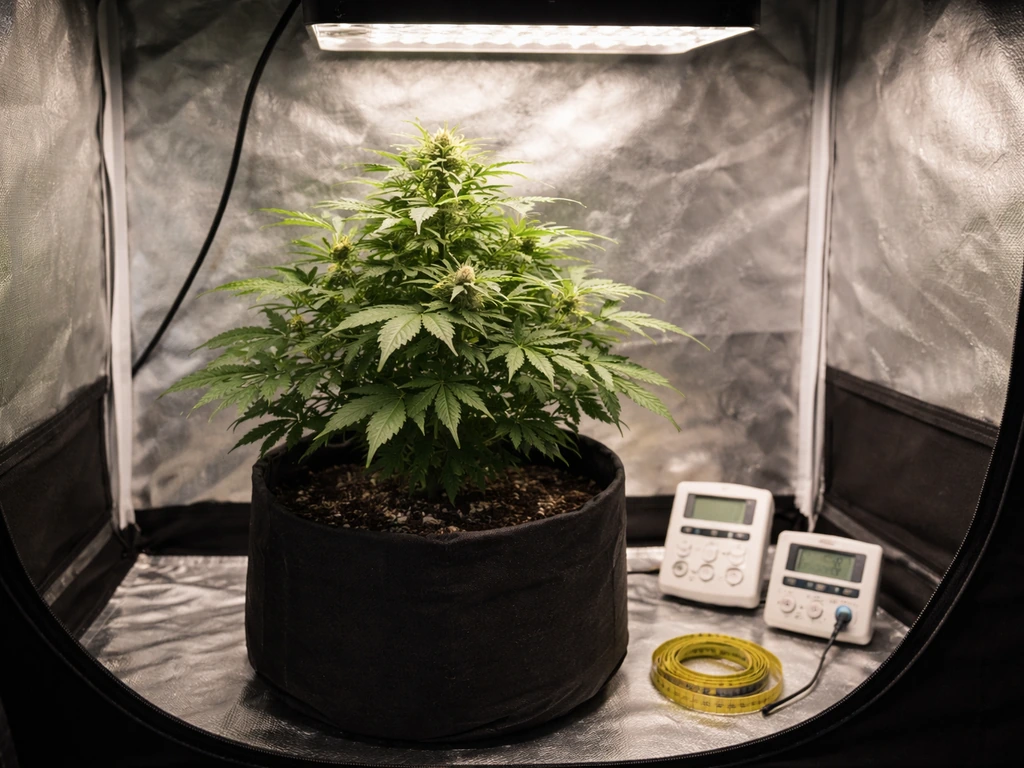
Genetics set the floor and ceiling for your timeline, but your environment and choices inside that window matter a lot. I've seen the same strain take 9 weeks in a dialed-in tent and 13 weeks when conditions were rough. Here's what has the most impact:
- Light hours and intensity: Autoflowers don't need a 12/12 trigger, so you can run 18/6 or even 20/4 (20 hours on, 4 hours off) from seed to harvest. More light generally means faster, denser growth. Many growers using 20/4 indoors hit that 75-day average more consistently.
- Temperature: Keep the grow space between 22–28°C (72–82°F) during lights-on for the fastest development. Temps below 18°C noticeably slow everything down.
- Humidity: Seedlings prefer 60–70% relative humidity. Flower stage should drop to 40–50% to reduce mold risk. Humidity that's consistently wrong slows development and invites disease.
- Watering rhythm: Overwatering is one of the most common growth-stoppers. The medium should partially dry between waterings to allow oxygen to reach roots.
- Pot size: Root restriction directly limits plant size and slows maturation. Most growers recommend at least a 7–15 liter (2–4 gallon) pot for autos. Smaller pots mean the plant finishes faster but smaller.
- Growing medium: Hydroponic setups can shave a week or two off total time compared to soil because nutrients are delivered directly to roots. Light, airy soil mixes (like coco coir blends) outperform dense, heavy soils.
- Nutrients and feeding: Autos are sensitive to overfeeding, especially nitrogen. Start at half the recommended dose and increase gradually. Nutrient burn or lockout can set the plant back by weeks.
- Genetics: This is the biggest variable. A fast-finishing auto like a Thai-cross or a purpose-bred 8-week strain will genuinely finish faster than a larger, more complex hybrid. Read the breeder's stated timeline and add about 2 weeks as a real-world buffer.
Planning your planting schedule: indoors vs outdoors
Because autos don't depend on day length, you have more flexibility in timing than with photoperiod plants. Indoors, you can start a new auto run at any time of year. Outdoors, the main constraint is temperature: soil temps and nighttime temps need to stay above about 10°C (50°F) consistently, and you want enough frost-free days to cover your full timeline. If you're growing outdoors in a temperate climate in late spring (around now, late April), you have a solid window for a full auto run finishing in late July or August.
For indoor grows, a simple planning approach is to count backward from your target harvest date. If you're wondering how long to grow seeds indoors, start by counting backward from your desired harvest date and use the stage timeline as your guide. That method also works well when you are estimating how long do autoflower seeds take to grow, because it ties everything to your actual end point count backward from your target harvest date. If you want to harvest in 10 weeks, start germination 10 weeks before that date. Use the week-by-week chart above as a tracking tool, and note any deviations so you can adjust your next run. Keeping a simple grow journal, even just a notes app on your phone, makes a huge difference in catching problems early and building a better mental model of your specific strain's rhythm.
Indoor vs outdoor auto grows: key differences
| Factor | Indoor | Outdoor |
|---|---|---|
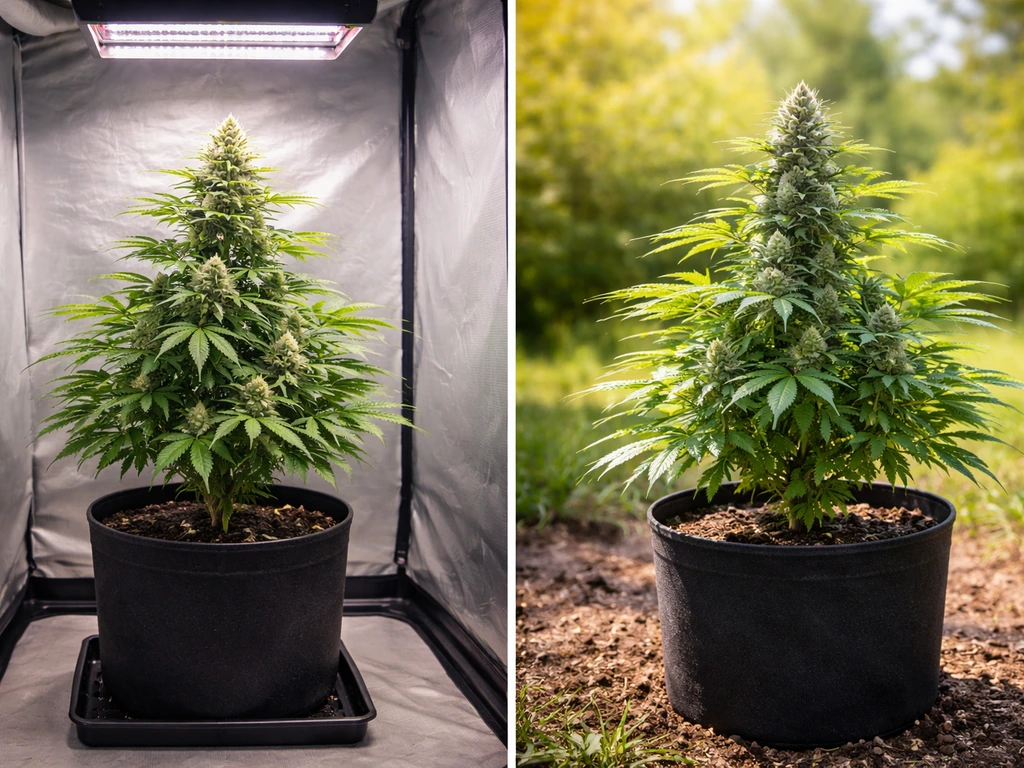
| Light control | Full control; 18/6 or 20/4 recommended | Dependent on natural daylight hours and season |
| Typical total timeline | 75–90 days under good conditions | 85–100 days (more weather variability) |
| Temperature management | Controlled via HVAC or fans | Dependent on climate; cold snaps can stall growth |
| Scheduling flexibility | Start any time of year | Constrained by frost dates and minimum temperatures |
| Yield potential | Consistent but limited by space/light | Higher potential per plant with strong summer sun |
| Risk factors | Overwatering, heat stress from lights | Pests, rain, temperature swings, UV variation |
Troubleshooting slow growth and germination problems
Slow growth frustrates everyone, and with autoflowers it hits harder because every wasted week is a larger percentage of the total grow. The good news is that most problems have a clear cause and a fix, as long as you catch them early.
Germination didn't happen after 3–5 days
First, check temperature. If it's below 21°C (70°F) at the germination spot, warm it up and wait another 48 hours. If the medium was soggy, try again with a fresh seed in a slightly drier setup. If the seeds are more than a couple of years old or were stored poorly, low germination rate is expected. Viable seeds are firm and dark-colored; pale, soft, or crushed seeds usually won't sprout. Give a non-germinated seed a maximum of 7 days before calling it. If nothing has happened by day 7 under correct conditions, that seed is likely not viable.
Seedling came up but growth stalled
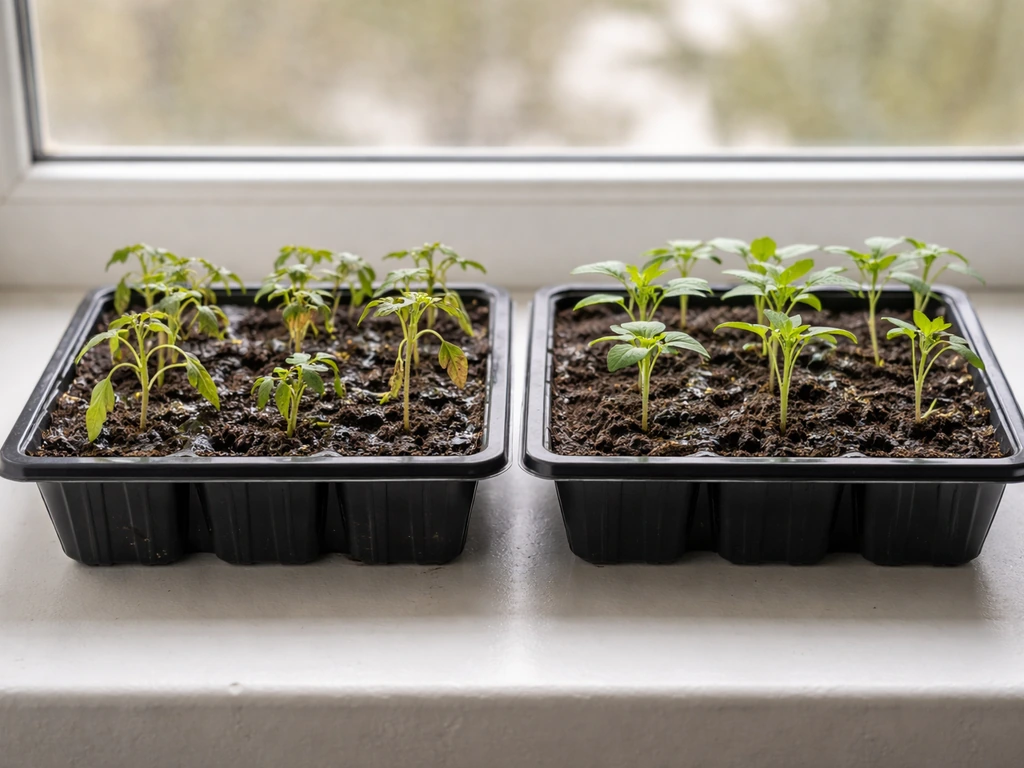
The most common culprits in the seedling stage are overwatering, low light, and cold temps. Seedlings don't need much water; the soil should be barely moist, not wet. If you're under a weak light source, the seedling will stretch and look pale and thin (a symptom called etiolation). Move it closer to a proper light source. Also check for damping-off, which is a fungal problem that causes the stem to pinch and collapse at the soil line. It's triggered by overly wet conditions and poor airflow. There's no saving a damped-off seedling, but you can prevent it by watering lightly and ensuring some air movement near the soil surface.
Plant is growing but looks unhealthy or stunted
Yellowing lower leaves often signal a nitrogen deficiency or, counterintuitively, overwatering that's preventing nutrient uptake. Curled leaf tips usually mean nutrient burn from overfeeding. Blotchy or spotted leaves can indicate pH issues in your water or soil, which block nutrient absorption regardless of what you're feeding. Check your water pH (6.0–7.0 for soil, 5.5–6.5 for hydro/coco) before anything else because pH problems are behind a surprising number of "mystery" growth issues. Also rule out root binding: if you started in a small cup or pot and the plant seems stuck despite good conditions, it may need to be potted up.
When to cut your losses and start over
Given that autos have a fixed life clock, a plant that gets severely stressed or stunted in the first 3 weeks rarely catches up enough to be worth continuing. If your seedling is showing severe damping-off, has been sitting in standing water, experienced prolonged cold below 15°C (60°F), or simply hasn't grown past the cotyledon stage by day 14, starting fresh with a new seed is usually the right call. The time cost of nursing a compromised auto through to a disappointing harvest is often higher than just restarting on a clean timeline. If you’re growing something different like cycads, the timeline is completely separate, so it helps to know how long do cycad seeds take to grow. Keep extra seeds on hand for exactly this reason.
Your action plan starting today
If you're planning a grow right now, here's the practical sequence to follow: If you are specifically growing aloe vera from seeds, the sprouting and timeline are very different from autoflower cannabis, so it helps to know how long aloe vera seeds take to grow before you plant.
- Choose your strain and check the breeder's stated seed-to-harvest time. Add 2 weeks to that number for a realistic worst-case planning window.
- Prepare your germination setup: damp (not wet) medium or cotton pad, temperature around 24–26°C (75–79°F), dark location.
- Germinate directly in your final pot if possible to avoid transplant stress (7–15L minimum).
- Check after 24 hours and expect to see a taproot within 1–3 days under good conditions.
- Track weekly progress against the stage chart above. Note dates for pre-flower signs (target: days 28–35) and early flower onset.
- Start checking trichomes under magnification around week 9–10 for average-duration autos, week 7–8 for fast strains.
- Harvest when trichomes are mostly cloudy with some amber, based on your preference for effect.
- Log everything: dates, watering schedule, any issues. Your second run will go much smoother with that reference.
FAQ
Do auto seeds take the same amount of time if I start counting from planting instead of germination?
Not usually. The article assumes timing from germination, since sprouting is easy to observe. If you count from planting into the medium, add the germination delay (often 1 to 3 days, sometimes longer if temps are cooler), so total days to harvest can look about 1 to 4 days longer on paper.
How can I tell if my auto is actually on schedule around week 3 to 5?
At weeks 4 to 5 from germination you should typically see the first pre-flower indicators at the nodes (and often stretching). If you are not past the cotyledon stage by about day 14, or there is clear stunting despite correct temps and light, it is a sign you may need to restart because autos usually cannot fully recover within their fixed timeline.
What’s the biggest reason an auto finishes later than the stated 70 to 90 days?
Early-stage stress is the common cause. In particular, prolonged cold (near or below the mid-teens C), overwatering that causes poor oxygen to roots, or weak light that leads to stretching can reduce final size and slow development, pushing harvest beyond the average even if flowering still starts automatically.
Can I speed up an auto grow to get harvest in under 8 weeks?
Only to a limited extent. Genetics set a hard floor, and the real-world minimum depends on how fast you can keep stable warm conditions during germination and seedling. If temps dip or seedlings stretch for light, “faster” targets like 56 days become unlikely, so it is safer to plan for 9 to 11 weeks unless your specific strain consistently proves otherwise.
Do autos keep growing if I harvest too early, can I wait longer instead?
Harvest timing affects maturity, not just size. If you harvest early, buds may lack full trichome development and can feel less potent or less “finished.” The article suggests checking around week 10 using magnification for the amber-to-cloudy shift, and that is the practical way to decide whether to hold off a bit longer.
Should I transplant autos or plant directly in the final pot?
Planting directly into the final container is usually the safer choice, since autos have less time to recover from transplant shock. If you must transplant, do it while roots are still small and avoid disturbing the root ball, because a setback in the first couple of weeks can reduce final yield more noticeably than with photoperiod plants.
What temperature range should I use to avoid slowing an auto down?
Aim to keep conditions warm and stable. The article calls out below about 21°C (70°F) around germination as a reason to warm and restart the waiting window, and it also flags prolonged cold below 15°C (60°F) as a severe limiter for autos. Consistent nighttime temps matter especially for outdoor runs.
How many frost-free days do I need for an outdoor auto to finish?
Use the full timeline as your baseline, then add a buffer. The article emphasizes keeping soil and nighttime temps above roughly 10°C (50°F) consistently and ensuring enough frost-free days to cover the whole run. Practically, if your strain is at the long end of the range, plan around closer to 12 weeks plus weather margin rather than the “fastest case”.
If one seed doesn’t sprout by day 7, should I try again immediately?
Yes. The article suggests giving a non-germinated seed a maximum of 7 days under correct conditions, then calling it non-viable. Restarting quickly protects your schedule, especially for autos where each lost week is a larger fraction of the total grow.
My auto started flowering, but buds seem small. Does that mean it will still catch up later?
It may not. If severe stress or stunting happened in the first 3 weeks, autos often cannot “catch up” enough to reach typical final size. The more likely outcome is reduced plant size and yield even if flowering timing proceeds automatically, so diagnosing early issues (water, light, pH) matters most.
Can pH issues affect how long my auto takes to finish, or only final quality?
Both. Poor pH can block nutrient uptake, which can slow growth and lead to symptoms like yellowing, spotting, or delayed development. Since the overall timeline is tightly paced, a pH-driven nutrient problem can extend real days-to-harvest beyond the genetic average, not just change appearance or potency.
Next Article
How Long Do Sedum Seeds Take to Grow From Seed
Know how long sedum seeds take: germination, seedling strength, and timing to full size and blooms from seed.