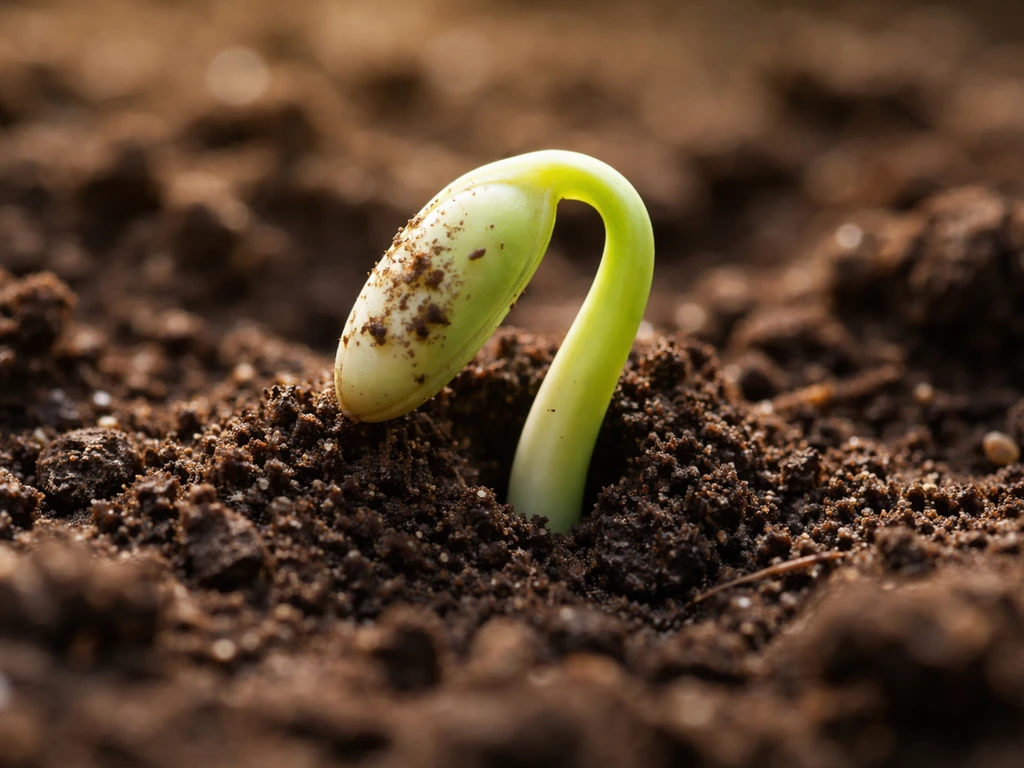
Growing a date palm from seed is a long game. You can expect the seed to sprout in anywhere from 3 to 8 weeks under good conditions, though it can stretch to 2 to 5 months if conditions aren't ideal. Getting the seedling to a meaningful size takes another year or two. And if you're hoping to harvest actual dates, brace yourself: seed-grown palms typically start bearing fruit somewhere between 4 and 8 years after planting, with full production not kicking in until 10 to 12 years. That's not a typo. But the good news is the process is genuinely satisfying, and germination itself is pretty reliable if you set things up right.
How Long Does It Take to Grow Dates From Seed?
Marcus Henley
26 Apr 2026
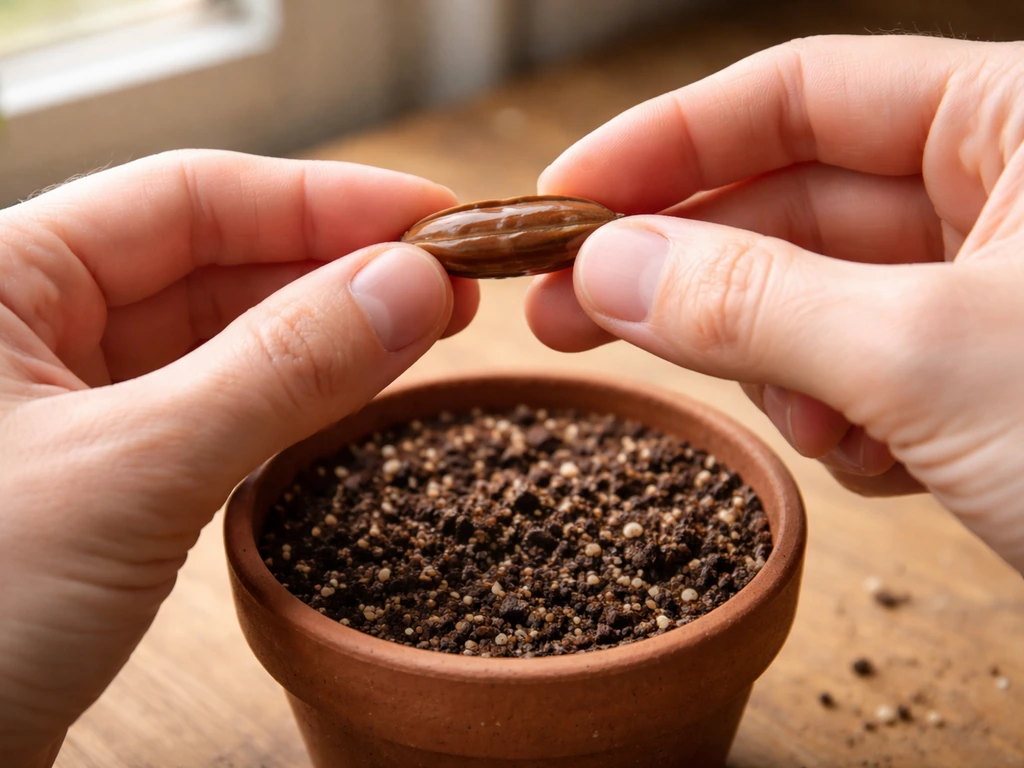
The realistic timeline from seed to mature palm
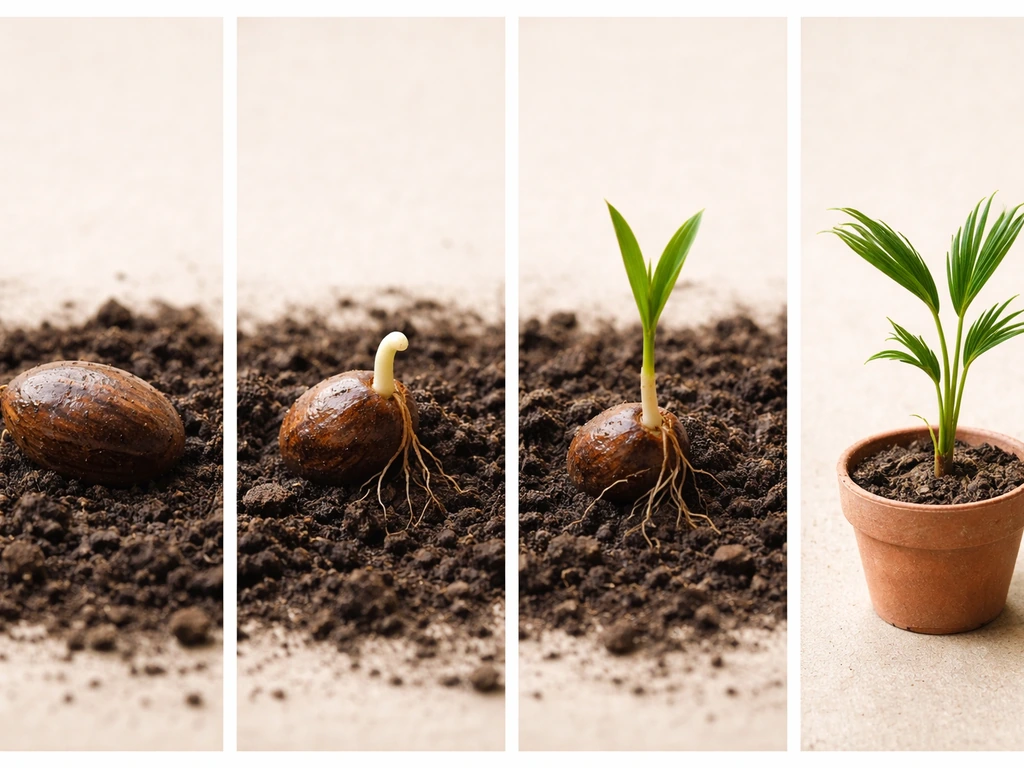
Here's the full arc so you know what you're signing up for before you plant that seed.
| Stage | Typical Timeframe | What to Expect |
|---|---|---|
| Germination (seed to sprout) | 3–8 weeks (up to 5 months) | A single pale shoot emerges from the seed |
| First foliar leaf | About 3 weeks after sprouting | A narrow, strap-like leaf appears |
| Established seedling | 6–8 weeks after sprouting | Root system anchored, first true growth underway |
| Juvenile palm (knee-height) | 1–3 years | Multiple feather leaves forming, trunk begins to develop |
| First flowering | 4–7 years (seedlings often 7+) | Sex of the palm becomes apparent at this point |
| First fruit (if female) | 4–8 years after planting | Small crop possible, quality unpredictable from seed |
| Full fruit production | 10–12 years | Peak yield, full canopy established |
To put this in perspective: a zucchini goes from seed to harvest in about 50 days. A date palm from seed to first fruit is closer to 2,000 days at the absolute minimum, and more realistically 7 to 10 years before you see a meaningful harvest. This is more comparable to growing grapes or persimmons from seed, both of which also require years of patience before payoff.
For a persimmon, the timeline is also measured in years once you start from seed persimmons from seed. If you're also wondering about fruiting timelines, grapes grown from seed take similarly long and require patience before you see real harvest potential how long does it take to grow grapes from seed. If you just want an ornamental conversation-piece palm in a pot, the timeline is much more forgiving.
But if dates are the goal, the seed route is genuinely slow.
What actually controls how fast your date seed sprouts
Germination speed for date palms isn't random. Five factors have the biggest influence, and getting all of them right dramatically tightens that 3-to-8-week window.
Seed freshness and viability
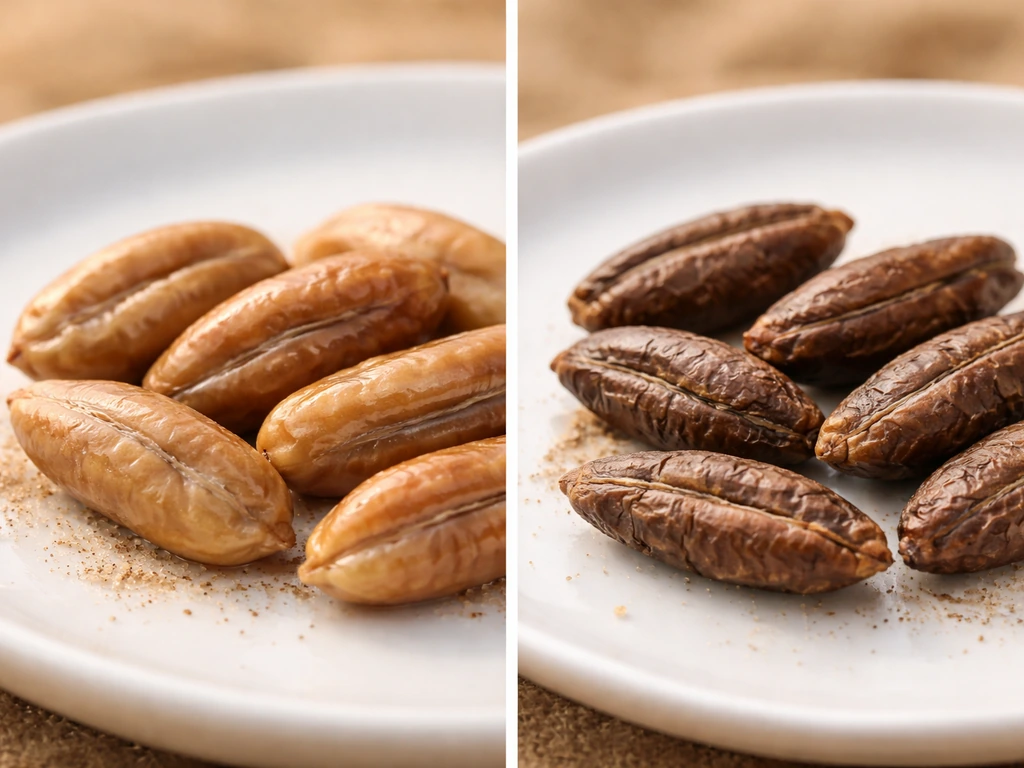
Fresh seeds germinate faster and more reliably than old ones. Seeds saved from store-bought dates (which are often dried, heat-treated, or months old by the time they reach you) may still germinate, but expect lower rates and longer delays. Seeds stored under proper cool, dry conditions can retain high viability, but every month of poor storage chips away at that. If you can source seeds directly from a fresh fruit or a reputable supplier, your germination odds go up noticeably.
Temperature
This one is huge. Date palms evolved in hot desert environments. Their optimal growing temperature is around 32°C (about 90°F), and growth essentially stops below 7°C (45°F). For germination, you want consistent warmth, ideally 25–35°C (77–95°F). A heat mat set to around 30°C is genuinely one of the most effective tools for home germination. Cool windowsill temperatures in the 18–22°C range will slow things down significantly and can push you into that 3-to-5-month window even with otherwise good conditions.
Soaking before planting
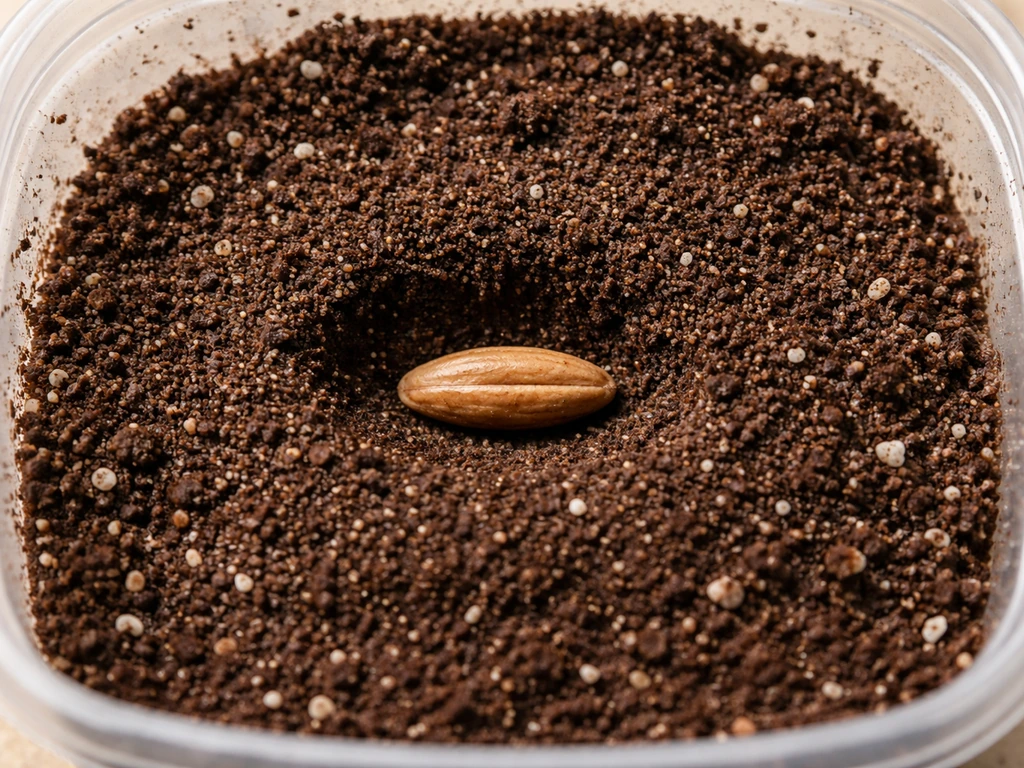
Soaking the seed in warm water for 24 to 48 hours before planting softens the hard outer coat and jumpstarts moisture uptake. Some growers change the water once or twice during soaking to remove germination inhibitors from the seed coat. This simple step can shave days or even a couple of weeks off your wait.
Planting depth and growing medium
Research on palm seed germination consistently shows that depth matters more than most people realize. Planting at about 0.5 inches (1.25 cm) deep gives the seed stability, moisture access, and darkness, which dramatically outperforms surface sowing. In one ASHS study comparing substrates and depths, seeds sown at 0.5 inches reached nearly 80% germination, while seeds surface-sown in sand barely broke 2%. The medium itself should be well-draining but moisture-retentive. A mix of coarse sand and perlite, or sand and peat, works well. Pure sand dries out too fast at the surface; heavy potting mix stays too wet and invites rot.
Consistent moisture
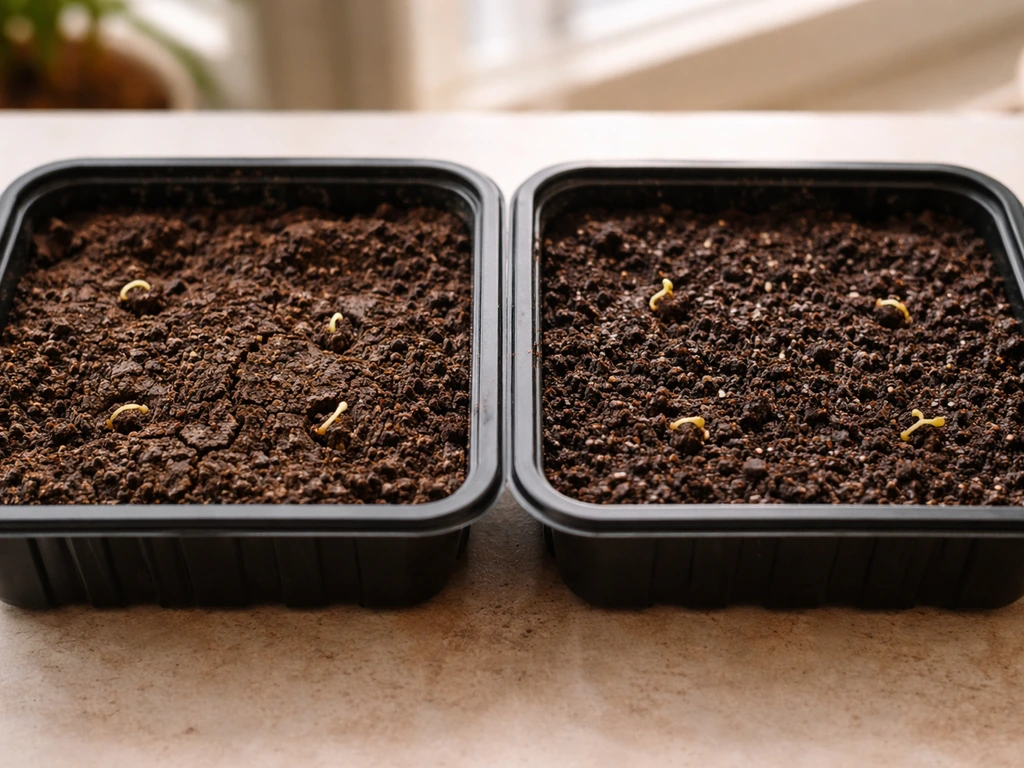
The medium should stay evenly moist but never waterlogged. Too dry and the seed desiccates before the radicle can emerge. Too wet and you're inviting fungal rot, which is the most common killer of date seeds in the germination phase. Think of a wrung-out sponge as your moisture target.
When germination actually happens: the day and week ranges
Under optimized conditions (warm temps, pre-soaked seed, good medium, consistent moisture), date palm seeds can germinate in as few as 28 days. One International Palm Society study recorded a mean germination period of about 50 days across treatment groups. The broader real-world range for home growers is about 3 to 8 weeks when conditions are good, expanding to 2 to 5 months when temperatures are cooler, seeds are older, or conditions are inconsistent.
The University of Nevada Reno Extension reports that roughly 80% of palm seeds germinate within 2 to 5 months under general conditions, which is a useful baseline to keep in mind. The University of Nevada Reno Extension reports that roughly 80% of palm seeds germinate within 2 to 5 months under general conditions.
The lag period before any visible action is normal and often longer than people expect. Nothing may happen for the first two to three weeks even with a perfectly healthy seed. That waiting phase, before the radicle has emerged and started showing at the soil surface, is where most people either give up or overwater out of anxiety. Resist both urges.
How to speed up germination and actually get results
Step-by-step setup for best results
- Clean the seed thoroughly. Remove all fruit pulp from the stone. Residual pulp can harbor mold and interfere with germination. Rinse well.
- Soak in warm water for 24 to 48 hours, changing water once. Use water around 30°C if you can manage it.
- Fill a small container (a seedling tray or 4-inch pot works fine) with a well-draining mix: roughly 50% coarse sand, 50% perlite or coco coir.
- Plant the seed on its side or with the pointed end slightly downward, about 0.5 inches deep.
- Water gently to settle the medium, then place on a heat mat set to 28–32°C.
- Cover loosely with plastic wrap or a humidity dome to retain moisture without sealing off airflow entirely.
- Check every few days. Re-moisten only if the surface is starting to dry. Do not water on a fixed schedule.
The bag method (great for impatient growers)
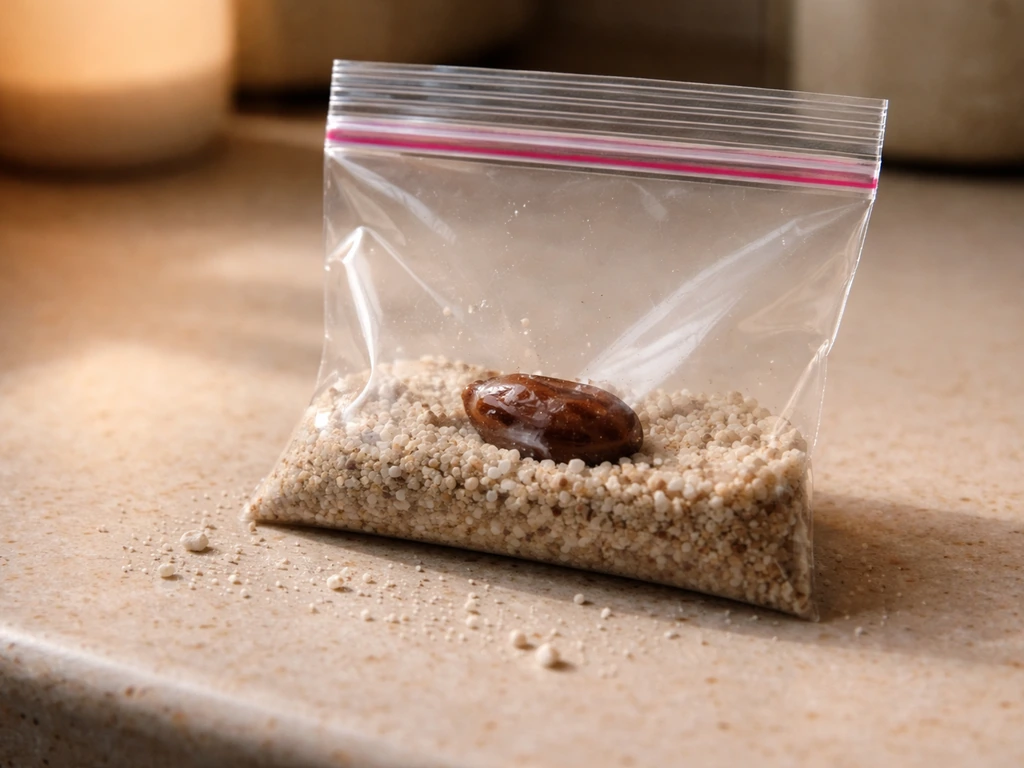
A reliable alternative to direct sowing is the plastic bag method: place the pre-soaked seed in a zip-lock bag with a small handful of barely-moist perlite or coarse sand, seal it, and set it on top of your heat mat or refrigerator (anywhere consistently warm). Check every few days. When you see a white radicle emerging from the seed, transfer it carefully to your prepared pot with the root pointing down. This method lets you skip the anxious guessing and only pot up seeds you know have sprouted.
After sprouting: how fast does the seedling actually grow?
Once you see that first pale shoot push through the soil, the real growing begins. The initial shoot is not a true leaf but a green spear. Within about three weeks of sprouting, the first foliar (strap-like) leaf typically emerges. By six to eight weeks after germination, you'll have an anchored seedling with a small but established root system. This is when you can transition it to a slightly larger pot with a more nutrient-rich mix.
Seedling growth in the first year is notoriously slow by garden standards. A date palm seedling at 12 months old might be 6 to 12 inches tall with a handful of narrow, feather-like fronds. In year two, growth picks up as the root system expands. By years two to three you'll have a recognizable juvenile palm, though still nowhere near a trunk. True trunk formation in date palms doesn't usually begin until the palm is several years old and the stem has built up enough girth from the inside out.
Keep your seedling warm (above 7°C at all times), in full or near-full sun once it has a few leaves established, and water regularly but never in standing water. Date palms are drought-tolerant once established, but seedlings need more consistent moisture than mature plants.
What 'maturity' actually means for a date palm grown from seed
This is the part most articles gloss over, and it's worth being direct: a date palm grown from seed is genuinely unpredictable in a way most other trees aren't. Date palms are dioecious, meaning individual plants are either male or female, and you cannot tell which you have until the palm flowers. That first flowering typically happens no sooner than 4 to 7 years after planting, and for seedlings (as opposed to offshoots), FAO notes it can be as late as seven years or more.
If your palm turns out to be male, you'll never get fruit from it. If it's female, you'll need a male nearby and manual pollination. And even then, the fruit quality from seed-grown palms is unreliable. The female could produce dates that are nothing like the variety you planted the seed from. About half of all seedlings will be male. This is exactly why commercial date growers use offshoots (suckers taken from known-good female palms), which can begin fruiting 2 to 3 years sooner than seedlings and produce fruit true to the parent.
| Goal | Seed-grown timeline | Offshoot-grown timeline |
|---|---|---|
| First flowering | 4–7+ years | 3–5 years |
| First fruit (if female) | 4–8 years | 2–5 years |
| Reliable fruit quality | Not guaranteed | True to parent variety |
| Sex known at planting | No | Yes (if from known female) |
| Full production | 10–12 years | 7–10 years |
If you're growing from seed purely for the love of the process, the ornamental appeal, or to see if you get lucky, that's completely valid. Lots of people keep date palms as container specimens and never expect a date harvest. As an ornamental, 'maturity' just means a full, healthy canopy and established trunk, which you can realistically have in five to eight years. That's a more satisfying timeline than waiting for fruit, and a date palm in a pot is genuinely beautiful.
Troubleshooting: when nothing is happening (or things go wrong)
No sprout after 8 weeks
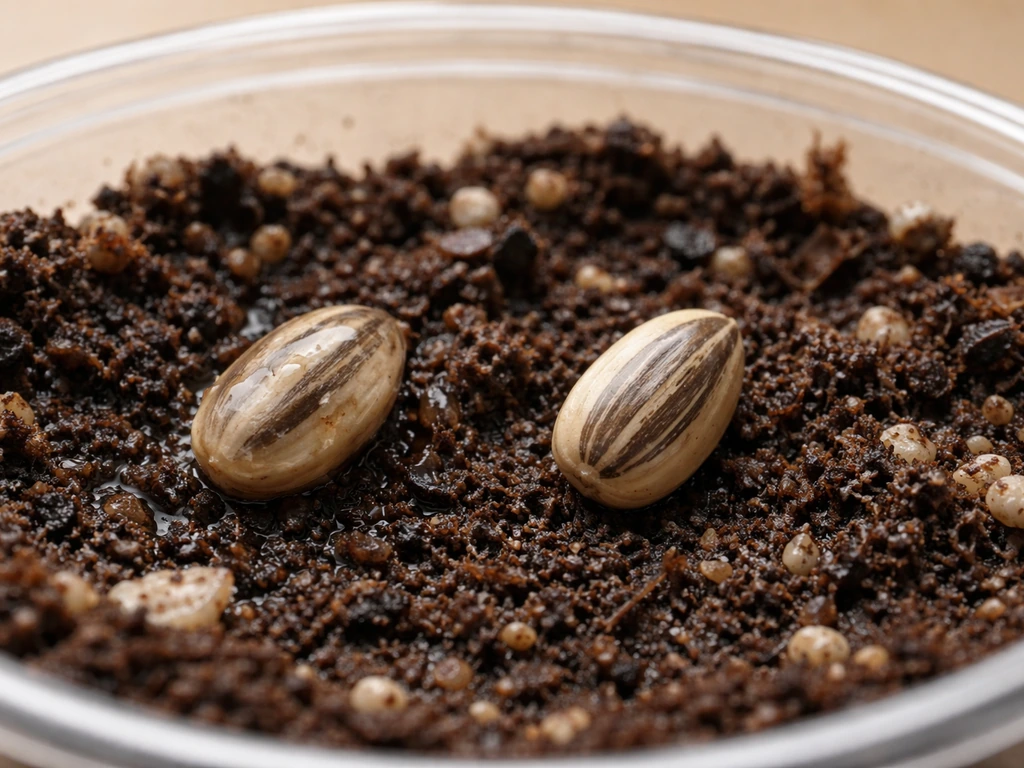
First, check your temperature. If your germination spot is below 25°C, that's almost certainly the culprit. Move the pot to a warmer location or add a heat mat. Eight weeks with no action doesn't automatically mean a dead seed. Date palms can have a natural lag period, and if conditions have been suboptimal, the seed may still be viable and just waiting for warmth. Give it to 12 weeks before writing it off, especially if temps have been cool.
Seed has gone soft, slimy, or smells bad
That's rot, and it usually means the medium was too wet or the seed wasn't cleaned thoroughly before planting. Pulp residue on the stone is a classic cause because it provides a food source for mold and bacteria. If you're using the bag method, you'll catch this early and can simply start over with a new seed. In a pot, it's harder to detect until it's too late. Going forward, use a sandier mix and be more conservative with watering.
The sprout emerged but growth has stalled
Slow early growth after sprouting is very normal for date palms. The seedling is putting most of its energy into root development, which you can't see. If the seedling looks healthy (green, firm, not yellowing), just keep conditions consistent and patient. If the seedling is yellowing, it may need more light or slightly better drainage. If it's pale and elongated, it's reaching for light. Move it to a brighter spot.
Very low germination rate from multiple seeds
If you planted five seeds and only one sprouted, suspect seed quality first. Seeds from commercial dried dates have often been through conditions that reduce viability. Try sourcing from a different supplier, or use seeds from fresh Medjool or similar soft dates rather than heavily dried varieties. Also double-check that you're planting to the right depth (around 0.5 inches) and that your medium isn't either bone dry or waterlogged.
A note on patience compared to other seeds
If you've come here after growing something fast like beans or zucchini, date palm timelines will feel almost absurd. Beans sprout much faster than date palms, so if you are mainly curious about how quickly a bean seed gets going, the timeline is usually measured in days rather than weeks how long does it take to grow a bean seed.
Even compared to slow-starting trees like bamboo or bonsai grown from seed, the date palm's path to any kind of fruiting maturity is exceptional. Going in with accurate expectations is genuinely the most useful thing you can do. If you're wondering how long it takes to grow bonsai from seed, the early timeline is also measured in years rather than weeks. Germination itself is very achievable at home.
Getting to fruit is a multi-year commitment, but the palm you'll have growing in your garden or container along the way is worth the ride.
FAQ
Can I get dates from a date palm grown from seed, or will I likely waste years?
Plan on fruit only after you know the sex. Seed-grown palms can take at least 4 to 7 years to flower, and if you buy seeds that were taken from unknown parents you may end up with no dates (male) or require a compatible male nearby (female).
What should I do if my date seed has not sprouted after 8 weeks?
If you do not see any swelling or radicle after about 8 to 12 weeks, test viability before giving up. Carefully unbury one seed, rinse off pulp residue if present, and check whether the interior still looks firm and white rather than hollow or blackened.
How many date seeds should I plant to improve my chances of getting fruit?
If you want multiple chances for fruit, start with several seeds because about half will be male. For the best odds, germinate more than you need, then keep the strongest seedlings and plan later for pollination.
When should I start fertilizing after a date palm seed sprouts?
Do not rush fertilizing. In most home setups, feed lightly once the seedling has produced its first strap-like leaf (about 3 weeks after germination) and then taper to a gentle schedule, otherwise you risk salt buildup in small containers.
When is the right time to move the sprouted seedling into a larger pot?
Transplant after the root is established, but before it outgrows the container. A good rule is to pot up when you can handle the seedling without snapping roots, typically around 6 to 8 weeks after germination when the seedling is anchored.
How often should I water a date palm seedling, and how can I avoid rot?
Use a potting mix that drains well and do not let water sit in the saucer. For seedlings, your main killer is rot from waterlogged medium, so bottom drainage and conservative watering matter more than frequent misting.
Can I grow a date palm from seed entirely indoors?
Yes, but container height depends on temperature and light. In cooler homes, you may keep it as a long-term indoor specimen longer, but you will likely slow growth, especially trunk development, compared with warm sunny conditions.
Is it safe to put my date palm outside in spring, and what temperatures should I avoid?
Cold stress is usually worse before germination than after. If you germinate indoors, keep the germination zone consistently above about 25°C, then once leaves are established you can tolerate slightly cooler conditions but avoid exposing seedlings to near-freezing temperatures.
Will seed-grown dates taste like the store-bought dates I used for the seed?
Because seed-grown date palms vary, the fruit will not be identical to the parent variety. If you want true-to-type dates, you generally need offshoots from known female palms, which tend to fruit sooner and more reliably than seedlings.
How can I tell if my date palm is male or female before it flowers?
Male or female cannot be confirmed until flowering, which may take 4 to 7 years. If you need to plan pollination, keep more than one plant and treat sex identification as a long-term milestone rather than something you can verify early.
Next Article
How Long Does It Take to Grow a Bean Seed
Timelines for growing beans from seed to harvest, including long beans, plus factors and troubleshooting for quick germi