Lavender takes 14 to 28 days to germinate from seed under good conditions, and anywhere from 90 days to a full year to reach a plant worth transplanting into your garden. That range feels frustratingly wide, I know, but the honest answer is that lavender is one of the slower herb seeds out there, and knowing why helps you plan around it rather than panic when nothing happens in the first two weeks.
How Long Does It Take Lavender to Grow From Seed?
Marcus Henley
5 Apr 2026
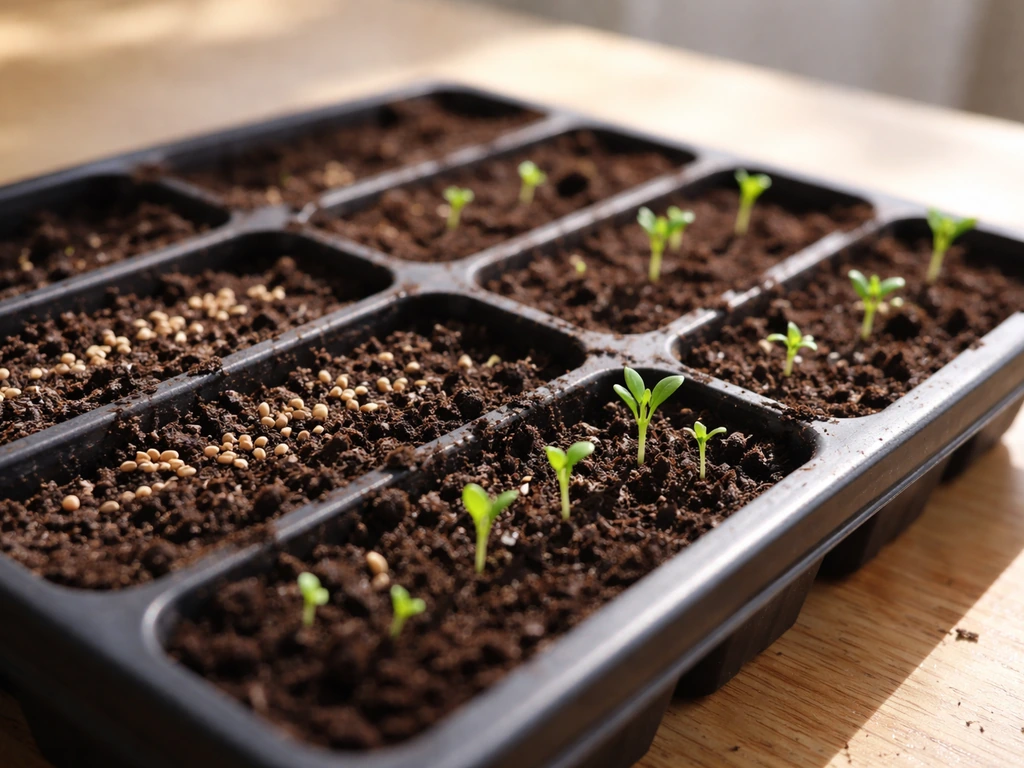
The full lavender-from-seed timeline
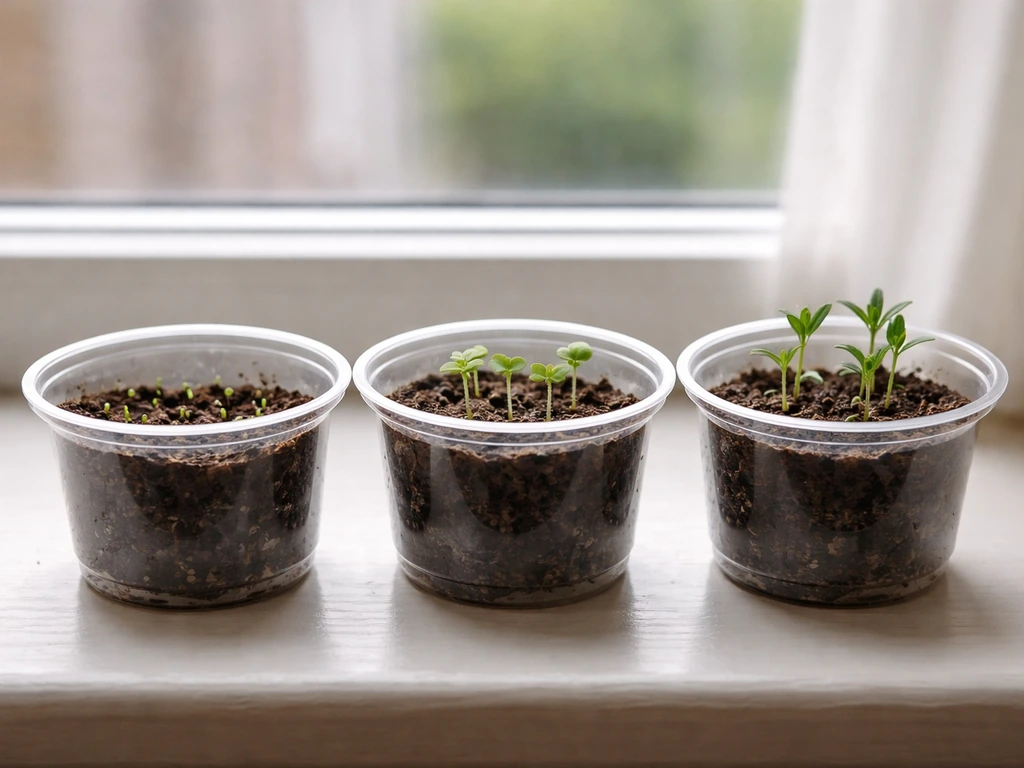
Here is what you are actually looking at from the day you sow to the day you have a real lavender plant:
| Stage | Typical Timeframe | Notes |
|---|---|---|
| Germination (seed sprouts) | 14–28 days | Faster at 65–70°F; can stretch to 90 days without stratification or in cool rooms |
| Seedling establishment | 4–6 weeks after germination | First true leaves appear; root system developing |
| Transplant-ready plug/seedling | 9–12 weeks from sowing | Benary and Syngenta both cite a 9–10 week plug crop time |
| First flower stalks (Year 1) | Late summer to fall of Year 1 (or spring of Year 2) | Munstead is earliest; some varieties skip flowering entirely in Year 1 |
| Full mature plant | 2–3 years from seed | When the plant reaches full spread and consistent annual bloom |
The key thing to internalize is that lavender is a perennial. You are not growing something that produces a useful harvest in one season. You are building a plant that will live in your garden for years, and the first year is mostly about root development. Flowers in Year 1 are a bonus, not a given.
How long lavender seeds actually take to germinate
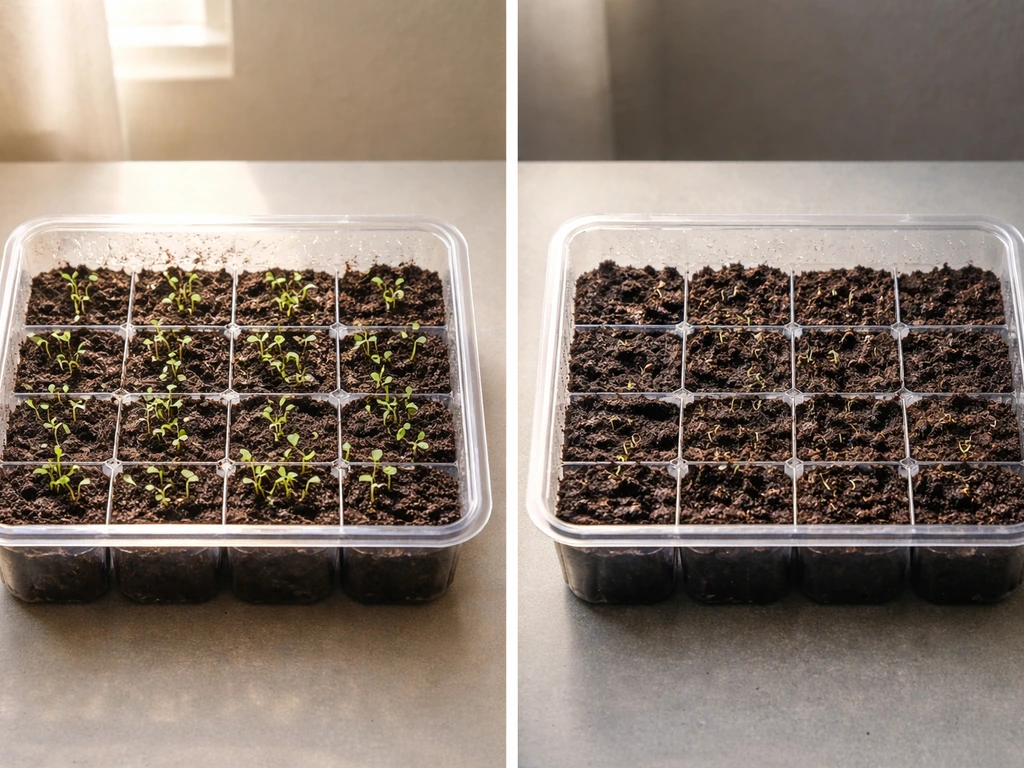
Under ideal conditions (65–70°F, surface-sown, moist but not wet, with light hitting the seeds), lavender germinates in 14 to 21 days. That is the number Johnny's Selected Seeds and Harris Seeds both list, and it matches what I see in a warm seed-starting setup. Burpee puts the window at 14 to 28 days, which is a fair real-world range once you account for home setups that are not perfectly temperature-controlled.
Without stratification (the cold-chill period that breaks seed dormancy), you can wait much longer. Walker Farm's germination guide documents a range of 21 to 90 days at a cooler 55–65°F, with a recommended 4 to 6 week pre-chill before sowing. That 90-day tail end is not a failure; it is just what lavender does when conditions are not quite right.
One critical detail that catches a lot of first-time lavender growers off guard: lavender needs light to germinate. Do not cover the seeds with soil or vermiculite. Surface-sow them and press them gently onto a moist mix so they make good contact, but leave them exposed. Harris Seeds even puts it in all caps in their instructions: DO NOT cover seed. Burying them is one of the most common reasons germination fails entirely.
What actually affects how fast lavender grows
Variety
Not all lavender is equal when it comes to germination speed. Lavandula angustifolia varieties like Munstead and Hidcote are the most commonly grown from seed, and Munstead is generally considered the easiest and fastest of the bunch. Spanish lavender (L. stoechas) and lavandin hybrids (L. x intermedia) are harder to start from seed and often more reliably propagated from cuttings. If speed matters to you, start with Munstead.
Temperature
Lavender seeds germinate best at 65 to 70°F. Go warmer and you may see some germination but also more rot risk. Go cooler and germination slows dramatically. Benary notes that cooler cultivation temperatures (around 54–59°F, or 12–15°C) can add 3 to 4 weeks to the overall timeline from seedling to flowering. If your seed-starting area is chilly, this is worth keeping in mind.
Stratification
Cold stratification is not strictly required for every lavender seed to germinate, but it makes a meaningful difference in both germination rate and speed. Vernalization (a longer cold exposure required to trigger flowering, at least 15 weeks at 35–41°F according to Benary) matters later in the plant's life for getting those first flower spikes. Pre-sowing stratification is the shorter step: 4 to 6 weeks in a fridge before sowing, which mimics winter and signals the seed to sprout when warmth returns.
Light
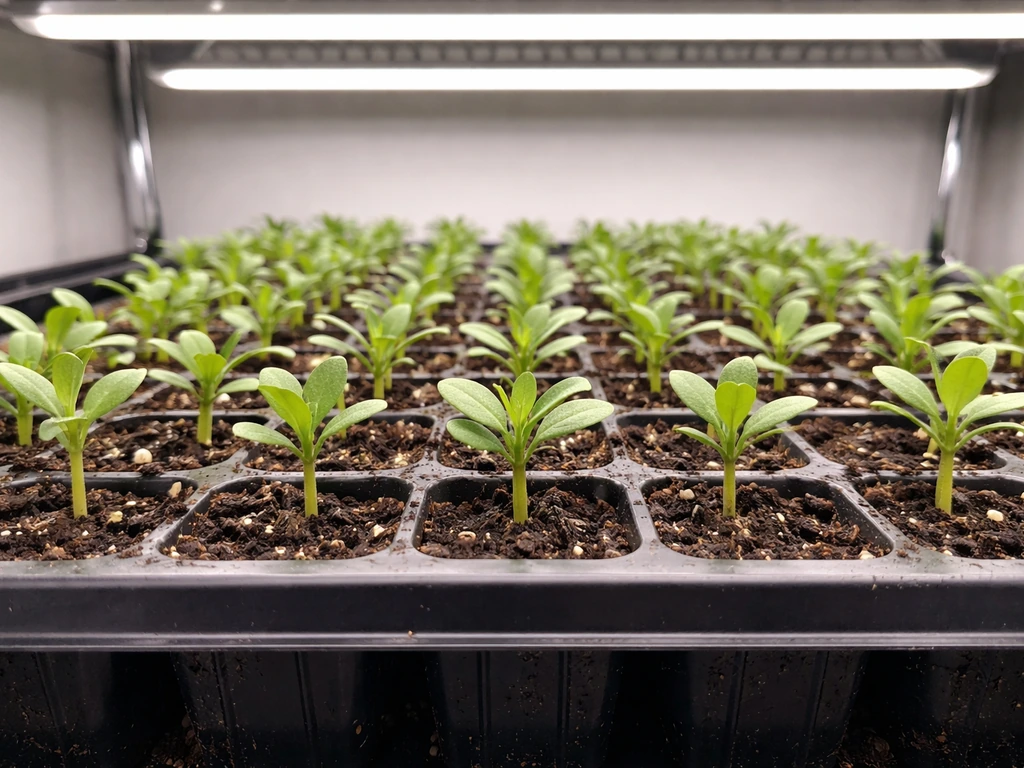
As mentioned above, light is not optional for germination. Once seedlings emerge, they need strong light immediately or they will stretch and become weak. Burpee recommends grow lights on a 16-hour-on, 8-hour-off schedule after emergence. A south-facing windowsill can work in spring but often is not bright enough in winter months, which is when most people are starting lavender for transplanting after last frost.
Moisture
Moist but never soggy is the rule. Lavender hates wet roots even as a tiny seedling. Use a well-draining seed-starting mix, keep it consistently damp during germination, and ease off once sprouts appear. Overwatering is a fast track to damping off, which will kill seedlings that took three weeks to appear.
Seed starting indoors vs. direct sowing outside
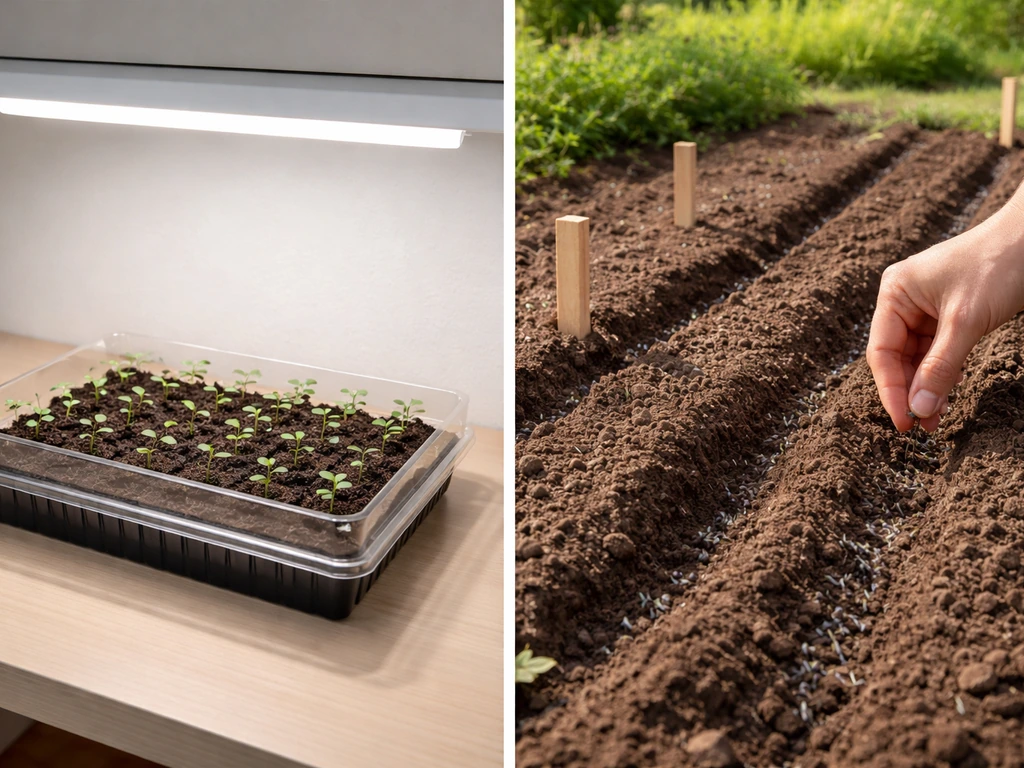
Direct sowing lavender outside rarely works well in most climates, and when it does, it is slow. You are at the mercy of soil temperature, competition from weeds, and erratic spring moisture. For most gardeners, starting indoors is the clearly better option, and it also gives you a meaningful head start on the season.
For indoor starting, Botanical Interests recommends beginning 10 to 12 weeks before your average last frost date. Johnny's puts it at 8 to 10 weeks before last frost. Seed Needs targets 6 to 8 weeks for Munstead specifically. The variation comes down to how much lead time you want before transplanting and how warm your setup is. I generally aim for 10 weeks before last frost, which gives me a comfortable buffer without the seedlings getting pot-bound before it is safe to plant outside.
If you do try direct sowing, do it in early spring so the seeds get a natural cold period from lingering cool temperatures, and accept that germination and establishment will take longer than an indoor start. You will also lose more seeds to birds, slugs, and unpredictable spring weather.
| Method | When to Start | Time to Transplant | Germination Control | Best For |
|---|---|---|---|---|
| Indoor seed start | 8–12 weeks before last frost | After last frost (established seedling) | High (temperature, light, moisture all managed) | Most home gardeners; best success rate |
| Direct sow outdoors | Early spring or fall | No transplant needed but very slow to establish | Low (weather-dependent) | Mild climates with predictable spring weather |
| Cold stratification + indoor start | 12–14 weeks before last frost (including chill time) | After last frost | Highest (mimics natural dormancy break) | Best germination rates; recommended for slow or failed batches |
When to sow based on your climate and goals
The most useful way to plan your lavender sowing schedule is to work backward from your last frost date. If your last frost is April 15, you want to be sowing indoors in late January to early February, accounting for 10 to 12 weeks of indoor growing time. If you are doing a cold stratification period first (recommended), add another 4 to 6 weeks before that, which means starting your chill period in mid-December.
For gardeners in warmer climates (USDA zones 7–9), lavender can also be started in late summer for a fall planting, which gives the plant a cool, wet winter to establish roots before the heat of summer hits. This timing often produces stronger first-year plants than a spring sowing because the plant is not trying to establish in warming temperatures while simultaneously pushing new growth.
In cold climates (zones 4–6), protect young transplants from late frosts and consider a cold frame for the first season. Utah State University Extension specifically recommends cold-frame protection for young lavender plants, and it is good advice: a plant you spent three months starting from seed is worth a little extra protection in its first weeks outside.
If you are growing something similarly patient and want to compare notes on timing, how long it takes to grow hydrangeas from seed follows a similarly slow arc and shares some of the same planning logic around cold exposure and indoor starting.
What to do when germination is slow or not happening
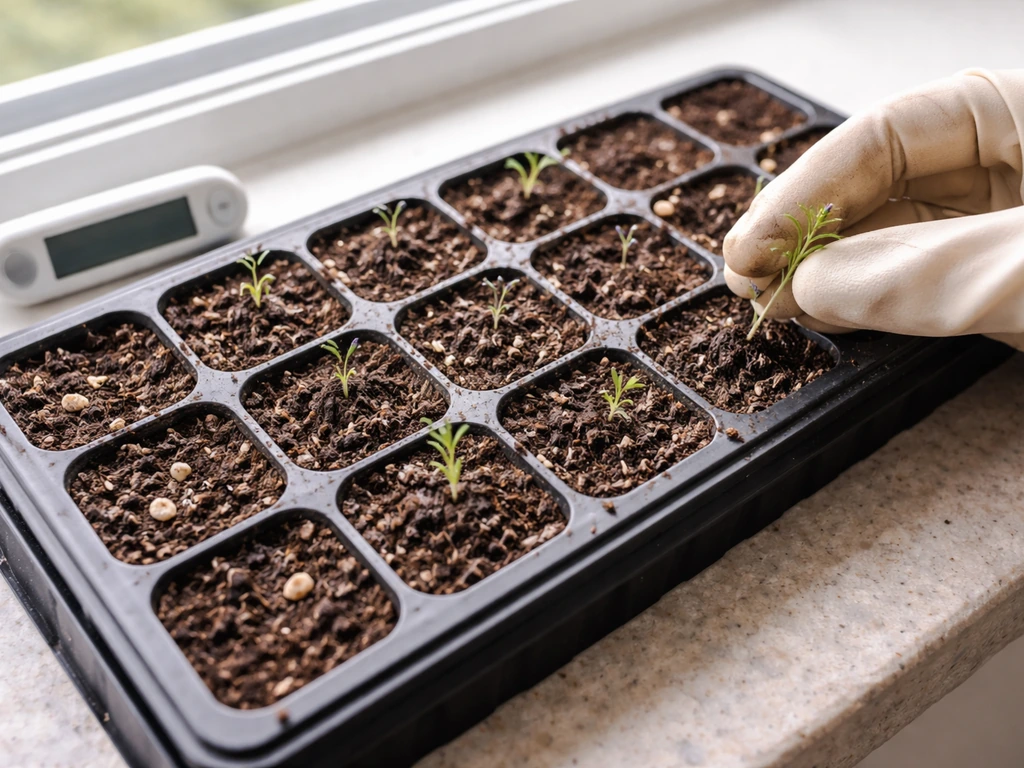
Slow germination is normal with lavender. Do not throw out the tray after two weeks. Here is a practical troubleshooting sequence based on what actually works:
- Wait longer first: Lavender can take up to 28 days in good conditions and up to 90 days in marginal ones. If it has been less than four weeks, keep waiting before making any changes.
- Check your temperature: If the soil is below 60°F, germination will be very slow. Move the tray to a warmer spot or add a heat mat set to 65–70°F.
- Check that seeds are not buried: Dig gently into the mix. If seeds are more than a millimeter or two deep, they may not germinate at all. Surface-sow any new seeds.
- Try the fridge trick: If four weeks have passed with no germination, Sarah Raven recommends moving the tray (seeds and all) to the fridge for four weeks, then returning it to warmth. Thompson and Morgan's guidance for tougher varieties like Spicata Rosea extends this to 6 weeks in the fridge, then back to warmth for another 6 to 10 weeks.
- Check moisture levels: The medium should feel like a wrung-out sponge. If it dried out at any point during the germination window, seeds may have aborted. Re-moisten and keep consistent from here.
- Consider seed viability: Lavender seed viability drops significantly after the first year. If you are working with old seeds, your germination rate may just be low. Fresh seeds from a reputable supplier make a real difference.
It is worth noting that other slow-germinating flowers share this challenge. If you have been through the process with something like hostas grown from seed, you already have a feel for this kind of patience-testing germination window, and the troubleshooting logic is similar.
Borage is almost the opposite of lavender in terms of germination speed, and sometimes gardeners find it useful to grow a fast-germinating companion alongside slower seeds just to keep morale up. If you are curious, how long borage takes to grow from seed is a much more satisfying experience if you need something sprouting in your tray fast.
How to tell your lavender is on track
Here are the milestones to look for, and what to do at each one:
- Days 14–28: You should see the first tiny sprouts, almost hair-like at first. If you see them, move the tray under strong grow lights immediately. Do not let them stretch toward a dim window.
- Weeks 4–6: First true leaves appear (beyond the initial seed leaves). The plant is now photosynthesizing on its own. At this point you can lightly mist with a diluted liquid feed, but go easy: lavender likes lean conditions.
- Weeks 9–12: Seedlings should be 2–3 inches tall with a small but visible root system. This is the plug-transplant window, as Benary and Syngenta both identify. Pot up into individual 3-inch containers if you started in a tray.
- After last frost: Harden off seedlings over 7 to 10 days (move outside for increasingly longer periods each day) before transplanting to their permanent spot. Full sun and well-drained soil are non-negotiable for long-term success.
- Summer of Year 1: Some plants, especially Munstead, may push a few flower spikes. Pinch these off to direct energy into root development. It feels counterintuitive but pays off in Year 2.
- Year 2 onward: This is when lavender starts performing the way you imagined. Fuller plants, reliable flowering, and much better drought tolerance once the root system is established.
One more check worth doing: if your lavender seedlings are pale green or yellowing, it is usually a light problem, not a nutrient problem. Under bright grow lights on that 16-hour schedule, lavender seedlings should be a healthy gray-green. Pale and leggy almost always means not enough light.
If lavender's slow pace is making you consider other flowering plants from seed, a few are worth comparing. Alyssum grown from seed is considerably faster and blooms reliably in the first season. For something with a similarly long-game investment feel, hibiscus grown from seed has its own unique timeline worth understanding before you commit. And if you want to know what truly slow looks like, gunnera grown from seed takes patience to a whole new level.
The short version: lavender from seed takes about 14 to 28 days to germinate, 9 to 12 weeks to reach transplant size, and 2 to 3 years to reach its full potential as a plant. That is longer than most gardeners expect going in, but once you have a thriving lavender plant you grew from a tiny seed, the timeline feels completely worth it. Gunnera, on the other hand, has a much longer wait from seed to a sizeable plant how long does gunnera take to grow from seed.
FAQ
My lavender seeds haven’t sprouted after 28 days. Should I re-sow or keep waiting?
Before re-sowing, confirm the setup: seeds must stay surface sown (no covering) and kept evenly damp, with consistent warmth around 65 to 70°F. If you skipped cold chill, germination can extend far beyond a month, so it is often worth waiting up to the longer end of the range (and up to several weeks more) if conditions still match. If nothing appears after a full cold-chill attempt plus warm germination time, then re-sowing is reasonable.
Does light affect how fast lavender germinates, or only seedling quality after they sprout?
Light is required for germination speed because the seeds need exposure to trigger sprouting. After emergence, light also prevents stretching, but you should not treat light as an “after” step. Keep seeds uncovered, and once they sprout, switch to strong light immediately (windowsill in winter often is too dim).
How long does it take lavender to get big enough to transplant, and what size is “ready”?
The timeline to transplant size is typically 9 to 12 weeks from sowing (assuming reasonable germination and steady growth). “Ready” usually means you have sturdy seedlings with a healthy color, not just tiny sprouts. If they are very leggy or pale, plan extra indoor time rather than rushing outside.
What’s the difference between cold stratification for germination and longer cold exposure for flowering?
Cold stratification before sowing mainly helps break dormancy so seeds sprout more reliably and faster. Longer cold exposure later in the plant’s life (vernalization) influences flowering, often requiring extended chilling. So even if you manage germination well, you may still not see flowers until later and in the right season.
If I use a warmer room than 70°F, will lavender germinate faster?
Not usually. Lavender can germinate in slightly warmer conditions, but higher temperatures also raise the risk of seed or seedling rot in consistently moist media. A practical approach is to keep warmth in the ideal band, improve airflow, and avoid overwatering rather than trying to “speed-run” by heating more.
How moist should the seed-starting mix be during germination, and what does “too wet” look like?
Aim for a mix that stays consistently damp but not pooled. If you see standing water, heavy condensation that never clears, or the surface staying soggy, that is too wet and increases damping-off risk. A good check is that the medium feels like a wrung-out sponge, and the top should not be continuously wet.
Can I sow lavender outdoors to avoid indoor timing, and how long will that take?
You can try, but direct sowing often takes longer and is more inconsistent because soil temperature, spring wetness, and weed pressure vary a lot. Even when it works, expect slower establishment than an indoor start, and plan for higher seed loss from slugs, birds, and uneven moisture.
Should I cover lavender seeds at all, like with a thin layer of vermiculite or sand?
No, any covering that blocks light can reduce or halt germination. If you want better contact with the medium, press the seed gently into the surface so it is touching but still fully exposed to light, then keep moisture managed.
What’s a realistic timeline from seed to first flowers?
Even after successful germination and transplanting, full flower production is usually not immediate. In the first year, growth is often focused on root establishment, and flowers (if any) are more of a bonus. For “full potential,” plan on roughly 2 to 3 years depending on variety, conditions, and winter survival.
My seedlings are pale green or yellowish. Is it likely a nutrient problem?
Often it is not. Pale and weak color is commonly a light issue, especially if seedlings are grown under insufficient light. Increase light intensity and duration (for example, with grow lights), and keep the schedule consistent before adding fertilizer.
Next Article
How Long Does It Take to Grow Chrysanthemums from Seeds
Timeline for growing mums from seeds: sowing to germination, transplant readiness, flowering and maturity, plus key vari