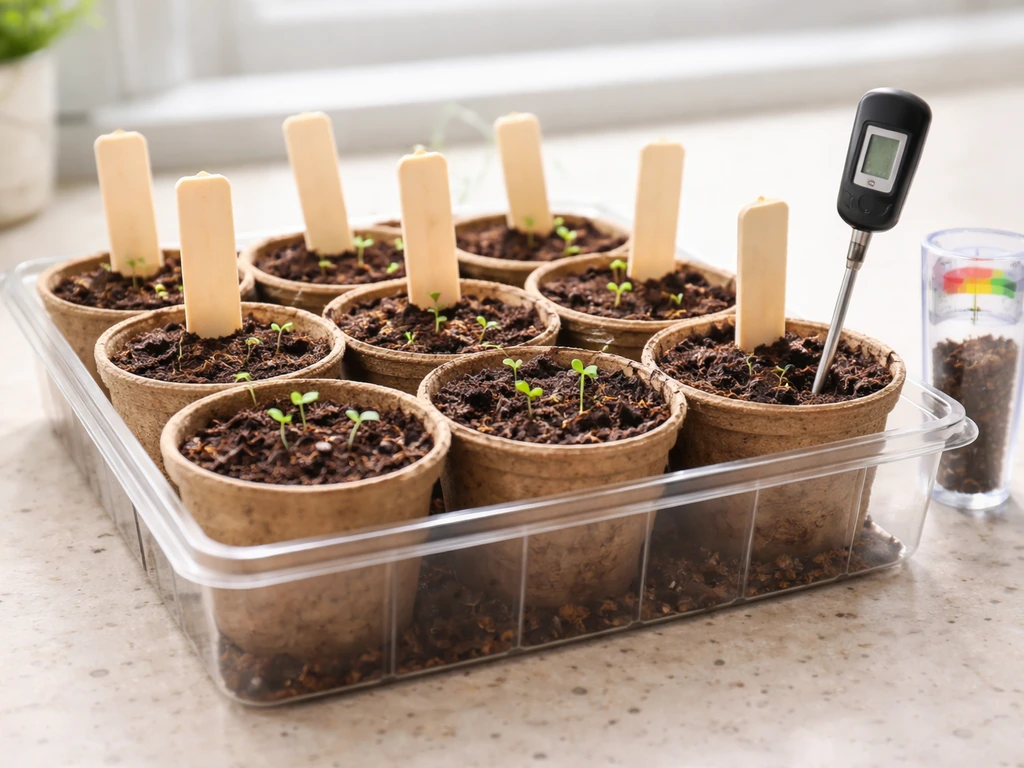
Scotts EZ Seed typically germinates in 5 to 14 days, depending on which blend you're using. The Sun and Shade mix is the fastest, with an average germination window of 5 to 10 days under ideal conditions. The Tall Fescue blend runs a bit slower, usually 7 to 14 days. A Scotts EZ Seed Patch & Repair Tall Fescue Lawns label PDF is available online, and you can use it to cite product-specific germination, timing, and care instructions from the package label. Warm-season varieties like Bermudagrass and Centipede Grass fall in a similar 7 to 14 day range when soil temperatures are where they need to be. After germination, you'll want to give the seedlings another two to three weeks before they're established enough to handle foot traffic or mowing. So from seed to a genuinely filling-in lawn patch, you're realistically looking at three to five weeks total.
How Long Does Scotts EZ Seed Take to Grow? Timeline
Typical timeline for Scotts EZ Seed, start to finish
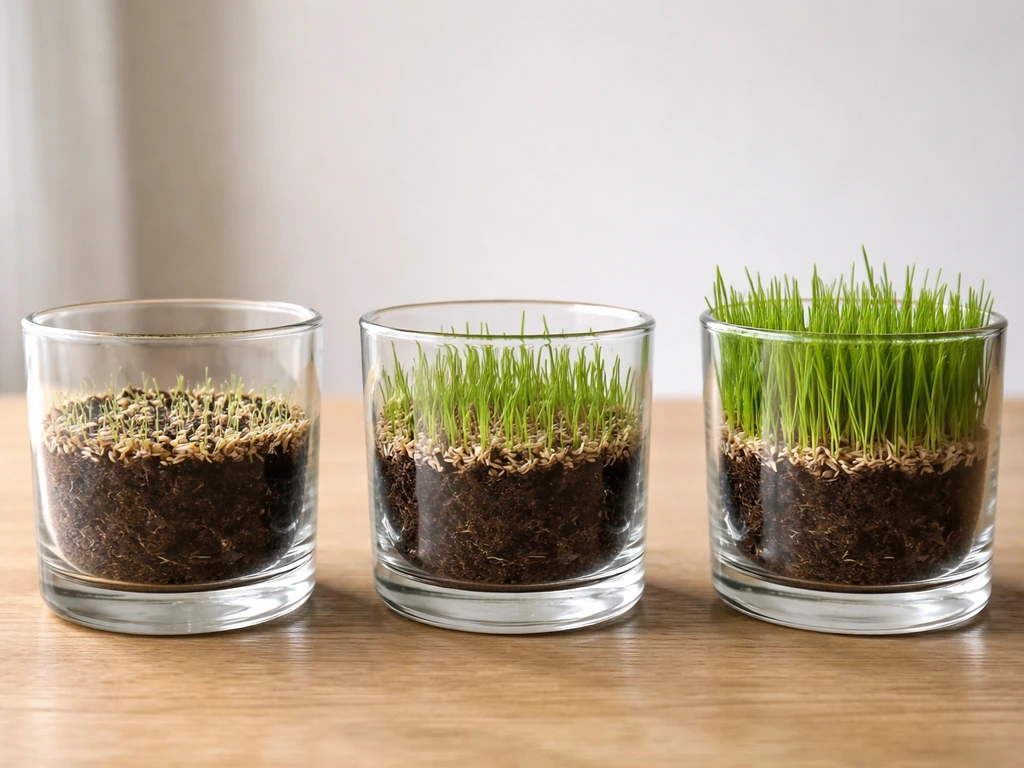
The most useful way to think about Scotts EZ Seed germination timing is in three phases: germination, early seedling growth, and establishment. Each phase has a rough timeline, and each can be stretched or compressed based on your local conditions.
| EZ Seed Blend | Avg. Days to Germinate | Reach 2 Inches Tall | Established (Walk-On) Patch |
|---|---|---|---|
| Sun & Shade | 5–10 days | ~2–3 weeks after germination | 3–4 weeks total |
| Tall Fescue | 7–14 days | ~2–3 weeks after germination | 4–5 weeks total |
| Bermudagrass | 7–14 days (soil 71–80°F required) | ~3 weeks after germination | 4–6 weeks total |
| Centipede Grass | 7–14 days (daytime 70–90°F required) | ~3 weeks after germination | 5–6 weeks total |
| Dog Spot Repair (Tall Fescue) | 7–14 days | ~2–3 weeks after germination | 4–5 weeks total |
These are label-based timelines under good conditions. Real-world results vary, and I'll cover exactly why below. The key milestone Scotts consistently uses across every EZ Seed product is seedlings reaching at least 2 inches tall. Until you hit that mark, keep the soil surface moist and don't stress the new grass.
How temperature, moisture, sun, and soil change your timeline
Temperature is the biggest lever. Cool-season blends like Sun and Shade and Tall Fescue germinate best when daytime air temperatures are between 60°F and 80°F, with soil temperatures in the 50 to 65°F range. Push outside that window and germination slows noticeably or stalls entirely. Scotts specifically warns that planting cool-season seed in summer heat can cause poor germination or even seedling death once sprouts emerge, because young roots can't survive scorching soil.
Warm-season varieties play by different rules. Bermudagrass germinates best when soil temperatures are between 71°F and 80°F, and Centipede Grass needs daytime air temperatures between 70°F and 90°F with zero frost risk. Plant either of those in early spring when soils are still cool and you'll be staring at a brown patch for weeks wondering what went wrong. Timing really does matter more than most people expect.
Moisture is the other major variable, and with EZ Seed it's more controllable than temperature. The mulch in EZ Seed is engineered to hold moisture around the seed, but it still dries out. Scotts' built-in moisture cue is the blank" rel="noopener noreferrer">color of the mulch layer: when it turns light brown, water it again. If you miss that window repeatedly, germination slows or stops. Consistent surface moisture matters most in the first 10 days before roots develop. After that, seedlings can handle slightly drier cycles, but you still want to keep things moist until the grass hits 2 inches.
Soil prep affects timing more than people realize. If you spread EZ Seed over compacted or crusty soil without loosening it first, the tiny roots have nowhere to go. Scotts recommends removing dead grass and loosening hard soil before applying. Loose, receptive soil means roots establish faster, which moves the whole timeline forward. Sunlight matters too, but EZ Seed blends are formulated for their specific conditions, so as long as you match the product to your site (full sun vs. shade), light is less of a bottleneck than temperature and moisture.
What to expect week by week
Days 1–3: Nothing visible yet (and that's normal)
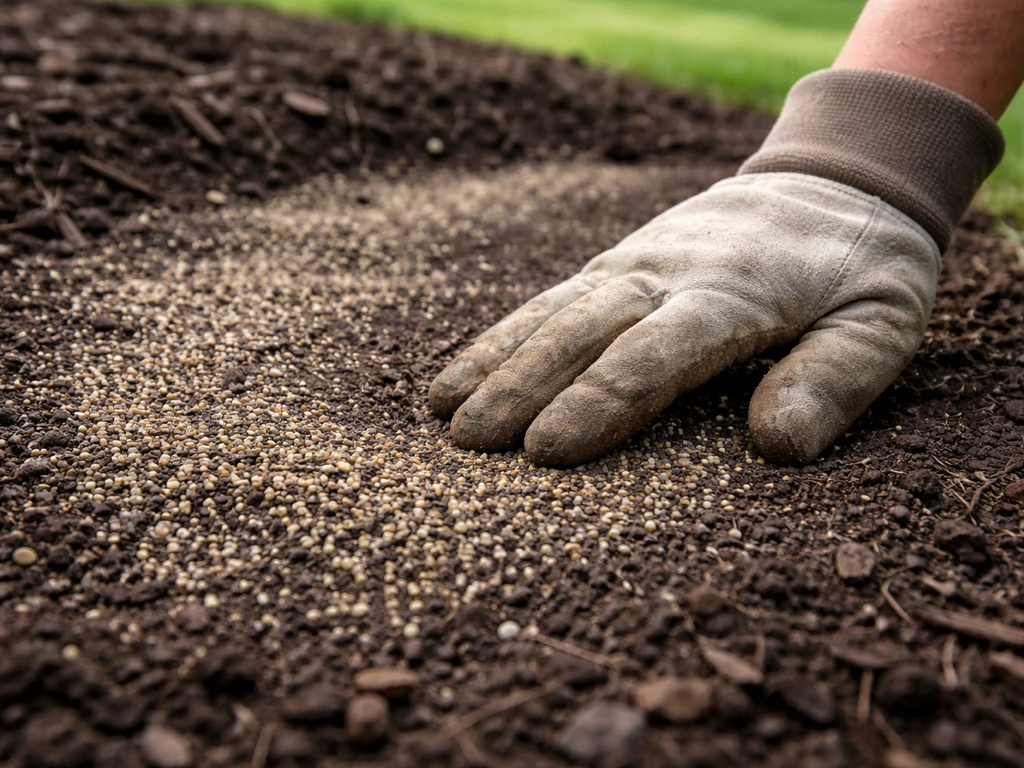
Right after application, your job is purely watering. Saturate the EZ Seed until no more water is being absorbed and the mulch turns dark brown. Then leave it alone. Nothing is visible yet. The seed is absorbing water and beginning the germination process underground. Don't touch it, don't rake it, don't worry. The dark brown mulch tells you it's properly saturated.
Days 4–7: Watch for the first signs
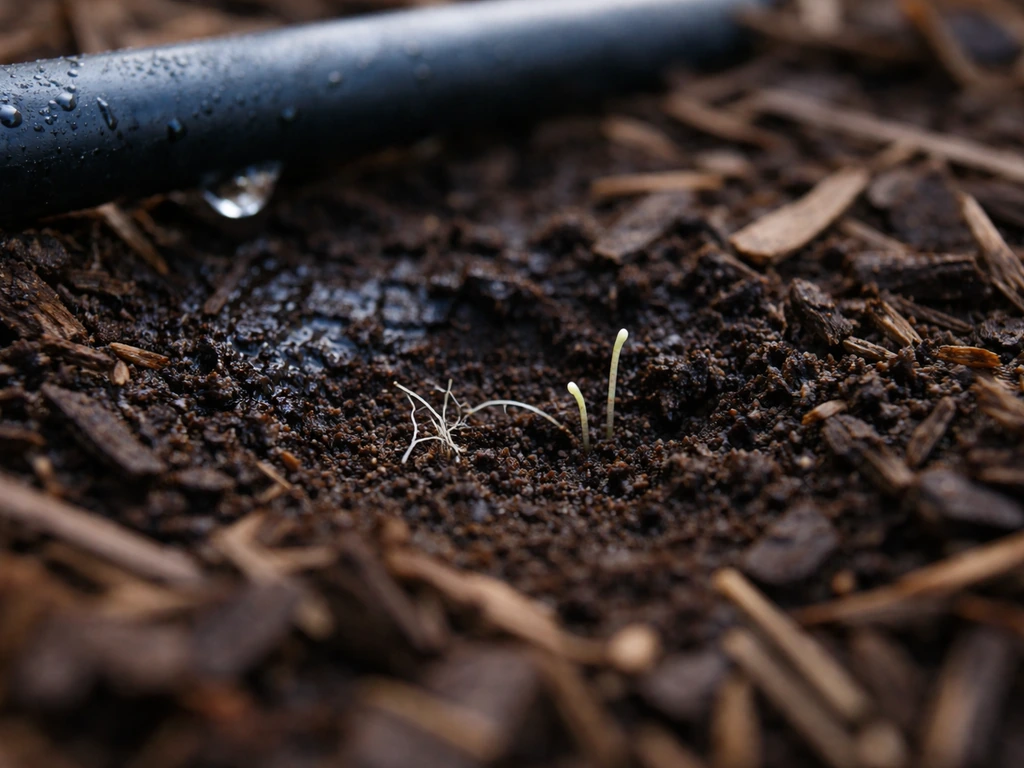
In ideal conditions (60–80°F daytime temps, soil staying moist), you may see tiny white roots or the very first hair-thin sprouts by day 5 or 6, especially with the Sun and Shade blend. Check the mulch color every morning. The moment it starts going light brown, water again. This is the most critical watering period. Missing moisture for even a day or two at this stage can abort germination entirely.
Days 7–14: Visible sprouting
By the end of week two, you should see visible green sprouts in most patches if conditions are favorable. Sun and Shade often shows solid coverage by day 10. Tall Fescue and warm-season blends might just be emerging at day 10 and will fill in more through day 14. The sprouts will look pale and fragile at this stage. That's expected. Keep watering on the mulch-color cue and resist the urge to test-pull or walk on the patch.
Weeks 2–3: Seedlings building their roots
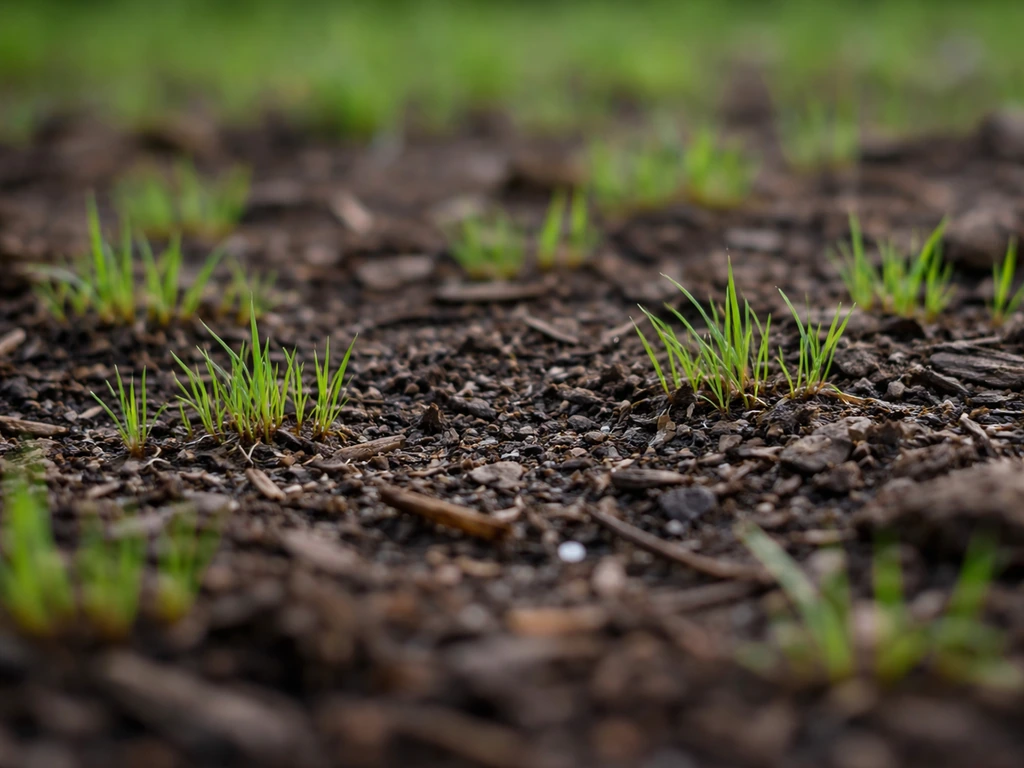
This is when the grass looks thin and patchy and people start to panic. Don't. The seedlings are putting energy into root development, not blade height, during this window. Continue the water-when-light-brown routine. You should see noticeable height gain and thickening by the end of week 3, with most patches starting to look like actual grass. The 2-inch milestone typically arrives somewhere in weeks 2 to 3 for fast-germinating blends.
Weeks 3–5: Establishment and filling in
Once seedlings hit 2 inches, you can back off the constant moisture monitoring and shift to deeper, less frequent watering. The patch will continue to fill in and thicken through week 5. For warm-season grasses like Bermudagrass and Centipede, full patch coverage can take until week 6. Mow for the first time once grass is at least 3 inches tall, and make sure the blade is sharp to avoid uprooting seedlings that haven't fully anchored yet.
How to tell if your seeds are actually germinating
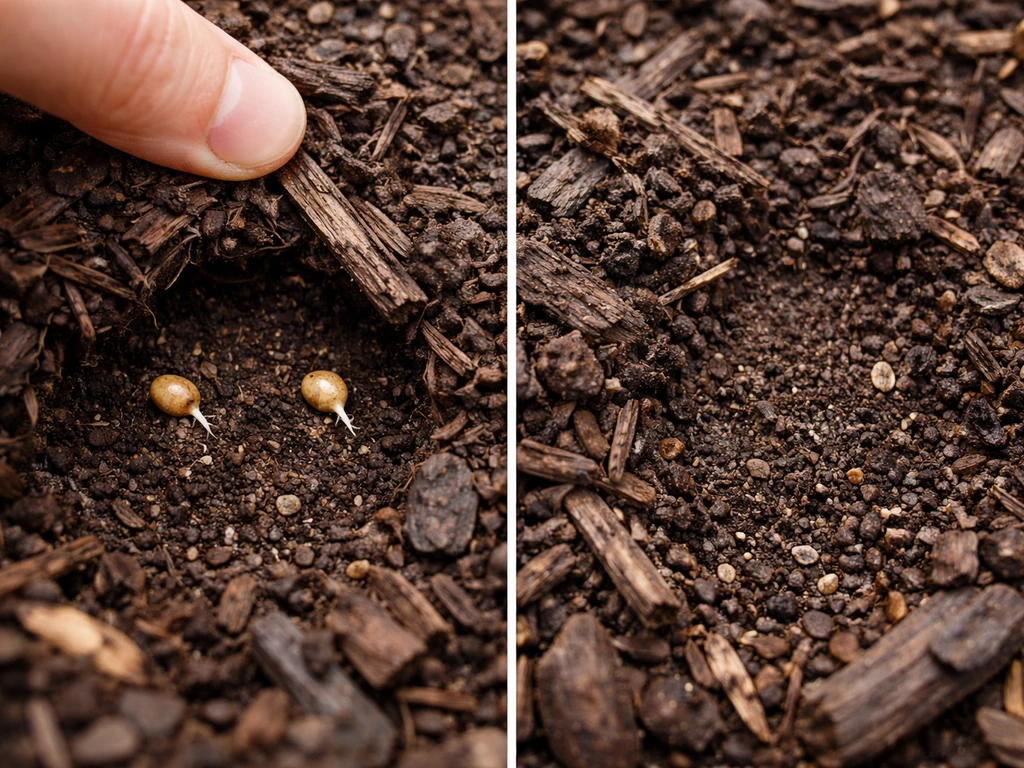
The most reliable early check is pulling back a tiny corner of the mulch around day 5 to 7 and looking for white root tips or a swollen seed. If seeds have absorbed water and begun to crack open, germination is happening, even if you see nothing from above. This is the same principle behind understanding how long it generally takes for seed to grow: the visible sprout is the last thing to appear, not the first. Germination starts underground.
From above, look for the mulch color. Dark brown mulch means moisture is good. Light brown means it needs water. If the mulch has gone very pale or crusty and you haven't watered in a while, there's a good chance germination has stalled. The fix is re-saturating thoroughly and getting back on a consistent watering schedule. If you've maintained moisture perfectly and see zero green by day 14, temperature is the likely culprit.
Another useful check is the squeeze test. Grab a small amount of EZ Seed and squeeze it. If it holds together and feels damp like a wrung-out sponge, moisture levels are correct. If it's dry and crumbles, you need to water more often. If water squirts out, you may be overwatering and risking pooling or runoff, which washes seeds away before they can root.
When growth is slow: the most common culprits
Slow or failed EZ Seed germination almost always comes down to one of four issues. Temperature being off is the top reason. If your soil is below 50°F or above 85°F, the seed is essentially on pause. There's not much you can do except wait for conditions to change, which is why timing the application correctly in spring or fall makes such a difference. If you want to understand how long EZ Seed takes to grow under real-world conditions, soil temperature is the first thing worth checking.
- Temperature out of range: Cool-season blends stall below 50°F soil temp or above 80°F air temp. Warm-season blends stall below 65°F soil temp. A cheap soil thermometer costs about $10 and removes all guesswork.
- Inconsistent moisture: Missing even one or two watering cycles in the first week can halt germination. Get back to the mulch-color check daily if results are slow.
- Soil not loosened before application: Compacted soil means roots can't penetrate. If you skipped this step, the fix for next time is raking or aerating the area before reapplying.
- Too thin or too thick an application: Too thin leaves seeds without enough mulch insulation. Too thick can smother seedlings. Coverage should be even, with bare ground still visible through the EZ Seed layer.
- Foot traffic or disturbance: Walking on EZ Seed in the first two weeks dislodges seeds before they root. Even one shortcut across the patch can set germination back by a week.
Shade is a slower-moving issue. If you planted a Sun and Shade blend in deep shade, germination may still happen but growth will be slower and thinner than in a sunnier spot. That's expected behavior, not a product failure. Conversely, planting a shade blend in full afternoon sun can stress seedlings once they emerge. Matching the product to the actual site conditions goes a long way.
When to wait and when to reseed
The general rule: give EZ Seed at least 14 days before drawing any conclusions, and 21 days before deciding to reapply. A lot of people get anxious around day 10 when they expected to see thick grass and see thin sprouts instead. That's often right on track. The realistic timeline for EZ Seed to grow always includes a slow-looking phase in weeks 1 and 2 that resolves in week 3.
If you're at day 21 and see zero germination anywhere in the patch, start a short diagnostic before reseeding. Check soil temperature with a thermometer at a 2-inch depth. Review your watering log. Look at whether the area has been disturbed. If temperature was consistently in range and moisture was maintained and you still have nothing, then reseeding is reasonable. Apply a fresh, thin layer over the same area and restart the moisture routine.
If you see partial germination, meaning some green spots but thin coverage, wait. Uneven germination is common and many of those bare spots fill in by week 4 or 5 without any additional seed. Reseeding too early over existing seedlings can create patchy competition and actually slow establishment. Patience in this phase usually pays off more than action.
For warm-season grasses especially, timing a reseed matters as much as the decision to reseed. Bermudagrass and Centipede Grass both need daytime temperatures above 70°F and soil temperatures above 65 to 71°F, so reseeding in cool fall weather won't work regardless of how perfectly you water. If you missed the optimal window, it's worth waiting until the following spring rather than fighting the season.
One last reassurance: EZ Seed is one of the more forgiving seeding products available because the mulch component genuinely helps with moisture retention compared to bare seed. Scotts has even noted cases where seed in the product germinates after being spread on hard surfaces, as long as moisture was maintained. So if the environment is right and you're keeping up with watering, the product is fairly reliable. If you're curious how this compares to other seed types in terms of raw germination speed, some varieties can show initial sprouting in as little as 3 days under perfect conditions, though EZ Seed's grass blends are not among the fastest-germinating seeds overall.
A few other seed timelines worth knowing
If you're working on a broader garden project alongside your lawn repair, it helps to know that germination timelines vary widely between plant types. Learning how long Buzzy Seeds take to grow versus a grass blend is a good reminder that every seed type has its own schedule, and EZ Seed's 5 to 14 day window is actually quite competitive for turf. Similarly, ornamental or novelty seeds like shamrock seeds can have very different germination expectations, so it's worth looking up specifics before planting anything new alongside your lawn patch.
The bottom line is this: EZ Seed works reliably when temperature and moisture are right. Your job in the first two weeks is mostly just watching the mulch color and keeping it moist. After that, the grass does the work. Germination in 5 to 14 days, seedlings at 2 inches in two to three weeks, and a filling, established patch by week four or five is a completely realistic outcome when conditions are on your side.
FAQ
My EZ Seed mulch keeps turning light brown quickly. Should I water more often?
If you’re still getting light brown mulch on day 10, it usually means surface moisture is dropping faster than expected (hot sun, wind, or thinner watering passes). Re-saturate until the mulch goes dark brown again, then keep checking at least once daily for the next 5 to 7 days, since that first 10-day window is when roots are most sensitive.
How do I avoid overwatering when watering for EZ Seed germination?
Yes, but only to a point. You want the soil kept consistently moist, not soaked enough to pool. A practical sign is the “no more being absorbed” cue after saturating, then re-wet when mulch color lightens. If you see runoff or muddy channels forming, reduce the watering rate and switch to slower cycles to avoid washing seed.
Can I walk on the lawn or use a rake before it’s established?
Wait until you see consistent green growth, because stepping or dragging tools across thin seedlings can uproot them before they anchor. For the first mow, set the height high (around 3 inches as a starting point) and use a sharp blade, since dull blades tear fragile seedlings and slow establishment.
Should I reseed if my lawn looks thin around day 10?
For cool-season blends, reseeding before day 21 often creates competition and doesn’t fix stalled germination caused by wrong temperature. If you see partial germination, the better move is usually to wait for week 4 or 5 unless there are completely bare areas that stay bare. Then recheck soil temperature and watering consistency before adding new seed.
Why is germination uneven across my yard?
It’s normal to see uneven germination because moisture and temperature can vary across the yard, especially on slopes, along sidewalks, and under different shade patterns. If only spots are bare, resist the urge to cover everything early. Instead, confirm the mulch-color watering routine is consistent across zones, then decide on targeted re-seeding after week 4 or 5.
What soil temperature reading matters most, and what if my air temps look fine?
Use soil temperature at seed depth (about 2 inches), not air temperature. If your soil is below roughly 50°F or consistently above the mid 80s, germination can pause even if the mulch looks okay. In that case, you may need to wait for conditions to shift rather than changing watering habits.
I see no sprouts by day 14. Is my batch failing?
If there are truly zero visible sprouts by day 14, still give it to day 21 before concluding failure. A lot of germination progress is underground first. Also, avoid repeated “check-pull” tests, since disturbing the mulch can dry the surface and interfere with the next watering cycle.
How can I tell underground germination is happening if I can’t see green?
Do a targeted diagnostic by checking for moisture and germination signs on the same day. Look for white root tips or cracked, swollen seed near the surface between days 5 and 7. If the seed is damp and cracking but there’s no green above, temperature and light stresses after sprouting may be the issue rather than moisture.
What should I do if the mulch was dark brown but germination never starts?
If the patch is dry and crusty and you haven’t watered consistently, the most likely fix is re-saturating thoroughly and restarting the mulch-color routine. If the mulch was kept dark brown the whole time and you still get no germination by day 21, reassess soil temperature first, then consider reseeding only after verifying there was no disturbance or persistent run-off.
If I reseed in late summer or fall, will warm-season EZ Seed ever catch up?
Warm-season grasses are especially timing-dependent, so if reseeding after a late frost or into cooler soil, it may not take until next season even with perfect watering. If you miss the warm window for bermuda or centipede, it’s often better to wait until spring rather than trying to force germination in cool soil.
EZ Seed How Long to Grow Timelines and Tips
Real timelines for EZ Seed germination, transplant size, and first harvest plus fixes for stalls from temp, depth, moist