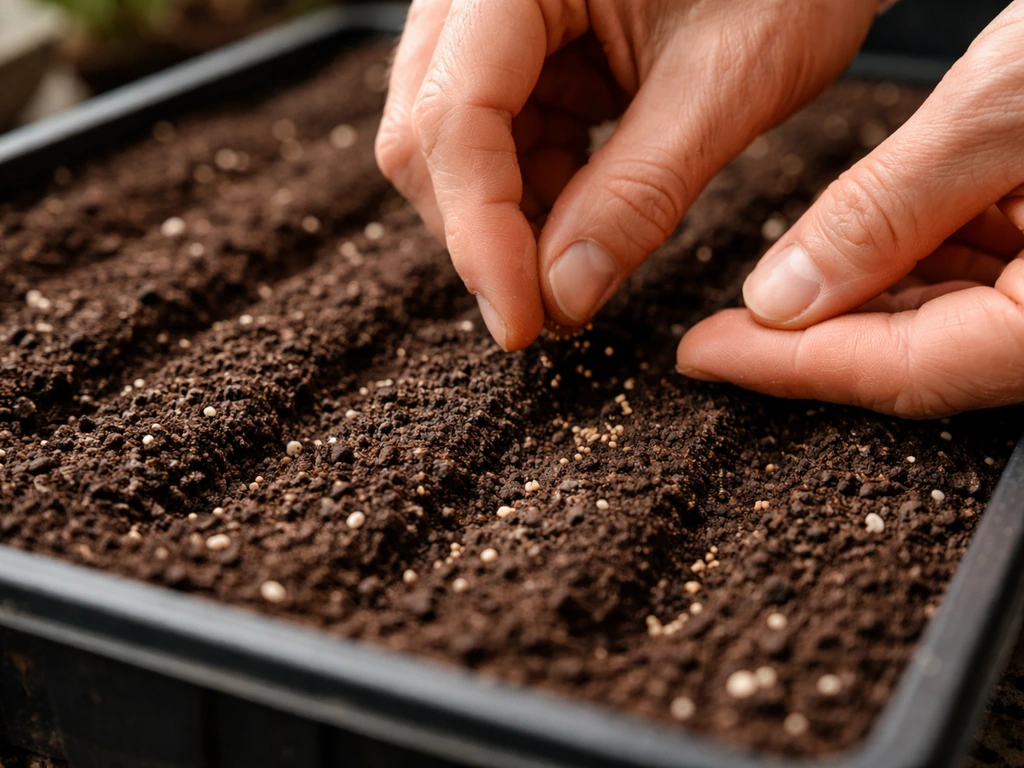
From the moment you pot up geranium plugs, expect about 1 to 2 weeks for roots to settle and anchor in, then another 2 to 3 weeks before you see obvious new leaf growth pushing out from the center. By 4 to 6 weeks in good conditions, a healthy plug looks like a proper transplanted plant: rooted, upright, and actively growing. If you want flowers, add another 6 to 10 weeks on top of that depending on variety and season. So from plug to first bloom, you're typically looking at 10 to 16 weeks total under decent home conditions.
How Long Do Geranium Plugs Take to Grow and Thrive?

Marcus Henley
2 May 2026
Plugs vs seeds: why the timelines are completely different
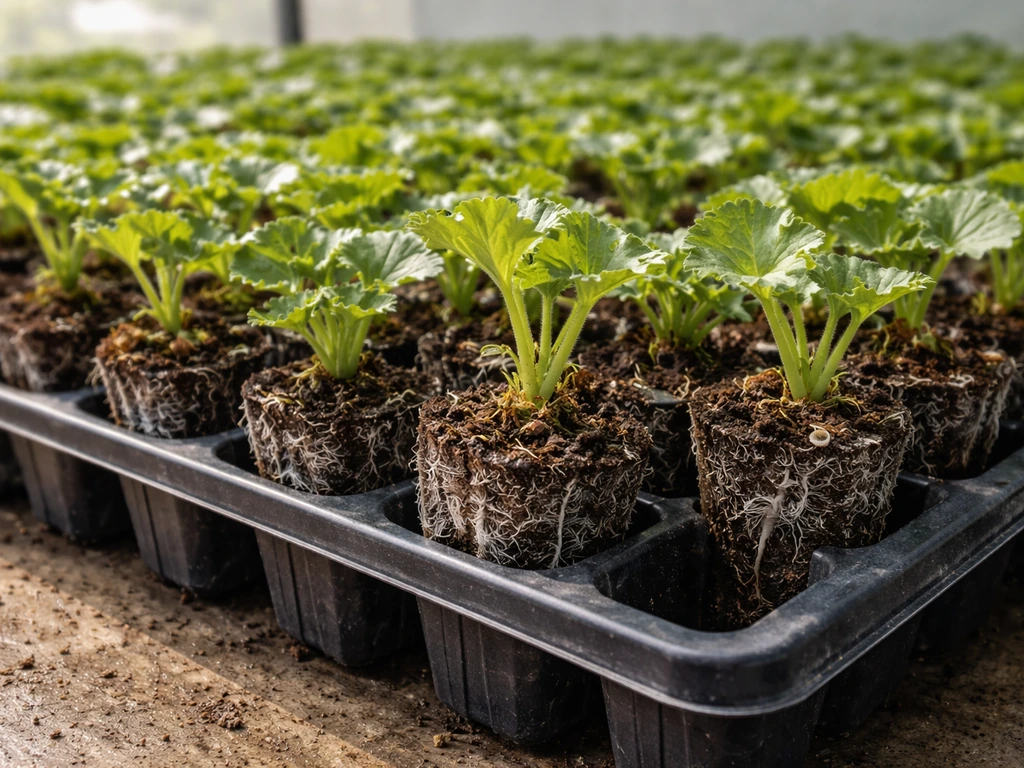
A geranium plug is a young rooted plant, not a seed. It's been germinated, grown on in a cell tray, and sold to you at a stage where it already has an established root ball and a few sets of leaves. That's a fundamentally different starting point from a seed, which still has to germinate, develop a radicle, push up a shoot, and slowly build a root system from scratch. Growing geraniums from seed is a long process, often 12 to 16 weeks just to reach transplant size. From seed, begonias can also be slow to establish, so it helps to plan your timing ahead of planting how long does it take to grow begonias from seed. Growing geraniums from seed takes longer, so plan for a more extended timeline before you can transplant how long does it take to grow geraniums from seed. Plugs skip all of that. You're buying time, basically.
That said, plugs still need time to transition. Their roots were formed in a specific plug medium, under controlled greenhouse conditions, and when you move them into a new pot or bed, they go through a settling phase that's sometimes called 'rooting out.' During this phase the plant is redirecting energy underground rather than putting on visible top growth, which can make it look like nothing is happening. It's not stalled, it's just busy where you can't see it.
This site mostly covers how long plants take to grow from seed, and geraniums from seed are genuinely one of the more demanding projects (you can compare the timelines). Petunias from seeds take longer than many gardeners expect, so it helps to plan your sowing date around the germination and early growth pace how long does it take to grow petunias from seeds. But plugs are a popular and genuinely practical alternative, especially for impatient gardeners or anyone starting later in the season. The tradeoff is cost per plant rather than time, and for geraniums that often makes sense.
Realistic timeline from potting up to established plant
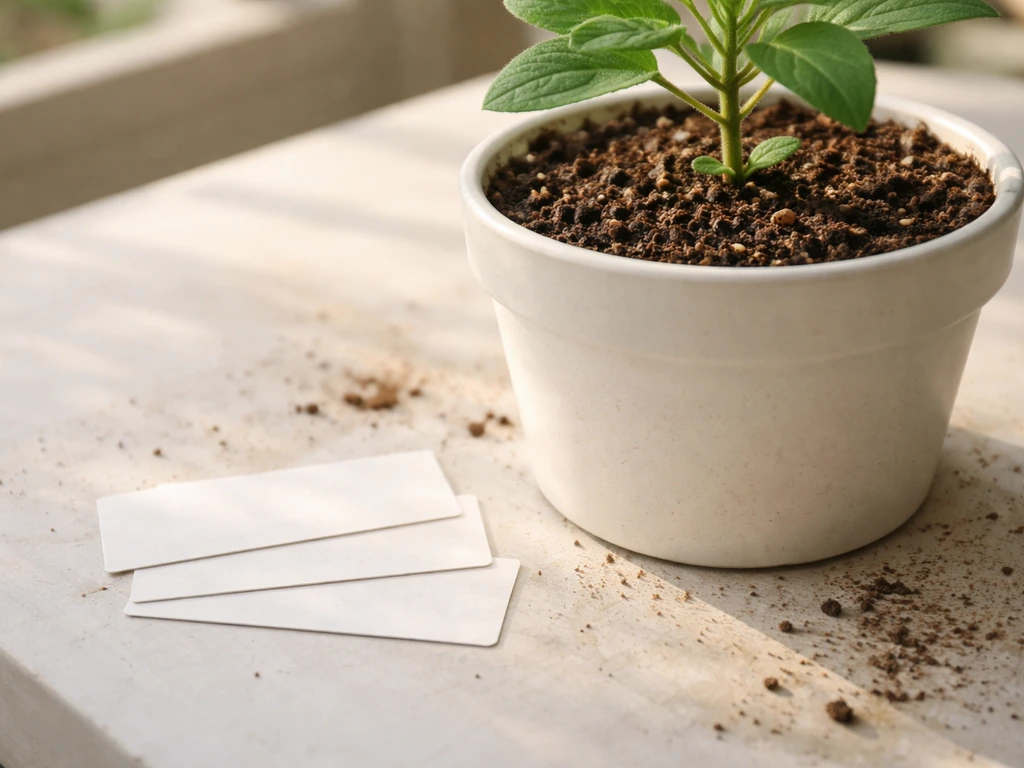
Here's what to actually expect at each milestone, assuming you're growing under reasonable indoor or greenhouse conditions with temperatures in the 65 to 75°F (18 to 24°C) range and decent light.
| Stage | Timeframe | What you see |
|---|---|---|
| Settling/rooting out | Days 1 to 10 | Little visible change; plant may look slightly droopy or static |
| Early root establishment | Week 2 to 3 | Plant firms up, stands upright, stops looking stressed |
| New top growth | Week 3 to 5 | Fresh leaf buds or new stems emerging from the crown |
| Actively growing | Week 5 to 7 | Noticeably larger, filling out, looks like a proper transplant |
| Bud formation | Week 8 to 12 | First flower buds visible, depending on variety and conditions |
| First flowers | Week 10 to 16 | Full blooms, ready for display or outdoor placement |
Commercial plug producers actually break this process into four formal stages. Stage 1 (rooting initiation) runs about 3 to 5 days at around 70 to 75°F (21 to 24°C). Stages 2 and 3 cover rooting out and early grow-on, adding roughly 5 to 10 days and then 14 to 21 days at slightly cooler temps around 65 to 70°F (18 to 21°C). Stage 4, the final hardening or transition phase, takes about 7 more days at 62 to 65°F (17 to 18°C). That commercial schedule gives you a useful benchmark: even professionals expect 4 to 6 weeks from freshly rooted plug to transplant-ready plant, and that's under optimal greenhouse conditions. Ball Seed’s Product Information Guide is a commercial grower reference that lists plug crop weeks and stage temperatures for geranium (ivy) pelargoniums, with examples showing about blank" rel="noopener noreferrer">4 to 6 weeks in 288-cell plugs from freshly rooted plug to transplant-ready plant. Greenhouse Product News and Greenhouse Management provide example plug-time numbers for other bedding crops, illustrating the industry timing conventions used during plug production.
How variety and conditions shift your timeline
Not all geraniums behave the same way from plug stage, and the type you're growing matters. Zonal pelargoniums (the classic upright bedding geraniums) are the most vigorous and forgiving of the group. They root out quickly and put on size reliably. Ivy-leaved or trailing types tend to grow a little more slowly from plug stage but catch up once they're established and start trailing. Regal pelargoniums are the slowest and fussiest of the three: they take longer to settle, prefer cooler conditions during bud set, and won't flower in the same heat that zonals love.
Temperature is the biggest single variable. Geraniums grow at their best pace between 65 and 75°F (18 to 24°C). Drop below 50°F (10°C) and growth slows dramatically. Get into the low 40s and the plant effectively stops. On the other end, consistent temperatures above 85°F (29°C) can cause heat stress that also stalls growth. If your plugs are sitting in a cold windowsill or a drafty greenhouse in early spring, you might be waiting twice as long for the same growth you'd see in warmer conditions.
Light is the other major factor. Geraniums want at least 6 hours of direct or bright light daily. Under a south-facing window in late spring, they're usually fine. Under a cloudy north-facing window in early spring, growth is noticeably slower and stems can become leggy as the plant stretches toward weak light. If you're buying plugs in February or March (common for mail-order deliveries), supplemental grow lights make a real difference and can pull your timeline back toward the faster end of the range.
Plug quality and age at purchase also matter more than people realize. A fresh, compact plug with white healthy roots and a few firm leaves will settle in and start growing far faster than a rootbound plug that's been sitting too long in its cell or a stressed plug that arrived in the mail dehydrated. If you're ordering online, check the delivery timing and try to pot up your plugs within a day or two of arrival.
Best setup today: potting mix, light, temperature, watering, and feeding
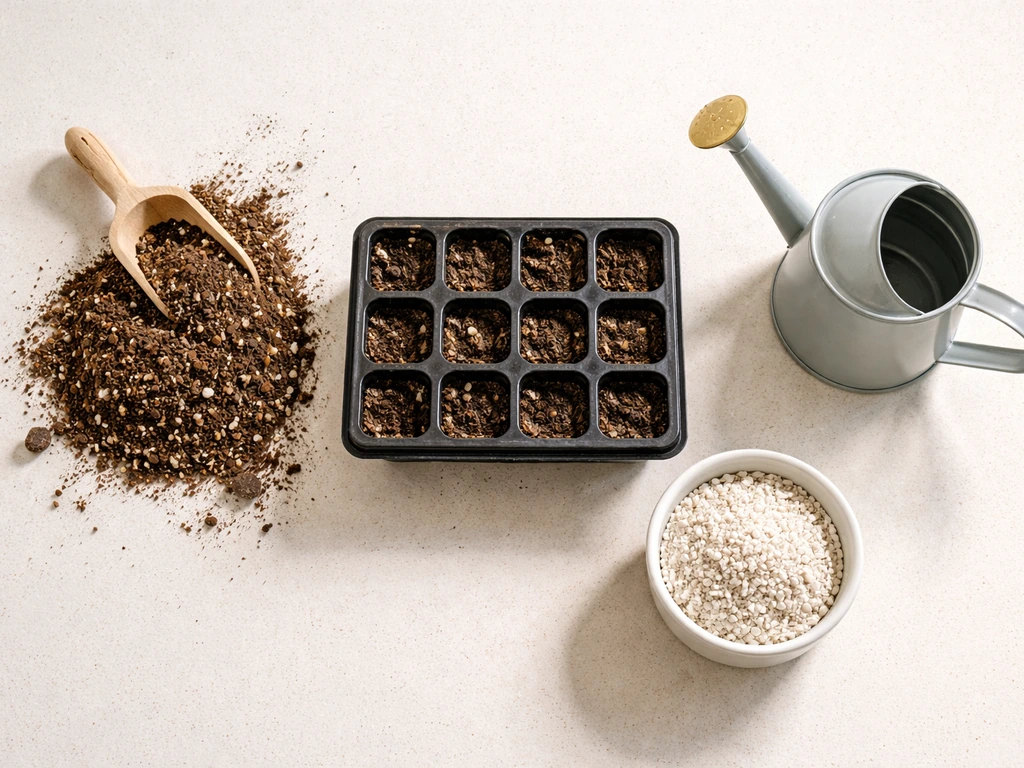
If you're setting up your plugs right now, here's exactly what to do to give them the fastest, healthiest start.
Potting mix
Use a well-draining peat or coir-based potting mix. Geraniums hate sitting in wet soil and are prone to root rot if drainage is poor. A mix with added perlite (about 20 to 30% by volume) is ideal. Don't use heavy garden soil or dense compost-only mixes for plugs: the fine roots need air around them to develop properly. A pot with good drainage holes is non-negotiable.
Container size
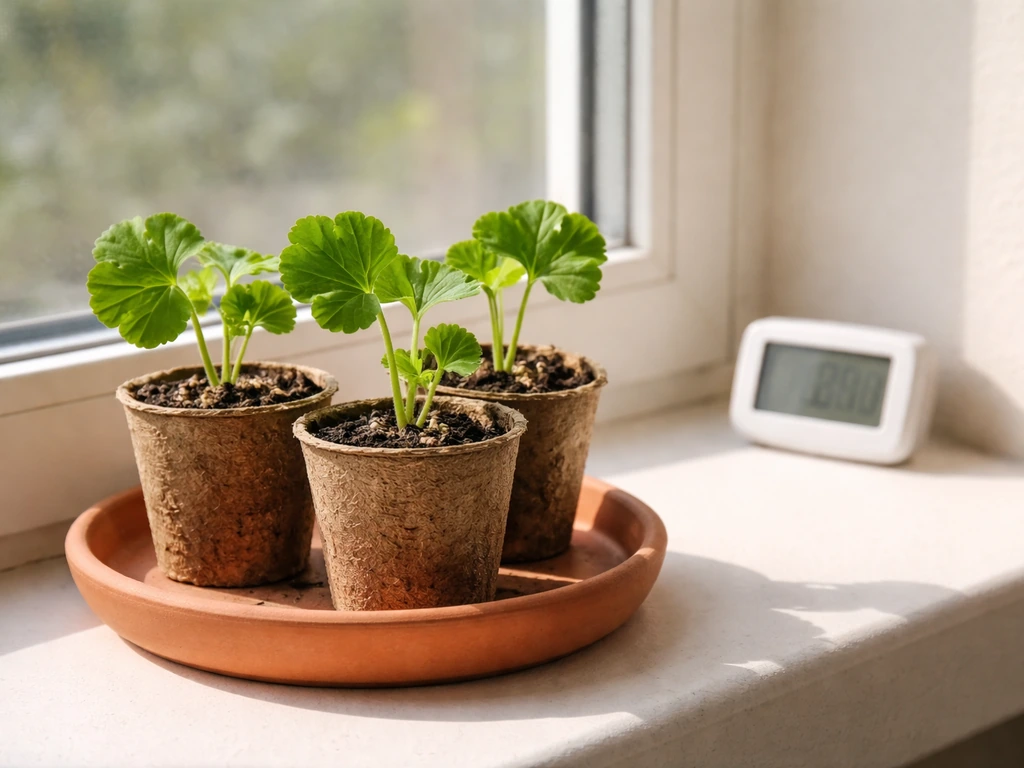
Don't oversize your container. Planting a small plug into a very large pot means there's too much damp soil surrounding the root zone, which encourages rot before the roots can grow to fill it. Start plugs in 3 to 4 inch pots, then move up to 5 or 6 inch pots once they're actively growing and starting to fill out.
Light and temperature
Place plugs in your brightest spot: a south or west-facing windowsill is ideal. If you're growing in May, natural light is usually sufficient in most climates. For indoor growing earlier in the year, a grow light positioned 4 to 6 inches above the plants for 14 to 16 hours a day will keep growth compact and steady. Aim to keep temperatures between 65 and 75°F (18 to 24°C) during the day, and avoid letting them drop below 55°F (13°C) at night.
Watering
Water thoroughly, then let the top inch of soil dry out before watering again. Geraniums are more drought-tolerant than you'd think, and far more likely to suffer from overwatering than underwatering. When plugs are freshly potted, keep them on the drier side for the first week to encourage roots to grow outward in search of moisture rather than sitting in wet soil.
Feeding
Hold off on fertilizing for the first week or two after potting up. The plug has been through a transition and its roots aren't ready to absorb nutrients efficiently yet. After that, a balanced liquid fertilizer (something like 10-10-10 or 20-20-20) at half strength once a week gets growth moving. Once you see buds forming, switch to a higher potassium feed to support flowering.
Transplant shock and when it passes
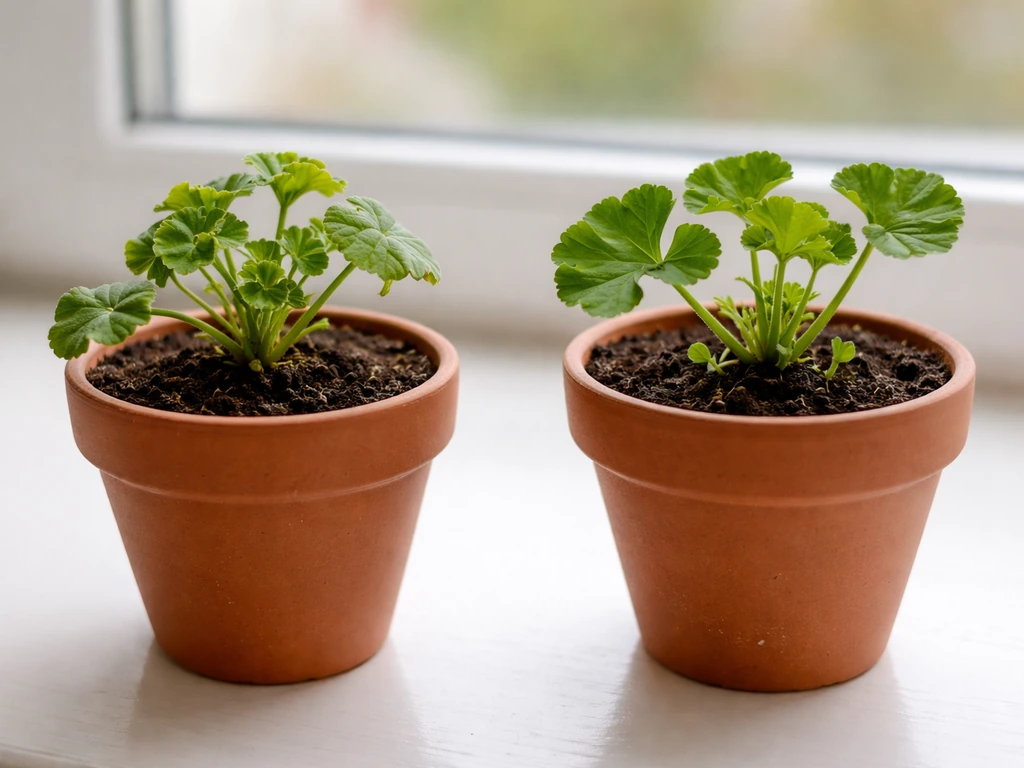
Almost every geranium plug goes through some degree of transplant shock, even when you do everything right. The signs are familiar: slightly droopy leaves, no new growth for a week or two, maybe some yellowing of the lowest leaves. This is the plant conserving energy while it re-establishes its root system in new soil. It's completely normal, and it doesn't mean you've done anything wrong.
Under good conditions, transplant shock typically passes within 1 to 2 weeks. You'll know it's over when the plant firms up, the leaves stop drooping, and you start to see new growth from the growing tips or crown. That new growth is the clearest signal that roots have found their footing and the plant is ready to move forward. If you're past 3 weeks and still seeing none of these signs, that's when it's worth investigating further rather than just waiting.
Troubleshooting slow or stalled plugs
If your plugs aren't progressing on schedule, there's usually a specific reason. Here's how to diagnose and fix the most common problems.
| Symptom | Likely cause | Fix |
|---|---|---|
| No new growth after 3+ weeks | Cold soil or air temperature | Move to a warmer spot, aim for 65–70°F minimum |
| Wilting despite moist soil | Root rot from overwatering or poor drainage | Let soil dry out, check for mushy roots, repot if needed |
| Yellowing lower leaves | Overwatering or nutrient deficiency | Reduce watering; after week 2, begin half-strength fertilizer |
| Leggy, pale stems | Insufficient light | Move to brighter spot or add a grow light 4–6 inches above |
| Crispy leaf edges, dry wilt | Underwatering or low humidity | Water more consistently; avoid placing near heat vents |
| Roots circling or bound at base | Plug was rootbound at purchase | Gently loosen roots before potting; consider a size-up pot |
| Soft, rotten stem at base | Damping off or overwatering | Remove affected plant, improve drainage, reduce watering |
The two most common culprits I see, by far, are overwatering and cold temperatures. Gardeners who are used to keeping other plants constantly moist tend to overwater geraniums, and plugs bought in early spring often get left in a cold room or unheated greenhouse where the soil temperature barely reaches 55°F. Either of those problems alone can stall growth for weeks. Fix both and most plugs bounce back within 10 to 14 days.
Planning your planting schedule
Working backward from when you want established, flowering geraniums outdoors is the clearest way to plan. Greenhouse Management explains that greenhouse bedding crop timing is often tracked as plug time plus finishing weeks, giving a practical way to estimate total crop duration. In most temperate climates, geraniums go outside after the last frost date, typically sometime between late April and late May depending on your location. Count back 10 to 14 weeks from that date and that's when you want to have potted up your plugs indoors.
Plug deliveries typically start in late January or February from UK suppliers, and from late February or March in North America. If you're buying today in early May 2026 and your last frost has already passed or is imminent, you're actually in a great position: pot up your plugs now, grow them on indoors for 2 to 3 weeks, harden them off, and you can move them outside in late May or early June with plenty of the season ahead of them.
Hardening off is essential before moving plugs outside. Spend 7 to 10 days gradually increasing their outdoor exposure: an hour in a sheltered spot on day one, working up to full outdoor days by the end of the week. Skip this step and even healthy plugs can suffer significant setback from wind, temperature swings, and direct unfiltered sun exposure.
- Buy plugs 10 to 14 weeks before your intended outdoor transplant date
- Pot up within 1 to 2 days of arrival, into 3 to 4 inch pots with well-draining mix
- Keep indoors at 65 to 75°F with bright light or grow lights
- Expect 1 to 2 weeks of transplant shock, then new growth by week 3 to 5
- Harden off over 7 to 10 days before moving outside permanently
- First flowers typically appear 10 to 16 weeks after potting up, depending on variety and conditions
Geranium plugs are one of the more reliable ways to get strong, flowering plants in a single season without the long lead times of starting from seed. When you’re comparing those timelines to how long it takes to grow impatiens from seed, expect a longer wait before you see consistent growth and flowering long lead times of starting from seed. If you are growing poppies from seed instead, the timeline is much longer and you’ll want to plan based on germination and early growth conditions starting from seed. Compared to something like peonies from seed (which can take several years to flower) or even petunias and impatiens grown from seed (which need careful temperature management), plugs genuinely deliver results on a predictable schedule. The key is giving them the right conditions from day one and knowing that the first quiet weeks of settling are just part of the process, not a sign that something's gone wrong.
FAQ
How can I tell if my geranium plugs are still “settling” versus actually failing?
Don’t judge by leaf size alone in the first couple of weeks. Look for root anchoring signals: reduced droop, firmer stems at the crown, and new growth emerging from the center. If the plug is still soft, very pale, or repeatedly wilting while the soil stays damp, that points more to a drainage or overwatering issue than “normal settling.”
When is the earliest I should fertilize geranium plugs, and what if they don’t respond?
A simple rule is, if the soil is still wet or cool, avoid fertilizing. After potting, wait until you see clear new growth or at least the plug is no longer drooping, then start with half-strength balanced feed. If the leaves look scorched at the tips or the plug seems to pause again, flush the pot with clean water and resume at a lower dose once it perks up.
Can I leave geranium plugs in their cell tray for more than a day or two after they arrive?
Yes, but you need to pot them up quickly and keep conditions warm and bright. If you cannot pot within 1 to 2 days of arrival, store the plugs slightly cooler (around the mid 60s F) with the brightest light available and ensure they are not left in sealed, humid packaging. Prolonged storage without potting often leads to slow regrowth because the roots and leaves dry out unevenly.
Why is my air temperature warm but my geranium plugs still grow slowly?
The key is soil temperature, not air temperature. If the root zone is below about 55°F (13°C), growth often slows dramatically even if the room feels warm. Use a thermometer or place the pots away from cold windows, and consider a gentle heat source or thicker pot placement to avoid cold drafts.
What are the visual signs that I’m overwatering versus underwatering geranium plugs?
Overwatering tends to show up first as persistent softness or yellowing leaves while growth stays minimal. Underwatering usually looks like drying edges, light-weight pots, and wilting that quickly improves after watering. If you’re unsure, use the “top inch” check described in the article, then correct toward the drier side for several days to encourage outward rooting.
If my plugs are behind schedule by 3 weeks, what should I check first before panicking?
It depends on your tolerance for risk and your local weather. If you see no new growth after roughly 3 weeks, don’t just wait. Verify three things in order: temperature near 65 to 75°F, at least 6 hours of bright light (or grow light), and drainage with a drier watering rhythm. Only after those checks should you consider replacing the plug if it still shows decline.
Will a rootbound or stressed plug catch up, and should I untangle the roots when potting?
When a plug is pot-bound or has been stressed, it often takes longer to root out and can also become leggy if light is weak. Carefully separate only if roots are tightly circling and gently tease with minimal disturbance. Then increase light immediately and avoid heavy watering during the first week after adjustment.
Does hardening off only affect outdoor stress, or can it also change how long it takes to bloom?
For best timing, count on an additional settling period if you keep them cold at night or suddenly move them outdoors without adequate hardening. Hardening mainly prevents a setback from wind and sun, but a cold night can also halt growth even if the plants look “toughened.” Plan to harden for 7 to 10 days and avoid planting into very cool conditions.
What should I do if I’m starting plugs in a low-light month like February or March?
Winter or very early spring conditions can stretch the timeline, especially if you cannot provide consistent warmth and strong light. Even with good potting practices, expect a slower root-out phase when daylight is limited. If you cannot hit the light target, use grow lights and extend the daily photoperiod rather than relying on brief intense sun.
My geranium plugs are not flowering, even though they’re growing. What are the most likely reasons?
Common causes include weak light (leggy stems), persistent damp soil (roots not expanding), or feeding too early at full strength. Fixes that usually help fastest are brightening light to keep stems compact, letting the top inch dry between waterings, and waiting until active new growth appears before any fertilizer increase.
Next Article
How Long Do Pansies Take to Grow From Seed
Learn typical timelines for pansies from seed: germination, seedling growth, transplant readiness, and first blooms.